Rabi season guide 2025: Best practices for Wheat, Chana, Mustard & Barley
The rabi season in India is a critical period for farmers, contributing nearly 40% of the country’s total foodgrain output. Sown between…
Rabi season guide 2025: Best practices for Wheat, Chana, Mustard & Barley

The rabi season in India is a critical period for farmers, contributing nearly 40% of the country’s total foodgrain output. Sown between October and December and harvested from March onwards, the 2025 rabi cycle is expected to benefit from favourable soil moisture and expanding access to micro-irrigation across major states. As farmers prepare for the upcoming sowing period, adopting crop-specific best practices can help maximise yield, reduce pest pressure, and improve profitability. Let’s uncover essential cultivation strategies for Wheat, Chana, Mustard and Barley — the core crops of the Indian rabi landscape.
Understanding the Rabi season 2025
With over 180 lakh hectares of wheat already sown in India and production rising to 119 Mn tonnes, which is 2.3 % higher than last year’s, the rabi season of 2025 is set to see strong momentum. Advances in climate-smart farming, precision nutrient management, and digital agri-platforms are further enhancing farmers’ decision-making.

Best practices for Wheat cultivation
Wheat remains India’s largest rabi crop, contributing nearly 110–113 million tonnes to national production. To achieve optimal results:
- Choose the right variety: Opt for high-yielding, disease-resistant varieties such as HD 3086, DBW 187, DBW 303 and HI 1544. These cultivars offer better resistance to rust and heat stress.
- Ideal sowing window: The best sowing period is from 1st to 20th November, enabling the crop to escape terminal heat in March. Delayed sowing may reduce yield by 10–15%.
- Seed treatment: Treat seeds with Carbendazim or Trichoderma to protect against soil-borne diseases. This enhances germination by up to 12%.
- Nutrient and irrigation management: Apply 120–150 kg nitrogen, 60 kg phosphorus, and 40 kg potash per hectare. Wheat requires five to six irrigations, with the crown root initiation (CRI) stage being the most critical.
- Weed and pest control: Use pre-emergence herbicides such as Pendimethalin and post-emergence herbicides such as Metsulfuron. Regular monitoring is essential to prevent yellow rust outbreaks.
Best practices for Chana (Gram) cultivation
- Optimal sowing time: Late October to mid-November ensures proper root development and moisture utilisation.
- Seed priming and treatment: Rhizobium and PSB inoculation can improve yields by 10–15%. Use fungicide seed treatment to avoid wilt and root rot.
- Variety selection: JG 14, JG 11, GNG 1581, and Pusa 372 are preferred for high yield and disease resistance.
- Irrigation: Chana is typically rainfed, but one irrigation at the pod formation stage can significantly boost yields.
- Pest management: Pod borer is the primary threat. Install pheromone traps (5–6 per acre) and use biological controls such as Helicoverpa NPV to minimise damage.

Best practices for Mustard cultivation
Mustard is India’s fastest-growing oilseed crop, contributing over 33%% of domestic edible oilseed output.
- Sowing window: Late October to early November is ideal. Sowing too early increases the risk of aphid infestation.
- Nutrient application: Mustard responds well to sulphur; applying 20–30 kg sulphur per hectare can increase oil content by 2–3%.
- Water management: Typically, two irrigations are sufficient — one at the flowering stage and another at grain formation.
- Variety selection: Popular varieties include Pusa Mustard 28, NRCHB 101, and RH 749.
- Pest and disease control: Aphids, alternaria blight and white rust are common issues. Use neem-based sprays and maintain proper spacing for airflow.
Best practices for Barley cultivation
Barley, known for its resilience, is grown across 5 major states — Uttar Pradesh, Rajasthan, Madhya Pradesh, Punjab, and Haryana — and is in high demand from breweries and the feed industry.
- Sowing period: Early to mid-November is recommended to avoid terminal heat.
- Varieties: DWRB 101, Lakhan, RD 2552 and HUB 113 are high-yielding and ideal for both feed and malt purposes.
- Fertiliser application: Barley requires less nitrogen than wheat — about 60–70 kg per hectare.
- Irrigation: Two irrigations — one at CRI and one at booting stage — are sufficient for good tillering and grain filling.

agribazaar’s support to farmers
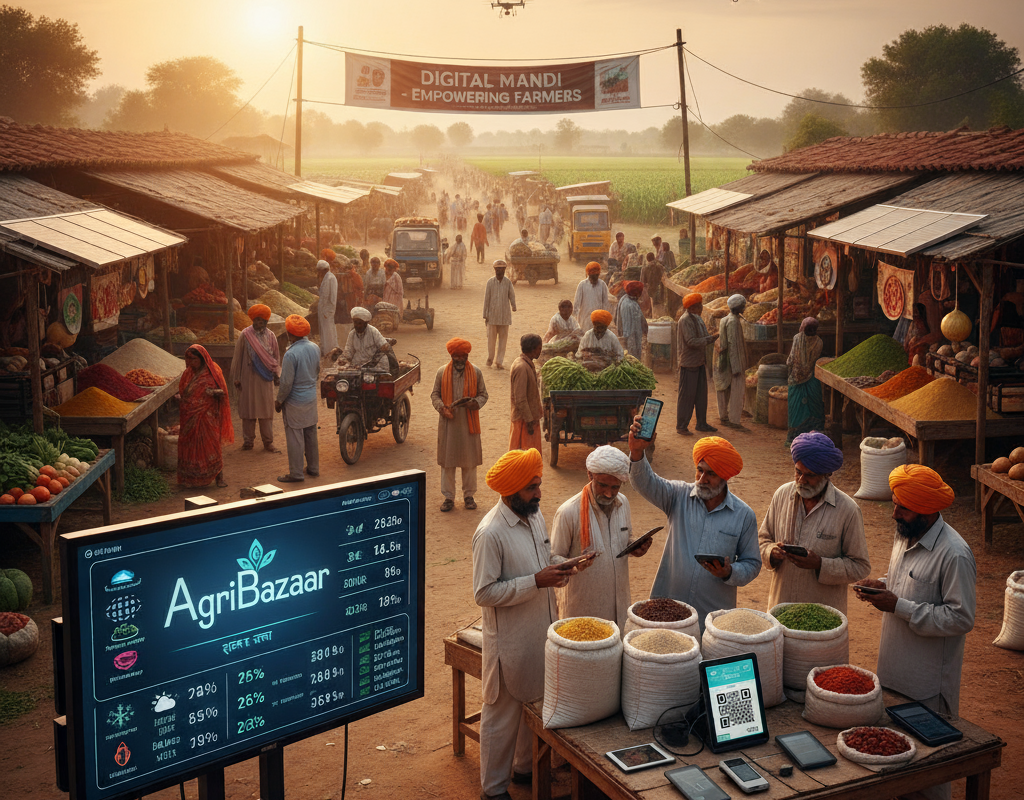
As farmers gear up for the rabi season 2025, agribazaar plays a vital role in enabling smarter, more data-driven farming decisions. agribazaar provides real-time mandi prices, weather-based insights, quality testing, and secure trading through its digital marketplace. Farmers growing wheat, chana, mustard and barley can use the platform to access wider markets, compare prices across states, and sell directly to buyers, ensuring better transparency and higher realisation.
메타데이터
- post_id
- 8a1b3694b32f
- slug
- rabi-season-guide-2025-best-practices-for-wheat-chana-mustard-barley-8a1b3694b32f
- url
- https://medium.com/@agribazaar/rabi-season-guide-2025-best-practices-for-wheat-chana-mustard-barley-8a1b3694b32f
- canonical_url
- https://medium.com/@agribazaar/rabi-season-guide-2025-best-practices-for-wheat-chana-mustard-barley-8a1b3694b32f
- author_url
- https://medium.com/@agribazaar
- status
- ok
- fetched_at
- 2026-06-23 03:48:11