Traveling to Latvia: The Side Most Americans Don’t Hear About
When I was getting ready to travel to Latvia, my expectations were pretty straightforward. Charming streets in Riga. The Baltic Sea. A…
Traveling to Latvia: The Side Most Americans Don’t Hear About
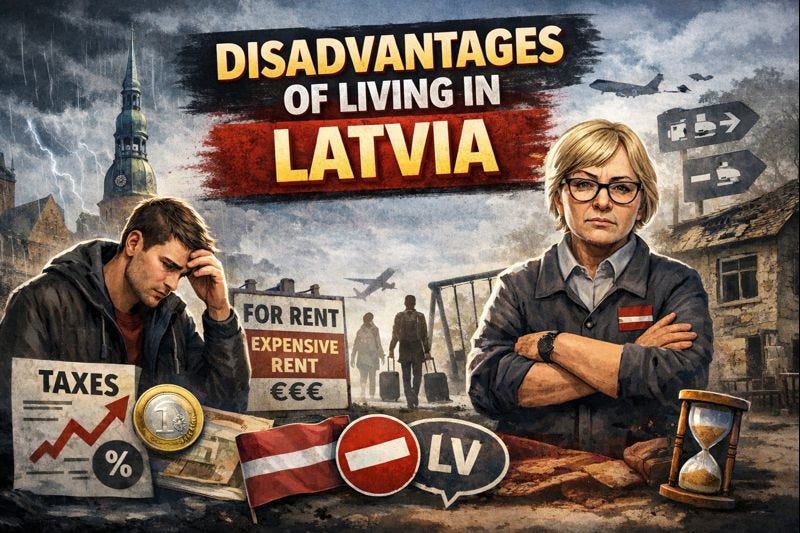
When I was getting ready to travel to Latvia, my expectations were pretty straightforward. Charming streets in Riga. The Baltic Sea. A calm, old-European vibe. Coffee with a view of the Old Town.
And yes — all of that exists. But there’s another side to the experience. One that doesn’t usually make it into travel guides. That’s the part I want to talk about. Honestly. Without postcards or tourist filters.
A Climate That Can Be a Shock for Americans
The first thing you notice is the humidity. Not the mild kind. The kind that sinks in.
Even when temperatures are technically above freezing, the cold feels sharper than you’d expect. In fall and winter, the sky can stay gray for weeks at a time. Rain feels constant. And the wind coming off the Baltic Sea can turn a simple walk into a test of patience.
If you’re used to sunshine, clear skies, or even dry cold, this kind of weather can wear you down. Not just physically — mentally too.
This isn’t the cozy, Instagram-friendly version of Northern Europe. It’s a damp, persistent cold that slowly drains your energy.
Housing Prices That Don’t Match Expectations
Another surprise for many visitors is housing — especially if you’re staying longer than a few days.
In Riga and nearby areas, rent prices are high compared to what you might expect for the quality. Many apartments are older, with poor insulation and unreliable heating.
The irony is simple: you pay a lot, and you’re still cold in winter.
If you’re used to modern apartments, good heating, and clear standards of comfort, this can feel frustrating — even short-term.
Buying property? For locals, it’s often out of reach. For foreigners, it’s rarely straightforward.
High Taxes and Prices for Everyday Life
Latvia isn’t a cheap destination once you’re past the tourist highlights.
Sales tax is high. Services add up quickly. And while this matters less on a short trip, it becomes noticeable if you stay longer.
At times, it feels like you’re paying prices closer to Western Europe — without always getting the same level of service or convenience Americans are used to.
A Country Quietly Losing People
This is something you notice if you look beyond the main sights.
Many young Latvians leave — for Germany, the UK, or Scandinavia. Outside Riga, some towns feel empty. Closed shops. Quiet streets. Long stretches of stillness.
Even Riga itself can feel surprisingly quiet for a capital city. Beautiful, yes — but much calmer than most Americans expect.
The Language Barrier Is Real
Yes, many people understand Russian. Yes, younger people often speak English.
But Latvian is the key language — especially in official settings.
In government offices, public services, or anything bureaucratic, English isn’t always enough. And while people are usually polite, interactions can feel distant and formal.
It’s not hostility. It’s emotional distance.
If you’re used to friendly small talk and casual conversations with strangers, this can feel unusual.
A Slower Pace — Without the Customer-First Mindset
Americans notice this quickly.
Things move slowly. In cafés. In banks. In offices.
Customer service exists, but it’s not built around urgency or friendliness. Sometimes it feels like you’re interrupting rather than being helped.
Some people call it “relaxed.” Others experience it as indifference.
It’s something to be aware of — especially if you’re used to efficiency and responsiveness.
Outside Riga, There’s Very Little to Do
This is where expectations matter most.
Outside the capital, Latvia becomes very quiet. Nature is beautiful — forests, lakes, coastline — but social life is limited.
Few events. Few nightlife options. Very little spontaneous activity.
Small towns are small in every sense: a couple of cafés, maybe a mall, and long quiet evenings.
If you’re used to constant entertainment, live music, or things being open late, boredom can arrive quickly.
Riga vs. The Rest of the Country
Riga carries almost everything: jobs, culture, nightlife, movement.
Step outside the city, and it feels like time slows down dramatically.
For a short visit, that can be charming. For a longer stay — especially in winter — it can feel isolating.
Polite People, Emotional Distance
Latvians are polite, respectful, and reserved.
Small talk isn’t common. Friendships take time. People keep to themselves.
If you’re used to casual conversations with strangers or easy social connections, this reserved style can feel cold — even if it isn’t meant to be.
Final Thoughts: A Beautiful Country, But Know What You’re Walking Into
Latvia is clean. Beautiful. Orderly. Quiet.
But visiting it isn’t the same as seeing it in photos.
A harsh climate. Higher costs than expected. A real language barrier. Quiet towns. Slow service. And a sense of emotional distance that takes time to understand.
For some travelers, that calm and simplicity is exactly the appeal.
For others — especially Americans used to warmth, openness, and convenience — it’s important to know the full picture before you go.
Latvia isn’t a postcard. It’s an experience.
And it’s best enjoyed when you know what to expect.
Video
[embed]
메타데이터
- post_id
- 8a1cc8ebb27a
- slug
- traveling-to-latvia-the-side-most-americans-dont-hear-about-8a1cc8ebb27a
- url
- https://medium.com/@alefcom1/traveling-to-latvia-the-side-most-americans-dont-hear-about-8a1cc8ebb27a
- canonical_url
- https://medium.com/@alefcom1/traveling-to-latvia-the-side-most-americans-dont-hear-about-8a1cc8ebb27a
- author_url
- https://medium.com/@alefcom1
- status
- ok
- fetched_at
- 2026-06-23 17:05:31