What Saddam’s Invasion of Kuwait Can Teach Canadians About Non-Zero Probabilities
A Neighbour’s Delusion: Why We Should Take Trump’s Canada Talk Seriously or at least not Dismiss it
What Saddam’s Invasion of Kuwait Can Teach Canadians About Non-Zero Probabilities
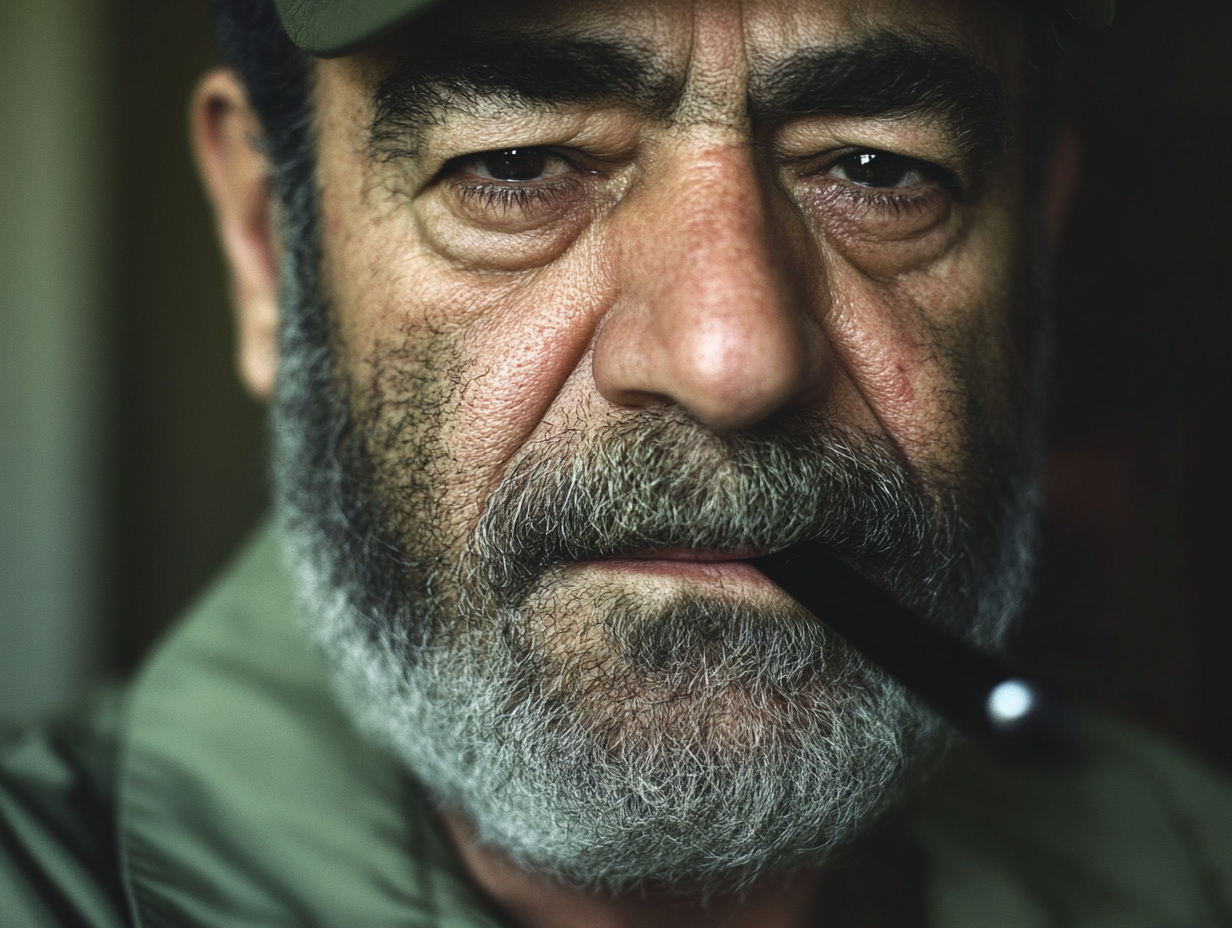
Even recent history is full of despots who defy borders
A Neighbour’s Delusion: Why We Should Take Trump’s Canada Talk Seriously or at least not Dismiss it
For much of history, nations have relied on a certain heuristic: neighbours with long-standing economic, cultural, and political ties do not invade one another. The bonds of commerce, common values, and shared history, we like to believe, serve as insulation against the harsh realities of power politics. But history tells a different story. In the summer of 1990, Kuwait never expected its belligerent yet familiar neighbor, Iraq, to launch an invasion. Saddam Hussein, once regarded as a strategic partner by Western governments, rationalized the annexation of Kuwait under pretexts ranging from economic grievances to historical claims. The world was shocked — until it wasn’t. Within hours, Iraq had subsumed the tiny Gulf state, and by then, the heuristic had been shattered.
Today, a strikingly similar complacency exists regarding Donald Trump’s repeated insinuations about annexing Canada. What began as offhand remarks — quips at rallies, rhetorical flourishes meant to rile up his base — has begun to take shape as something far more dangerous. Trump, who never hesitated to stretch the limits of executive power, often dismissed the sacrosanct nature of America’s geopolitical norms. In his worldview, borders are not immovable lines, but rather opportunities for conquest or negotiation. As a second Trump presidency looms as a real possibility, it is worth asking: Is Canada 100% immune to the fate of Kuwait? Is there a non-zero chance Trump might do what he says.
A History of Dismissal
The first time Trump mused about taking Canada, it was easy to dismiss. He had, after all, threatened to withdraw from NATO, suggested Mexico would pay for a wall, and floated the idea of purchasing Greenland from Denmark. Canada, with its seemingly unshakable bond to the United States, was thought to be in a different category altogether. However, Trump’s deep disdain for America’s neighbour to the north is well-documented. His presidency was marked by diplomatic skirmishes with Prime Minister Justin Trudeau, whom he openly mocked as “weak” and “dishonest.” Trump imposed tariffs on Canadian steel and aluminum, attempted to renegotiate NAFTA on humiliating terms, and even threatened trade wars that would devastate Canada’s economy.
And then, there were the comments. “Canada? That should be ours.” Variations of this phrase surfaced multiple times during his tenure, often met with laughter or disbelief. But why, exactly, should such statements be taken lightly? Did Kuwait expect Saddam’s claim that it was historically part of Iraq to materialize into tanks rolling through its capital? When autocrats — or aspiring autocrats — test the limits of discourse, history warns us to pay attention.
The Logic of Annexation
If Trump were to pursue an expansionist vision, Canada would be an obvious target. It is vast, rich in natural resources, and sparsely populated. Its economy is deeply intertwined with the United States, making it vulnerable to economic coercion. Politically, a U.S. claim over Canada could be framed in ways that resonate with Trump’s brand of nationalism: that America has a “right” to the land, that Canadians would be “better off” under U.S. governance, that economic and security concerns necessitate integration. Some of these very arguments were used by Saddam in 1990 when he justified his invasion of Kuwait.
The Trumpian playbook relies on pushing past traditional boundaries of acceptability and normalizing radical ideas through repetition. What begins as an offhand remark metastasizes into policy discussions, trial balloons, and, eventually, executive action. If Trump were to be re-elected, the political apparatus of a second administration — no longer bound by first-term caution — could pursue an aggressive agenda.
Would there be an outright military invasion? Unlikely. But coercion, economic warfare, hybrid political strategies? Entirely possible. A unilateral claim, backed by tariffs, visa restrictions, and legal maneuvers, could set the stage for a crisis. The question is not whether Canada is under immediate threat of tanks rolling across the border, but whether the architecture of its sovereignty can withstand the weight of an administration willing to break every norm to achieve its goals.
History’s Warning
Canada is not Kuwait, and Trump is not Saddam Hussein. But the belief that powerful nations do not absorb weaker ones through brute force — whether economic, legal, or military — is a luxury that history has repeatedly dismantled. Europe believed that economic integration would prevent war, yet Russia annexed Crimea in 2014 and invaded Ukraine in 2022. The world believed China and Hong Kong would coexist under “one country, two systems” until Beijing eroded those freedoms. The United States itself has a history of territorial expansion, from Texas to Hawaii, using methods ranging from conquest to economic leverage.
Trump’s words, whether said in jest or with intent, should not be brushed aside as mere showmanship. The world has seen what happens when leaders with unchecked power and revisionist ambitions exploit complacency. For Canadians, and for those who believe in the stability of democratic alliances, the time to take Trump’s statements seriously is now — before history rhymes once again.
메타데이터
- post_id
- 8a34af03bbc1
- slug
- what-saddams-invasion-of-kuwait-can-teach-canadians-about-non-zero-probabilities-8a34af03bbc1
- url
- https://medium.com/@d.incecushman/what-saddams-invasion-of-kuwait-can-teach-canadians-about-non-zero-probabilities-8a34af03bbc1
- canonical_url
- https://medium.com/@d.incecushman/what-saddams-invasion-of-kuwait-can-teach-canadians-about-non-zero-probabilities-8a34af03bbc1
- author_url
- https://medium.com/@d.incecushman
- status
- ok
- fetched_at
- 2026-07-21 00:19:15