The Meaning of Life? Solved!
It’s the ultimate philosophical question thinkers and cultures around the world have argued over for millennia. And still there is no…
The Meaning of Life? Solved!
It’s the ultimate philosophical question thinkers and cultures around the world have argued over for millennia. And still there is no consensus. But is the real and true answer staring us right in the face?
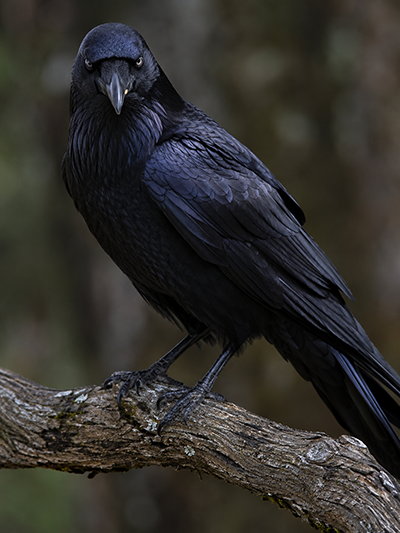
“What about me?”
The Meaning of Life is simple. It’s the Pursuit of Happiness. That’s it. This answer covers all bases. This is the prime and persistent impulse of ALL LIFE! It’s what ALL life forms are doing ALL the time.
There is no valid argument against it. It’s air tight. It couldn’t be any simpler. It couldn’t be any more obvious. It’s been hiding in plain sight. For millennia.
For we Americans, it’s right there in our own Declaration of Independence! But all of us have been blind to this phrase’s sweeping implications. As was even Thomas Jefferson, who jettisoned “property” from John Locke’s original trinity of essential rights of humans to become life, liberty and the pursuit of happiness in the Declaration.
Not Locke nor George Mason nor Jefferson ever claimed that pursuit of happiness is the meaning of life. Yet, this phrase actually connects the dots straight to that conclusion. There’s a life form. It’s free. Free to do what? To pursue happiness!
We live this “meaning” every day, every hour, every minute, every second. And so does every other life form on this planet or any other. All of us, whether human or animal or plant or fungi or algae or protozoan or bacteria, whether newly hatched chick or old buzzard, are always pursuing happiness. In their own peculiar way, of course. What makes a bacterium happy as a clam just won’t do for a horse.
Even when we are sleeping, we are simply recharging for the next round of pursuing happiness.
OK, you may be thinking we’re taking some liberties with the word “happiness.” Can a bacterium really be “happy?” Of course it can. Happiness is just another word for flourishing, feeling good, feeling satiated, feeling safe, feeling comfortable. The opposite feeling is suffering.
Buddha said the meaning of life is the pathway to avoid suffering. He’s wandering in the right direction; he’s identifying the tension between pain and pleasure. But then he takes a wrong turn. He’s fixated on the suffering, which he blames on desire and attachment, with the ultimate answer being escape into nothingness. Sure, all life flees from pain (or potential pain), but that is not the driving impulse of their life. The driving impulse is toward happiness.
Desire gets a bad rap in some philosophies. Over-the-top, reckless, greedy, evil desire is, indeed, a trap… for everyone involved. But desire is essential to the pursuit of happiness. The quest is fueled by desire. Most usually, that desire is easily satiated. And “attachment,” to family, to nest, to clan, to nation, to ideals, brings about some of our most meaningful interactions and experiences.
Meanwhile, day to day, there is little in the way of suffering. Instead, there is consistent winning the prize. We take most of this entirely for granted. Like breathing. Can you freely breathe? If so, consider that a HUGE win, every few seconds, because there are millions out there who this moment are struggling to do so.
When we do encounter difficulty, struggle and suffering, our desire seemingly flaunted, this too is fundamental to the quest and meaning. But, until the end, the ratio of winning vs losing is pretty remarkably on the side of winning.
Check it yourself. Look out your window to the world outside. How many life forms do you see suffering. The grass? The flowers? The hedge? The trees? The moss? The birds? The squirrels? The bees? The ants? The gnats? The earthworms? The fish in the creek? The lizards? The mushrooms? Your cat snoozing in the shade? The dog next door barking? The microbes chewing on that dead log? Most likely, NONE of them are suffering, or seem to be worried too much about… anything!
What are they all doing? They are all fixated on their own way of… pursuing happiness.
Look around at busy, busy, humans. What are they all doing? Pursuing happiness.
Same, same. Our pursuits are just a lot more complicated. But there’s not a shred of difference in the fundamental act.
Why doesn’t everyone know this? Why aren’t we all taught this? Why hasn’t this been known and taught for centuries, if not millennia?
There’s a simple answer to that.
Human hubris.
“Hubris” is stubborn, often ignorant, pride and arrogance. Of all things that ever lived, humans are the most infected with this malady.
In considering the “meaning of life,” humans have made the question too complicated… mostly by applying the idea strictly to themselves (as usual), while ignoring the rest of, you know… LIFE!
Still, some people have come tantalizingly close to the answer, albeit without quite hitting the bullseye.
Aristotle was sniffing around the formula. He claimed the meaning of life is “eudaimonia,” which basically means well-being, i.e. happiness. So close. But no cigar for you Ari.
At least Aristotle’s answer might apply to all life forms. Most of the answerers to the question of the meaning of “life” seem unaware that there is any other “life” other than humans. The actual subject they are considering is the meaning of human life, and human life only. Alas, they all fail at even that. The real and true Meaning of LIFE is going to include humans as well as all other life forms.
Still, over two thousand years later, this notion of happiness being essential to meaning still lingers. The Dalai Lama says, “The purpose of our lives is to be happy.” The meaning isn’t something you discover “out there,” it’s something you cultivate inside. This is another theory all about the humans. No other life need apply.
But this postulation about happiness is wrong. The meaning of life is not happiness itself. As we all know, happiness is a state, a phase, a mood; it’s the goal, sometimes elusive, but generally only if we’re hard to please. Still, it’s a transient state. Does life lose meaning when it’s not safe in this comfy state of happiness? Of course not. The true meaning resides in the incessant quest, the journey, the struggle, the process, the being alive and in action to try to achieve the perennial objective… of happiness. Failure to attain that goal does not negate the meaning of the quest in the least; it may actually increase the meaning. Some of the most “meaningful” experiences of any life come precisely in the times when that life is not in the state of happiness!
Epicurus also thought happiness is the meaning of life, but one should throttle back what one desires. Live simply. Steady your mind. Good advice. Perhaps he didn’t realize how well other life forms do exactly this. He would be stunned by how thoroughly we modern humans have ignored and disobeyed his tenets.
Pythagoras said that the meaning of life is to achieve spiritual “purification,” through reason, virtue and the pursuit of wisdom. Maybe owls, known for their “wisdom,” could participate in this? No, they have mice to catch.
Similarly, Confucius believed the meaning of life isn’t a single answer but a lifelong journey of self-improvement. Ralph Waldo Emerson echoed this idea. Yes, crocodiles and cockroaches and cockleburs are renowned for their diligence in that regard. See, what I mean? Taken out of the purely human context, this answer about “life” falls flat on its face.
Diogenes said the meaning of life is to achieve happiness by living virtuously in harmony with nature. Epictetus said that life’s purpose is living in accordance with virtue and reason. Cato combined the two by proclaiming that the meaning of life is to live in harmony with nature, virtue and reason. All great ideas. But, considering how unharmonious most people have been with virtue, reason and nature, humanity is, in sum, a sour and dissonant mob, a failed experiment.
Friedrich Schopenhauer, Albert Camus and many other cynics would readily agree, believing that life has no inherent meaning whatsoever. We are living a cosmic joke… shit happens and then you die! Schopenhauer even insisted there is no such thing as true happiness. I think we can agree that happiness can be fleeting, thus the eternal quest, but no real happiness? That seems the wildest of stretches.
William James took a different tact. He acknowledged that maybe life has no meaning, that the “rational mind” can’t prove meaning exists! But we humans can create our own meaning. Sure, there’s suffering and evil, but if we adjust our attitude we can pretend like there’s meaning. “Believe that life is worth living, and your very belief will help create that fact.” Not very inspiring. Or reassuring. Or accurate. James is another “deep thinker” whose survey of “life” in this regard was ultra shallow. Again, no other life forms need apply for consideration.
Bertrand Russell offered the complete opposite of what we are considering here. Meaning is NOT inherent, but is created by humans through their connections, pursuits and understanding of a Universe indifferent to us. Again, no animal or any other life form was consulted. And whether a Universe that so benevolently bequeathed us such a precious jewel of a planet to live upon is “indifferent,” is another philosophical question altogether.
Hegel believed there is no single, simple meaning of life but rather a dynamic, dialectical process of Spirit (Geist) realizing its own freedom and self-consciousness, moving from mere natural existence to rational understanding, culminating in the ethical life of the community and the realization of freedom within the State, where the individual finds his/her true purpose in universal reason and duty. Umm, no. I don’t think bacteria, the greatest grand parents of all of us, have the slightest notion of any of this.
Spinoza felt that the meaning of life is achieving happiness through reason, understanding oneself and the Universe as one unified, divine nature. I’m onboard with that awareness, but I fear, again, we are leaving the rest of life off the table. Then again, the pursuit of happiness of carnivores involves a focused understanding of unifying with their prey. Otherwise, I don’t think the vast majority of other life forms are much into thinking in terms of “divine nature.”
Viktor Frankl came oh so close. “What man actually needs is not a tensionless state but rather the striving and struggling for some goal worthy of him.” Right on dude… keep going and link this very same “striving and struggling” to all the rest of life. “What he needs is not the discharge of tension at all cost by the call of a potential meaning waiting to be fulfilled by him.” Oh no! There he spins, off the rails. See, he’s saying the meaning is the fulfillment of the striving and struggle, i.e. the happiness. We’re right back to Aristotle and the Dalai Lama. Nope. It’s the striving and struggle that constitutes the meaning.
Karl Popper had an unusual take. He didn’t offer a single, grand “meaning of life,” but suggests “all life is problem solving.” OK. That’s overstated. But for what purpose or goal is the “problem solving?” It’s happiness. So he’s clumsily on top of the issue. Sometimes problem solving is involved in the pursuit, the quest. But not always. Not even frequently. I guess you could say that being hungry or thirsty constitutes a “problem.” Still, most life forms don’t have to solve a new problem every day. They figured it out the first time… and every subsequent occasion they just saunter over to the food or water source or place of safety and imbibe. No problem at all. Nothing to “solve.” Just daily life.
Jacques Derrida claimed that meaning isn’t inherent but comes from differences between words and concepts, always deferred and never fully present. Huh? And this works exactly how… for life forms without words and concepts?
Michel Foucault proposed that meaning comes from actively shaping one’s existence, turning life into a self-authored “masterpiece. It’s the idea that one should live as a work of art. I actually love this idea as a pathway of self-examination, understanding and growth in human individuals, and even groups. But it’s not the meaning of life. Try helping a cactus understand this concept.
Hegel, Derrida and Foucault pose a question: should the meaning of life be simple or complex (like their answers)? Certainly life is very complex, even the simplest forms, in comparison to inanimate stuff. But that doesn’t mean the meaning of life itself must be complex. In fact, some basic property shared across the entire biosphere, should be fairly… basic.
Basic, which breath, hunger, thirst, moving toward comfort, away from discomfort or danger precisely are. Securing these life-sustaining components are all essentially the same primal urge. The meaning of life is universal, meaning that it likely applies to any and all life forms in the Universe. So the pursuit of happiness is elegantly simple, and, actually, astoundingly, profoundly, beautiful.
Think about it. What kind of reachable goal did the Universe establish for its crowning creation, life itself? Happiness! Aww, what a great Universe. I could just hug it.
True, there are no guarantees. Anything can happen in this “life” experiment. There is “viciousness” out there in the world. That’s just another being pursuing their own happiness. You may be eaten a minute after struggling to break through your shell. You may be born damaged. Even if you survive, there are no free rides. Everybody has to work for their happiness. And then it dissipates. And you start all over again. But unlike Sisyphus, it’s not any absurd, self-defeating, doomed undertaking; that struggle, that quest is the very meaning of life.
There are many other “answers” to the meaning of life. They all fall apart once you seriously apply that word “life.”
One answer that seems to pass this test, encompassing all life, is one of these. You’ll hear it said that the meaning of life is to procreate. True it is a fundamental impulse… for some individuals (not most ants and bees, etc.) … in short spurts… separated by long phases of distraction pursuing other desires. Alas, the vast majority of higher life forms never procreate. Their lives, or those of human individuals who never have children, are not meaningless. This ”answer” would also rob babies and children of having meaningful lives. So out with that notion.
Jesus seemed to suggest that love is the meaning of life. Or at least we like to think he might have said this (you can never be sure what Jesus thought or said). It sounds so lovely. If only it were true.
It’s not… by a long shot. And the reason why is even more amazing. Like the first atoms, the first elements, the first molecules, the first batches of molecules, the first stars, the first planets, the first galaxies, the first life, each and every new species were all “emergent properties” that emerged out of existing structures, so too is love an emergent property. Besides life itself, love is quite possibly the most stunning and profound emergent property that this self-creating Universe ever achieved. But it’s still a recent emergence… like in the past five hundred million years or so. Before that there was life on Earth but not love; before that there was not life. Show the evidence for “love” on the Moon. You won’t find an atom of love anywhere else in the solar system. There is no trace of love, much less some kind of pervasive love that powers the Universe.
Right here on this magical planet of life, evolution created love just as it created mouths and eyes and fins and tails and hearts and gills and lungs and livers and kidneys and bones and hair and brains. We humans inherited a planet filled with love. Love is not the meaning of life; it’s just a sublime adornment. It gives certain life forms a higher plane of happiness to pursue.
Then there’s those who would insist that the meaning of life is to serve “God.”
Please! Just stop.
You do realize that there is ZERO possibility that this “God” entity you have in your mind actually exists, don’t you? If you’re still believing such childish notions, that’s your problem. Of course you have every right to think the entirety of your meaning is based upon a figment. It’s dumb, but obviously conforming to what you are told to believe is your way of pursuing happiness. Go your way in peace, albeit unquestioning and clueless.
Humans, in fact, often have the most trouble of any life form at pursuing happiness. We have set up these convoluted, often incoherent, often stifling, systems, institutions, traditions, ideologies, religions, cutthroat business practices, rampant militarism, hyper individualism combined with truly soul-sucking materialism, that it’s no wonder we are rarely satiated. People with five dollars wish they had five hundred; people with five hundred wish they had five thousand; people with five hundred thousand dollars wish they had a million; millionaires so wish to have a billion; billionaires wish they were trillionaires, and the trillionaires truly seem like lost souls. It’s nonstop craving, never satisfied. No other life form is so selfish and stupid.
We should pause and watch birds. They know how to play the pursuit of happiness. They have some of the toughest challenges. Next time you are complaining about something inane, imagine being a bird clutching its branch for dear life out in a freezing hail storm. And then the next morning those that survive are right back to pecking through the dirt to find a morsel, grieving though they may be for their lost mate.
Or consider an ant. He or she lives in a colony with its brothers and sisters. The group is highly regimented and specialized. They are super loyal and gentle with each other. Any will gladly die for the colony. It’s not slavery. It’s patriotism. It’s what their species is built for. An ant removed from the group gets frantic and unhappy and suffers, won’t eat or drink and will soon die. Happiness for an ant is serving the greater organism. Selfishness hardly exists. If only humans could more consistently pull off that feat.
Or consider a plant, struggling to break from its own “egg,” and fighting up through hard ground to break free to the sun, its power source, thence to attune its daily activities patiently but actively tracking the golden orb’s every move and mood, while drinking in Mother Earth’s substance of life: water. The plant has simple needs. No one can say they are any happier than a healthy and growing plant.
There are as many ways to pursue happiness as there are life forms that ever existed. Each has its own way of pursuing happiness. And so meaning is inherent in all life forms. And, actually, all things. To exist is to have meaning. Every mote in this Universe has meaning. And no, we don’t create that meaning by our discovery. That’s just more human hubris. The qualitative difference is that only living things have the opportunity to intentionally do anything. And what they ALL choose to do is… pursue happiness.
The great news for us humans is that you don’t have to go searching for meaning. It’s not this mysterious thing. It’s not so complicated only a trained philosopher can understand it. It’s been with you all along, as for all other life forms. Your life, the world, the Universe, is the exact opposite of “meaningless” or “absurd.” You simply aren’t thinking right if you stubbornly refuse to acknowledge it’s all magnificently amazing. We are swimming in meaning. No one can escape the meaning. Meaning is your birthright. It’s infused in every cell of you.
Take the advice of these wise people who never quite figured out the meaning of life. Keep it simple. Carefully curate what you desire. Adjust your attitude. Focus on truth, virtue, reason, beauty. Serve others. Serve your community. It has been proven that helping others is one of the surest pathways to deeper and sustainable happiness. Think of your life as an art project. Try to improve yourself so that you become your best possible self. Be confident that you can become truly noble. Forgive. Count your blessings. Love one another.
All of us have tremendous upside in this regard; yet so few take on the challenge. What about you?
Certainly, by recognizing the “Pursuit of Happiness” as not just an “inalienable right” but the very “Meaning of Life,” humans should be very, very careful about so blithely trampling upon this right and the very meaning of being alive amongst themselves, or other life forms!
Happiness is the goal. The quest is the meaning. There is so much to be happy about just being alive. Every breath is the quest fulfilled. Every sip of water and nibble of bread is the quest fulfilled. Every beautiful sunrise or sunset, every soft rain, ever bunny running through the yard, every note of a songbird, every sway of your favorite tree, every cloud sailing by, every star in the deep dark night, every smile from a child, every backrub from your partner, every dip in the bathtub, every lovely old memory is the quest fulfilled. There is so much to learn and know and experience, as well as a deep responsibility for us humans to recognize and respect the deep and beautiful meanings of others.
Open your mind, your heart, your soul… follow the raven’s lead and … fly!
Of course, I wrote a song about it. Take a listen to my “The Meaning of Life” on YouTube and all the streaming services. It’s from my album “Head to Heart,” which is comprised of songs that explain much of my philosophy and worldview.
No Hate. No Violence. All Life is Sacred. The Universe is Magnificent & Beautiful. Love is the Way.
Copyright 2026, Rusty Reid
If you enjoyed or learned anything useful from this essay, please click here to receive a notice when I publish the next one. Thanks!
메타데이터
- post_id
- 8a45862a1cce
- slug
- the-meaning-of-life-solved-8a45862a1cce
- url
- https://medium.com/@rustyreid/the-meaning-of-life-solved-8a45862a1cce
- canonical_url
- https://medium.com/@rustyreid/the-meaning-of-life-solved-8a45862a1cce
- author_url
- https://medium.com/@rustyreid
- status
- ok
- fetched_at
- 2026-07-09 22:34:41