Why smallholder farmers are demanding omnichannel engagement
A shift in expectations, not just tools
Why smallholder farmers are demanding omnichannel engagement
A shift in expectations, not just tools
Author: Jitin Kohli Editor: John DeSarbo
Smallholder farmers are no longer passive recipients of product recommendations delivered through a single sales channel. Across emerging markets, they are becoming more informed, more selective and more demanding in how they evaluate agricultural inputs. They expect timely advice, consistent information and engagement that reflects their specific crops, conditions and constraints — delivered through a mix of physical and digital touchpoints.
This shift is not driven by technology alone. It is driven by rising decision complexity and risk. Climate variability, input cost inflation, water scarcity and increasing pressure to improve yields mean that every choice — from seed selection to crop protection timing — has real financial consequences. As a result, smallholders are seeking something deeper than products: they want trusted, always‑available agronomic guidance.
This is a structural change in farmer behavior, and it has significant implications for manufacturers of seeds, traits and crop protection products.
What’s changing in smallholder farmer behavior
Globally, farming behavior varies by geography and farm size, but one need is universal: access to reliable agronomic advice. What has changed is how farmers want to access that advice and how often they expect it.
There are an estimated 550 million smallholder farmers worldwide. In India alone, approximately 86% of farmers operate on less than 2 hectares of land, with nearly 70% farming less than 1hectare. Traditionally, these farmers relied on local retailers, distributors or infrequent field visits from sales representatives for information. That model is increasingly insufficient.
Smallholders today are:
- Adopting higher‑yielding, more input‑intensive crops
- Experimenting with new seed traits and crop protection solutions
- Facing greater variability in weather and pest pressure
- Operating under tight cost constraints, where mistakes are expensive
As a result, agronomic decisions have become more frequent, more technical and more high‑stakes. Farmers want reassurance that they are making the right choice — not just at purchase, but throughout the growing cycle.
Why this matters: advice has become as important as the product
For manufacturers, this shift fundamentally changes the basis of differentiation. Product performance still matters, but it is no longer enough on its own. Farmers increasingly judge value based on:
- The quality and relevance of guidance they receive
- The consistency of messaging across channels
- The ease with which they can access information when they need it
Traditional sales and distribution models were not designed for this level of ongoing engagement. In many smallholder markets, channel partners are stretched, agronomic capability is uneven and face‑to‑face coverage is limited. This has created a gap — one that manufacturers are now being pulled into filling.
Many input companies are already stepping beyond product sales, taking on greater responsibility for education, advisory support and demand generation. The challenge is doing this at scale, in markets that are fragmented, cost‑sensitive and difficult to reach.
Digital adoption is accelerating — but unevenly
Digital channels are becoming central to how smallholder farmers access information, even if adoption is not uniform across tools.
In India, for example, an estimated 70% of farmers now own smartphones and actively use platforms including YouTube and Facebook. Messaging apps such as WhatsApp are deeply embedded in daily life, making them powerful vehicles for content dissemination and peer learning.
At the same time, the use of dedicated agriculture applications remains relatively low. Studies have shown that only a small percentage of farmers use mobile apps for field‑level decision‑making, though adoption increases significantly among more educated farmers. This highlights an important insight: access alone does not drive usage — relevance and ease of use do.
Rather than thinking about digital as a collection of tools, it is more useful to view it through a few impact‑led themes.
Key digital themes shaping engagement
-
Mobile-first, low-friction engagement The most effective digital touchpoints meet farmers where they already are. Short videos, voice notes, vernacular content and messaging-based interactions outperform complex applications. The goal is not to digitize everything, but to remove friction from accessing advice.
-
Data-enabled, contextual insights Technologies such as IoT, remote sensing and analytics are increasingly used behind the scenes to generate insights on soil health, weather patterns and crop stress. Farmers may not interact directly with these tools, but they benefit from the recommendations that they power — such as optimal spray timing or risk alerts.
-
Trust through consistency and community Social media and messaging platforms have become critical for building trust. Farmers compare notes, share experiences and validate recommendations within their local networks. Consistent messaging across digital and physical channels is essential; contradictions quickly erode credibility.
-
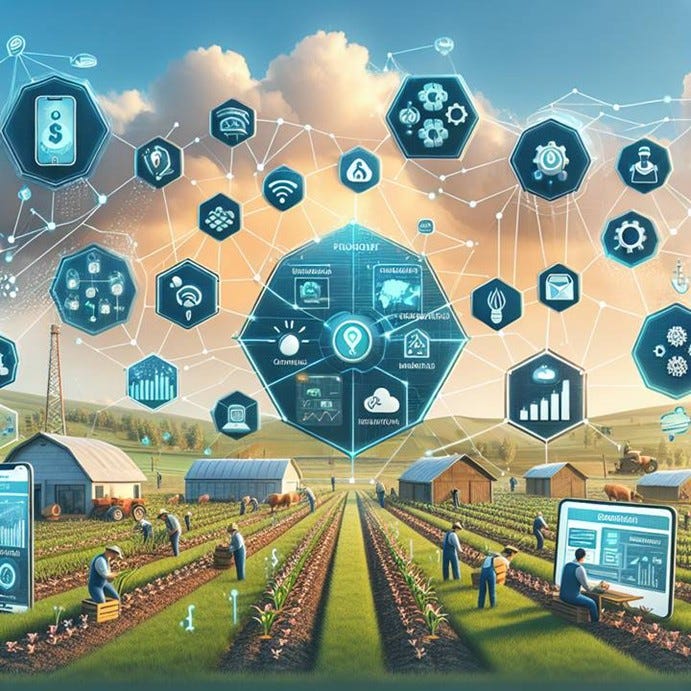
Integrated ecosystems, not standalone tools Digital payments, e‑commerce platforms and even blockchain-enabled traceability are starting to connect advice, transactions and outcomes. While still emerging, these ecosystems point toward a future where engagement, purchase and performance feedback are linked.
What input manufacturers need to do differently
This evolution in farmer expectations requires a shift from a product‑centric to an advisory‑led, omnichannel model. Three actions stand out:
-
Design omnichannel journeys, not isolated touchpoints Manufacturers need to orchestrate coherent experiences across field staff, retailers, call centers, social media and mobile channels. Each interaction should reinforce the same agronomic narrative and guide the farmer forward.
-
Invest in farmer-level data and insight generation Capturing and activating data — crop type, location, past purchases, engagement history — enables more relevant recommendations. Even simple segmentation can dramatically improve the usefulness of advice.
-
Build capability for scaled advisory support This may include digital agronomy platforms, partnerships with agri-tech providers or new roles focused on content and engagement rather than sales alone. The objective is to support decisions throughout the season, not just at the point of sale.
The cost of inaction — and the opportunity ahead
The digital transformation of smallholder agriculture is still in its early stages, but expectations are rising quickly. Farmers who experience timely, personalized and consistent advice will increasingly favor brands that provide it.
Manufacturers that fail to adapt risk being reduced to commodity suppliers that are dependent on price and promotions. Those that succeed in becoming trusted advisors can unlock deeper loyalty, better product adoption and more sustainable growth.
The future of smallholder engagement will not be won by those with the most products, but by those who deliver the most insight — at the right time, through the right channels and at scale.
This article reflects our personal views. They do not necessarily represent any official position of ZS.
메타데이터
- post_id
- 8a45d7633ecf
- slug
- why-smallholder-farmers-are-demanding-omnichannel-engagement-8a45d7633ecf
- url
- https://medium.com/zs-associates/why-smallholder-farmers-are-demanding-omnichannel-engagement-8a45d7633ecf
- canonical_url
- https://medium.com/zs-associates/why-smallholder-farmers-are-demanding-omnichannel-engagement-8a45d7633ecf
- author_url
- https://medium.com/@jitinkohli
- status
- ok
- fetched_at
- 2026-06-23 06:34:20