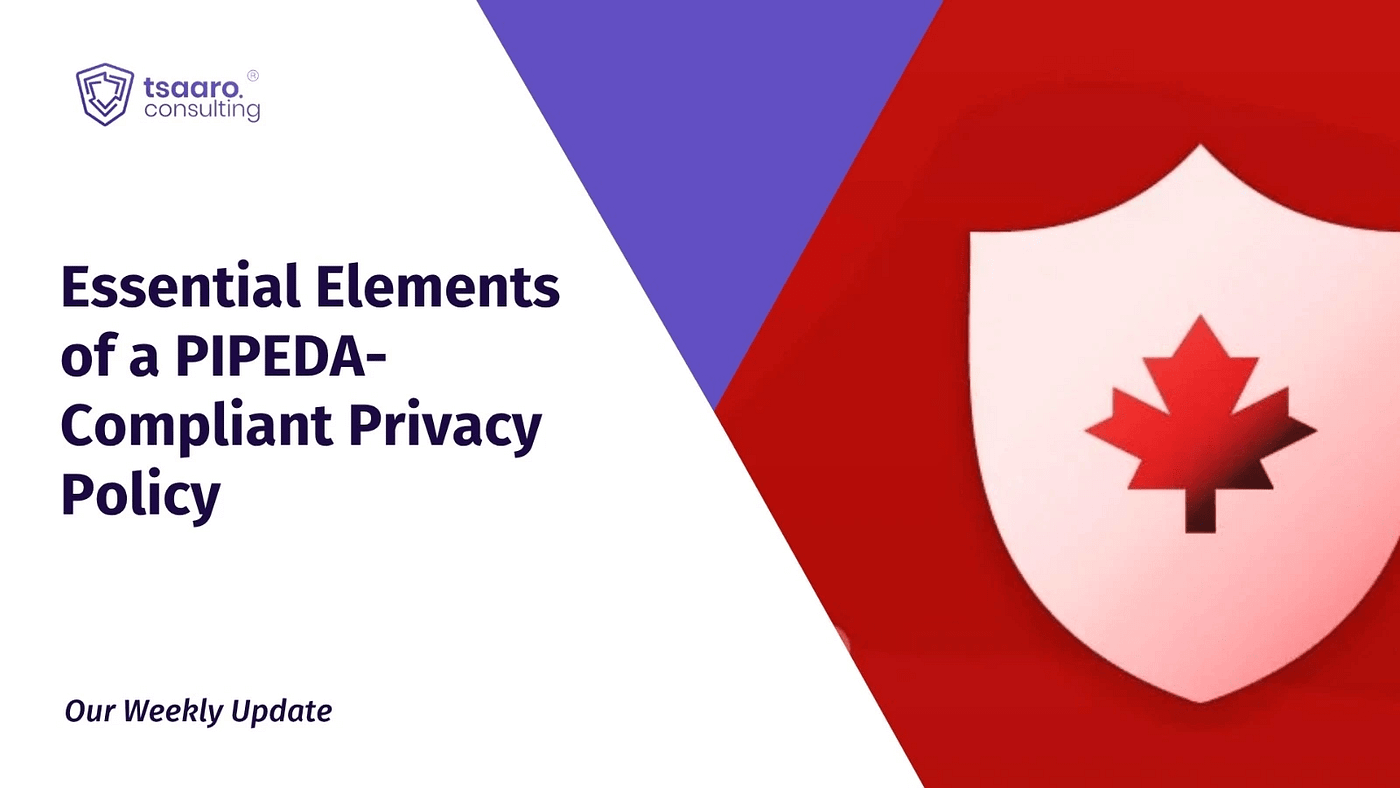
Essential Elements of a PIPEDA-Compliant Privacy Policy
Introduction
Essential Elements of a PIPEDA-Compliant Privacy Policy
Introduction
The Personal Information Protection and Electronic Documents Act, also known as PIPEDA, is the federal law in Canada that governs the collection and processing of personal data and information during business activities. This Act mirrors the Canadian Standards Association’s Model Code and is the foundation for assessing privacy compliance. The fact that PIPEDA is intended to maintain Canada’s data breach notification requirements in line with those of its trading partners, particularly the EU, is another crucial feature.
PIPEDA applies to all private sector organizations and aims to balance the privacy rights of individuals with the needs of organizations that collect and use their data. Under the PIPEDA Act, "personal information" refers to personal health information, cookie data, loan records, ID and address, etc. What is generally not considered personal information can include government information, a person’s business contact information, certain information about public servants, etc. One of the most essential requirements under the PIPEDA Act is obtaining meaningful consent, in which individuals are informed clearly about how and why their data is being collected and how it will be used or disclosed if saved by the organization. Fair Information Principles in PIPEDA
Accountability: PIPEDA’s Accountability principle states that every organisation in compliance with the Act is responsible for personal information under its control and must designate an individual to ensure compliance.
Identifying Purposes: Principle 2 delves into identifying the purposes for which the organisation collects user information. This principle mandates the documentation of purposes for which the personal data of the individual is stored in accordance with the Openness principle and the Individual Access principle.
Consent: Consent of the individual is required before the collection and use of personal data, except in cases where the government collects it to prevent fraud and law enforcement. Principle 3 requires the organisations to make reasonable efforts to ensure that the individual is informed before collecting personal data. Any authorised representative of the individual can also give consent.
Limiting Collection: Under the Limiting Collection principle, the amount and type of information collected should be strictly limited to what is necessary. No deceptive or intrusive methods can be used when gathering data, and it should be done fairly and legally.
Limiting Use, Disclosure, Retention:The limiting use principle provides that personal information should only be used for the disclosed identified purposes, and the companies should refrain from using personal information for purposes not disclosed to the user previously.
Accuracy: PIPEDA’s Accuracy principle requires that personal data that has been collected is up to date and accurate for the purpose it is intended to be used. The extent of accuracy and how the information is used should be cautiously handled, as organisations typically, when updating and merging user data, tend to make errors.
Safeguards: Personal information should always be protected with appropriate safeguards, with emphasis based on the importance of the information. Principle 7 provides for safeguards against unauthorised access, copying, modification, and disclosure.
Openness: Organisations and companies should maintain openness about their policies concerning the management of personal information; all users must be able to acquire information about the company’s policies and practices without reasonable effort.
Individual Access: The 9th fair information principle governs individual access and requires organisations to adopt policies and procedures to respond to requests for personal information. Request for personal details towards any staff member must be directed to the designated staff member responsible for processing it.
Challenging Compliance: The 10th principle, called challenging compliance, requires businesses to have policies and procedures to receive complaints and questions about how the organisation handles the data. Businesses are mandated to allow individuals to bring complaints and concerns to the designated individual responsible for compliance with PIPEDA.
Conclusion: Drafting a privacy policy can feel like a dry, legalistic chore. But here’s the thing, it’s so much more than just ticking a box. For any business operating in Canada, a PIPEDA-compliant privacy policy isn’t just about avoiding penalties, it is about establishing trust. By weaving in the 10 Fair Information Principles laid out by PIPEDA, you’re not just meeting legal obligations, you’re showing a deep commitment to responsible data handling. This commitment, in turn, becomes a cornerstone of your brand’s credibility. Here’s a quick check to get you started: 1.Assess your current policy 2. Designate a Privacy Officer 3. Make consent meaningful Need support? Find us at Essential Elements of a PIPEDA-Compliant Privacy Policy to ensure your policy is legally sound and future ready.
메타데이터
- post_id
- 8a4ce32f7a18
- slug
- essential-elements-of-a-pipeda-compliant-privacy-policy-8a4ce32f7a18
- url
- https://medium.com/@tsaaro-consulting/essential-elements-of-a-pipeda-compliant-privacy-policy-8a4ce32f7a18
- canonical_url
- https://medium.com/@tsaaro-consulting/essential-elements-of-a-pipeda-compliant-privacy-policy-8a4ce32f7a18
- author_url
- https://medium.com/@tsaaro-consulting
- status
- ok
- fetched_at
- 2026-07-13 06:23:13