168. Cheat Sheet for Decoding the Quantum Realm.
A Beginner’s Guide to Quantum Computing
168. Cheat Sheet for Decoding the Quantum Realm.
A Beginner’s Guide to Quantum Computing

Photo by Dynamic Wang on Unsplash
Diving into the Qubit
Welcome to the fascinating world of quantum computing! Here, we’ll delve into the fundamental building block: the qubit. Get ready to break free from the binary world of classical computers and explore the mind-bending possibilities of quantum mechanics.
The Binary Backbone: Classical Bits
Imagine a light switch. It can be either on (representing a 1) or off (representing a 0). This is the essence of a classical bit, the basic unit of information in traditional computers. A bit can hold only one value at a time, forming the foundation for storing and processing data.
Introducing the Qubit: The Quantum Superhero
Now, let’s introduce the game-changer: the qubit. Unlike its classical counterpart, a qubit can exist in a state of superposition. Think of it like a dimmer switch, capable of being partially on, partially off, or anywhere in between. In the quantum realm, a qubit can represent 0, 1, or a combination of both simultaneously. This “both at once” state is known as superposition.
Superposition: The Power of Exploration
Superposition unlocks a superpower for qubits. Imagine flipping a coin that lands on heads, tails, or a blurry combination of both! With multiple qubits in superposition, the possibilities explode. They can explore many calculations simultaneously, exponentially increasing processing power for specific problems.
The Probabilistic Dance: Ensembles and Measurement
But there’s a catch! While a qubit can be in superposition, when we measure it, we only get a single answer — 0 or 1. This act of measurement forces the qubit to “collapse” into a definite state. The outcome, however, is probabilistic. We can predict the likelihood of getting a 0 or 1 based on the qubit’s initial state in superposition.
Understanding Ensembles: Strength in Numbers
To get a more accurate picture, we don’t rely on a single qubit. Instead, we use ensembles — collections of many qubits all prepared in the same initial superposition. Measuring each qubit in the ensemble gives us a distribution of 0s and 1s. This distribution reflects the probabilities associated with the initial superposition.
By diving deeper into these concepts, you’ll gain a solid foundation for understanding how qubits process information and unlock the true potential of quantum computing!
Mastering the Quantum Gates
Welcome back to the quantum playground! Now that you’ve met the versatile qubit, it’s time to introduce the tools that make them dance: quantum gates.
The Quantum Orchestra: Conducting the Qubit Symphony
Imagine an orchestra where each instrument represents a qubit. To create beautiful music (or solve complex problems), we need a conductor — the quantum gate. Just like logic gates in classical computers (AND, OR, NOT), quantum gates are operations that manipulate qubits. They act on one or two qubits at a time, transforming their states and guiding them through a carefully designed choreography.
Common Gates: The Building Blocks of Quantum Circuits
Let’s meet some of the core instruments in the quantum orchestra:
Hadamard Gate: The Superposition Maestro
This gate takes a qubit in its definite state (0 or 1) and puts it in a state of equal superposition (both 0 and 1 with a 50% chance of finding either upon measurement). Think of it as a conductor raising their baton, directing the qubit to explore both possibilities simultaneously.
Pauli-X Gate: The Bit Flip Virtuoso
This gate is a single-qubit magician. It flips the state of a qubit — turning a 0 into a 1 and vice versa. Imagine a mischievous gremlin in the orchestra, playfully swapping the notes played by a qubit (its state).
CNOT Gate: The Entanglement Maestro
This powerful gate controls one qubit (the target) based on the state of another qubit (the control). If the control qubit is 1, the CNOT gate flips the target qubit. But if the control qubit is 0, the target remains unchanged. Think of it as two synchronized instruments — the control qubit sets the tempo, and the target qubit adjusts its melody accordingly. [Note: We’ll explore entanglement in more detail on Page 3]
Building Quantum Circuits: Composing the Quantum Symphony
Just like combining musical notes creates a symphony, arranging gates in a specific sequence forms a quantum circuit. These circuits are the programs that run on quantum computers, instructing the qubits on how to manipulate their states to solve a particular problem. The complexity of a circuit depends on the number of qubits involved and the desired outcome.
As you delve deeper into quantum gates, you’ll discover a vast library of operations, each with its unique role in the quantum computation symphony. From single-qubit rotations to multi-qubit entanglement, these gates unlock the true potential of qubits, allowing us to tackle problems that would take classical computers centuries to solve.
Unveiling Superposition and Entanglement
We’ve explored the power of qubits and the magic of quantum gates. Now, buckle up as we delve into the truly mind-bending phenomenon of entanglement — a cornerstone of quantum mechanics with far-reaching implications for quantum computing.
Spooky Action at a Distance: The Entanglement Enigma
Imagine flipping two coins, but instead of independent heads or tails, they’re forever linked. If one lands on heads, the other is guaranteed to be tails, no matter how far apart they are. This seemingly bizarre correlation is the essence of entanglement. Two qubits can become entangled, sharing a single quantum state regardless of their physical separation. Albert Einstein famously called it “spooky action at a distance,” highlighting its defiance of classical physics.
How Does Entanglement Work?
Think of entangled qubits as two synchronized dancers. Their movements are intrinsically linked — a pirouette by one is instantly mirrored by the other, even if they’re dancing on opposite sides of the stage. In the quantum realm, this connection transcends physical space. The qubits share a single wavefunction, a mathematical description of their combined probabilities. A change in the state of one entangled qubit instantaneously affects the state of the other, regardless of distance.
Harnessing the Power of Entanglement
Entanglement isn’t just a scientific curiosity; it holds immense potential for quantum computing. Here are some exciting applications:
Quantum Teleportation: Imagine teleporting information, not physical objects! Entanglement allows the transfer of quantum information from one location to another. While not a Star Trek-style beam-up, it has profound implications for secure communication.
Error Correction: Qubits are delicate creatures, prone to errors. Entanglement can be used to detect and correct errors in quantum computations, a crucial step for building reliable large-scale quantum computers.
Quantum Cryptography: Entanglement can create unbreakable codes, revolutionizing cybersecurity by ensuring messages can’t be intercepted without detection.
Visualizing the Qubit State: The Bloch Sphere
Understanding entanglement requires visualizing the state of a qubit. For a single qubit, the Bloch Sphere is a powerful tool. Imagine a sphere where the north pole represents |0>, the south pole represents |1>, and points in between represent superpositions of these states. The direction from the center of the sphere to a point on its surface defines the qubit’s state. Entangled qubits, however, share a more complex. mathematical description that goes beyond the Bloch Sphere.
As you delve deeper into entanglement, you’ll discover its profound implications for quantum computation. It’s a realm where the seemingly impossible becomes reality, paving the way for groundbreaking advancements in various fields.
Exploring Quantum Algorithms: Cracking the Code of Complexity
We’ve unveiled the wonders of qubits, mastered the art of quantum gates, and explored the mind-bending world of entanglement. Now, let’s dive into the heart of quantum computation: quantum algorithms! These are the special instructions that harness the unique properties of qubits to solve problems that would bring even the mightiest classical computers to their knees.
Beyond Classical Limits: The Power of Quantum Parallelism
Imagine searching a maze. A classical computer would explore each path one by one, a slow and tedious process. But a quantum computer, with its qubits in superposition, can explore many paths simultaneously. This ability, known as quantum parallelism, allows quantum algorithms to tackle problems that would take classical computers an exponential amount of time.
Famous Examples: Redefining What’s Possible
The world of quantum algorithms is brimming with exciting possibilities. Here are two groundbreaking examples:
Shor’s Algorithm: Cracking the Encryption Code
This powerful algorithm, developed by Peter Shor, poses a significant threat to modern encryption methods. It can efficiently factor large numbers, a task that underpins the security of many widely used cryptographic systems. While not yet a reality, a functional Shor’s algorithm could revolutionize online security, necessitating the development of new, quantum-resistant encryption methods.
Grover’s Algorithm: The Speedy Searcher
Imagine searching a phonebook with millions of entries. A classical computer would need to check each name one by one. But Grover’s Algorithm offers a significant speedup. It utilizes superposition to explore the search space more efficiently, significantly reducing the average time it takes to find the desired entry. This has applications in various fields, from drug discovery to financial modeling.
Finding the Right Tool for the Job: Not a Silver Bullet
It’s important to remember that quantum algorithms aren’t a magic solution for every problem. They excel at specific types of problems, particularly those involving large searches or complex factorizations. However, for many everyday tasks, classical computers remain perfectly suitable. The key lies in understanding the strengths and weaknesses of both approaches to leverage the right tool for the job.
Beyond these examples, a rich landscape of quantum algorithms is under development. From optimizing logistics to simulating complex molecules, these algorithms hold the promise of revolutionizing various fields. As quantum computing matures, we can expect even more groundbreaking applications to emerge, pushing the boundaries of what’s possible.
The Future Landscape of Quantum Computing: A Glimpse into the Quantum Frontier
We’ve embarked on a fascinating journey through the fundamentals of quantum computing. Now, let’s peer into the future and explore the exciting possibilities, challenges, and potential applications that lie ahead.
The Race for Quantum Supremacy: Breaking the Classical Barrier
One of the most anticipated milestones in quantum computing is achieving “quantum supremacy.” This refers to the point where a quantum computer can outperform a classical computer for a specific task. While not a universal benchmark, it signifies a crucial step forward, demonstrating the practical advantage of quantum computation. Researchers worldwide are actively engaged in this race, pushing the boundaries of hardware and software development to achieve this milestone.
Challenges and Opportunities: Building a Robust Quantum Ecosystem
The path to a fully functional quantum computer is paved with challenges. Here are some key hurdles to overcome:
Scalability: Building large-scale quantum computers with many interconnected qubits remains a significant challenge. Maintaining stability and coherence in these complex systems requires ongoing research and innovation.
Error Correction: Qubits are susceptible to errors, leading to inaccurate computations. Developing robust error correction techniques is crucial for ensuring the reliability of quantum calculations.
Software Development: Designing and implementing efficient quantum algorithms requires a new way of thinking compared to classical programming. New tools and languages are being developed to unleash the full potential of quantum hardware.
Despite these challenges, the potential rewards are immense. Overcoming these hurdles will pave the way for the:
Quantum Revolution: A paradigm shift in various fields. Quantum computing holds the potential to revolutionize fields like:
Materials Science: Simulating complex molecules to design new materials with superior properties.
Drug Discovery: Accelerating the development of life-saving drugs by simulating the behavior of molecules and chemical reactions.
Artificial Intelligence: Developing more powerful AI algorithms capable of tackling complex problems beyond the reach of classical computers.
Finance: Optimizing financial modeling and risk analysis.
The future of quantum computing is brimming with potential. By overcoming the technical challenges and fostering collaboration between researchers, engineers, and scientists, we can unlock a new era of innovation and discovery. As quantum computing evolves, it has the potential to redefine the way we approach problems and push the boundaries of what’s possible across various scientific and technological frontiers.
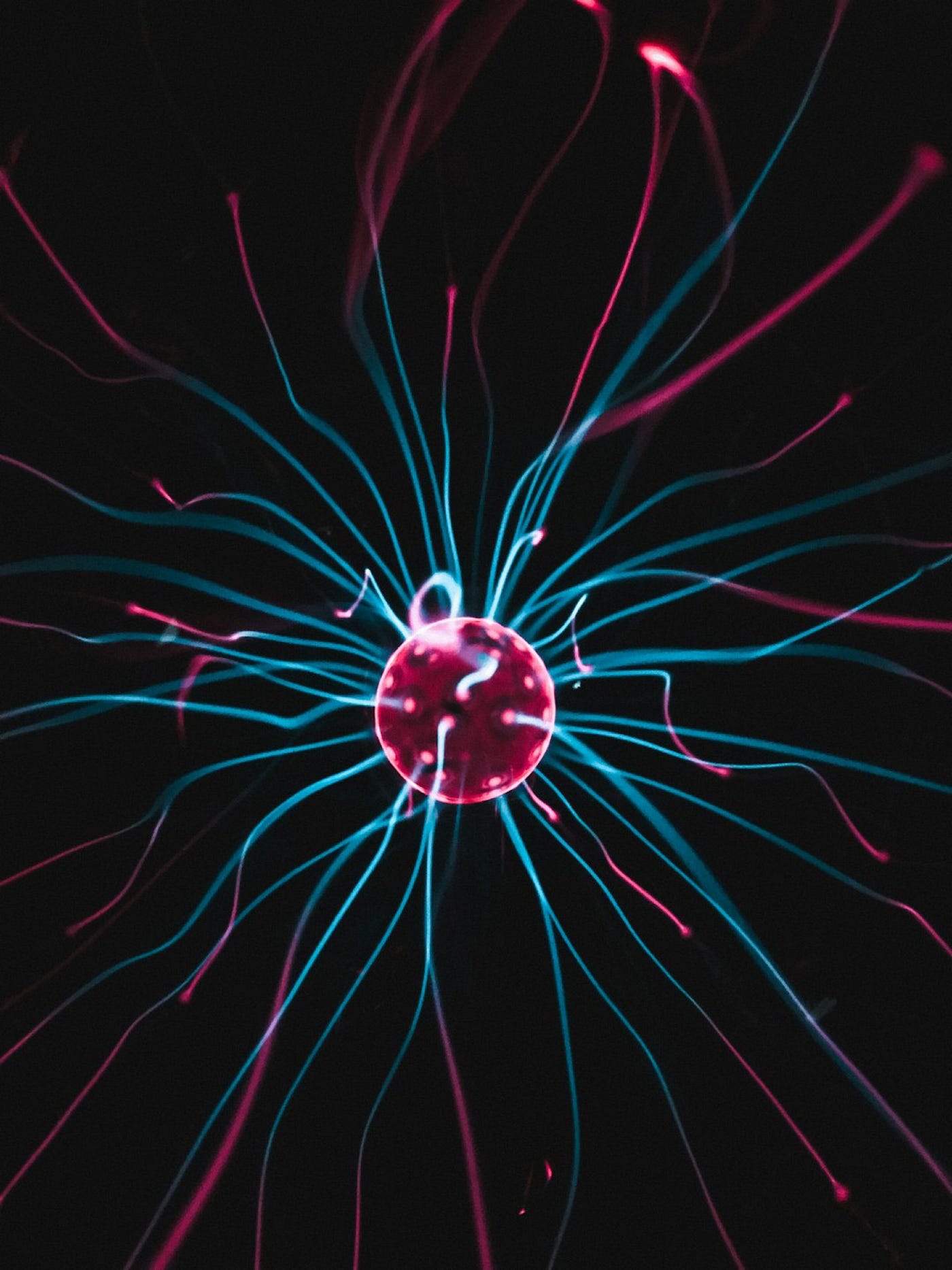
Photo by Karlis Reimanis on Unsplash
메타데이터
- post_id
- 8a56cd4fdcf3
- slug
- 169-cheat-sheet-for-decoding-the-quantum-realm-8a56cd4fdcf3
- url
- https://medium.com/@ilakk2023/169-cheat-sheet-for-decoding-the-quantum-realm-8a56cd4fdcf3
- canonical_url
- https://medium.com/@ilakk2023/169-cheat-sheet-for-decoding-the-quantum-realm-8a56cd4fdcf3
- author_url
- https://medium.com/@ilakk2023
- status
- ok
- fetched_at
- 2026-06-24 11:06:28