Most People Are Not Living Anymore. They Are Performing.
Social media did not just change our habits. It changed the way we experience reality itself.
Most People Are Not Living Anymore. They Are Performing.
Social media did not just change our habits. It changed the way we experience reality itself.

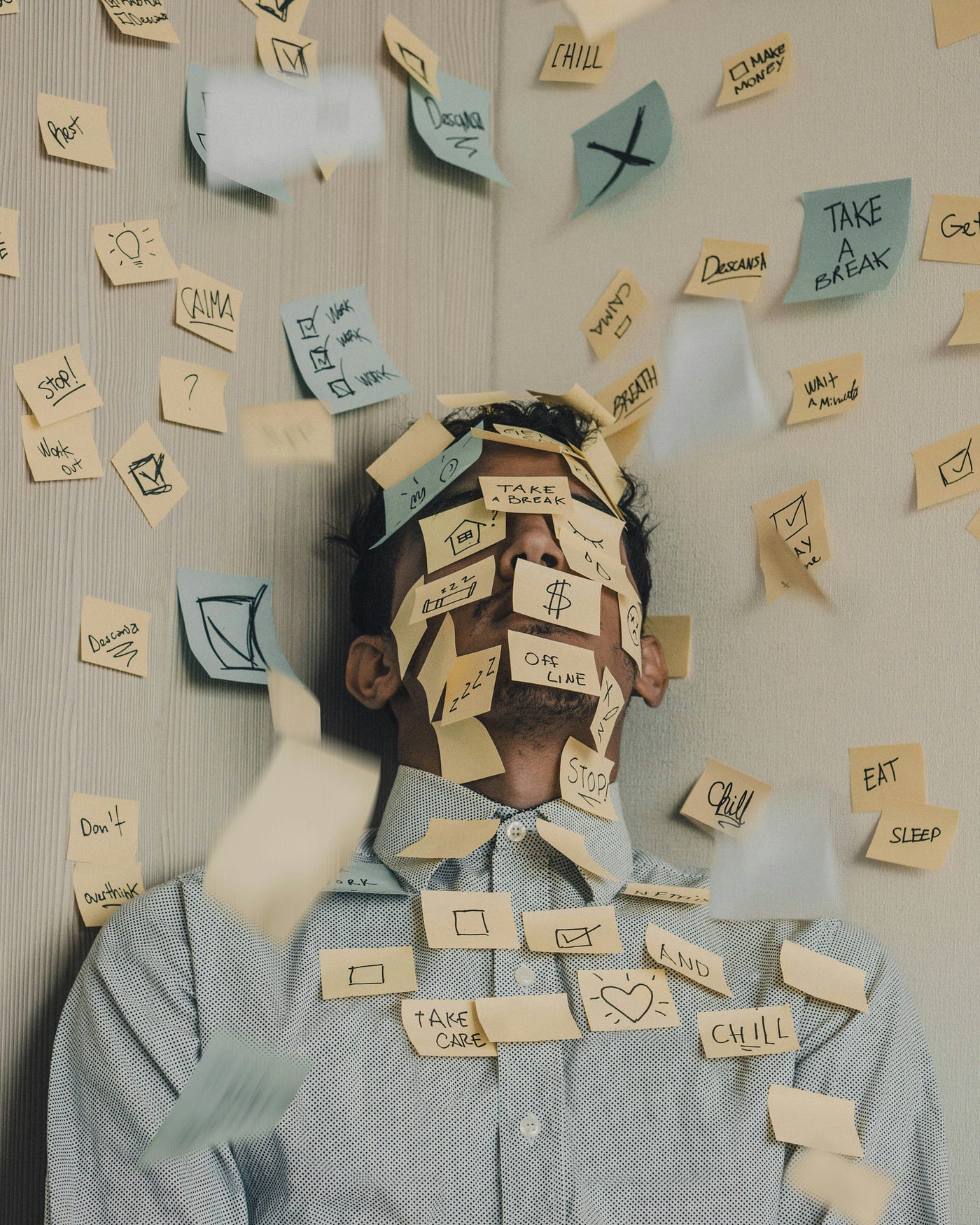
Photo by Reno Laithienne on Unsplash
I realized something was deeply wrong when I started experiencing moments only after imagining how they would look online.
A beautiful sunset was no longer just a sunset. It was a potential Instagram story.
A café was not just a café. It was lighting, aesthetics, angles, captions.
Even silence had started feeling incomplete unless it was witnessed by someone else.
At first, I thought this was normal. Everyone around me was doing the same thing. People documented workouts before feeling healthy, relationships before feeling connected, and “healing journeys” before actually healing.
But slowly, I started noticing something disturbing.
We are no longer living life directly.
We are performing it.
And the frightening part is that many of us do not even realize it anymore.
The French philosopher Jean Baudrillard warned decades ago that modern society would eventually replace reality with simulations of reality, something he called “hyperreality.” Instead of experiencing life itself, people would experience representations of life.
At that time, it sounded abstract.
Today, it feels painfully accurate.
We no longer travel only to feel wonder. We travel to produce evidence that wonder happened.
We no longer eat only to enjoy food. We eat to post pictures proving that our lives are interesting.
We no longer fall in love privately. We announce relationships publicly like brand collaborations.
Even our suffering has become performative.
People now cry while recording videos. They post emotional breakdowns online before they have even processed the emotion itself. Grief has become content. Vulnerability has become strategy. Authenticity itself has become a performance.
The internet did not just create influencers.
It turned ordinary people into unpaid actors in their own lives.
Sociologist Erving Goffman once described social interaction as a theatrical performance where people constantly manage how others perceive them. But social media amplified this behavior beyond anything he could have imagined.
Today, there is no backstage anymore.
We are always visible.
Always available.
Always curating.
Always performing.
And that constant performance is exhausting us psychologically.
A study published in the Journal of Social and Clinical Psychology found strong links between excessive social media usage and increased loneliness, anxiety, and depression.
This makes sense because performance creates distance from the self.
The more time people spend constructing a version of themselves for public approval, the less connected they become to who they actually are privately.
That is why so many people today feel emotionally numb even while appearing socially active.
We know how to present emotions.
But many of us no longer know how to fully experience them.
The strangest part is how deeply performance has entered ordinary life.
Productivity is now performative.
People announce “grind mode” online while being mentally burnt out offline.
Reading books has become aesthetic.
Working out has become aesthetic.
Journaling has become aesthetic.
Even self-care has become aesthetic.
Somewhere along the way, improvement stopped being personal and became public branding.
The philosopher Guy Debord described modern society as a “society of the spectacle,” where appearances become more important than reality itself. In such a society, people stop participating in life directly and instead become spectators of curated images.
That prediction now defines modern existence.
Most people no longer ask: “What do I genuinely enjoy?”
They ask: “What version of myself will people admire?”
That shift changes everything.
Because once identity becomes performance, authenticity becomes dangerous.
A person who is constantly performing can never fully relax. They are always monitoring themselves from an outside perspective.
How do I look?
How do I sound?
Will people approve?
Will this get attention?
Will this make me seem intelligent, attractive, spiritual, successful, deep, different?
The result is a generation that is hyper-visible but internally disconnected.
And social media platforms profit from this disconnection.
Research from Harvard University showed that talking about oneself activates the same reward systems in the brain associated with pleasure and dopamine release. Social media exploits this neurological vulnerability perfectly.
Every like becomes validation.
Every notification becomes stimulation.
Every post becomes another attempt to feel visible.
The problem is that visibility is not the same thing as connection.
And attention is not the same thing as meaning.
A person can receive thousands of likes and still feel profoundly alone.
In fact, constant visibility may be worsening loneliness.
A report by Cigna found that loneliness levels have risen dramatically among younger generations despite being more digitally connected than any generation before them.
This contradiction reveals something important.
Humans were never designed to maintain permanent performance.
We need spaces where we are unseen.
Where identity is not being marketed.
Where experiences are not converted into content.
Where emotions exist privately before becoming public language.
But modern digital culture discourages privacy because privacy produces no engagement.
Silence cannot be monetized.
Reflection cannot be monetized.
Stillness cannot be monetized.
Only performance can.
That is why many people now feel anxious when they are alone with their thoughts.
Without external stimulation, there is suddenly no audience left to perform for.
And that silence becomes terrifying.
Sometimes I wonder whether this is why modern burnout feels so emotionally confusing.
People are not only exhausted from working.
They are exhausted from constantly presenting themselves.
From maintaining identities.
From editing personalities.
From branding emotions.
From converting every experience into something consumable.
Even rebellion has become aesthetic now.
People market authenticity while carefully calculating how authentic they appear.
The irony is almost unbearable.
The internet promised self-expression.
Instead, it standardized personality.
People now dress similarly, speak similarly, think similarly, react similarly, and chase the same forms of visibility while calling it individuality.
Algorithms reward familiarity, not originality.
And slowly, people begin shaping themselves around what receives attention.
This is dangerous because human identity is fragile.
When external validation becomes the foundation of self-worth, criticism feels catastrophic and invisibility feels unbearable.
A study in Cyberpsychology, Behavior, and Social Networking found associations between social comparison on social media and lower self-esteem and mental well-being.
That is the hidden cost of performative living.
Your existence starts depending on audience response.
And audiences are unstable.
One day they admire you.
The next day they forget you.
No human nervous system was built for this cycle.
Sometimes I think the real tragedy is not that people are fake online.
The real tragedy is that many people no longer know who they are offline.
Private selves are disappearing.
People now struggle to enjoy moments without documenting them because undocumented experiences feel incomplete.
We have trained ourselves to see life from the perspective of spectators instead of participants.
And once life becomes performance, peace becomes almost impossible.
Because performance never ends.
There is always another update to post.
Another opinion to share.
Another identity to maintain.
Another version of yourself to construct.
Maybe that is why so many people feel emotionally detached from their own lives now.
They are too busy watching themselves live to actually live.
And maybe that is why silence feels unbearable for modern people.
Because without an audience, many of us no longer know who we are.
메타데이터
- post_id
- 8a58d83f2e97
- slug
- most-people-are-not-living-anymore-they-are-performing-8a58d83f2e97
- url
- https://medium.com/original-philosophy/most-people-are-not-living-anymore-they-are-performing-8a58d83f2e97
- canonical_url
- https://medium.com/original-philosophy/most-people-are-not-living-anymore-they-are-performing-8a58d83f2e97
- author_url
- https://medium.com/@priyapandey90897
- status
- ok
- fetched_at
- 2026-06-14 11:28:49