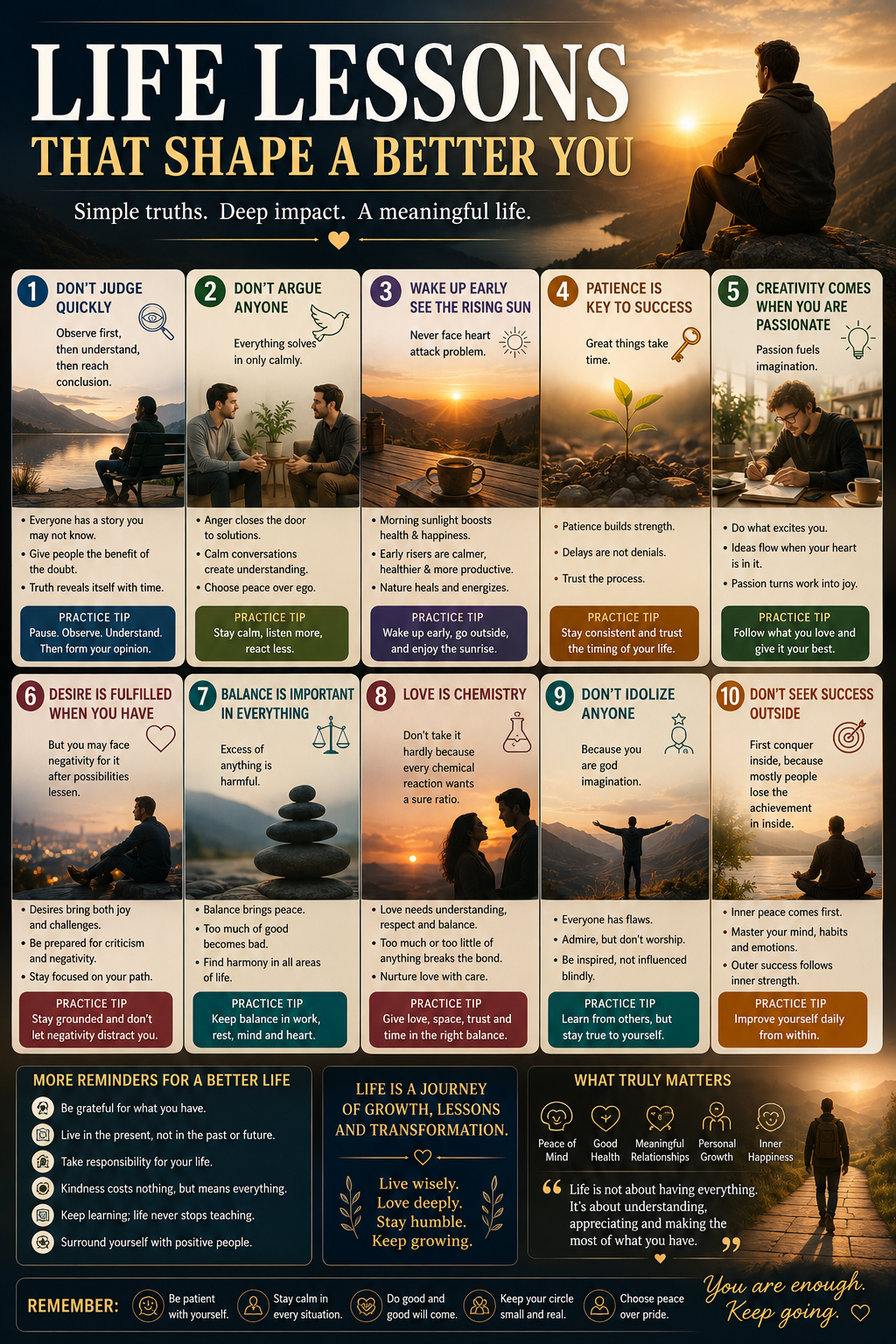
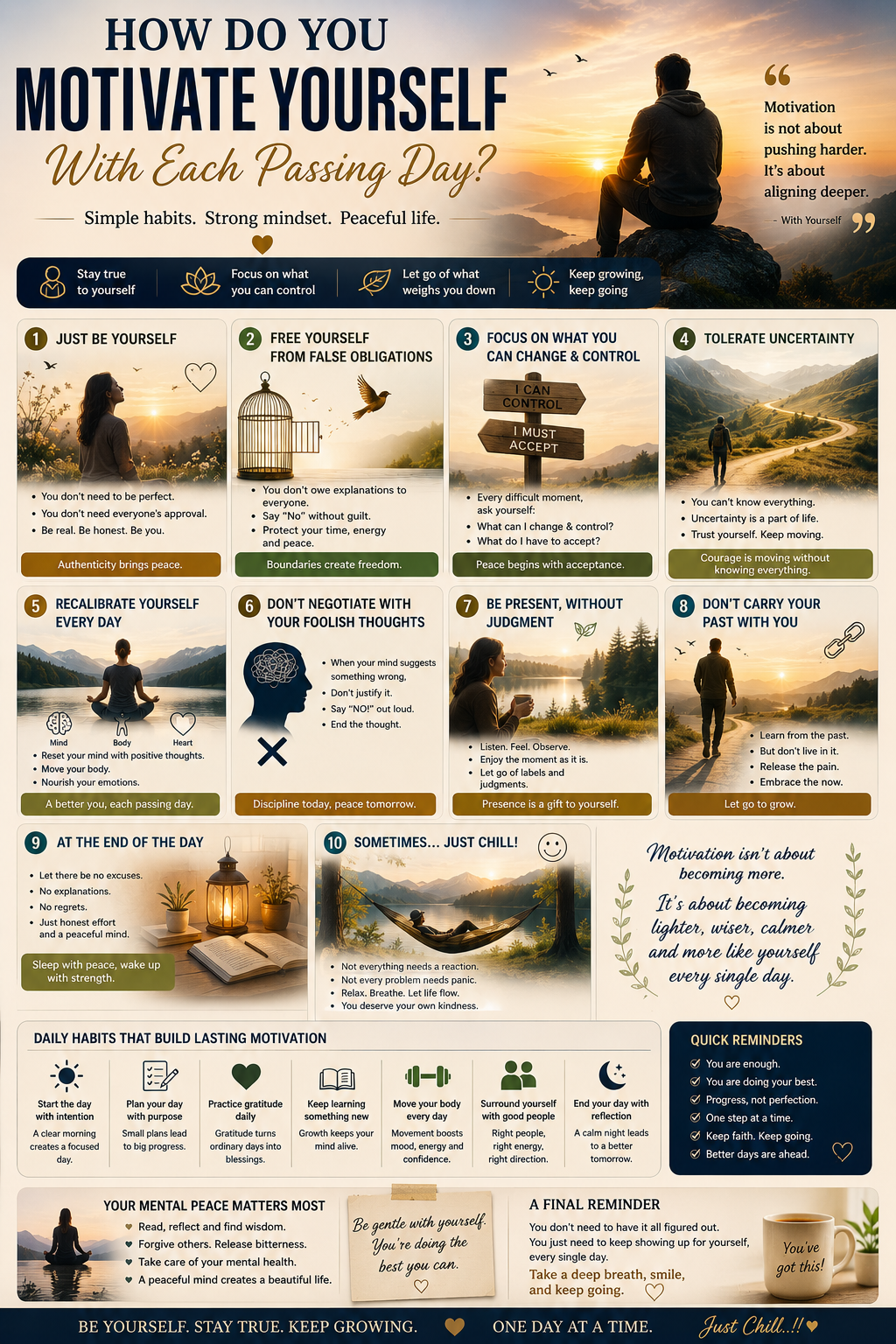
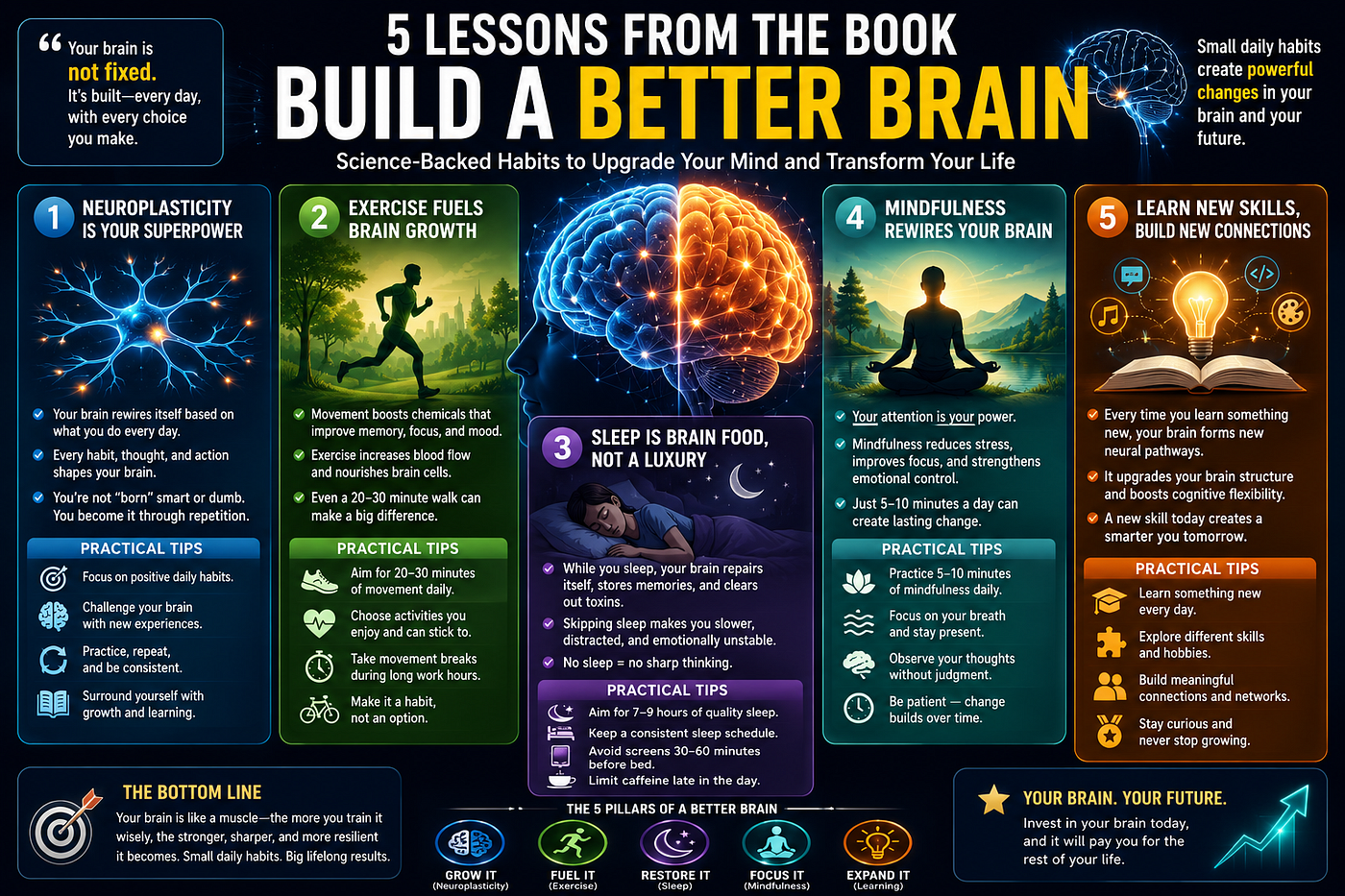
5 Powerful Ways to Stabilize Your Mood and Find Inner Peace
Life can be overwhelming.
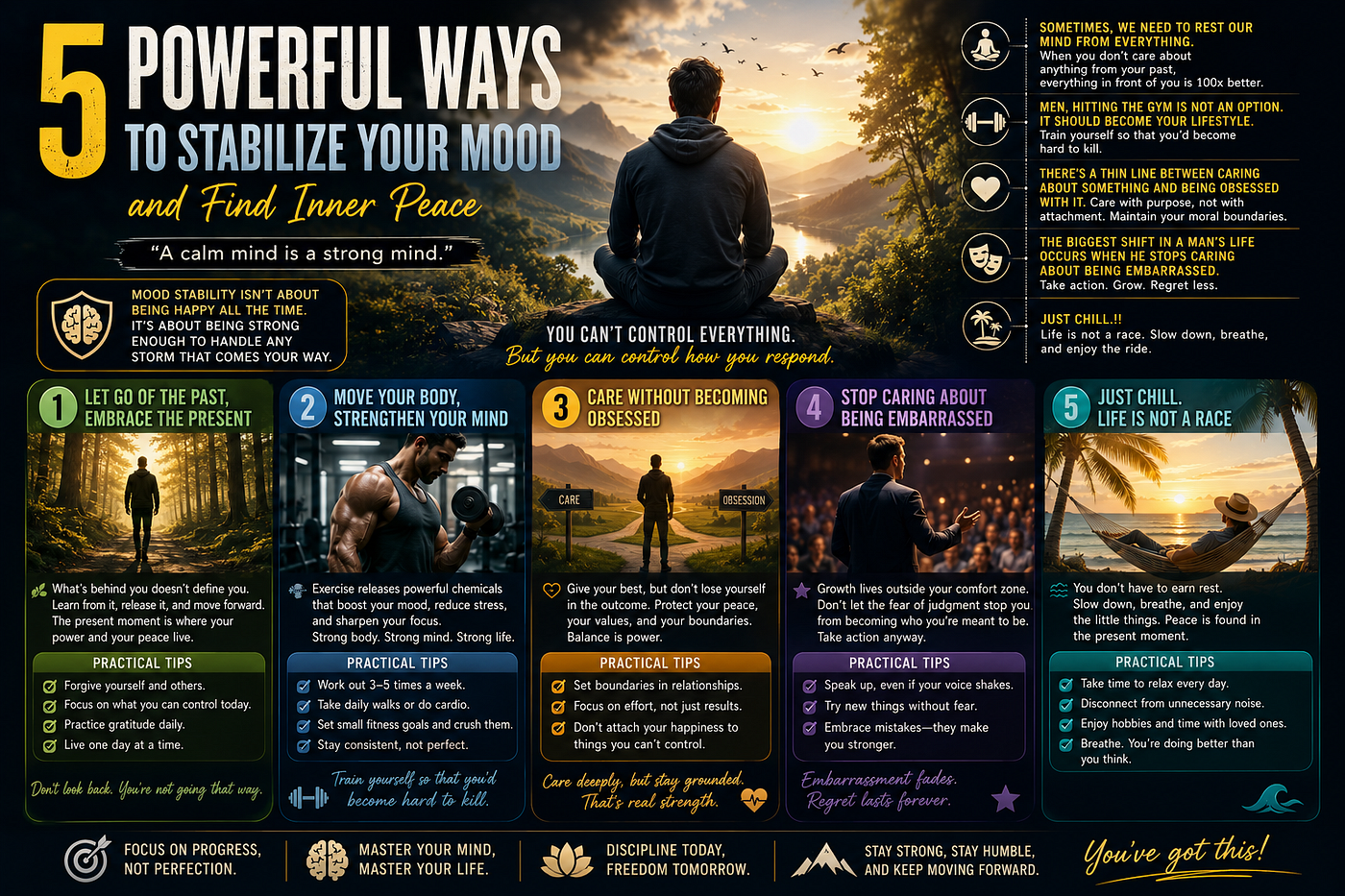
5 Powerful Ways to Stabilize Your Mood and Find Inner Peace
Life can be overwhelming.
Some days, everything seems to demand your attention — work, relationships, finances, responsibilities, expectations, and the endless noise of the modern world. Your mind races from one problem to the next, replaying past mistakes while worrying about future uncertainties.
When this happens, many people search for a quick fix.
But lasting emotional stability rarely comes from a single breakthrough. More often, it comes from simple habits and shifts in perspective that help you regain control of your mind, body, and emotions.
The truth is that mood isn’t something that simply happens to you.
It is something you can actively influence.
While nobody can feel happy every moment of every day, there are powerful practices that can help you become calmer, more resilient, and emotionally balanced.
Here are five life-changing ways to stabilize your mood and build a stronger, more peaceful mindset.
1. Learn to Let Go of What You Cannot Change
One of the biggest sources of emotional suffering is carrying the weight of the past.
Past mistakes.
Past failures.
Past heartbreaks.
Past embarrassments.
Past opportunities you wish you had taken.
Many people spend years mentally reliving moments that can never be changed.
The problem is that the mind cannot fully enjoy the present when it is constantly trapped in yesterday.
Imagine driving a car while staring only into the rearview mirror.
Eventually, you’re going to crash.
The same thing happens emotionally.
The more energy you spend fighting the past, the less energy you have to build your future.
This doesn’t mean ignoring your experiences.
It means learning from them and then moving forward.
When you stop carrying yesterday’s burdens, today’s opportunities become much easier to see.
As strange as it sounds, sometimes the greatest form of healing is simply allowing yourself to say:
“It happened. I learned from it. Now I’m moving on.”
Practical Tips
- Write down three things from your past that still bother you.
- Ask yourself what lesson each experience taught you.
- Focus on the lesson rather than the pain.
- Practice gratitude for what is working in your life today.
Remember:
You cannot rewrite the past, but you can write the next chapter.
2. Move Your Body, Strengthen Your Mind
Many people think exercise is only about looking better.
In reality, exercise is one of the most powerful mood-enhancing tools available.
When you exercise, your body releases chemicals that improve mental well-being, including:
- Endorphins
- Dopamine
- Serotonin
These chemicals help reduce stress, improve focus, and increase feelings of happiness.
Exercise also teaches something deeper:
It teaches resilience.
Every difficult workout reminds you that you can do hard things.
Every completed session builds confidence.
Every small improvement proves that growth is possible.
For men especially, physical training often becomes more than fitness.
It becomes a foundation of mental discipline.
Not because you want to become “hard to kill,” but because you want to become difficult to break.
A strong body doesn’t guarantee a strong mind.
But the habits required to build physical strength often build mental strength as well.
Practical Tips
You don’t need a perfect gym routine.
Start with:
- 30 minutes of walking daily
- Strength training 3–4 times per week
- Stretching each morning
- Regular outdoor activity
Consistency beats intensity.
A simple workout done regularly is more powerful than an extreme workout done occasionally.
3. Care Deeply Without Becoming Obsessed
There is a subtle but important difference between caring and obsessing.
Caring is healthy.
Obsession is exhausting.
When you care about something, you invest energy into it while maintaining balance.
When you become obsessed, your identity becomes attached to the outcome.
You stop enjoying the journey.
You begin measuring your worth by results.
Whether it’s work, business, relationships, fitness, or personal goals, obsession often creates anxiety because everything suddenly feels like a matter of life and death.
Emotionally healthy people understand a powerful principle:
Give your best effort, but don’t surrender your peace of mind to the outcome.
This applies especially to relationships.
Some people create emotional walls and believe it makes them appear strong or mysterious.
In reality, genuine connection requires openness.
It requires vulnerability.
It requires allowing people to know the real you.
Strength isn’t pretending you don’t care.
Strength is caring while remaining grounded.
Practical Tips
Ask yourself:
- Am I enjoying the process?
- Can I still be happy if this doesn’t go exactly as planned?
- Am I sacrificing my values for this goal?
If the answer is yes, it may be time to restore balance.
4. Stop Letting Fear of Embarrassment Control Your Life
One of the greatest emotional breakthroughs many people experience is realizing:
Nobody is thinking about you as much as you think they are.
People often avoid opportunities because they fear embarrassment.
They don’t speak up.
They don’t approach someone they admire.
They don’t start a business.
They don’t share their ideas.
They don’t try something new.
Why?
Because they are afraid of looking foolish.
Yet almost every successful person has been embarrassed countless times.
The difference is that they stopped allowing embarrassment to make decisions for them.
Think about it.
Most of the moments that feel mortifying today will barely matter in a year.
Many won’t matter next week.
Confidence doesn’t come from avoiding embarrassment.
Confidence comes from surviving it and realizing you’re still okay.
Practical Tips
Challenge yourself regularly:
- Ask the question.
- Share the idea.
- Try the new activity.
- Start the project.
The more you face discomfort, the less power it has over you.
Remember:
Growth lives on the other side of embarrassment.
5. Learn the Art of Simply Chilling Out
This may sound simple.
But it might be the most underrated skill in modern life.
Most people are constantly stimulated.
Their minds are always occupied.
Always planning.
Always worrying.
Always consuming information.
Always reacting.
Few people ever stop.
Few people ever sit quietly.
Few people ever allow themselves to simply exist.
Yet peace often appears when we stop forcing life and start experiencing it.
Sometimes the most productive thing you can do is:
- Take a walk.
- Watch a sunset.
- Listen to music.
- Read a book.
- Spend time with people you love.
- Sit quietly with your thoughts.
Not every moment needs optimization.
Not every day needs extraordinary achievement.
You are allowed to rest.
You are allowed to breathe.
You are allowed to enjoy life.
Practical Tips
Create a daily “peace ritual.”
For 15–30 minutes:
- Put away your phone.
- Stop multitasking.
- Do something calming and enjoyable.
Protect this time as seriously as any important meeting.
Final Thoughts
Mood stability isn’t about becoming emotionless.
It’s not about being happy all the time.
It’s about developing the ability to remain grounded even when life becomes difficult.
The most emotionally resilient people are not those who avoid stress.
They are those who know how to recover from it.
Let go of what you cannot change.
Move your body.
Care without obsession.
Stop fearing embarrassment.
And remember to simply breathe and enjoy the moment.
Because sometimes the greatest improvement you can make to your mental health isn’t another productivity hack, another self-help book, or another life strategy.
Sometimes it’s simply remembering that life was never meant to be lived in a constant state of tension.
Slow down. Trust yourself. Keep moving forward. And don’t forget to just chill.
If you found this post helpful, please consider:
- 👏 Giving it all 50 of your claps!
- 💬 Leaving a comment to share your thoughts.
- 🔍 Highlighting important text for easy reference.
- 🔔 Don’t forget to **subscribe** for more valuable insights!
메타데이터
- post_id
- 8a658cdded77
- slug
- 5-powerful-ways-to-stabilize-your-mood-and-find-inner-peace-8a658cdded77
- url
- https://medium.com/empowerment-odyssey-essays-on-growth-success/5-powerful-ways-to-stabilize-your-mood-and-find-inner-peace-8a658cdded77
- canonical_url
- https://medium.com/empowerment-odyssey-essays-on-growth-success/5-powerful-ways-to-stabilize-your-mood-and-find-inner-peace-8a658cdded77
- author_url
- https://medium.com/@complexitybeauty
- status
- ok
- fetched_at
- 2026-07-09 01:30:37