How Artificial Intelligence Can Amplify Bias — and What We Can Do About It
Artificial Intelligence is often described as neutral, objective, and even fairer than humans. But the truth is more complicated: AI…
How Artificial Intelligence Can Amplify Bias — and What We Can Do About It
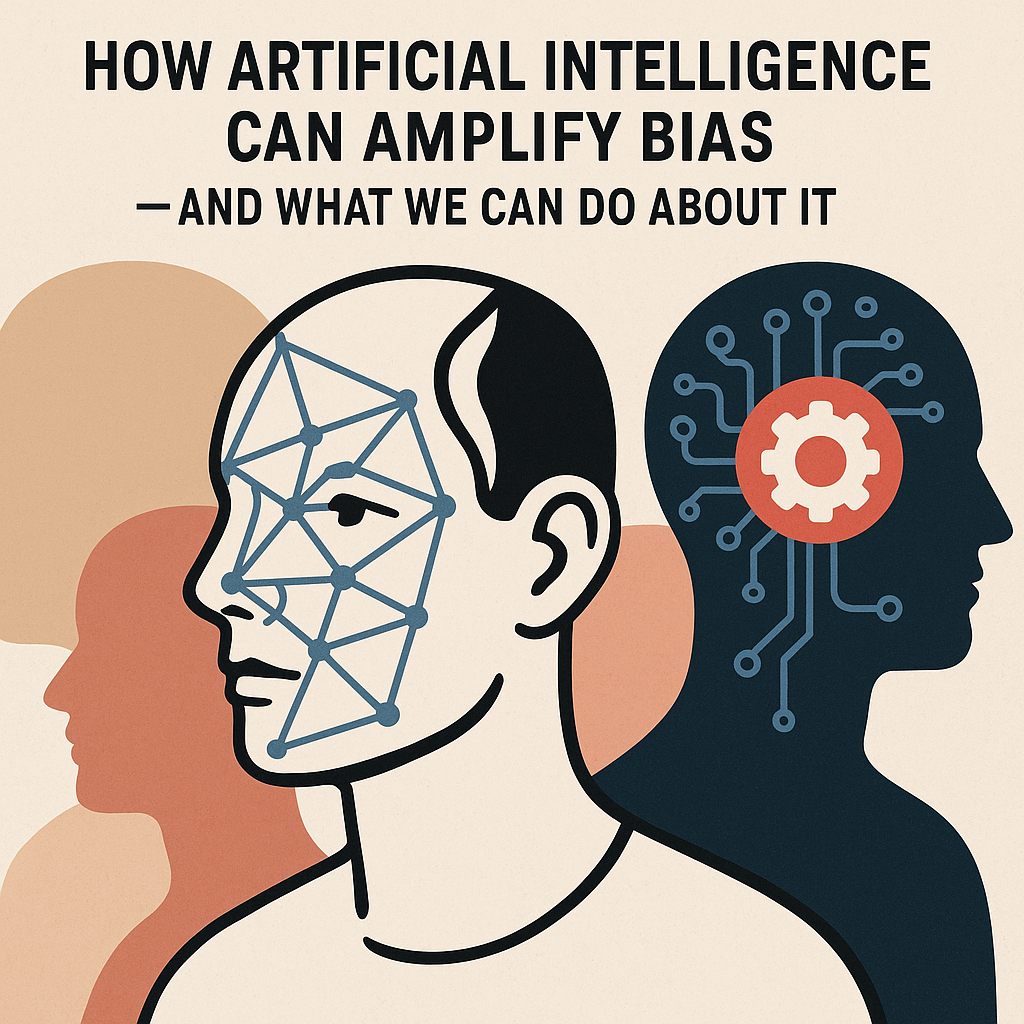
Artificial Intelligence is often described as neutral, objective, and even fairer than humans. But the truth is more complicated: AI systems can learn our biases just as easily as they learn to recognize faces or translate languages. And when those systems are used to make decisions that affect people’s lives — like who gets a job, a loan, or a parole — the consequences can be serious, and deeply unjust.
What is Algorithmic Bias?
Algorithmic bias occurs when an AI system produces results that are systematically prejudiced due to flawed assumptions in the machine learning process, biased training data, or a lack of contextual understanding. In other words, it can reinforce discrimination that already exists in society.
Some examples include:
- Facial recognition software that performs worse on darker skin tones, leading to false arrests and surveillance injustices
- Hiring algorithms that filter out candidates with non-Western names or that favor male-coded resumes
- Credit and loan systems that rate applicants based on zip codes or social media activity, disproportionately affecting marginalized communities
Where Does the Bias Come From?
AI systems don’t create bias from thin air. They learn from data. And that data reflects the world as it is — not necessarily the world as it should be.
- Historical data: If a company has hired mostly men in the past, its AI may learn to associate male language with “qualified.”
- Incomplete data: Underrepresentation of certain groups (racial, ethnic, gender, linguistic) can skew AI results.
- Design choices: Engineers may unintentionally embed assumptions or overlook the social impact of the decisions they automate.
Why It Matters Globally
Algorithmic bias doesn’t just affect wealthy countries. As AI spreads across borders, it often comes embedded with Western cultural norms, language prioritization, and infrastructure dependencies. This can silence or misrepresent people in the Global South, replicate colonial dynamics, or deepen inequality where regulation is weak.
For example:
- Healthcare algorithms trained on Western patients may underperform for populations in Asia or Africa
- Automated translation systems can distort meaning in underrepresented languages
- AI-powered surveillance can disproportionately target activist groups or ethnic minorities in countries with authoritarian leanings
What Can We Do?
- Diversify the teams building AI. People from different backgrounds bring awareness of different risks.
- Demand transparency. We need to know how decisions are being made and what data is being used.
- Create and enforce regulation. Ethical guidelines and legal standards must keep up with the speed of innovation.
- Involve the communities impacted. People affected by the systems should have a voice in how they’re built and used.
The Bottom Line
AI is not magic, and it’s not neutral. It reflects our world — which means it reflects our inequalities too. But if we understand its limits, and design with intention, we can build systems that challenge injustice instead of reinforcing it. AI can either widen the gap, or help close it. The choice is ours.
메타데이터
- post_id
- 8a83fdfe4bb4
- slug
- how-artificial-intelligence-can-amplify-bias-and-what-we-can-do-about-it-8a83fdfe4bb4
- url
- https://medium.com/@ignacio.martinezcanadell/how-artificial-intelligence-can-amplify-bias-and-what-we-can-do-about-it-8a83fdfe4bb4
- canonical_url
- https://medium.com/@ignacio.martinezcanadell/how-artificial-intelligence-can-amplify-bias-and-what-we-can-do-about-it-8a83fdfe4bb4
- author_url
- https://medium.com/@ignacio.martinezcanadell
- status
- ok
- fetched_at
- 2026-07-17 15:34:10




