Fred Merkle — September 23, 1908
The Greatest Plays You Never Saw, №4
Fred Merkle — September 23, 1908
The Greatest Plays You Never Saw, №4
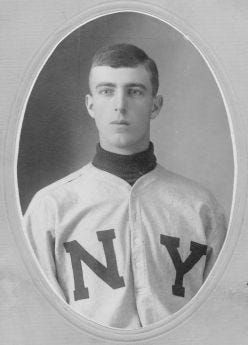
Fred Merkle, age 18 in 1907
This year’s series highlights the game’s greatest plays, unrecalled in the memory of any living fan. For me, great plays include the awful blunders that turned around a game, a season, or a world’s championship. In the seamless web of baseball’s history, Fred Snodgrass commiserates with Lonnie Johnson, Mickey Owen feels for umpire Bill Joyce, and Fred Merkle wraps a consoling arm around Bill Buckner.
Donald Hall wrote in an essay about that enduringly failed hero, The Mighty Casey: “Triumph’s pleasures are intense but brief; failure remains with us forever, a featherbed, a mothering nurturing common humanity.” We recall the missteps, each one of us. The memory stings, but it unites us with our would-be heroes.
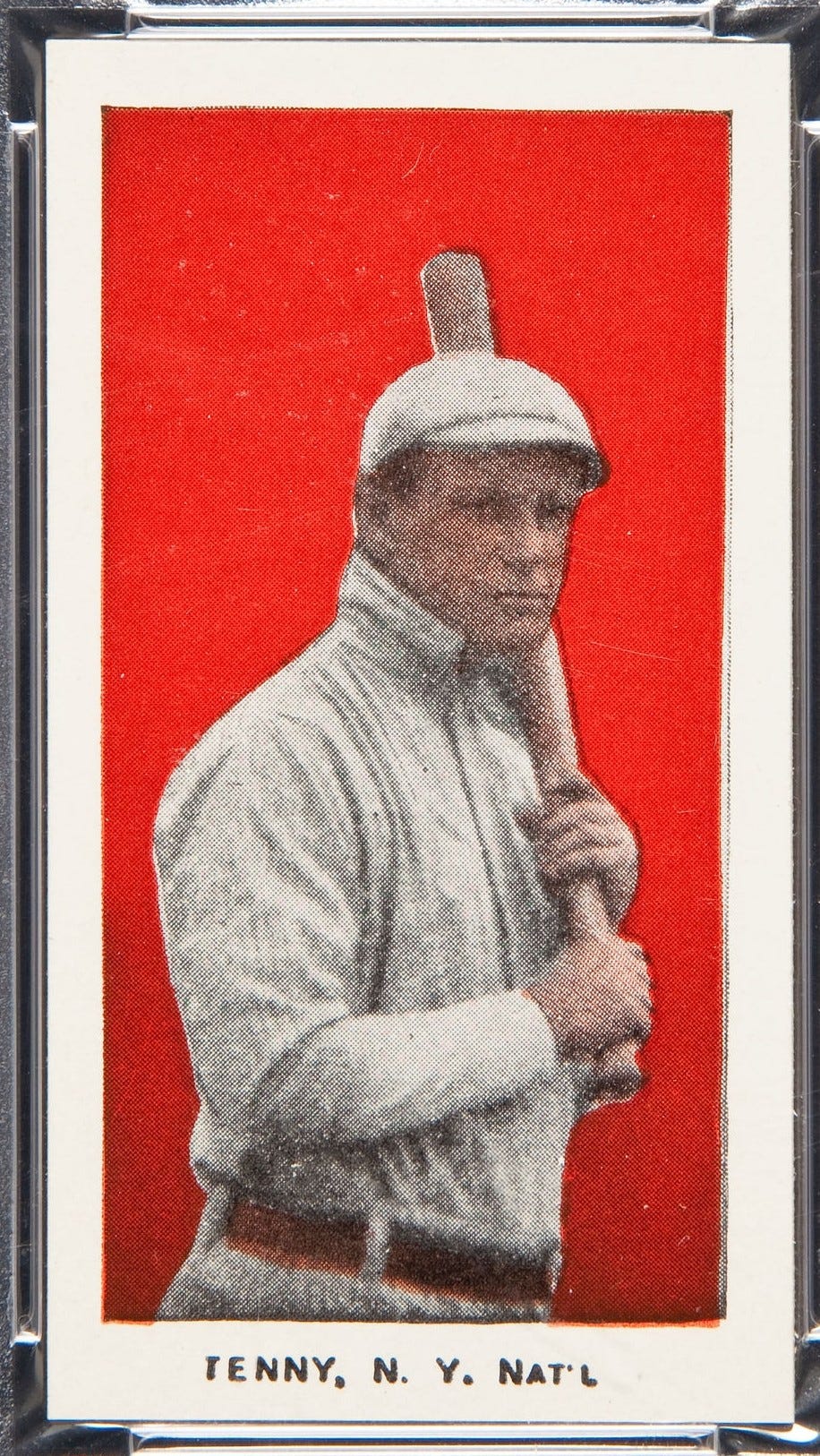
Fred Tenney, who had come to the Giants from Boston (NL).
Why was Merkle, the substitute first baseman, playing in a pennant race? “Here is something for the fans to consider,” wrote Bozeman Bulger in the Chicago Tribune two days before the ill-fated game. “Suppose Fred Tenney should be crippled. That would be a calamity, wouldn’t it? Yes, it would in one way, but it wouldn’t keep the Giants from winning the pennant. There is a young fellow on the bench named Fred Merkle who can fill that job better than nine tenths of the first basemen in the league.”
On the morning of September 23rd Tenney indeed came up lame. The teenaged Merkle, still shy of 100 at bats after two seasons as a reserve, was thrust into action.
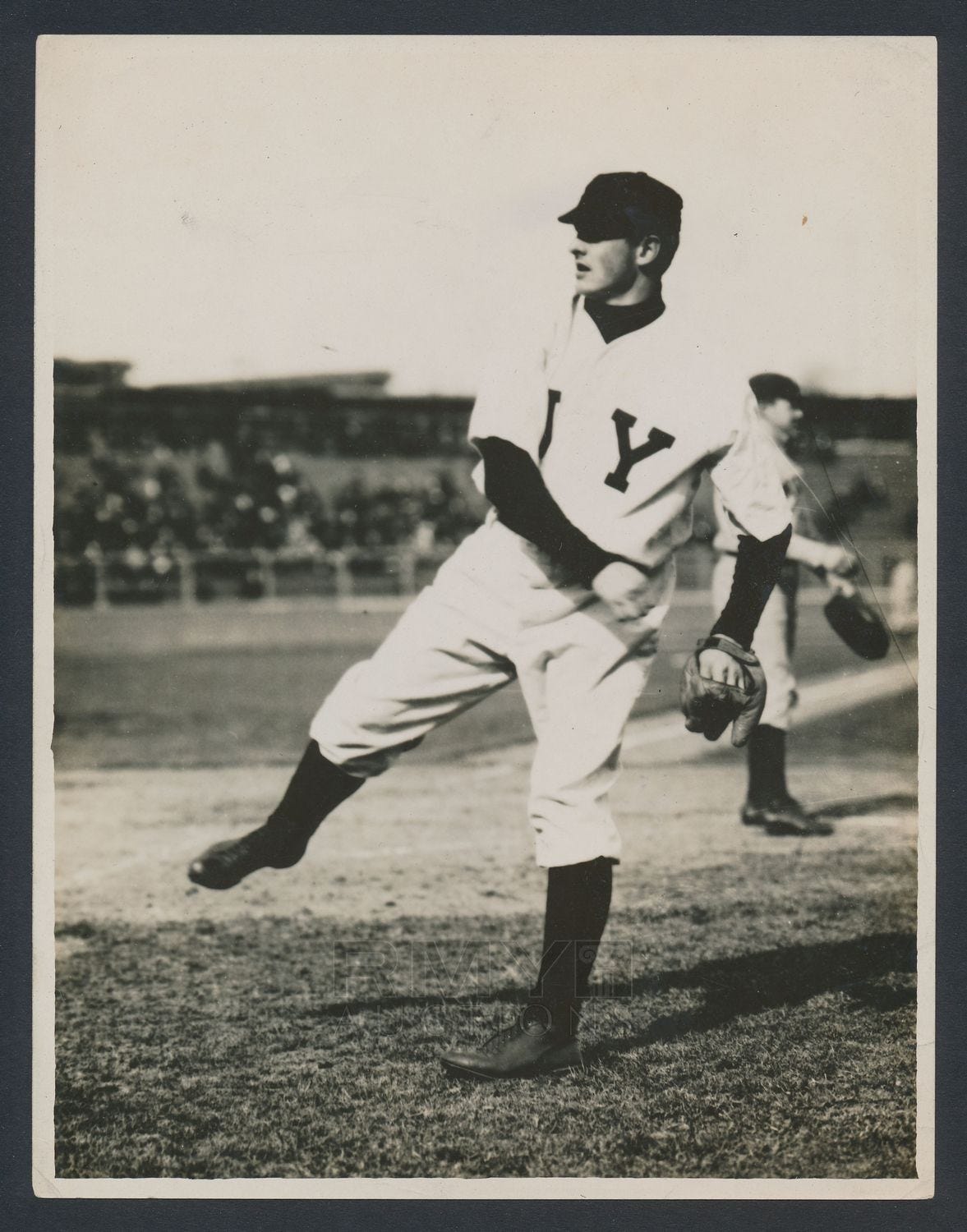
Christy Mathewson, 1907
The Giants and Cubs were in a virtual tie for first. The game at the Polo Grounds was tied 1–1 in the last of the ninth, as Jack Pfiester dueled Christy Mathewson. With the Giants’ Moose McCormick on first and one out, Merkle shot a single to right that moved the runner to third. After another out, shortstop Al Bridwell singled to center, the winning run crossed the plate, and the Giants had extended their slim lead. Or had they?
W.A. Phelon wrote, in the Chicago Journal: “It has long been an unwritten baseball law that as soon as a home player crossed the plate with a run that breaks a tie after the eighth inning the game is over, that instant. A batter runs out his hit and that is all. If a batter singles and scores a runner from second base, it is necessary for him to touch only first base.”
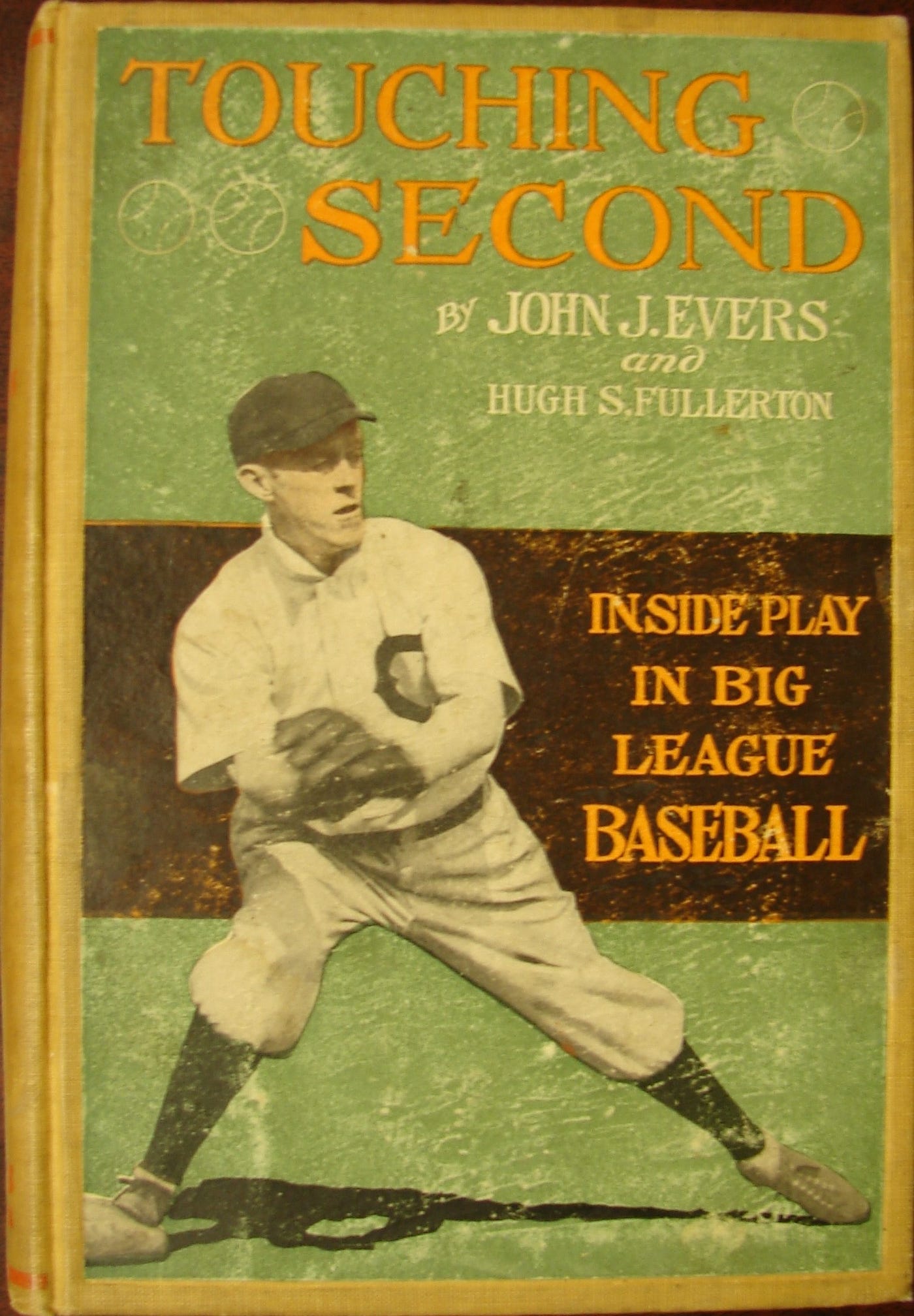
Did the title of Evers’ book (1910) refer to Merkle?
Merkle, in accordance with baseball custom and practice, if not in strict accordance to the rules, never bothered to touch second, instead running off the field to avoid the rush of fans storming onto the field in celebration. Somehow Cub second baseman Johnny Evers got the ball and stepped on second, holding the ball aloft to show the umpires — veterans Bob Emslie and Hank O’Day — that he had forced Merkle and the run didn’t count. Less than three weeks earlier, on September 4, the Cubs had tried to win a ruling on a similar force-out against the Pirates but were overruled.
Not this time. The umpires, who had not seen the frenzied action at second base, declared the game a tie, as there was no way to clear the fans from the field. League president Harry Pulliam backed them up. The game was to be replayed, if necessary to determine a pennant winner. At season’s end, the teams were indeed tied for first place. The game had to be replayed on October 8; the Cubs won and went on the World Series, which they also won (though not another for the next 108 years).
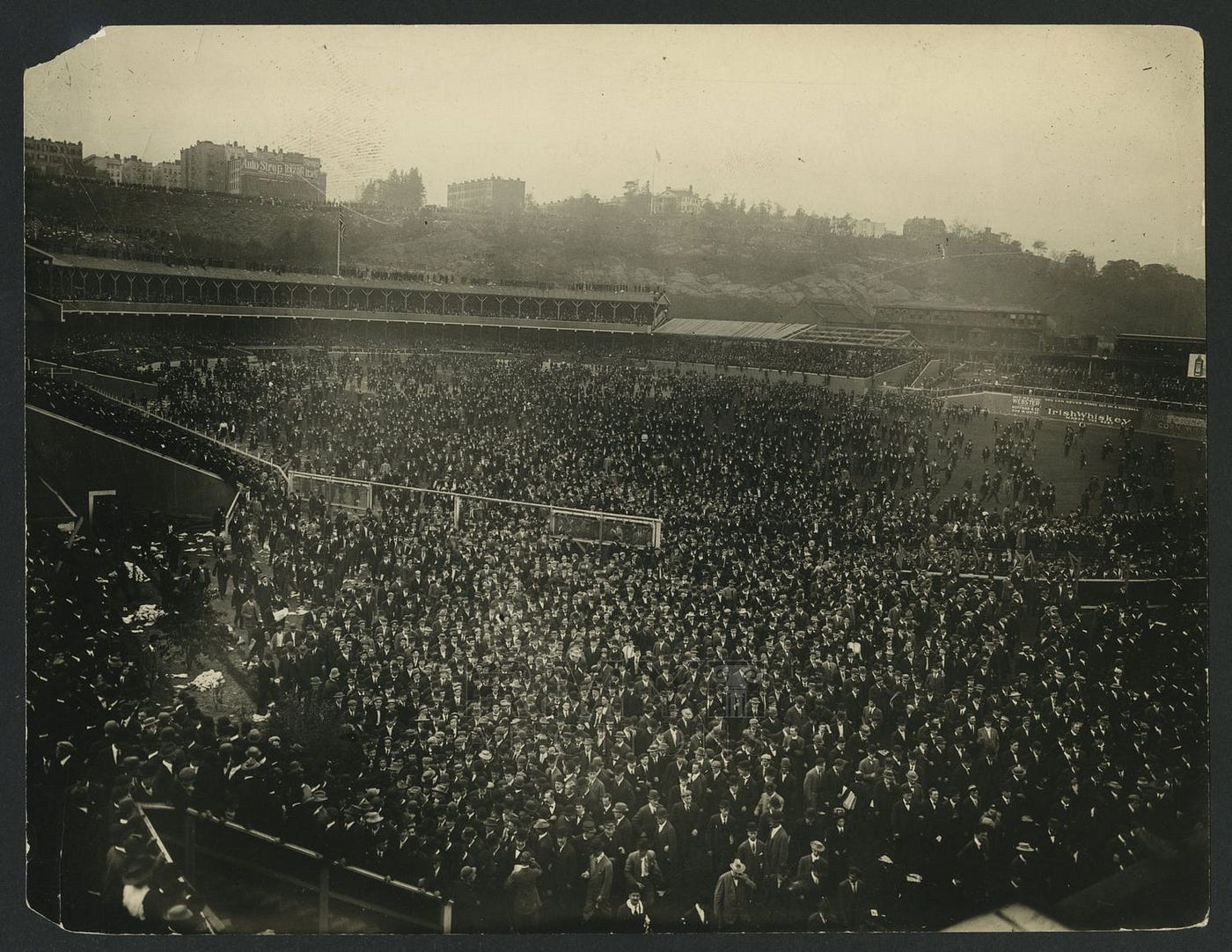
Some 40,000 fans attended the October 8 replay game; after the Giants’ loss, they depart
In the early 1990s Joe Evers, a nephew of Johnny, who had died in 1947, discovered a ball in a box, with an ink-marked notation across the sweet spot: “Merkle” and “Sept. 23, 1908.” This ball came up for auction in 1993, selling for a modest $30,250. It came up again in 2020, selling for what still seems a modest $76,375. Clearly, this was the ball Evers was holding when he touched second base to record the final out of the game. But was it the ball that Bridwell hit, which put Merkle out?
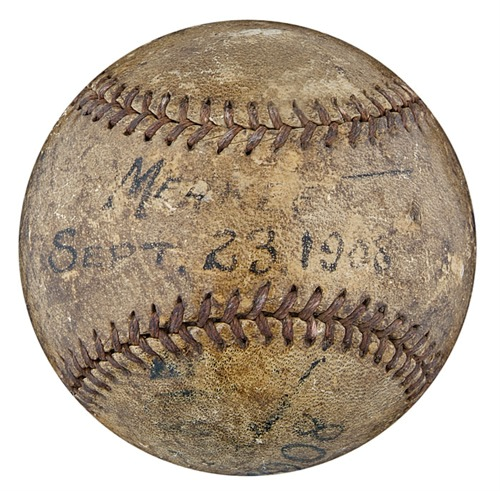
The Merkle Ball, via Johnny Evers
Not according to Charles Dryden. who wrote in the Chicago Tribune: “[Solly] Hofman [in center field] threw the ball to Evers, but before the latter could step on second base [Joe] McGinnity, who had been on the coaching line and was on his way to the clubhouse, took a hand and grabbed the ball away from Evers. Evers and [Joe] Tinker then grabbed McGinnity and wrestled with him trying to get the ball. They weren’t successful, for the next minute the ball was sailing over toward the left field bleachers. Some Chicago player [Rube Kroh] rescued it and brought it in.”
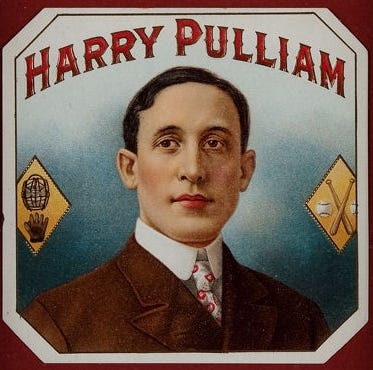
Harry Pulliam, cigar label
Manager John McGraw stuck with Merkle for years to come, praising his headiness. The first sacker went on to Brooklyn and the Cubs and finished up with the Yankees. But he had been subject to relentless vilification. The same was true for NL president Pulliam, who committed suicide in 1909, in part because of the merciless hounding by New York baseball figures who believed his decision had cost the Giants a pennant.
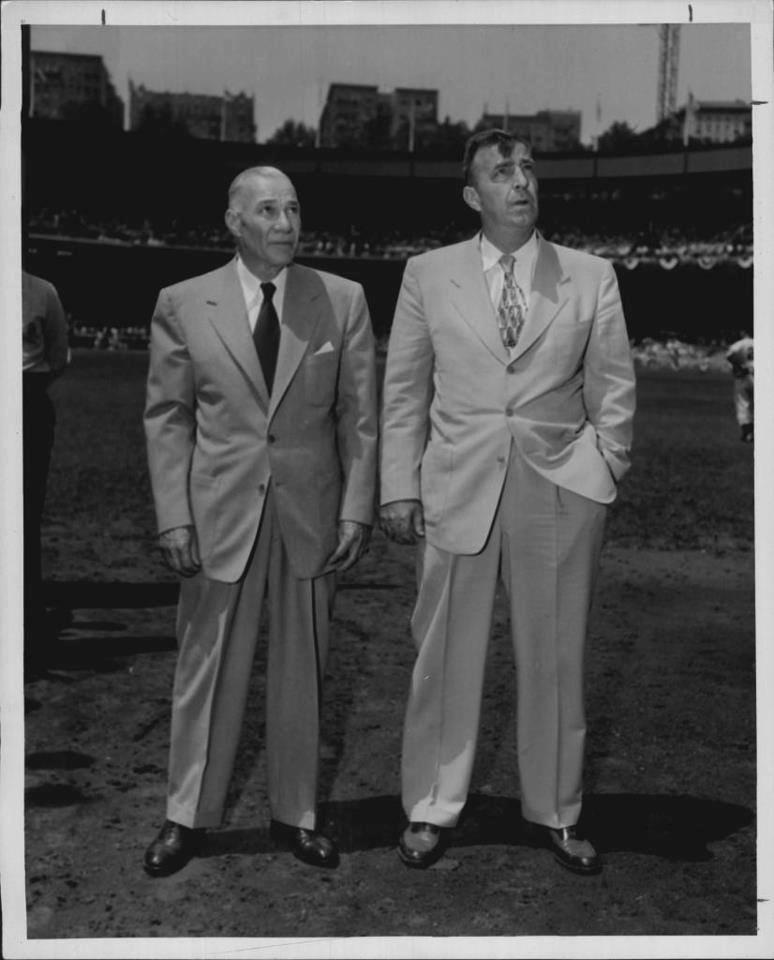
Merkle at right, with Larry Doyle at Polo Grounds, 1950
When Fred Merkle nervously returned to the Polo Grounds for an old-timers’ game in 1950, the fans gave him a standing ovation. He wept.
Later this week, I will also publish at Our Game an essay that G.H. Fleming wrote for the 1982 launch of The National Pastime, a publication I created for SABR: “The Merkle Blunder: A Kaleidoscopic View.”
메타데이터
- post_id
- 8a884e79656f
- slug
- fred-merkle-september-23-1908-8a884e79656f
- url
- https://ourgame.mlblogs.com/fred-merkle-september-23-1908-8a884e79656f
- canonical_url
- https://ourgame.mlblogs.com/fred-merkle-september-23-1908-8a884e79656f
- author_url
- https://medium.com/@thorn_john_87223
- status
- ok
- fetched_at
- 2026-07-19 22:53:17