The Day I Spoke to a Child Killer: What I Learned About Evil Working in the Australian Prison…
Human evil is a subject of eternal fascination. True crime remains among the most popular of genres, and our entertainment is full of…
The Day I Spoke to a Child Killer: What I Learned About Evil Working in the Australian Prison System
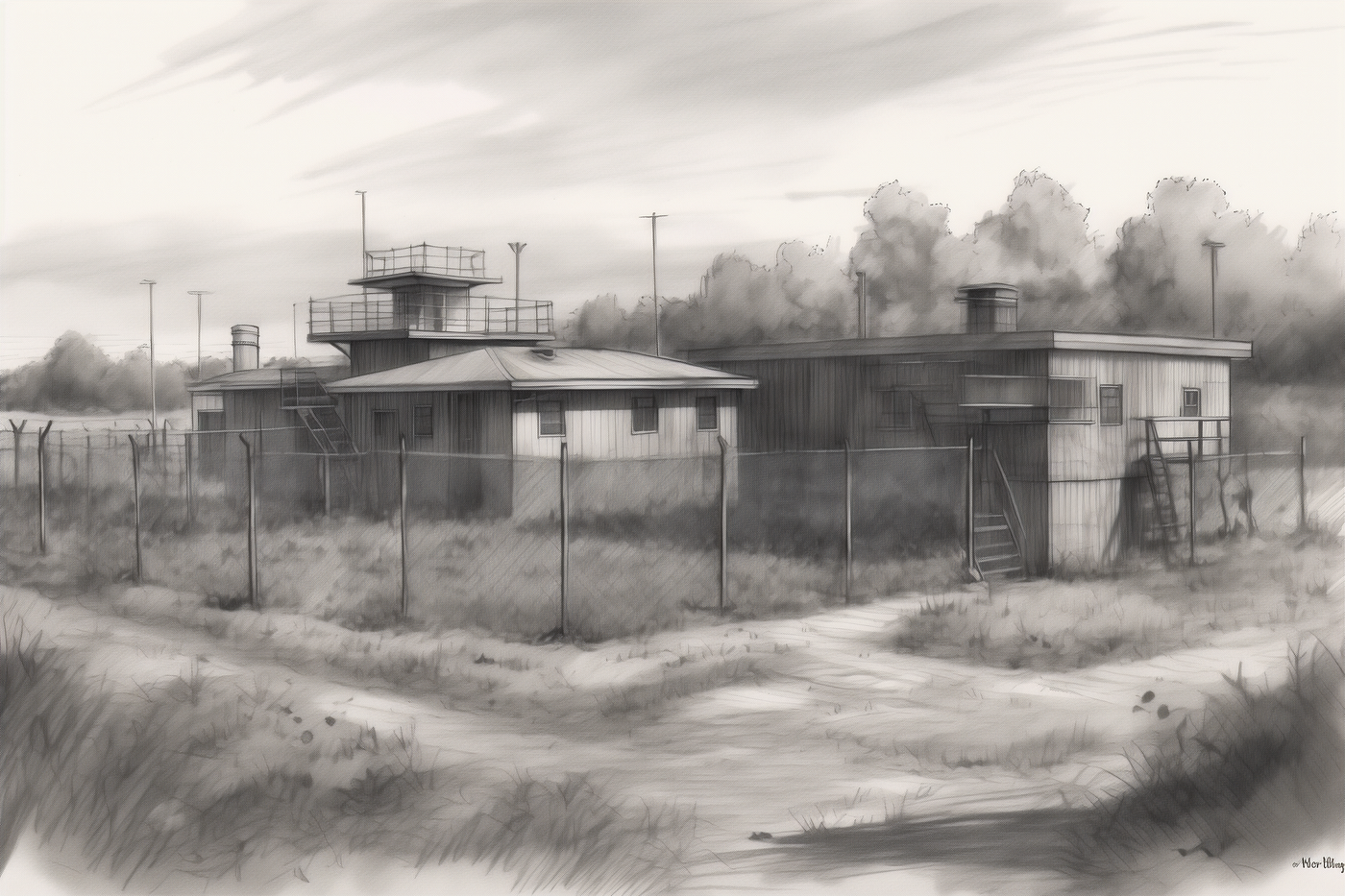
Image: Midjourney
Human evil is a subject of eternal fascination. True crime remains among the most popular of genres, and our entertainment is full of fictional serial killers and villains. Our attention seems to endlessly revolve around the likes of Hitler, Dahmer, Voldemort, Sauron and Lecter. It’s a fascination I shared for many years.
Then, between 2000 and 2005, I worked for an organisation that provided counselling, welfare and other social work services to offenders and their families. It was the most eye-opening, fascinating and difficult job I ever had. I worked with what many people would describe as the scum of the earth: armed robbers, murderers, sex offenders, fraudsters, burglars and everything in between. In the process I learned that evil is not what I had imagined.
Even though we were a charity, we received almost no private donations. We weren’t exactly the Make-A-Wish Foundation; we couldn’t rustle up an army of volunteers to stand on street corners asking for gold coin donations to help a crim get back on his feet. In fact we constantly battled a headwind of prejudice against the entire notion of supporting people who had been exiled from the community for the bad things they had done. We were trying to help offenders who were returning to the community to deal with the multiple challenges of reintegration — in fact I wrote a book on the subject that for several years was provided free to everyone leaving the Victorian prison system — but overall there was little public sympathy for such people.
Every now and then the tabloid Melbourne newspaper the Herald Sun would run a story about prisoners “living it up in gaol” with televisions, swimming pools and ice creams, fanning its loyal readership’s easily-fanned embers of outrage. Like spitfires poked with a stick, readers would rear up in disgust and moral indignation, and up would go the old refrain: “Lock ‘em up and throw away the key!”
Of course no analysis was provided beyond summoning the contextless image of prisoners enjoying scandalous pleasures like cooling off on a hot day. It might provide some context to understand that prisoners at Port Phillip Prison in those days would all get an ice-cream as a monthly reward if there had been no stabbings.
Nobody considered what happens when prisoners are confined in close quarters in stinking heat with no outlet or possibility of reward for good behaviour. Nobody wondered what happens when men who live in brutal, dehumanised conditions for the length of their sentences are released into a community they know despises and reviles them…
In fact we know the answer to those questions, because the experiment was tried in Victoria in the maximum security wing of Pentridge Prison known as Jika Jika, and the answer is “nothing good”. There was a guy by the name of Grant who used to be a regular at my workplace. He was on old-school bank robber from the seventies who’d ended up gunning down a rival gang member and he’d spent the best part of twenty years in Pentridge, including both Jika Jika and the almost equally infamous H division.
He was a rangy, stooped, sad eyed man who spoke quietly but with the hard edged inflection of a long-term inmate. He had a handshake like reinforced concrete. Yet the truth was he was a gentle soul. He was completely beyond hurting anyone, and his whole body was saturated in sorrow and regret. He would come in because he was lonely, and I’d sit with him while he told me truly hair-raising stories about his time in Pentridge with infamous underworld figures like “Chopper” Reid and kidnapper Ted Eastwood.
What came through in Grant’s stories was just how dismal and utterly depressing real evil is. He told me about a murder he had witnessed in the prison exercise yard that haunts me to this day. It was nothing worthy of anyone’s fascination. When I think of it, and of Grant’s expression of disgust and horror in the retelling of it, I feel only a sense of profound sadness. That this is what we do to one another, the nightmare that some people live inside. This was the only deep truth I learned: that there is nothing worth seeing here, nothing glamorous or thrilling, but only things to make the heart sick.
Yet for all the horrific things they had done, evil was not a word that I would attach to the vast majority of the people I met in prison. Certainly their moral responsibility for their crimes could not be waved away. Many had committed horrifying acts, but for the most part they were acts committed in extremis, the crime an almost inevitable final domino in a long chain of awful events that began in childhood.
Far from being the criminal masterminds or evil sadists of popular imagination, many of them seemed like toddlers inflated to the size of overgrown men. Even while one knew what they were capable of, nonetheless one often found one’s heart going out to them spontaneously, in the way it goes out to children.
Typically they came from backgrounds of appalling neglect and brutality, which had arrested their emotional development early. They were cognitively and emotionally stunted. The simplest arithmetic of personal responsibility was beyond them. We offered them programs with titles like “consequential thinking”, but it’s doubtful anything stuck. These were men with long term brain injuries from drug overdoses, bashings, accidents. They were uneducated. Their damaged, undeveloped prefrontal cortex was no match for the trauma ravaged emotional brain beneath it, or the reptilian brain below that on which they relied to survive.
The programs we delivered were sometimes frankly ridiculous given the environment and the limitations of the participants. The anger management program I ran had suggestions straight out of the living rooms of middle class marriages. Don’t say “you make me angry when you do that.” Instead say, “when you do that, I feel angry.”
I was telling this to a guy who later in the class was describing torturing a man with a meat tenderiser because he (incorrectly) thought the man was a police informant. In any case trying to teach peaceful negotiation skills in an environment in which only violence talks was like trying to knit a sweater while someone is working to unravel every stitch you make. It was a Sisyphean task.
And yet they came to the classes and they listened. They looked at me — many of them older men than I was at the time — with the kind of luminously attentive gaze that emotionally starved children bestow on an adult who shows them kindness. They wanted my approval. They protected me. They saw who I was — a “straight-head” kid from a nice family who would never really understand their lives, who was giving them bone-headed “strategies” for managing their anger in the brutal world of prison — yet they didn’t reject me out of hand. On the contrary they craved the simple, priceless thing I was offering: attention without judgment, someone who looked at them and saw a human being rather than the worthless criminal they themselves believed they were.
There were moments of black humour. There was one woman of over seventy who had been paroled after serving a sentence for the murder of her husband. She had bludgeoned him to death while he slept, not an altogether uncommon way for women to rid themselves of a violent husband, though I don’t know if those were the circumstances in her case. Whatever the story, she was a singularly unpleasant person: mirthless, demanding, and seemingly devoid of the capacity for gratitude despite the small army of well-meaning social workers she seemed to have at her beck and call. She came in for some service or other and I interviewed her. I knew her crime, but when she mentioned that her husband was dead, I decided not to let on. I wanted to see if she would be honest with me. “How did he die?” I asked her. “Oh,” she replied. “He died peacefully in his sleep.” She paused a beat, her mouth still set in its humourless line. “Of head injuries.”
She probably met the psychological criteria for a diagnosis of Antisocial Personality Disorder, the formal diagnostic category for psychopaths. It’s a very common disorder among prisoners. I recognised it clearly in a number of men I worked with who seemed preternaturally unfazed by violence, even those who had not been conditioned to it from childhood. There was one young man who told me about how a passenger in another car had pointed a gun at him in a road rage incident. He said that he had remained icy calm. Situations that would have terrified me barely raised his pulse.
Another teenage boy on a community based order told me about stabbing a stranger on a bus. When I asked him if he felt remorse over it, he shrugged and shook his head. “Nah.” I studied his face for a sign that this was bravado, but it was strangely blank. I could see he was just telling me the simple truth. He was wired differently to most people.
Yet for all the violence they were capable of, I would never have thought to call either of these young men evil. Their calm indifference to physical violence and their obvious lack of empathy were alien and disconcerting. Nonetheless I was able to connect with them as human beings, to find a light in them, even to like them.
One day, however, I took a call from Barwon Prison, Victoria’s maximum security facility. It had units named after Australian native flora. “Acacia” was the unit reserved for the worst of the worst, a truly frightening place that my boss referred to as Hell’s waiting room; most of the people in there would only leave by dying. I did not know it, but the call I took that day came from there. As soon as I heard the man’s voice, an icy shudder went down my spine. Sex offender, I immediately knew.
The owner of that voice was Robert Arthur Selby Lowe, the man who murdered six-year-old schoolgirl Sheree Beasley in 1991. After kidnapping her from a street near her home and subjecting her to unspeakable abuse, he shoved her naked body into a drain and covered it with branches. He was convicted partly due to the testimony of a cellmate who agreed to wear a wire and try to lure a confession from him. That man, Peter Reid, was a hardened criminal who had murdered a police officer and blackmailed the parents of another kidnapped girl, Karmein Chan. Yet Lowe was too much even for him. He found the man so toxic that he began to develop psychological problems and begged police to release him from his agreement.
On that day when I took Lowe’s phone call, he spoke no more a half dozen words to me, yet I could feel his coldness blow through me like a wind, and I instinctively recoiled. I cannot explain this instantaneous response other than through the concept of evil. Evil not as a mere descriptor for people who do bad things, but as something tangible, a dark force. I do not mean this in a religious sense. I don’t believe in Satan. But I do now believe in a power in human nature that the Satan myth sprang from.
We all harbour a little of this darkness in some corner of our souls we’d rather not look at. Working in prisons, I learned that any of us, if driven to it by enough suffering and stress, can commit evil acts. Yet I also learned about people like Lowe, people consumed by evil. To catch a glimpse of their soul is to look into a terrifying abyss. Once upon a time I almost wanted that experience. Having had it, I never want to again.
메타데이터
- post_id
- 8a8bc8c6374f
- slug
- evil-is-not-what-i-imagined-what-i-learned-working-in-the-australian-prison-system-8a8bc8c6374f
- url
- https://medium.com/@pierz-newton-john/evil-is-not-what-i-imagined-what-i-learned-working-in-the-australian-prison-system-8a8bc8c6374f
- canonical_url
- https://medium.com/@pierz-newton-john/evil-is-not-what-i-imagined-what-i-learned-working-in-the-australian-prison-system-8a8bc8c6374f
- author_url
- https://medium.com/@pierz-newton-john
- status
- ok
- fetched_at
- 2026-06-15 20:49:13