May The Circle Be Unbroken
As Goes The South
May The Circle Be Unbroken
As Goes The South screened at Community Investment Network in Raleigh, North Carolina
Photo by Muhammed Disu on Unsplash
The most ancient and natural shape in the universe is a circle. It is born out of ether, naturally smoothing its edges equidistant from an agreed-upon center.
Circles are precious, like relationships.
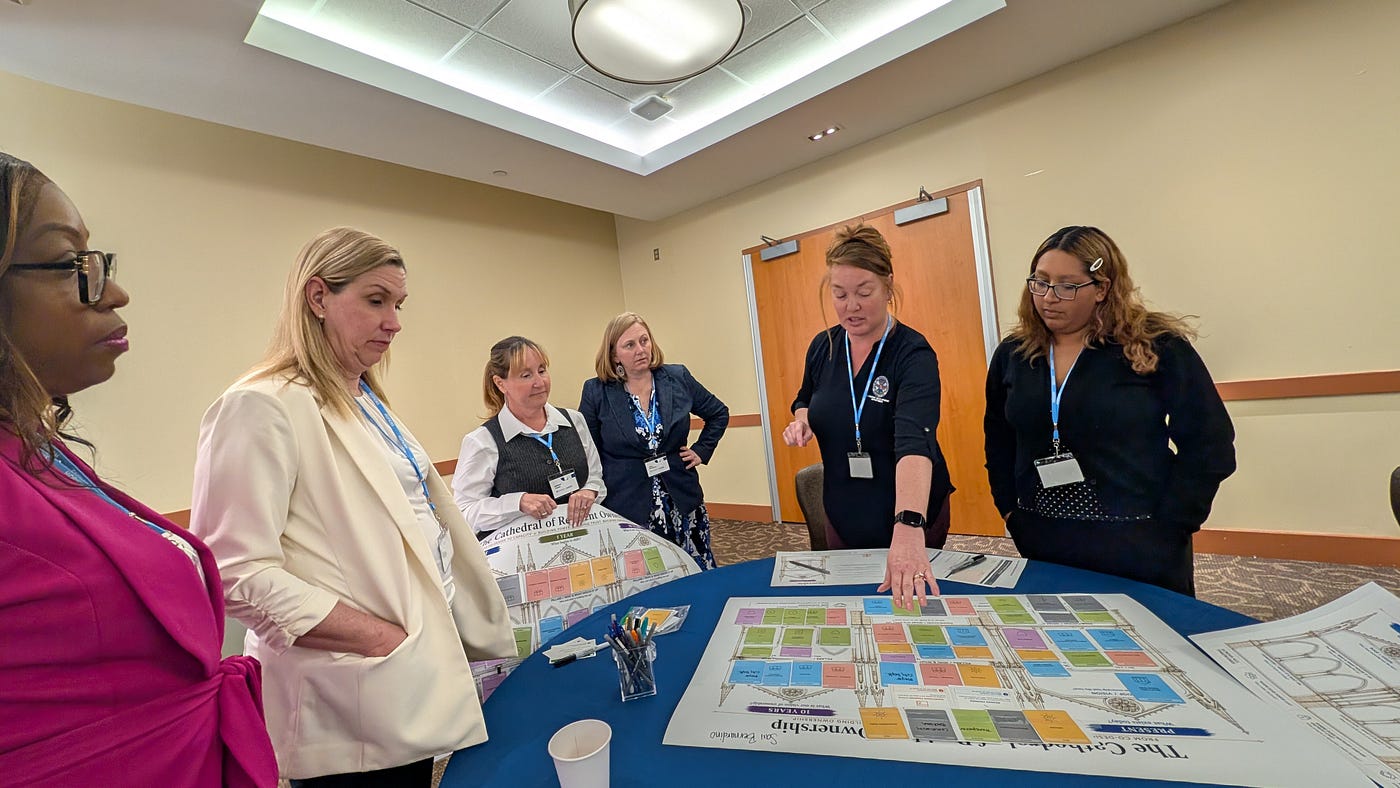
And so was our screening of As Goes The South at the Community Investment Network (CIN) Leadership Summit in Raleigh, North Carolina on April 30. What made this gathering special was the depth and duration of the relationships in the room — more than 25 years of shared history for many of us.
More than fifty community and civic leaders gathered: an inter-generational, inter-faith gumbo of love for Black folks, sharing their collective giving power and testimony. This was not a gathering of institutional players; it was grassroots and grasstops leaders harnessing their energy together.
The Modern Giving Circle Movement
CIN is a national membership network of giving circles rooted in community-centered philanthropy. For those unfamiliar with the model, a giving circle is a collaborative philanthropic vehicle where a group of people pool their money and democratically decide which local charities or social causes to fund.
I attended the very first convening twenty-three years ago, before the organization even had a name. A group of young, civic-minded Black folks from Birmingham and Raleigh-Durham convened at the Aberdeen Woods Retreat Center in Georgia. We spent that weekend driven by a singular question: What are young Black folks of our generation doing with our time, talent, treasure, and testimony?
The answer wasn’t programmatic — it was structural. We chose to build, and the most natural mode of engagement was to form giving circles.
Giving circles are a culture-rich tradition among communities of color, especially descendants of the enslaved who had to take care of one another in the absence of institutional support. They built these sanctuaries of mutual aid in the very presence of hostility, terror, and exploitation from government, corporate entities, and institutional philanthropy itself.
Thus, our modern giving circle movement began. It was through Birmingham’s giving circle, the Birmingham Change Fund, that I formed relationships with so many current Birmingham leaders, including Mayor Randall Woodfin. From two circles in two Southern cities came a dozen throughout the South, then two dozen throughout the nation. Soon, we witnessed the emergence of Latino, Asian, and Pacific Islander giving circle networks spanning the nation.
[embed]CIN has hosted annual conferences for community philanthropists since 2003
While CIN cannot take credit for inventing the foundational concept, we can proudly claim to be the generative source of the modern movement.
Our movement has existed long enough to know whole seasons of joy and pain. Our organization and relationships have a familial culture. Familial cultures breed intense loyalties, entrenched traditions, and, at times, contemptuous dynamics. We have experienced it all.
So, attending this gathering was a true full-circle moment for me. As a past chairman of the board of directors, it was refreshing for me to see so many new faces outnumbering the very familiar and fond ones. There were new people hungry to pour into their communities through a model of persistent relevance, alongside tenured leaders eager to anchor the next generation of African American philanthropists.
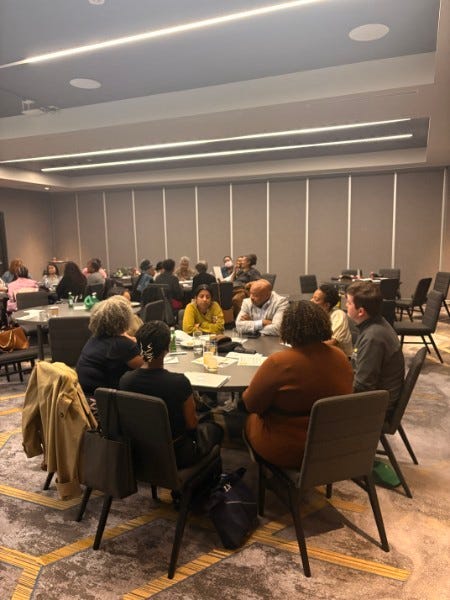


Images from the 2026 CIN Leadership Summit and screening of As Goes The South. Photo credit: author
The Talk-Back
Noel and I love a direct talk-back because we get audience feedback and questions in real time. We are deeply curious to understand how the film lands on people in different cities, with different perspectives and histories.
Because we spoke at previous CIN convenings in Houston and Jackson, we did not need to warm up the room; we jumped right in rhythm.
Noel strolled to the front of the room as the film ended and the lights came on. I pulled a couple of chairs to the center of the space for us to sit facing the attendees. Following a brief introduction and applause from the audience, our host prompted dialogue with a question, asked from the rear of the room. After our brief response, Noel and I flowed into a natural, long dialogue with the audience.
Not a presentation, a real conversation.
One attendee, Earlene, stood and clapped enthusiastically, visibly touched by what she saw in As Goes The South. She was thrilled because of Sun Ra’s prominence in the film. Later in the evening, Earlene let me know she used to travel to different cities to see him and his famous Arkestra perform, recalling his shows in Philly and his famous anthem, “Space is the Place.” She was a self-proclaimed groupie.
“Hold up, Earlene!” I said. “What happened in space stays in the place!” Earlene knew I was kidding her.
I have known Earlene as a longstanding CIN participant as a member of the Heritage Quilters, a giving circle of mature Black women in Wilmington, North Carolina, who quilt and design civic solutions in their small, historic community of grassroots organizers.
A delegation of women from Charleston, South Carolina, and Tulsa, Oklahoma, told us they saw their own cities in our story. Cities are starved for reclamation across the nation; too many untold stories of people shaping their communities in this very moment. In this regard, Birmingham’s story is special, but not entirely unique.
Safiyah Jackson, a County Commissioner for North Carolina’s Wake County, stood and asked one of the most profound questions we have received across all of our cities:
“I loved seeing the images of the children. And, hearing the voices. This makes me want to know so much more about Birmingham — tell me about jobs, and poverty, and what is really happening there. It looks phenomenal. But tell me….’how are the children doing?’”
Such a simple, heavy question.
I took my time answering it, first providing some texture about our industries, population, and poverty. It is helpful to have a day job that requires me to be fluent in the realities that matter most for Birmingham.
But that second question — How are the children doing? — hit me hard. I told her the truth, “I am not fully qualified to respond to that.” I continued, “Only the children possess the answer. It would be disingenuous of me to represent their perspective.”
Instead, I spoke about our intention to center the voices of young people, starting with the stories we tell in As Goes The South. Then, I spoke about the Birmingham Promise, and our strategy to level up on everything happening from the time a child is in the cradle until they choose a career.
Our message landed well. The room broke out in applause as we discussed solutions that are working for our children and residents.
Conclusion
The CIN Leadership Summit was a beautiful homecoming for me — an unexpected joy to see old friends and make new ones. A reunion and a reclamation.
May our circles, and yours, remain unbroken.
Honestly,
Ed.
I am a poet, essayist, and civic strategist based in Birmingham, Alabama. Subscribe to my newsletter here.
메타데이터
- post_id
- 8a8d913fa9d8
- slug
- may-the-circle-be-unbroken-8a8d913fa9d8
- url
- https://medium.com/as-goes-the-south/may-the-circle-be-unbroken-8a8d913fa9d8
- canonical_url
- https://medium.com/as-goes-the-south/may-the-circle-be-unbroken-8a8d913fa9d8
- author_url
- https://medium.com/@honestlyed
- status
- ok
- fetched_at
- 2026-06-09 15:37:30