Place-Based Learning and Service Learning: How to Reignite Your Teaching with Purpose and Community
Discover how connecting your curriculum to the real world can boost engagement, performance, and empathy — all backed by research.
Place-Based Learning and Service Learning: How to Reignite Your Teaching with Purpose and Community
Discover how connecting your curriculum to the real world can boost engagement, performance, and empathy all backed by research.
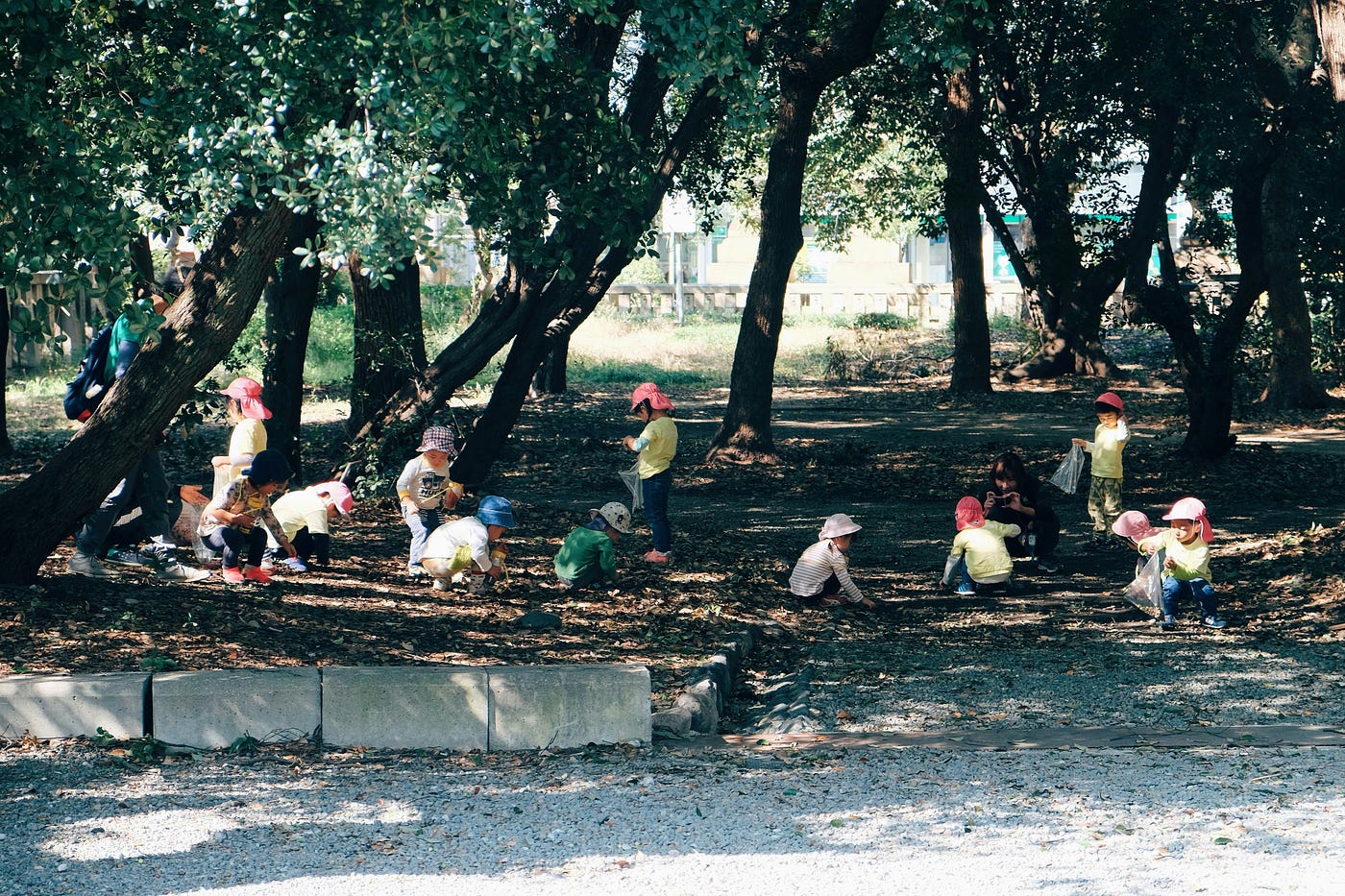
Photo by Note Thanun on Unsplash
“I thought it would be easier. But it’s harder… and that’s what makes it fun. For the first time, I actually want to learn.” — A middle school student reflecting on a place-based project
Place-Based Learning and Service Learning are reshaping classrooms
If you feel like your teaching is disconnected from your students’ lives — or if they seem to be just going through the motions — you’re not alone.
But there’s a proven solution: Place-Based Learning (PBL) and Service Learning (SL). These strategies reconnect your students with their communities, environments, and sense of purpose — transforming how they learn and why it matters.
What Is Place-Based Learning and Why It Works
Place-Based Learning uses the local context — nature, history, community — as the living curriculum. It turns your surroundings into a source of knowledge, relevance, and civic engagement.
As David Sobel (2004/2014) explains:
“Place-based education connects students to their own backyards as laboratories for learning.”
✔ It’s interdisciplinary
✔ It’s inquiry-driven
✔ It’s grounded in real life
Key Outcomes:
· Better test scores in reading, math, and science
· Higher attendance and fewer behavioral referrals
· Improved critical thinking and environmental awareness (Source: Lieberman & Hoody, 1998; Sobel, 2014)
👉 Example: In Texas, Hotchkiss Elementary saw a 91% drop in disciplinary actions after implementing a place-based curriculum (Lieberman & Hoody, 1998).
Why Service Learning Builds Civic Engagement and Empathy
Service Learning blends academic learning with hands-on service in the community. It’s not volunteering — it’s tied to your curriculum with intentional reflection and measurable learning goals.
Katy Farber (2017) puts it this way:
“Real service learning transforms both the learner and the community.”
Students apply classroom content to real-world challenges — designing solutions, creating change, and building agency.
Benefits of Service Learning:
· Builds empathy and social responsibility
· Fosters teamwork and leadership
· Strengthens writing, speaking, and reasoning skills
· Connects theory to practice in meaningful ways
💡 From organizing food drives to solving local water issues, students become active citizens, not passive learners.
The Science Behind It: Situated Cognition
Both PBL and SL are supported by the cognitive theory of Situated Learning. According to Díaz Barriga (2003):
“Learning is constructed within authentic, social, and contextualized activities.”
That means: the more real and connected your teaching is, the deeper the learning.
Students don’t just memorize. They do. They experience. And they carry those experiences into life beyond school.
Of course, experiential learning is only meaningful when it includes everyone. Methodologies like place-based or service learning are powerful — but they’re not automatically inclusive.
I explore this deeper in “The Empty Chair: What Didactics Sometimes Choose Not to See”, where a story about a student left out during a group activity reminds us that belonging isn’t optional in learning — it’s foundational.
No method, no matter how modern, can substitute intentional inclusion.
Awe, Emotion, and the Small Self
New research adds another layer. Piff et al. (2015) found that awe — deep emotional engagement with something larger than oneself — reduces egocentrism and increases prosocial behavior.
Place-Based Learning creates those moments of awe: — Witnessing a sunrise on a field study — Listening to a community elder share stories — Seeing a neglected green space restored
And those moments make a lasting impression — emotionally and academically.
Three Ways to Start Place-Based or Service Learning Now
-
Scan your surroundings: What community issues or natural spaces could inspire learning?
-
Start small: Link a subject standard to a real-world task. (e.g., Math → garden planning, Writing → local op-eds)
-
Partner with purpose: Invite local nonprofits, elders, or experts into your classroom as co-educators.
Final Takeaway: Teach Where You Are
Place-based and service learning aren’t trends — they’re timeless.
They remind us that the best teaching starts not with a textbook, but with a question: What matters here? What do my students see, feel, and want to change?
By grounding learning in place, purpose, and participation, you’ll reignite both your classroom and your calling.
“Students hadn’t just consumed facts — they developed tools for thinking and acting that they could take anywhere.” — David Sobel (2014)
Sources
Díaz Barriga, F. (2003). Cognición situada y estrategias para el aprendizaje significativo. Revista Electrónica de Investigación Educativa, 5(2).
Farber, K. (2017). Real and Relevant: A Guide for Service and Project-Based Learning. Rowman & Littlefield.
Lieberman, G. A., & Hoody, L. L. (1998). Closing the Achievement Gap: Using the Environment as an Integrating Context for Learning. SEER.
Piff, P. K., Dietze, P., Feinberg, M., Stancato, D. M., & Keltner, D. (2015). Awe, the Small Self, and Prosocial Behavior. Journal of Personality and Social Psychology, 108(6), 883–899.
Sobel, D. (2004/2014). Place-Based Education: Connecting Classrooms and Communities. The Orion Society. Reprinted in The NAMTA Journal, 39(1), 61–78.
메타데이터
- post_id
- 8a8e920fb513
- slug
- place-based-learning-and-service-learning-how-to-reignite-your-teaching-with-purpose-and-community-8a8e920fb513
- url
- https://medium.com/@sarafuertes/place-based-learning-and-service-learning-how-to-reignite-your-teaching-with-purpose-and-community-8a8e920fb513
- canonical_url
- https://medium.com/@sarafuertes/place-based-learning-and-service-learning-how-to-reignite-your-teaching-with-purpose-and-community-8a8e920fb513
- author_url
- https://medium.com/@sarafuertes
- status
- ok
- fetched_at
- 2026-08-04 23:19:17




