Hermes Agent: The Self-Improving AI Agent That’s Rewriting DevOps in 2026
Executive Summary and Key Takeaways
Hermes Agent: The Self-Improving AI Agent That’s Rewriting DevOps in 2026

Executive Summary and Key Takeaways
Hermes Agent represents a new class of self-improving AI agents designed specifically for DevOps workflows. These autonomous agents observe system states, propose and execute remediation or optimization actions, ingest feedback, and continuously improve their own policies and “skills” over time. By 2026, this kind of agentic AI is evolving from research prototypes into production-ready components that can reduce toil, accelerate incident resolution, and optimize deployments — provided teams adopt strict governance, monitoring, and security controls.
Key takeaways:
- Hermes Agent combines model-driven decision making, a registry of skills/tools, and feedback/reward pipelines that enable incremental, tested self-improvement.
- Production benefits include faster mean time to recovery (MTTR), fewer repetitive on-call actions, and continuous optimization of canaries, scaling, and costs when integrated with CI/CD, Infrastructure as Code (IaC), observability, and policy engines.
- Risks involve privilege escalation, model drift, supply-chain or data poisoning, and opaque decision provenance. Mitigations revolve around human-in-the-loop controls, auditable decision trails, and least-privilege execution.
- Early governance items to adopt include versioned skill manifests, simulation sandboxes, automatic canary rollbacks, policy-driven vetting, and secrets handling via ephemeral credentials and delegated access.
What is the Hermes Agent?
Quick Definition of Hermes Agent
Hermes Agent (used here as a flagship example) is an autonomous AI software agent tailored for DevOps. It integrates large language and decision models with a skills library of prebuilt automation capabilities, a tool registry with APIs for CI/CD, cloud control planes, ticketing, and observability, along with a feedback/reward pipeline that measures outcomes and constantly updates agent behavior.
Its tasks include diagnosing incidents, patching misconfigurations, tuning deployment strategies, and enforcing security policies — with progressively less human supervision as its confidence grows.
Unlike developer copilots or runbook generators, Hermes Agent is stateful and action-enabled, equipped with a lifecycle for continuous learning. It acts, observes results, logs provenance, and uses those signals to refine its decision models and skill selection.
What “Self-Improving” Means in DevOps
In DevOps, “self-improving” means the agent follows an automated lifecycle:
- Observes telemetry and system outcomes (metrics, traces, logs, incident tickets).
- Selects or composes skills (playbooks, Terraform changes, API calls) to take actions.
- Executes actions in controlled environments — canaries, staging, or limited scopes — using a tool registry.
- Collects outcome signals such as success/failure, MTTR deltas, user feedback, and cost changes.
- Updates its internal parameters, reward functions, and possibly model weights or policy rules through a governed model update pipeline.
- Improves its action selection and confidence estimators so future decisions need fewer human approvals.
This self-improvement is explicitly constrained: initial learning happens in simulated or low-impact contexts; later stages expand scope only with verified metrics, approvals, and policy controls. In production, safeguards like rollback and kill-switch mechanisms, auditable training data, and human oversight are critical to avoid unsafe behavior drift.
Why Hermes Agent Matters for DevOps in 2026
Key Benefits: Speed, Reliability, Reduced Toil
Hermes Agent-style automation tackles persistent challenges in modern cloud operations:
- Faster incident detection-to-remediation: Agents correlate telemetry, run diagnostic experiments, and apply tested remediations in minutes rather than hours, reducing MTTR when integrated with observability and runbook libraries.
- Reduced repetitive toil: Routine changes like configuration drift fixes, dependency upgrades, and rollbacks can be automated and validated, freeing Site Reliability Engineers (SREs) for higher-value engineering work.
- Continuous optimization: Agents conduct controlled experiments on canaries, A/B deployment strategies, and autoscaling settings to optimize cost and reliability without manual toil.
- Improved deployment velocity: Automating verification, preflight checks, and regression triage enables safer, faster deployments while maintaining or lowering change failure rates.
- Standardized runbooks and faster knowledge transfer: Agents encode institutional knowledge as versioned skills, speeding ramp-up time for new hires while creating machine-readable runbooks.
Key Risks and Tradeoffs
Adopting Hermes Agent introduces important tradeoffs requiring operational vigilance:
- Privilege and blast radius: Agents require access to sensitive APIs like cloud control planes and secrets. Without least-privilege delegation and ephemeral credentials, mistakes or compromises can cause major outages or security breaches.
- Model and policy drift: Over time, self-improvement can lead to unintended behaviors if reward functions or telemetry are misaligned.
- Opaque decision provenance: Black-box model decisions reduce trust. Enterprises must enforce traceable, human-reviewable explanations or fallback mechanisms for critical changes.
- Regulatory and compliance demands: Automated changes in regulated industries demand immutable audit trails, approvals, and compliance mappings before scaling agent autonomy.
- Operational burden: Platform teams need to build and maintain skill testing pipelines, model validations, and retraining workflows — introducing ongoing maintenance overhead.
How Hermes Agent Works: Technical Architecture
Agent Loop and Orchestration Layer
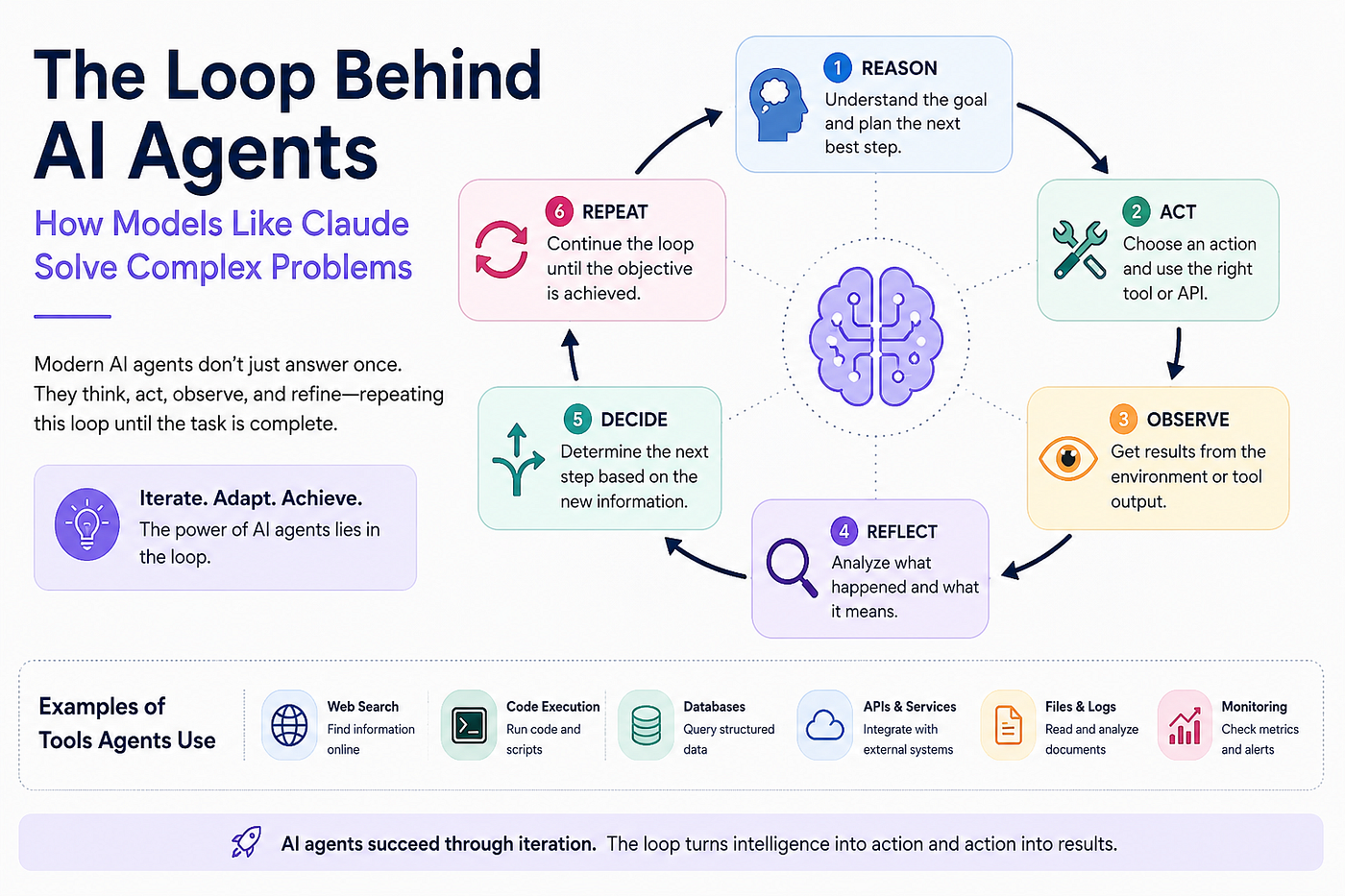
Hermes Agent operates on a closed-loop orchestration pattern consisting of:
- Sensors: Observability systems (metrics, traces, logs, events) and external inputs (incident alerts, tickets) provide telemetry to the agent.
- Reasoning & Decisioning: A decision layer combines retrieval-augmented generation (RAG), structured policy rules, and reinforcement or supervised learning to select candidate actions and estimate confidence levels.
- Skill & Tool Registry: Actions are implemented by idempotent skills like scripts, Terraform modules, Kubernetes patches, or API adapters, all stored in a versioned registry with metadata, tests, preconditions, rollback steps, and permissions.
- Execution & Orchestration: Actions run inside constrained scopes (canaries, rate-limited APIs, staging environments), with enforced approval gates, rate limits, and fallback conditions.
- Feedback Collection: Outcome signals such as success/failure, latency, cost metrics, and human feedback are captured and linked to action invocations for provenance.
- Learning & Update Pipeline: Logged experiences and labeled outcomes feed into model evaluation and policy update pipelines under governance, staged through sandboxes before production rollout.
This orchestration layer forms a crucial safety boundary, integrating with policy engines like Open Policy Agent (OPA), CI/CD pipelines, and IAM systems to enforce least privilege and traceability.
Data & Feedback Pipelines, Reward Functions, Model Updates
Robust self-improvement depends on disciplined data engineering and experimentation:
- Event and Experience Store: All decisions, inputs, environment states, and outcome metrics are persisted in a tamper-evident store — serving as the source of truth for training and audits.
- Reward Functions and Signals: Multi-objective reward functions balance reliability, safety, cost, and user satisfaction, penalizing increases in errors or security violations and rewarding MTTR reductions.
- Data Quality & Labeling: Outcomes are systematically labeled (true positive remediations, false positives, regressions), enriched by human annotations, and used for offline training and validation.
- Offline Evaluation & Simulations: Candidate policies are validated in replayed production traces, shadow mode, or synthetic environments to detect unintended side effects.
- Staged Model Updates: Blue/green deployments with rollback triggers allow safe rollouts of improved models only after passing safety checks.
- Model Versioning: All models, training data, and evaluations are stored immutably to enable reproducible audits and policy rollback.
Integration Points: CI/CD, IaC, Observability, Policy Engines
To be effective and secure, Hermes Agent integrates deeply with key platform components:
- CI/CD: Agents trigger jobs, validate builds, promote artifacts, or handle targeted rollbacks, submitting code changes as pull requests with required tests following GitOps principles.
- Infrastructure as Code (IaC): Using Terraform, CloudFormation, or Pulumi modules with GitOps patterns ensures all infrastructure changes undergo code review, testing, and are auditable.
- Observability: Integration with metrics (e.g., Prometheus), tracing (OpenTelemetry), logs, and incident management (PagerDuty, Opsgenie) provides critical diagnosis and validation signals.
- Policy Engines and Authorization: Policy-as-code tools like OPA and Kyverno check compliance and safety policies before execution, with least privilege enforced through IAM delegation and ephemeral credentials (OIDC, AWS STS tokens).
- Secrets and Vaults: Secrets management via HashiCorp Vault or AWS Secrets Manager is mediated through brokers issuing short-lived credentials and logging access.
Core Use Cases and Workflows
Incident Remediation and Self-Healing Infrastructure
Hermes Agent automates incident triage and remediation by:
- Correlating alerts and traces to identify probable root causes, selecting suitable skills (e.g., restarting a failing pod, scaling replicas, adjusting traffic splits).
- Executing low-risk, reversible remediations in canary or limited scopes, followed by accelerated SLO verification.
- Creating documented pull requests or runbook entries for every change, notifying owners with full provenance.
- Logging outcomes and incorporating human feedback to improve decision accuracy and confidence estimation.
Operational safety patterns:
- Start in read-only or suggest mode before enabling execute mode for approved low-risk actions.
- Require multi-factor approvals or human escalation for higher-risk operations.
- Maintain a “do-not-auto-remediate” list for sensitive services under investigation or regulatory restriction.
Deployment Optimization and Canary Automation
The agent can autonomously handle deployment strategies by:
- Designing and running canary experiments with automated traffic shifts based on predefined SLOs, metrics, and rollback limits.
- Tuning autoscaling parameters with workload simulations, balancing costs against latency.
- Automating image promotion/demotion in registries when tests and real-user metrics meet thresholds.
Example workflow: The agent proposes a progressive canary rollout with specified traffic percentages and SLO targets → the orchestration layer executes the canary → the agent monitors telemetry and applies scripted promotions or rollbacks per policy.
Security Triage and Policy Enforcement
Hermes Agent enhances security operations by:
- Automating triage of vulnerability scans and staging patches in gated environments.
- Enforcing policies by scanning IaC diffs and quarantining risky changes.
- Initiating incident containment steps (network ACL updates, pod quarantines) under strict audit trails.
Cost Optimization and Capacity Management
Continuous cloud cost optimization includes:
- Analyzing usage patterns to propose rightsizing recommendations and executing them during non-peak hours with A/B validation.
- Experimenting with autoscaling strategies to find cost-performance sweet spots.
- Identifying and reclaiming underutilized ephemeral resources after grace periods with owner notifications.
Governance, Safety, and Security
Human-in-the-Loop Patterns and Approval Gates
Essential human-in-the-loop (HITL) practices include:
- Suggest Mode: Produce recommended actions as pull requests or tickets for human review without automatic execution.
- Guarded Execute Mode: Automatically execute only low-impact, reversible actions; require pre-approval for high-risk changes.
- Policy-Based Escalation: Route uncertain actions to on-call or security owners via policy rules for quick approval.
- Confidence Thresholds: Block or human-route low-confidence actions.
Approval workflows must integrate with CI/CD and orchestration layers, ensuring auditable and time-stamped approval histories.
Auditability, Provenance, and Audit Trails
Enterprise adoption requires:
- Immutable logs recording all inputs, decisions, model versions, skill revisions, and execution details.
- Versioned artifacts linking all skills, models, and policy manifests to each action, enabling reproducibility and rollback.
- Explainability outputs with human-readable rationales explaining decisions, data sources, and alternatives.
- Compliance mappings connecting agent actions to regulatory controls for full audit traceability.
Secrets Handling and Least Privilege Policies
Best practices for secrets and privilege management:
- Use ephemeral, short-lived credentials issued via brokers (OAuth/OIDC, cloud STS) scoped tightly to each action.
- Avoid embedding long-lived secrets in models or logs; route all access through secure vaults with access logging.
- Provide just-in-time privilege elevation on approved actions, with background checks and two-step authorization for sensitive operations.
- Separate roles for agent authors, approvers, and runtime operators, enforcing least privilege for each.
Measuring Impact: KPIs and Benchmark Framework
Proposed Metrics
Operationalize agent value by measuring:
- Mean Time to Recovery (MTTR): Time from incident detection to verified recovery, primary for incident remediation.
- Change Failure Rate: Percentage of deployments triggering incidents or rollbacks.
- Deployment Frequency: Number of production deploys over time, reflecting velocity.
- Toil Hours Saved: Quantified reduction in repetitive manual tasks converted to engineering time saved.
- Model & Agent Health: Confidence calibration, action success rates, false positive remediation rates, and model drift indicators.
- Safety & Security KPIs: Auto-executed actions requiring rollback, policy violations caught, secrets access incidents.
Setting Baselines and Running Pilot Programs
Before rollout:
- Collect 30–60 days of pre-pilot telemetry capturing MTTR, deployment frequency, incident rate, and on-call hours.
- Define control groups to enable A/B comparison during pilots.
- Set numeric success criteria (e.g., 20% MTTR reduction, zero policy violations, >90% action success) and clear abort conditions.
- Build dashboards surfacing agent actions, canary results, and safety metrics for real-time monitoring.
Pilot Roadmap: 6-Step Rollout Plan
Step 1 — Discovery & Constraints
- Define goals (e.g., reduce MTTR by X% for a given service).
- Select a small, non-critical service with well-documented runbooks.
- Assemble a cross-functional team: platform engineers, SREs, security, legal/compliance.
Step 2 — Architecture & Policy Baseline
- Install telemetry and experience store.
- Define policies, least-privilege roles, and secrets handling.
- Establish approval gates and human-in-the-loop workflows.
Step 3 — Skill Development & Testing
- Develop a small skills library: prioritized runbooks, IaC modules, PR templates.
- Unit test skills in CI and run against staging clusters.
Step 4 — Shadow Mode & Offline Evaluation
- Run the agent in read-only/shadow mode to propose actions and measure hypothetical outcomes.
- Evaluate against baselines and gather human feedback.
Step 5 — Guarded Execution & Canary Expansion
- Enable limited autonomous execution for low-risk tasks with approval gates for higher-risk changes.
- Implement canary rollouts with automatic rollback thresholds for production-impacting actions.
Step 6 — Scale & Continuous Improvement
- Gradually expand scope based on performance and safety metrics.
- Establish periodic model validation, retraining, and formal skill change management.
Team Responsibilities
- Platform Team: Agent orchestration, CI/CD integration, model registry.
- SREs: Runbook authors, action validators, incident responders.
- Security/Compliance: Policy coding, approval, audit reviews.
- Data/ML Engineers: Reward function design, training pipeline management, model validation.
Case Studies and Example Results
Anonymized Case Study Templates
Incident Remediation Pilot
- Baseline: Service A — MTTR 3 hours, 15 weekly on-call pages, 3 deployments per week.
- Pilot Actions: Automated diagnostic correlation and low-risk restarts; 14 days shadow mode, 30 days guarded execution.
- Outcomes: MTTR reduction, SREs freed for backlog tasks, no safety incidents.
Deployment Optimization Pilot
- Baseline: Service B — manual autoscaling tuning, cost per request metrics.
- Pilot Actions: Executed autoscaling experiments with canaries, adjusted thresholds.
- Outcomes: Cost savings, latency improvement, stable change failure rate.
Case studies should anonymize company data, clarify pilot scope, and disclose measurement methods.
Integration Checklist
Before agent execution:
- Ensure full observability with metrics, tracing, centralized logs.
- Version and test skills registry with CI pipeline.
- Implement immutable experience store and audit logging.
- Set up ephemeral credential broker and secrets vault integrations.
- Define policy-as-code rules for security, compliance, and escalation.
- Build simulation sandbox and replay tests for offline validation.
Monitoring Signals to Watch
- Action success rate, time to execute.
- False positive remediation rate, rollback frequency.
- Agent confidence calibration versus success.
- MTTR and deployment frequency in scoped services.
- Model drift indicators and policy violation counts.
Policy Templates (High-Level Examples)
- Safety Policy: Deny any auto-execution modifying database schemas or billing without two human approvals.
- Compliance Policy: Route changes affecting personally identifiable data to compliance approvers.
- Rollback Policy: Automatic rollback triggered by key latency or error budget breaches within fixed windows
Future Outlook and Implications for DevOps Teams
Emerging Skills, Organizational Changes, and Regulatory Expectations
- Skills: Agent engineering and prompt/policy design; model validation and observability; policy-as-code and compliance engineering.
- Organizational Changes: Platform teams gain model-ops responsibilities; SREs shift from hands-on troubleshooting to oversight and policy management.
- Regulatory Expectations: Auditors will demand model version provenance, training data lineage, and explainable rationales for automated decisions — especially in regulated sectors. Enterprises should prepare for certification and attestation schemes ensuring end-to-end traceability.
Conclusion and Recommended Next Steps
Hermes Agent-style self-improving AI offers measurable benefits for DevOps teams: faster MTTR, safer deployments, reduced toil, and continuous operational tuning. Achieving this requires solid engineering investment in orchestration, observability, governance, and security.
Recommended next steps:
- Run a small scoped pilot using the 6-step rollout plan.
- Invest early in governance primitives: experience store, policy engines, ephemeral credentials, and audit trails.
- Rigorously define and measure success criteria upfront, using control groups for objective comparison.
- Adopt staged self-improvement: start in shadow/suggest mode, evolve to guarded execution, then expand autonomy based on validated metrics.
References
- DORA / Accelerate: State of DevOps — Google Cloud
- GitHub Copilot product information and adoption notes
- Open Policy Agent (OPA) documentation
- HashiCorp Vault documentation on secrets management
- Prometheus monitoring system
- OpenTelemetry project
- Auto-GPT GitHub repository (illustrative of open agent frameworks)
- CNCF Cloud Native Survey (trends in observability and automation)
- Gartner Market Guide and Forrester research on AIOps and autonomous agents
- PagerDuty incident response patterns and SRE practices
- PagerDuty blog on incident response and automation best practices
- Kubernetes and GitOps patterns for IaC and automated deployment
메타데이터
- post_id
- 8ad3efd55ffd
- slug
- hermes-agent-the-self-improving-ai-agent-thats-rewriting-devops-in-2026-8ad3efd55ffd
- url
- https://blog.axiomio.com/hermes-agent-the-self-improving-ai-agent-thats-rewriting-devops-in-2026-8ad3efd55ffd
- canonical_url
- https://blog.axiomio.com/hermes-agent-the-self-improving-ai-agent-thats-rewriting-devops-in-2026-8ad3efd55ffd
- author_url
- https://medium.com/@Axiom_IO
- status
- ok
- fetched_at
- 2026-06-10 08:17:25