Flamingo-watching in Yucatan, Mexico
Pink, pretty, and full of beta-carotene
Flamingo-watching in Yucatan, Mexico
Pink, pretty, and full of beta-carotene
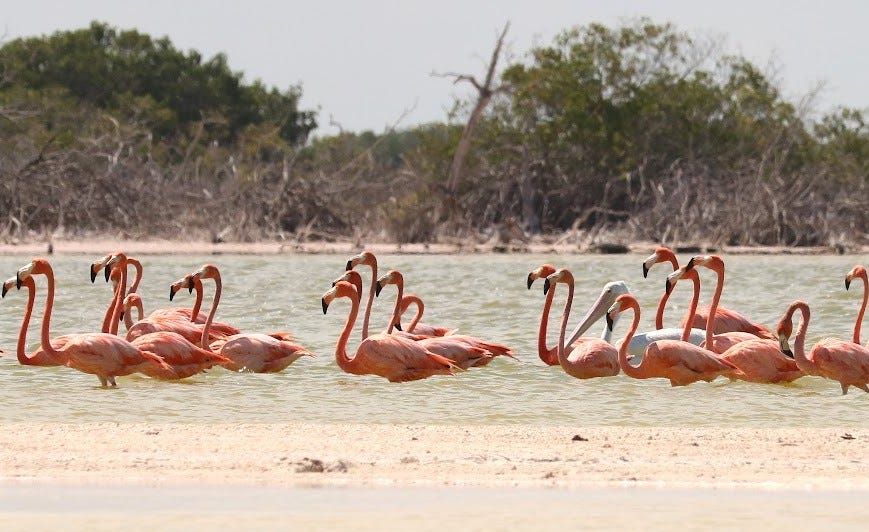
Flamingos in Progreso, Mexico. All photos by the author (or an author’s family member).
In April, my partner and I met up with my parents in Progreso, a small port city in Mexico’s Yucatan Peninsula. They flew south from New Jersey, we flew north from Peru.
This was our first time meeting in a “third place.” It’s a painfully expensive way to get together (four airfares instead of two, paid lodging instead of staying in one of our homes), and we might never get to do it again. But, it was wonderful to travel together. Progreso is a special little town, and Yucatan is beautiful, full of history, and brimming with wildlife.
On this trip, I met quite a few new birdies, like the turquoise-browed motmot, the tropical mockingbird, and the Yucatan woodpecker. A highlight was watching Yucatan nightjars hunt bugs in our backyard, every evening at dusk.
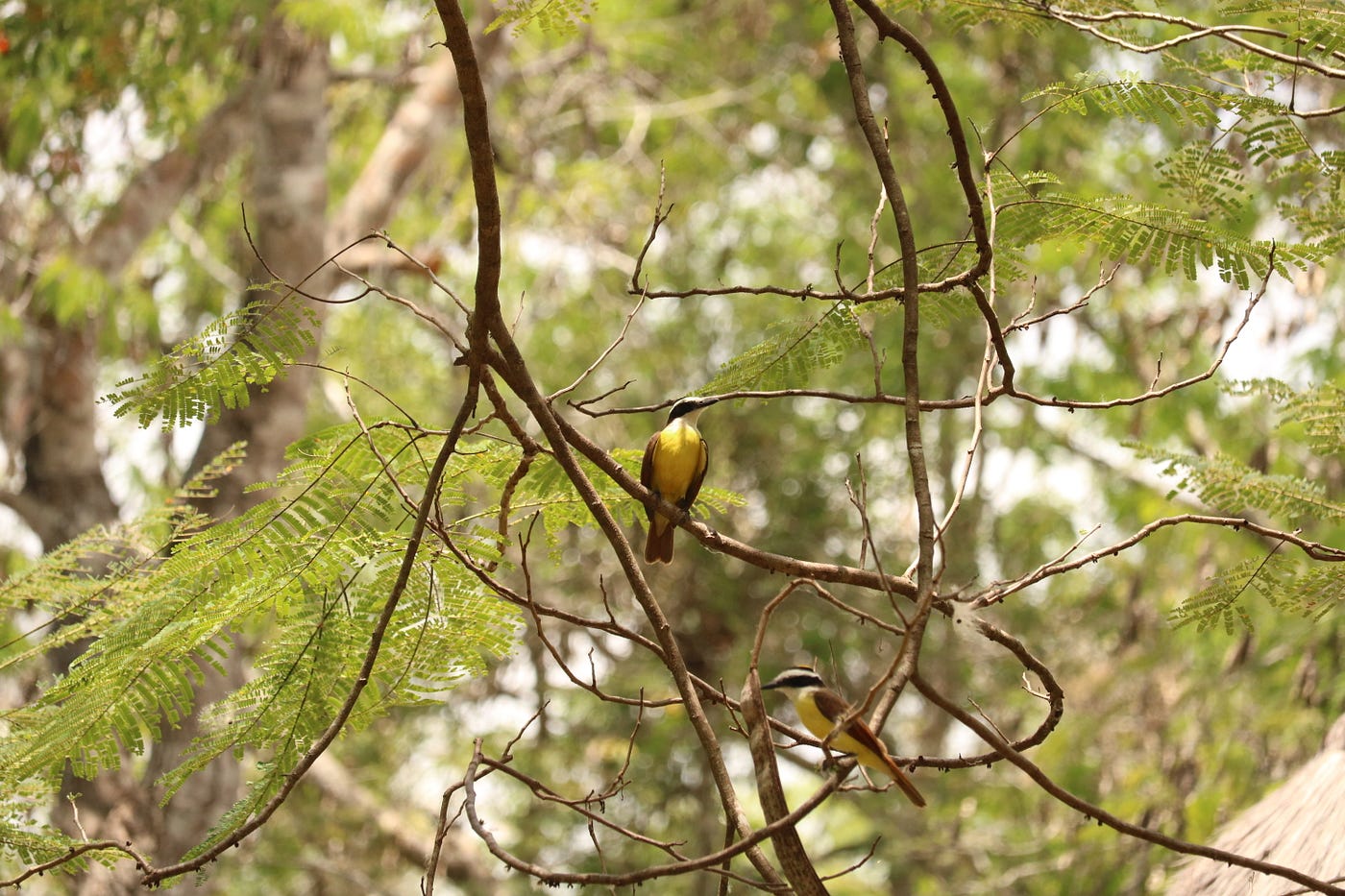
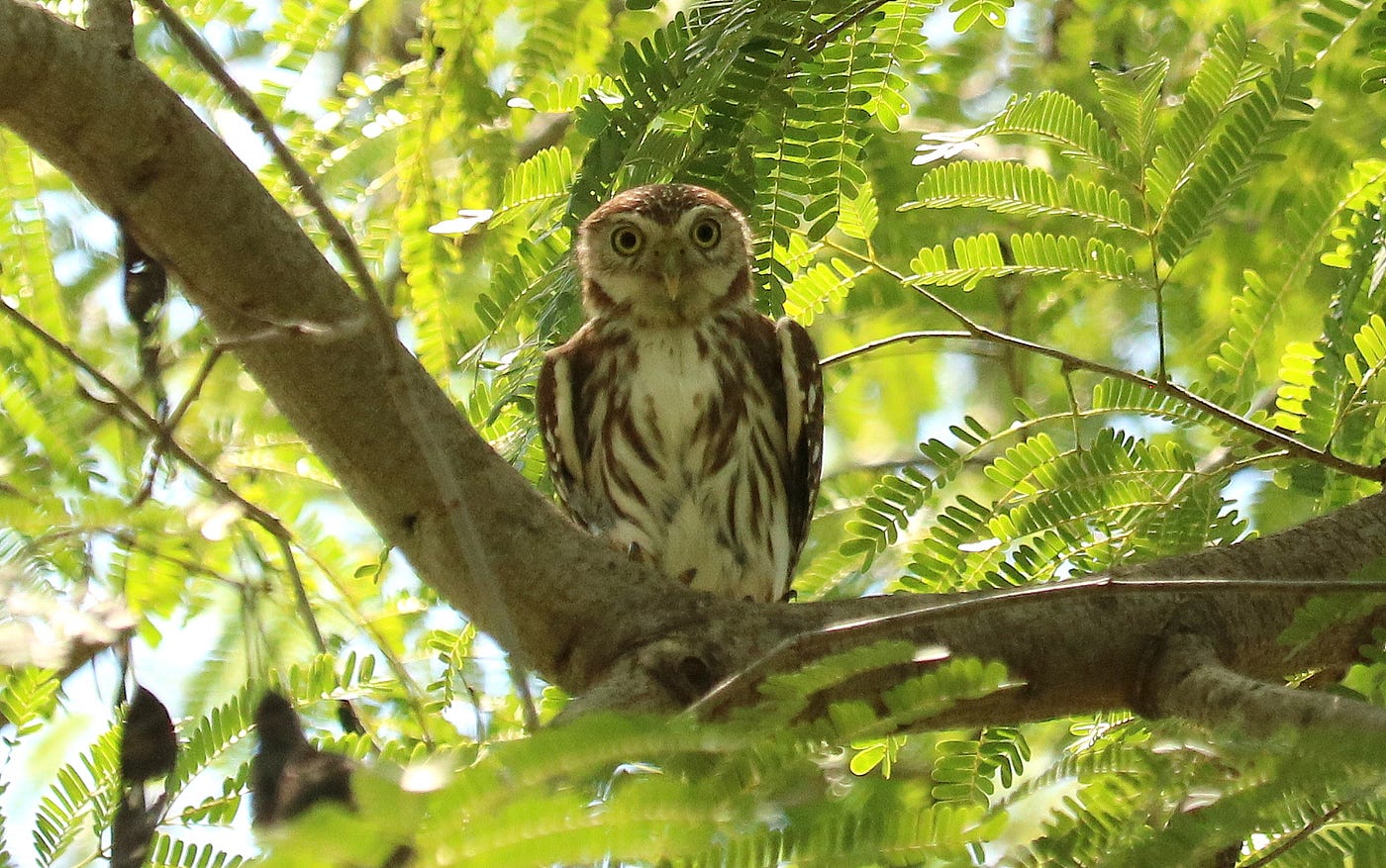
Birding highlights from Yucatan. Left: two social flycatchers (Myiozetetes similis). Right: ferruginous pygmy owl (Glaucidium brasilianum).
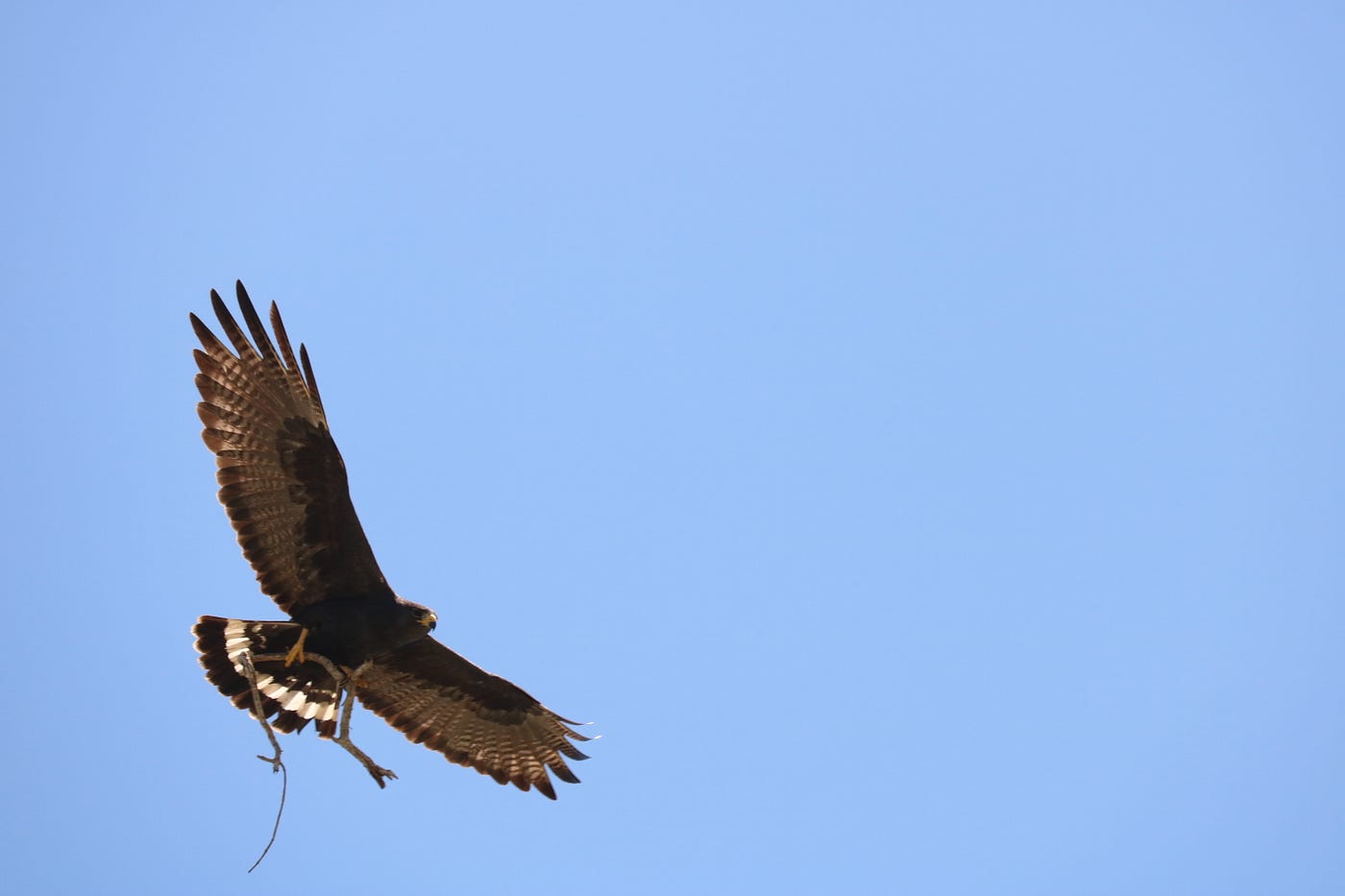
Zone-tailed hawk (Buteo albonotatus) carrying a stick.
The birds I was most excited for were the flamingos.
There are six flamingo species. Four are native to the Americas, while the other two occur in Africa, Southern Europe, and southwest Asia. The species found in Yucatan is the American flamingo (Phoenicopterus ruber). Of the six species, American flamingos have the brightest plumage.
My partner and I don’t own a camera. So, it was a special treat on this trip to have access to my dad’s camera.
We took some obligatory flamingo photos with our phones, of course… totally worthless. While we waited in line for our turn with the camera, we also attempted the art of phone + binoculars photography.
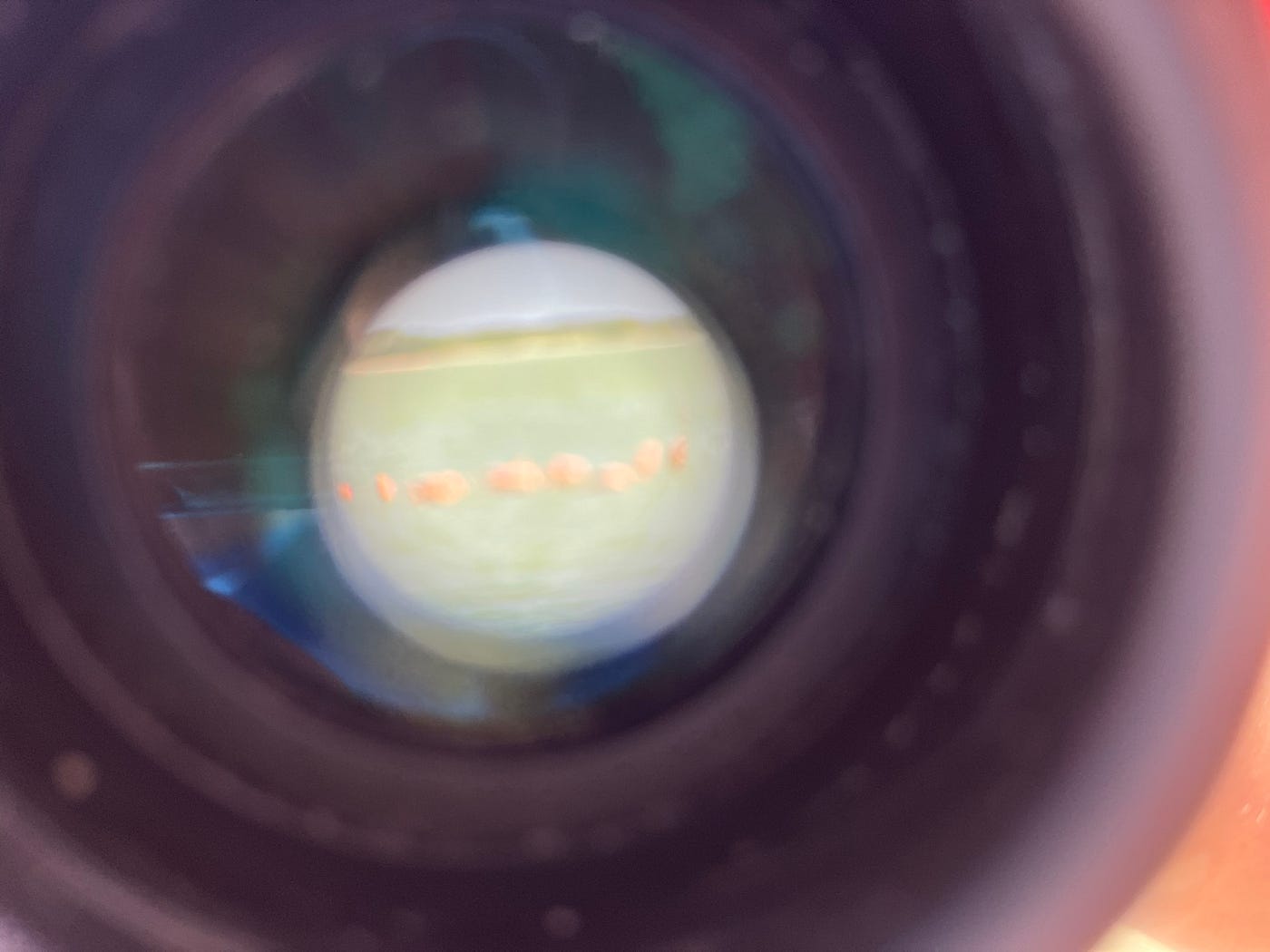
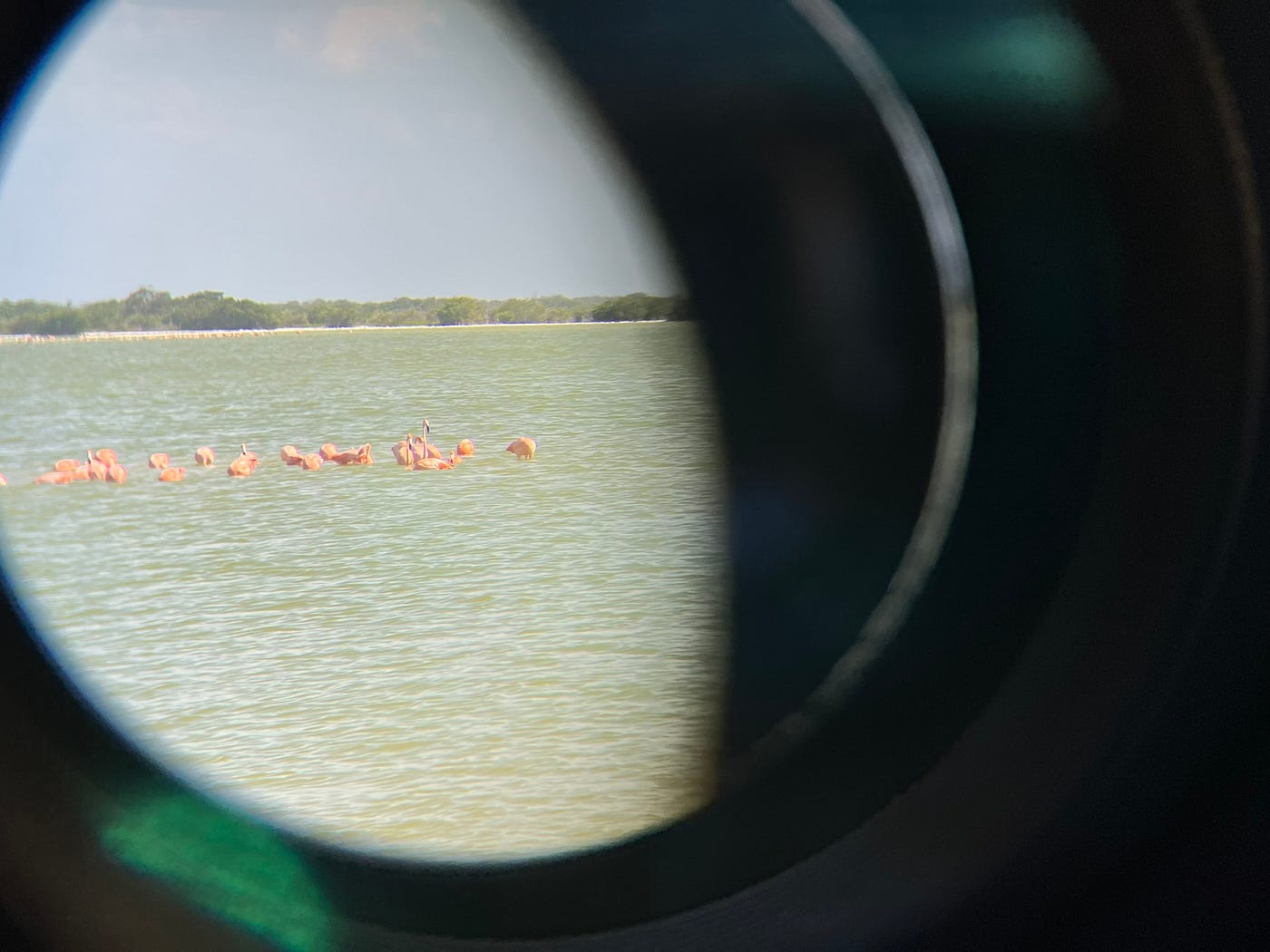
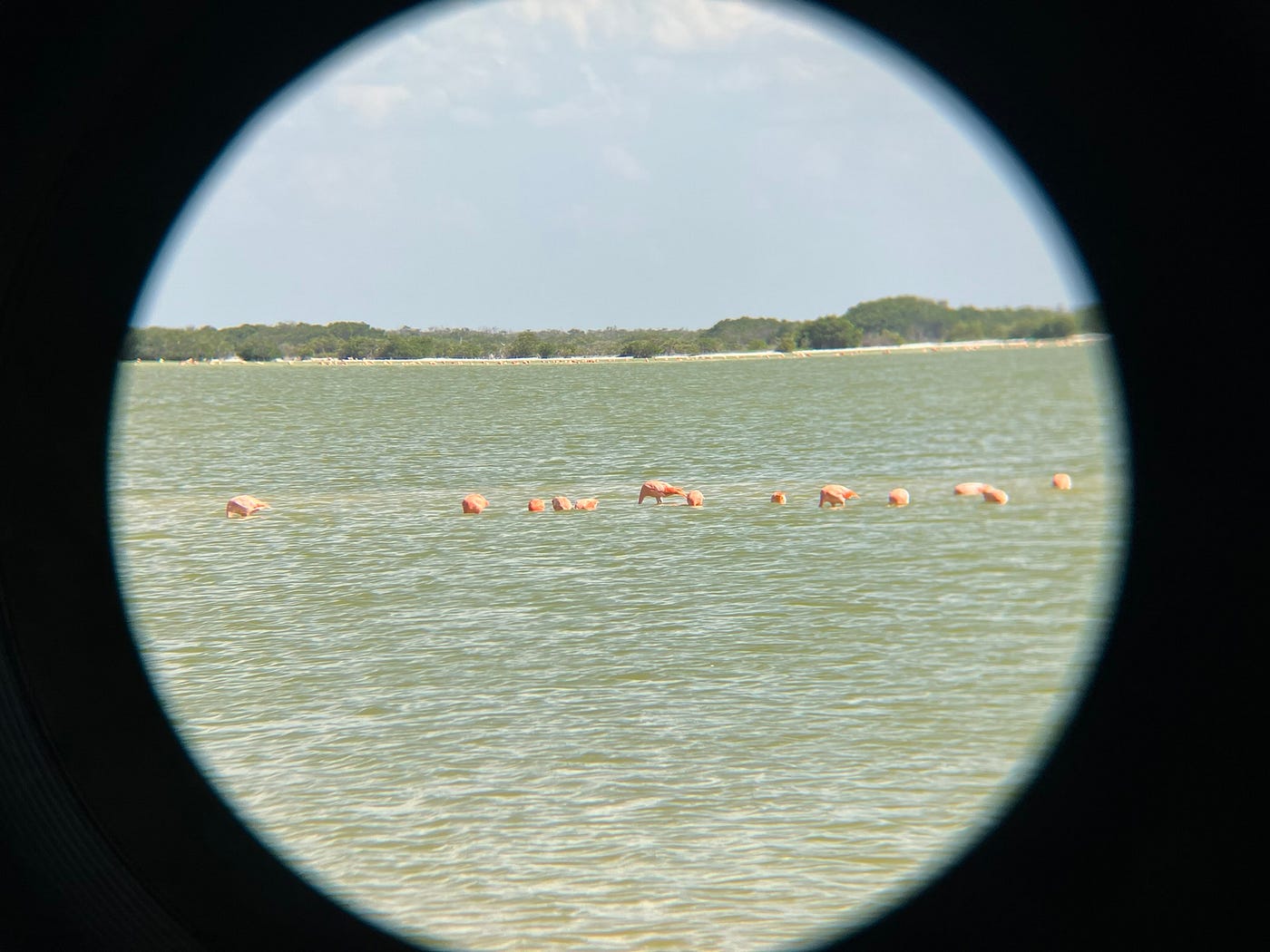
Getting progressively better at taking photos through a binoculars lens.
It’s a painstaking process. We worked as a team, one of us holding the binoculars, the other squaring up the phone and tapping the photo button. You need to get the angles just right, hold both devices very still, and execute the button-push without ruining everything. All while your subjects stay sufficiently still.
Eventually, we got a shot that I’m quite fond of:
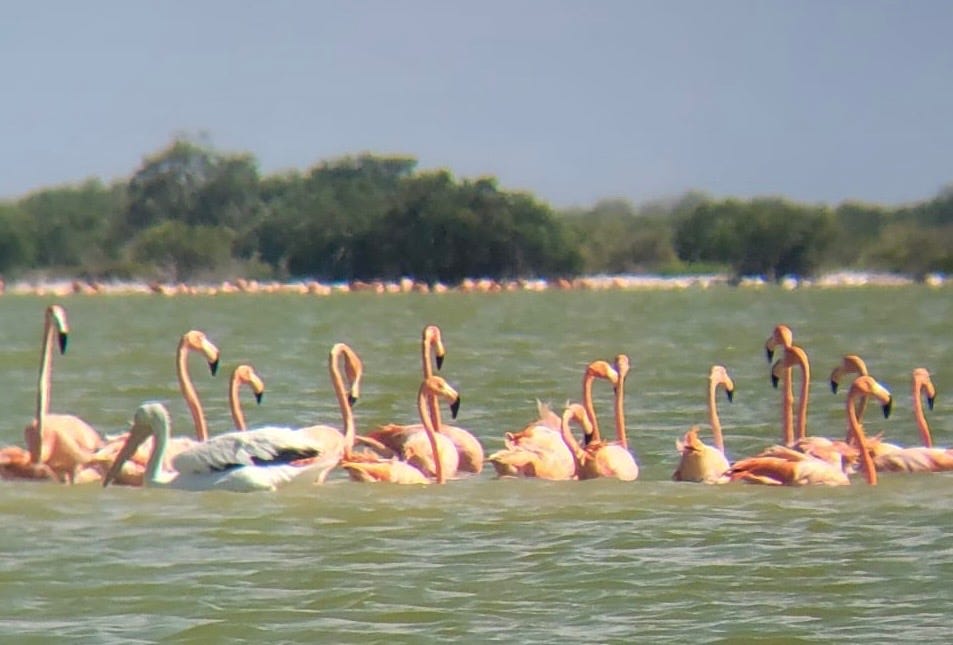
It’s low-def, but it’s grainy in a good way.
Obviously, the photos we took with the “real” camera captured a much greater level of clarity:
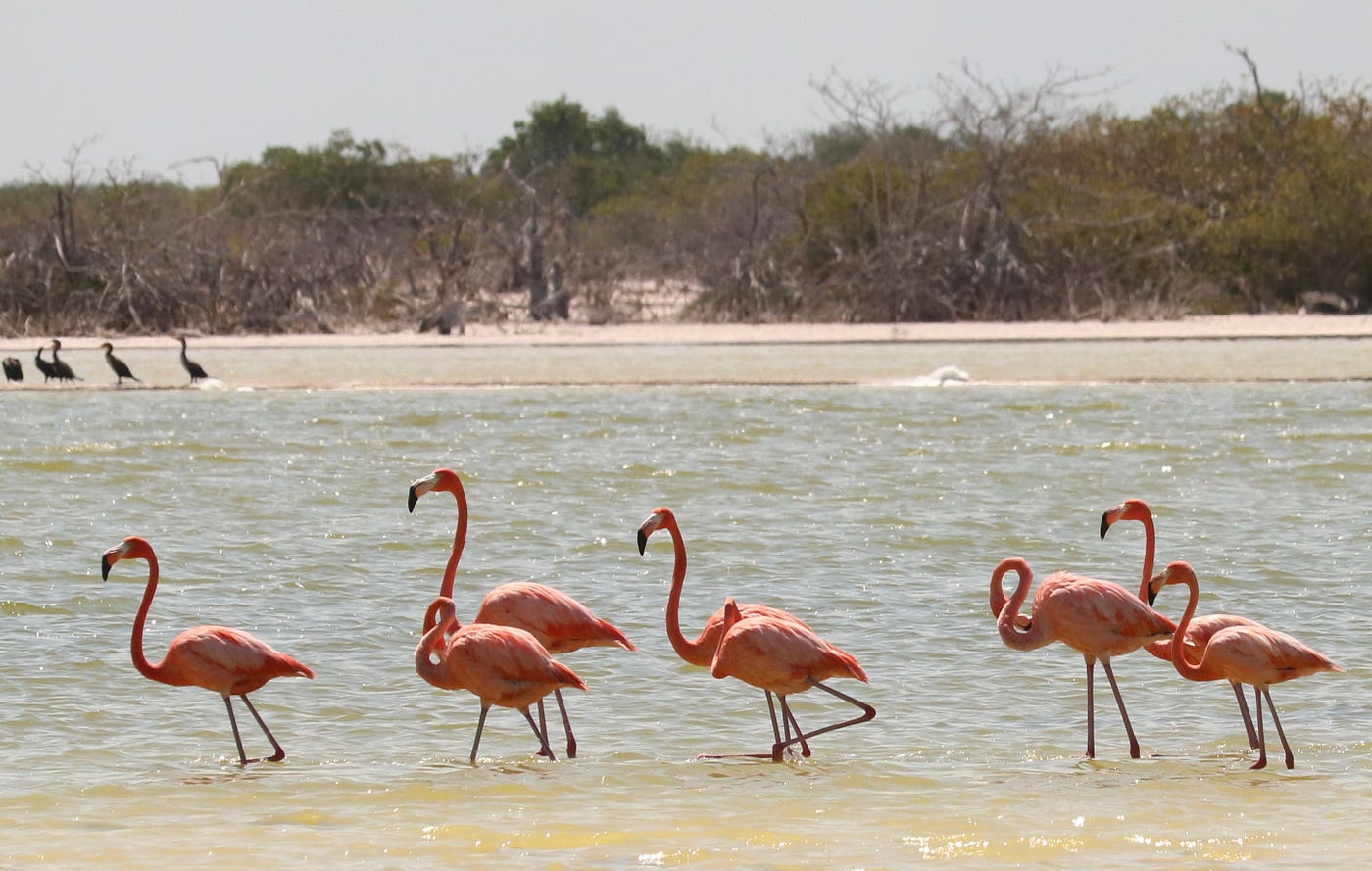
Progreso isn’t quite an island, as it’s connected to the peninsula by a bit of land. The city is on a long, thin mass that lies parallel to the mainland, separated by ocean and wetlands. That’s where we spotted flamingos. This isn’t one of Yucatan’s best-known spots for seeing them, but the entire northern coast is known as the “flamingo coast,” as they’re common throughout.
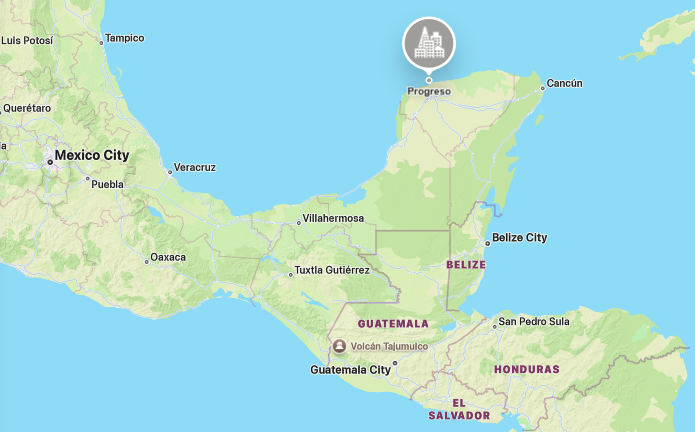
Apple Maps screenshot.
You don’t have to be an avid birder to be wowed by flamingos. They stand up to 4.5 feet (1.4 m) tall, with wingspans as broad as five feet. And they’re nature’s most famously and fabulously pink creatures. That hue comes from consuming copious amounts of beta-carotene via brine shrimp and algae.
A flamingo’s appearance is so different from what we’re used to that they confound our sensibilities. They’re extravagantly beautiful and elegant, but also bizarre and sort of wrong-looking.
Their bills are enormous and oddly shaped. Rather than sloping evenly to a point, they make an awkward downward turn, while also changing from pink to black.
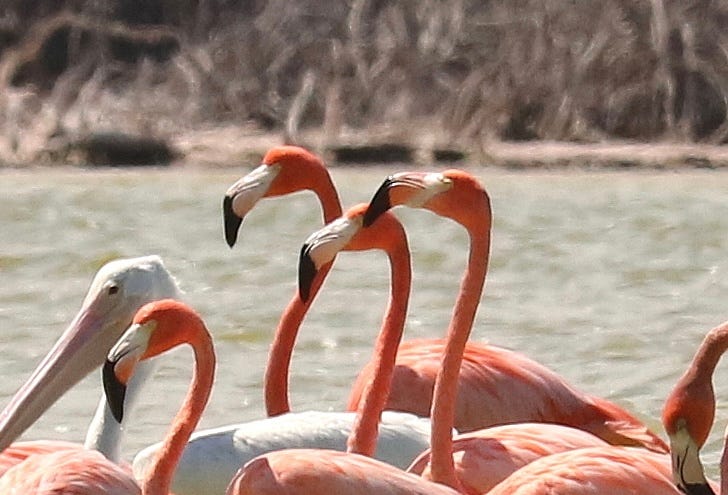
Yes, they have a pelican friend.
The way the head tilts down in front of the neck, which can S-curve dramatically, creates a sort of coyish posture that adds to the intense expressiveness of the face.
That long neck goes on and on, converging in the big pink body with an even longer set of legs.
Those legs are stick-thin and comprise another surprising set of angles. They seem to bend the wrong way at the knee joint. In fact, those are ankles — very high-up ankles connected to super-long feet.
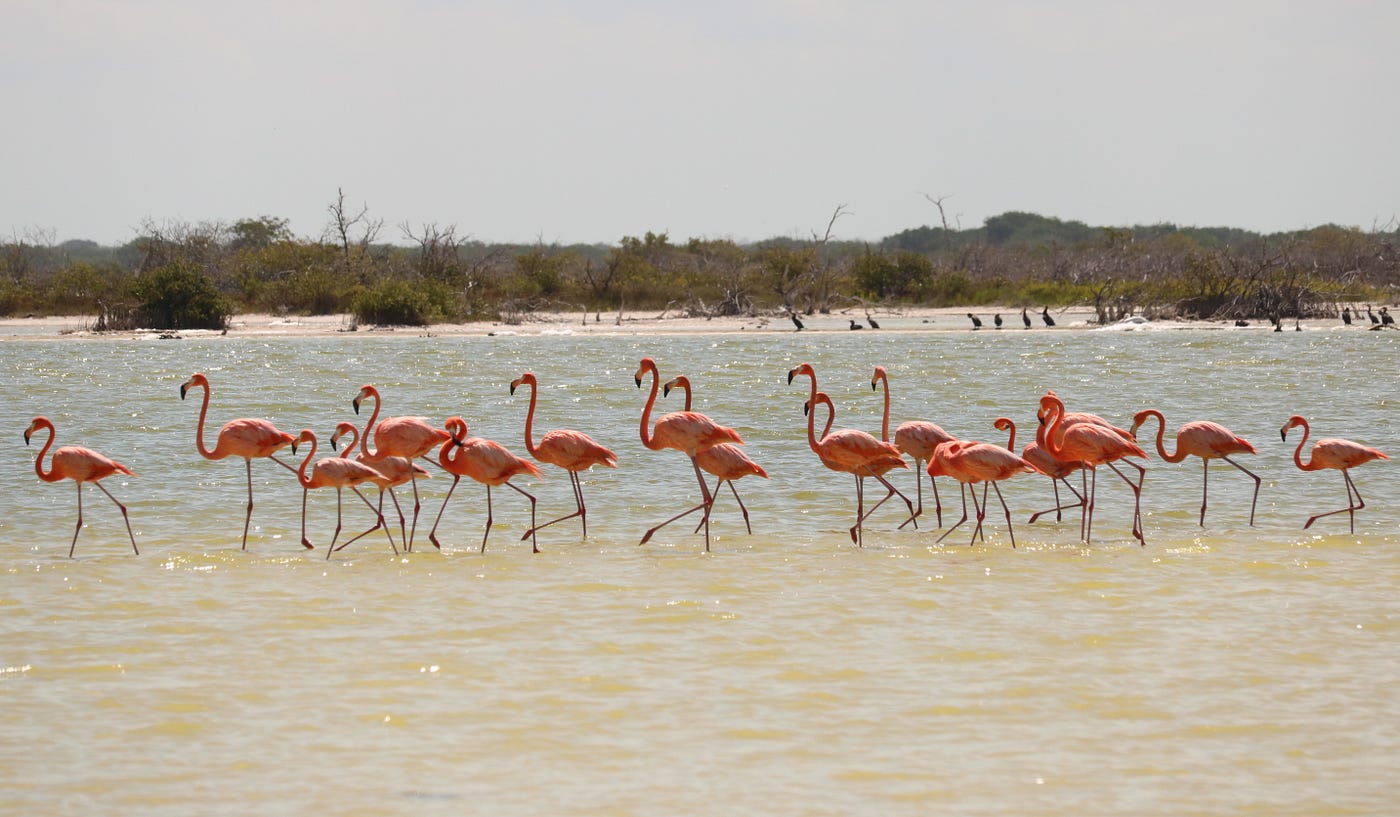
Flamingos are comfortable on their feet, where they spend their days wading through shallow water. They’re also capable flyers. However, their unusual bodies do present difficulties.
They need a running start to take flight. So, if a group is startled, it becomes a dangerous mess of necks and legs and wings, which can easily result in a broken leg — a fatal injury. Thus, you should never intentionally spook these birds in order to enjoy the spectacle of their flight. It’s a good reminder to always minimize your contact with wild animals to avoid causing unforeseen harm.
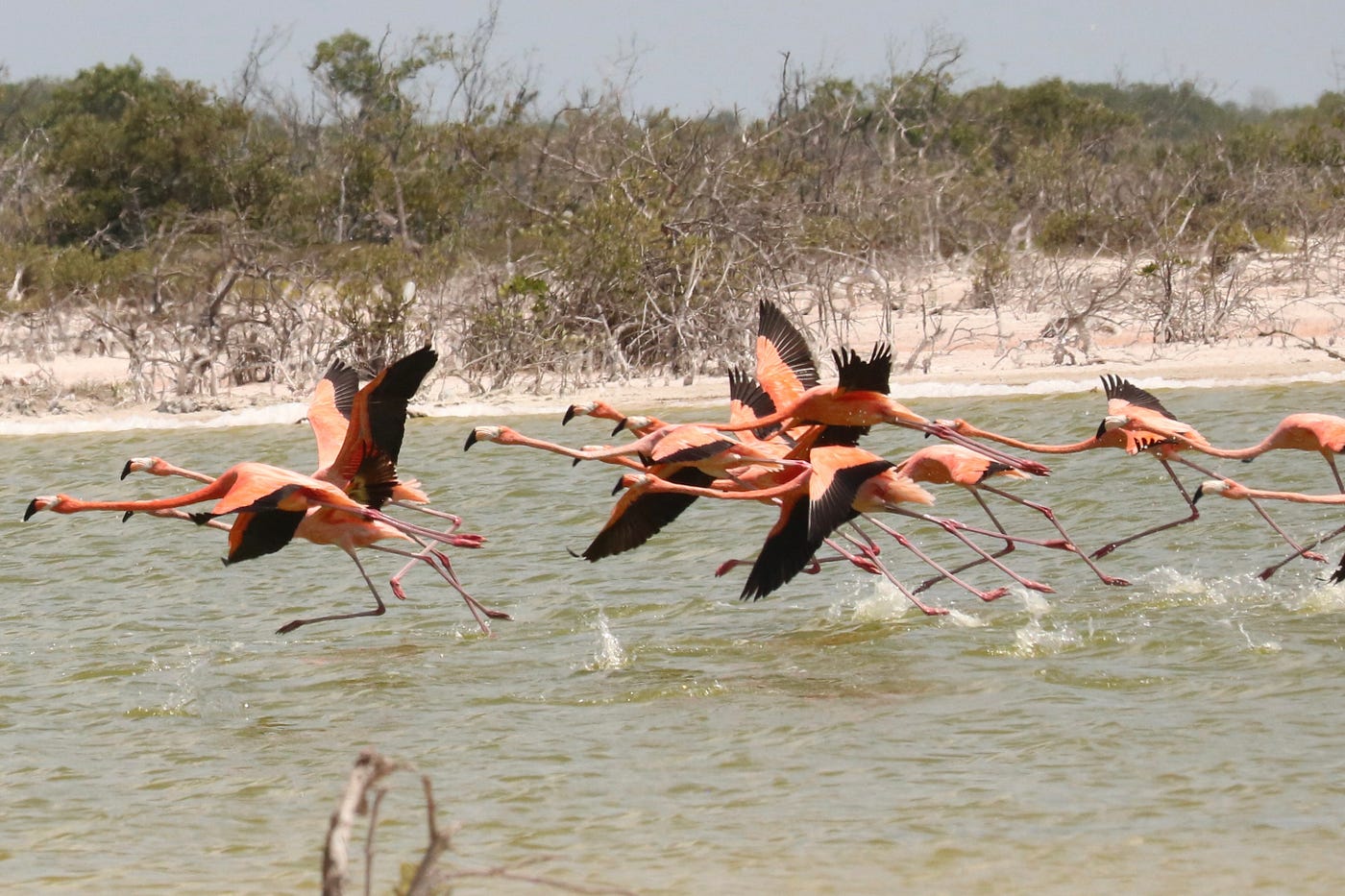
Don’t worry, we didn’t startle them. These photos were taken from a great distance.
Even when they take flight calmly, it’s a chaotic scene. Those long legs are a lot to manage.
In flight, they’re gorgeous. When their wings are lifted, black feathers appear.
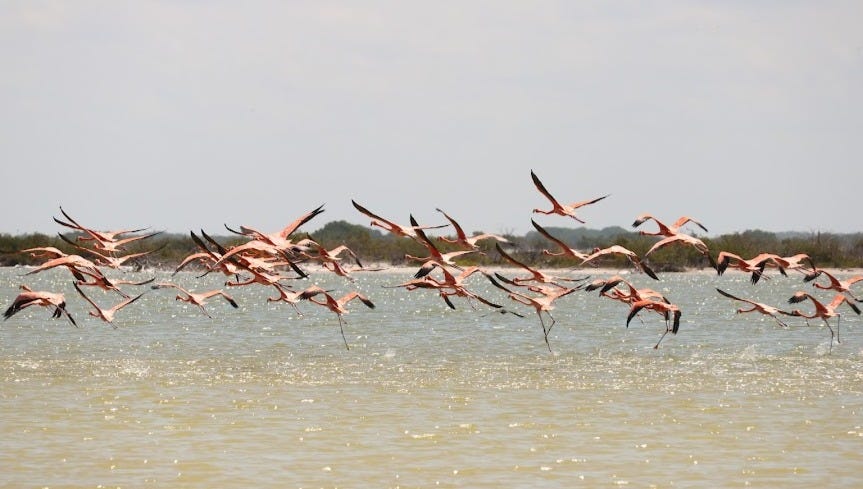
Flamingos lead rich social lives. They can live up to 30 years in the wild, much longer than most birds. They spend those long lives in large colonies, usually numbered in the thousands. Within the large group, they form strong pair bonds. Mates work together to build nests, protect eggs, and feed chicks.
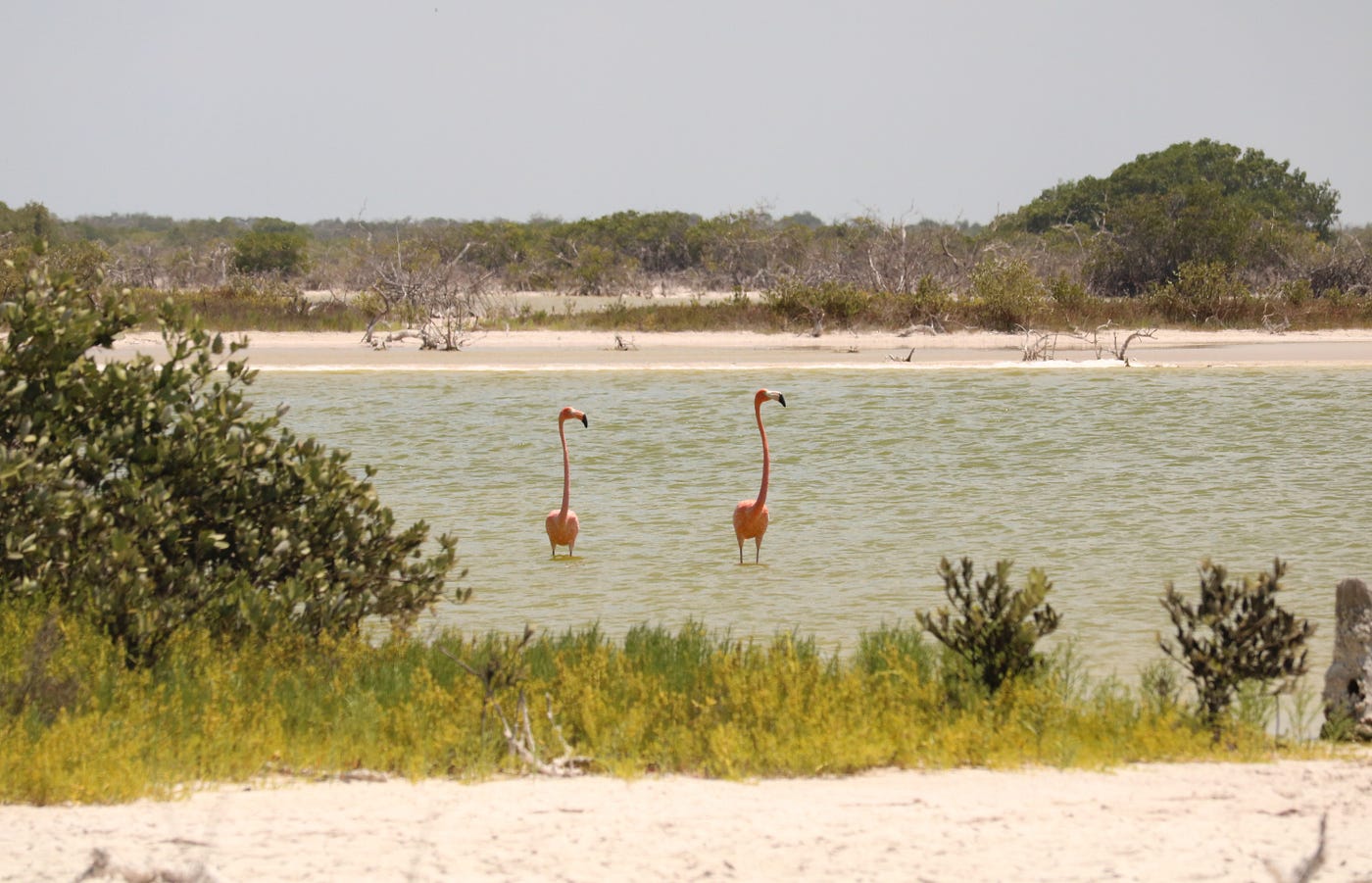
How long have these two been together, always turning their heads in sync like this, seeing the world from the same vantage?
Long-term mated pairing is complex and wonderful, but there’s much more to flamingo society. They also form same-sex pair bonds, close-knit trios and quartets, friendships, and cliques. Researchers have even observed enemy relationships within flocks — certain flamingos that avoid one another and display hostility when they cross paths.
Some flamingos make short migrations, but they usually spend most of their lives in the same small area. They’re as deeply connected to their bit of coast as the local fishermen, while tourists like me come and go.
메타데이터
- post_id
- 8ad4ff654a09
- slug
- flamingo-watching-in-yucatan-mexico-8ad4ff654a09
- url
- https://medium.com/picturethis/flamingo-watching-in-yucatan-mexico-8ad4ff654a09
- canonical_url
- https://medium.com/picturethis/flamingo-watching-in-yucatan-mexico-8ad4ff654a09
- author_url
- https://medium.com/@kennyminker
- status
- ok
- fetched_at
- 2026-06-26 21:52:29