The Life and Afterlife of Tutankhamun
A child king, a quiet reign, and an accidental legacy
The Life and Afterlife of Tutankhamun
A child king, a quiet reign, and an accidental legacy
Photo by Jens Aber on Unsplash
The name Tutankhamun is now so familiar to us that it almost feels inevitable, as though his place in history was always secure. His image circulates constantly, often stripped of context and reproduced so frequently that it is sometimes used to represent Ancient Egypt as a whole. It appears on museum banners, textbooks, documentaries, and souvenirs, so often that it begins to feel less like a person and more like a symbol. That familiarity makes it easy to assume that Tutankhamun must have been an important ruler during his lifetime, someone whose authority shaped the political or religious direction of his world, and, because of this, we still remember him today. In reality, very few points to this. Tutankhamun’s importance does not come from what he did while alive, but from what happened to his body after he died.
He was born into the Eighteenth Dynasty at a point when the Egyptian state was already under strain. His probable father, Akhenaten, had attempted to dismantle Egypt’s religious system by replacing its traditional gods with the exclusive worship of the Aten. Before Akhenaten, Egypt had many gods. Different gods for different places, jobs, and ideas, and a powerful class of priests who ran temples, owned land, and had huge influence. Akhenaten tried to get rid of all of that. He pushed the idea that there was only one god worth worshipping, called the Aten, which was associated with the sun.
This was not a symbolic change or a gradual shift in belief. It was carried out through the closure of temples and the removal of priesthoods that had long held social, political, and economic power. The reform disrupted relationships that had existed for centuries, creating resentment among elites and uncertainty among the wider population. When Akhenaten died, that resentment did not disappear. Tutankhamun, at only nine years old, entered this world without any choice or preparation, inheriting the consequences of decisions made before he was old enough to understand what they meant.
When Tutankhamun became pharaoh, the title gave him status but very little control. Egypt did not, however, pause because a child now sat on the throne. Administration continued through the same officials, advisers, and military leaders who had survived the previous reign. Real authority rested with older figures within the court, especially Ay and Horemheb, whose experience and position allowed them to guide policy while remaining formally subordinate to the king. Tutankhamun appeared in public as pharaoh, took part in ceremonies, and lent his name to decrees, but his presence served more as confirmation than direction. Power continued to operate as it always had; only the figure at its centre had changed.
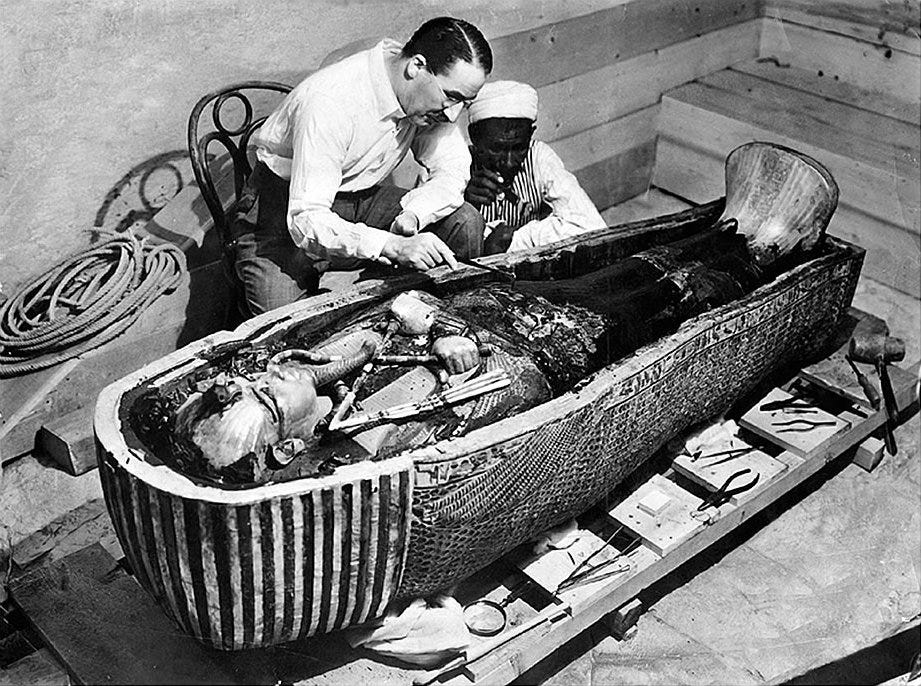
Carter opening Tut’s tomb / Wikimedia Commons
This arrangement became especially clear when Egypt began to move away from Akhenaten’s religious reforms. Early in his reign, Tutankhamun’s name was altered, removing the reference to the Aten and replacing it with Amun. The change signalled a return to the traditional gods and a quiet rejection of the previous regime’s ideas. It was framed carefully, as restoration rather than reversal, allowing the state to correct course without openly criticising Akhenaten himself. That this shift occurred under the authority of a child mattered. Tutankhamun provided continuity without responsibility, absorbing the public weight of change while protecting the men who were actually carrying it out.
Across the years attributed to his reign, there is little sign of independent decision-making. The monuments and inscriptions associated with him focus on repair rather than expansion or ambition. Temples were reopened, rituals resumed, and a sense of normality was slowly reconstructed after years of disruption. In visual representations, Tutankhamun often appears beside larger, more dominant figures, reinforcing the impression that kingship during this period was exercised around him rather than by him. His reign functioned as a pause, a way of stabilising the state while keeping real authority firmly out of his hands.
Tutankhamun died at around eighteen or nineteen years old, bringing this arrangement to an abrupt end. Modern examinations of his remains suggest that he was in poor health, marked by inherited conditions and disease, including malaria. A fracture to his leg shortly before death has led to speculation about accidents or complications, though no definitive cause has ever been established. What is clear is that his death was sudden and politically awkward. He left no surviving heir, and the question of succession was resolved quickly by those already closest to power.
The nature of his burial reflects this urgency. The tomb in which he was placed is unusually small for a pharaoh, and its contents suggest that it was not originally intended for him. Many of the objects buried with him appear to have been altered or reinscribed, their original ownership changed to fit his name. The burial lacks the scale and preparation seen in the graves of more prominent rulers, and it reads less like a carefully planned commemoration than a practical response to an unexpected vacancy. After his burial, Tutankhamun faded from view. The rulers who followed worked to erase the Amarna period from official history, and Tutankhamun’s name disappeared along with it.
For more than three thousand years, he remained largely unknown. His tomb, sealed by debris and later construction, avoided the looting that stripped most royal burials of their contents. This was not due to reverence or protection, but to chance. In being overlooked, it survived.
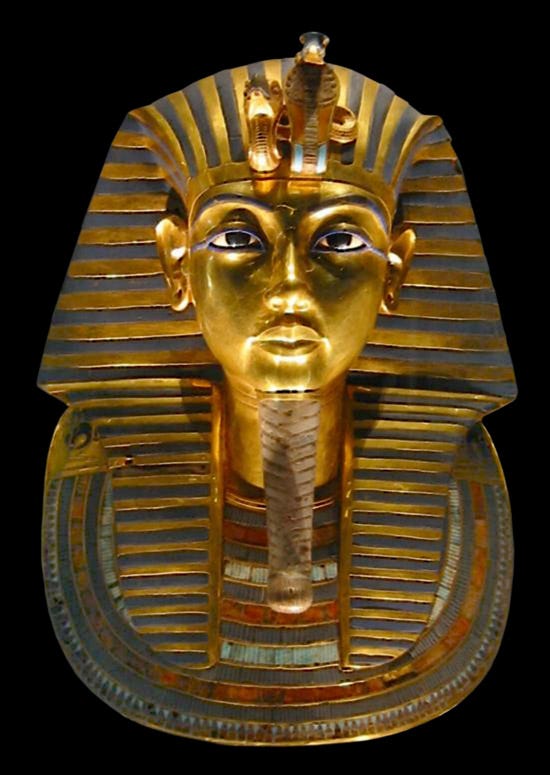
Tutankhamun’s death mask / Wikimedia Commons
When Howard Carter uncovered the tomb in 1922, the reaction was immediate and far greater than Tutankhamun’s historical role might have suggested. The burial was unusually intact, filled with objects whose quantity and quality had rarely survived elsewhere. Gold, furniture, weapons, ritual items, and personal belongings emerged from a space that had remained closed since the Bronze Age. The discovery transformed Tutankhamun almost overnight from a marginal figure into the most recognisable pharaoh in history, not because of what he had done, but because his death had gone unnoticed for long enough to escape interference.
In the years that followed, Tutankhamun’s image drifted further away from his life. He came to represent Egyptian power and mystery, his golden mask elevated to iconic status. Stories developed around the tomb that focused on curses and danger, despite their absence from the historical record. Meanwhile, the men who had exercised real authority during his reign remained largely forgotten, while the child through whom they governed became permanently visible.

What Tutankhamun might have looked like / Wikimedia Commons
Tutankhamun’s reign was brief, his authority limited, and his impact small. What endures is not his rule, but the physical evidence of his burial, preserved by neglect and revealed by accident. His importance today is not down to his actions, but in the fact that his remains went undiscovered for so many years.
Tutankhamun didn’t live very long; he ruled relatively quietly and then vanished almost completely. Today, he is unavoidable thanks to the discovery of his tomb and the story we learned from its artefacts.
메타데이터
- post_id
- 8aeeb4e55c29
- slug
- the-life-and-afterlife-of-tutankhamun-8aeeb4e55c29
- url
- https://medium.com/illumination/the-life-and-afterlife-of-tutankhamun-8aeeb4e55c29
- canonical_url
- https://medium.com/illumination/the-life-and-afterlife-of-tutankhamun-8aeeb4e55c29
- author_url
- https://medium.com/@liamhb
- status
- ok
- fetched_at
- 2026-07-22 13:40:40