CIVILISATIONAL ERASURE
THE CIVILISATIONAL ERASURE OF EUROPE
CIVILISATIONAL ERASURE

THE CIVILISATIONAL ERASURE OF EUROPE
The term “civilisational erasure” originates in the National Security Strategy (NSS) of the USA, a policy document released by the Trump administration in December 2025. It describes an existential threat to Europe’s cultural, national, and demographic identity, portrayed as more severe than the continent’s economic stagnation. The phrase is used in the following passage:
“But Europe’s real problems are even deeper. Continental Europe has been losing share of global GDP — down from 25 percent in 1990 to 14 percent today — partly owing to national and transnational regulations that undermine creativity and industriousness. But this economic decline is eclipsed by the real and more stark prospect of civilisational erasure. The larger issues facing Europe include activities of the European Union and other transnational bodies that undermine political liberty and sovereignty, migration policies that are transforming the continent and creating strife, censorship of free speech and suppression of political opposition, cratering birth rates, and loss of national identities and self-confidence. Should present trends continue, the continent will be unrecognizable in 20 years or less.”
This section critiques Europe’s trajectory under EU influence and progressive policies, arguing that unchecked trends, particularly mass migration leading to demographic shifts, low birth rates, and erosion of sovereignty, could render Europe culturally unrecognizable and strategically unreliable as an American ally.
An infamous example of “civilisational erasure” was the Sack of Rome in 410, when the Visigoths stormed through the Salarian Gate. Although the occupation of the city was brief Rome never fully recovered. This event horizon is one of the most symbolically loaded moments in Western history, and it is a revealing analogy when placed next to the NSS phrase “civilisational erasure.”
Rome had not fallen to a foreign enemy in nearly 800 years. For centuries the city had been treated as inviolable, almost divinely protected, and the event shattered the Roman elite’s self-conception as the eternal centre of the world. The western empire limped on for another 66 years, but never truly recovered.
The Sack of Rome was less a single cataclysm than the moment when a long, slow erosion of confidence, administrative capacity, and demographic vitality suddenly became undeniable. That is precisely the sense in which the NSS deploys “civilisational erasure” — not an apocalyptic overnight conquest, but a creeping realization that the cultural, political, and demographic underpinnings of a society have already slipped away.

The NSS emphasizes the erosion of free speech as symptomatic of civilisational erasure. ‘Non-Crime Hate Incident’ laws are a unique feature of the UK and are essentially based on superstition and perceived grievances. Racialist religious ideologies, and the laws they inspire, are the contemporary equivalent to the witch trials of previous centuries. They are an indicator of civilisational erasure in the UK and by extension in Europe.
The analogy to the witch trials captures a key tension in the UK’s Non-Crime Hate Incident (NCHI) framework. It is a system built on subjective perceptions of harm, often without objective evidence or due process, which echoes the superstitions, grievance-driven persecutions of the witch trial era. They function as a modern mechanism for enforcing ideological conformity — much like how witch accusations served to police social boundaries in times of anxiety.
An NCHI is defined as “any non-criminal incident which is perceived, by the victim or any other person, to be motivated by hostility or prejudice” toward a person with protected characteristics. The key word is “perceived,” no actual hostility needs to be proven, and the “any other person” clause means bystanders or even unrelated third parties can trigger a record.
Critics define NCHIs as Orwellian or Kafkaesque because records can be kept indefinitely, appear on enhanced DBS (Disclosure and Barring Service) checks, and often happen without the knowledge of the accused. Over 250,000 NCHIs were recorded from 2014–2019 alone. This is a tool that incentivizes self-censorship, as people fear a permanent “hate” stain on their record for everyday speech.

Text of the Malleus Maleficarum
The witch trial comparison is more than metaphorical — it is a recurring critique in free speech discourse. Early modern Europe’s witch hunts (peaking 1560–1630, with ~50,000 executions across the continent) were lawful, enshrined in texts like the ‘Malleus Maleficarum’ (Hammer of Witches), which framed witchcraft as a heretical threat based on perceived pacts with the devil.
Accusations often stemmed from grievances (such as a neighbour’s cow dying after an argument), amplified by superstition and moral panic during times of plague, war, or religious strife. Trials relied on spectral evidence (invisible harms) and community testimony, with little due process — much like how NCHIs hinge on subjective “hostility” without requiring proof.
In Europe similar laws become a new “crimen exceptum” — an exceptional crime justifying extraordinary measures, just as witchcraft was treated as beyond normal legal protections. Propelled by racialist religious ideologies contemporary identity-based laws can devolve into scapegoating, where protected groups’ grievances become sacred, and dissent is heresy. In the UK, trials for these offences will no longer be subject to a jury, placing a single judge in the role of the Witchfinder General of the reclaimed witch trial era.
The UK Justice Secretary has announced that juries will be abolished except for the most serious crimes such as manslaughter and murder. Thus the ancient protections that have existed since the Magna Carta of the thirteenth century are casually revoked. Barons won this fundamental freedom from King John’s absolutism, seeding habeas corpus, parliamentary sovereignty, and the jury as the people’s veto on state power.
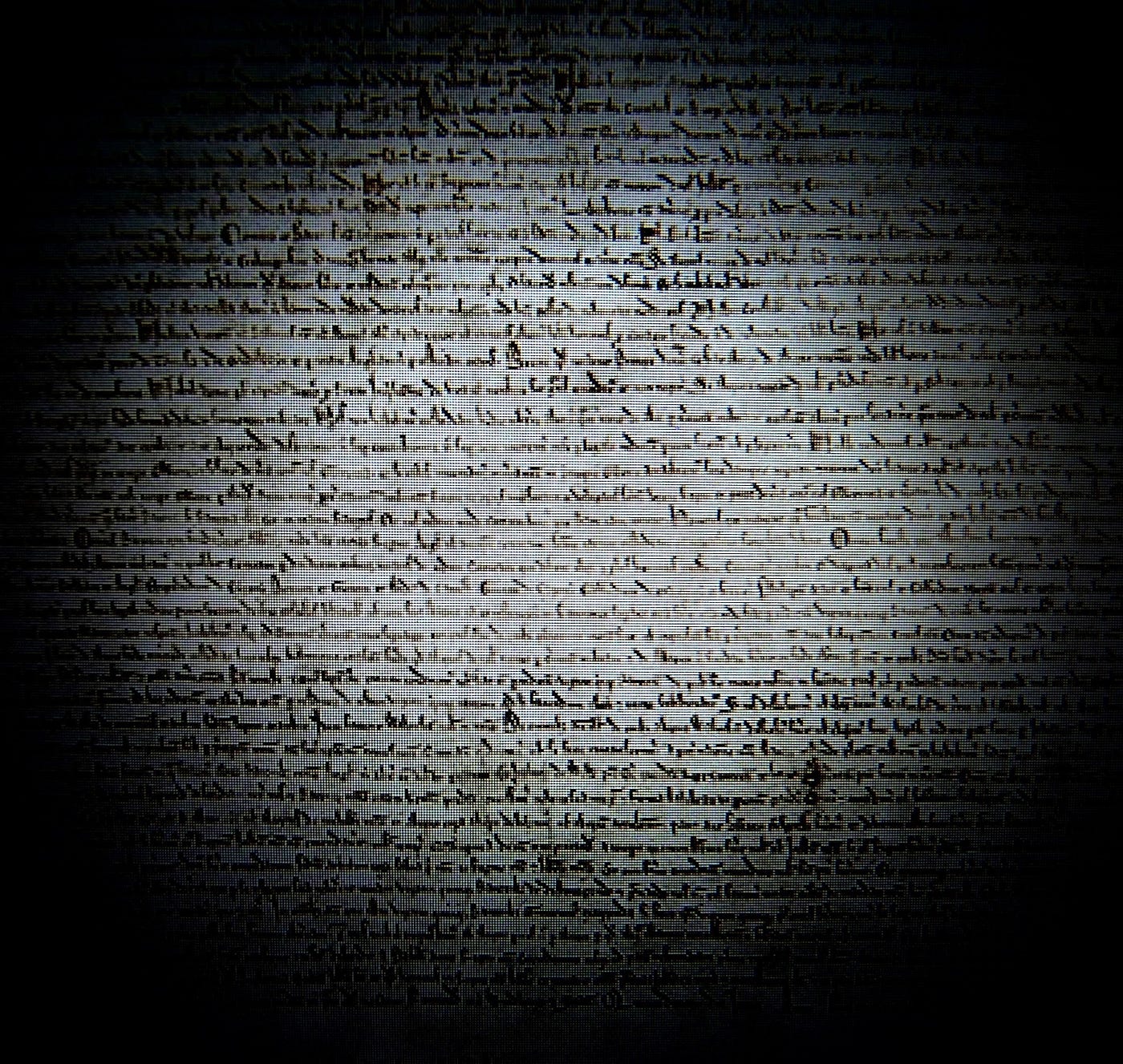
Magna Carta — 1215 text
These regressive restrictions, according to new proposals, are to be enforced together with the loss of the automatic right of appeal in magistrate courts. The regression is therefore cumulative and exactly aligns with the concept of civilisational erasure.
NCHIs exemplify the NSS’s warnings about “censorship of free speech and suppression of political opposition” eroding Europe’s “civilisational self-confidence.” They are a symptom of a broader shift toward enforced conformity, where elites prioritize harmony over the vitality of open debate — the very ferment that birthed the Renaissance or the Enlightenment.
The UK is awaiting a new Islamophobia definition, criticized for re-introducing a new blasphemy definition in a throw-back to the medieval era, and paralleling with the witch trials. Since the blasphemy laws against Christianity have been repealed, the Islamophobia definition effectively prioritizes another religion over Christianity, aligning with the concept of civilisational erasure.
Modern speech restrictions are not just bureaucratic overreach, but act as a selective sacralization of certain ideologies — one that echoes historical battles over Europe’s religious and cultural core. The UK’s pending Islamophobia definition, with its critics decrying it as a “backdoor blasphemy law,” risks inverting the secular process that repealed Christian blasphemy laws in 2008. This is not neutral policy — it is a pivot that could enshrine protections for one faith’s “expressions of Muslimness.” Blasphemy as a concept is thus resurrected, but defined in the language codes of the present era.

Goya’s image of the Spanish Inquisition - Islamophobia definition
Islamophobia has now been redefined as a form of racism, whereas in the relatively recent past it would not have been defined as such. Islam would then have been defined as comprising many different ethnicities and therefore outside the scope of a racialized definition. The change in definition is a reflection of the increasing dominance of the new racialism dogmas. Christianity enjoys no such protection and is not placed under a protective racialism umbrella.
The pivotal text is the 2018 All-Party Parliamentary Group that defined Islamophobia as “rooted in racism and a type of racism that targets expressions of Muslimness or perceived Muslimness.” It was adopted by Labour in 2019 and echoed in EU bodies like the European Network Against Racism. This formulation amends the UN’s 1965 racial discrimination definition to include religious markers as racial proxies, enabling prosecutions under hate crime statutes that treat perceived slights as racial assaults.
Framing the redefinition of Islamophobia as a form of racism, and its asymmetry with Christianity’s lack of equivalent safeguards, strikes at the heart of how contemporary “new racialism” (often termed critical racial theory) is reshaping European legal and cultural landscapes. This shift is not merely semantic — it is a doctrinal pivot that racializes religious identity in ways that echo the coercive transitions of late antiquity, where one faith’s ascendancy demanded the erasure of its predecessor’s symbols and adherents.
Contemporary European civilisational erasure parallels the destruction wrought on pagan temples and sculptures by the early Christian zealots when one religion was replacing another. This led to the Byzantine Iconoclasm crisis and the laws of Theodosius — another existential event horizon in European history when there was civilisational erasure. The symbol of this erasure becomes the tetrapylon of Palmyra, an emblem of the contemporary erasure of civilisations.

Tetrapylon of Palmyra prior to its destruction
Early Christian zealots smashing pagan temples were part of a state-enforced iconoclasm, where the new faith’s dominance required obliterating the old’s visual and ritual memory. Theodosian edicts banned the production of icons as idolatrous and ordered their destruction. This paved the way for Byzantine Iconoclasm, an intra-Christian crisis where emperors, interpreting defeats to Arabs as divine wrath against idolatry, decreed icon bans, sparking widespread destruction of holy images. Just as the destruction of pagan temples symbolized erasure, so too does the racialization of Islamophobia risk consigning Christianity’s artefacts to cultural irrelevance.
The iconoclastic destruction during the early Christian era of pagan temples, sculptures and artefacts has a contemporary parallel in the iconoclastic destruction of ancient monuments of Palmyra in Syria. One of these was the famous tetrapylon that, although reconstructed, had survived intact from antiquity until it was destroyed during the ISIS occupation of the site.
When Syrian forces retook the site, the tetrapylon had been reduced to four shattered stumps — an act of calculated civilisational erasure. The iconoclastic destruction has its parallel in the restrictions on the ancient tradition of jury trials, racialization of religious critique with the elevation of Islam over Christianity, the logging of thoughts as hate incidents, and the celebration of demographic dissolution. These are acts of deliberate iconoclasm against the original civilisation, its debasement a sustained and calculated programme of civilisational erasure.
In this apocalyptic tetralogy, the four gates, taken together, constitute a single four-faced breach in the European civilisational citadel. This tetrapylon encapsulates the phenomenon of iconoclastic destruction, only surviving in the digital ether. The gates now become the portals through which the horsemen of civilisational erasure ride in.
[Based on a conversation with Grok AI on the term “civilisational erasure” as used in the NSS document]

메타데이터
- post_id
- 8af1e520ea84
- slug
- civilisational-erasure-8af1e520ea84
- url
- https://medium.com/@bennettdns/civilisational-erasure-8af1e520ea84
- canonical_url
- https://medium.com/@bennettdns/civilisational-erasure-8af1e520ea84
- author_url
- https://medium.com/@bennettdns
- status
- ok
- fetched_at
- 2026-07-08 02:40:31