THE WELL OF JABBAR: A Legend of Sacrifice
In ancient times, the shadow of war rolled in like a black storm cloud over the quiet villages scattered along the edge of the Kyzylkum…
THE WELL OF JABBAR: A Legend of Sacrifice
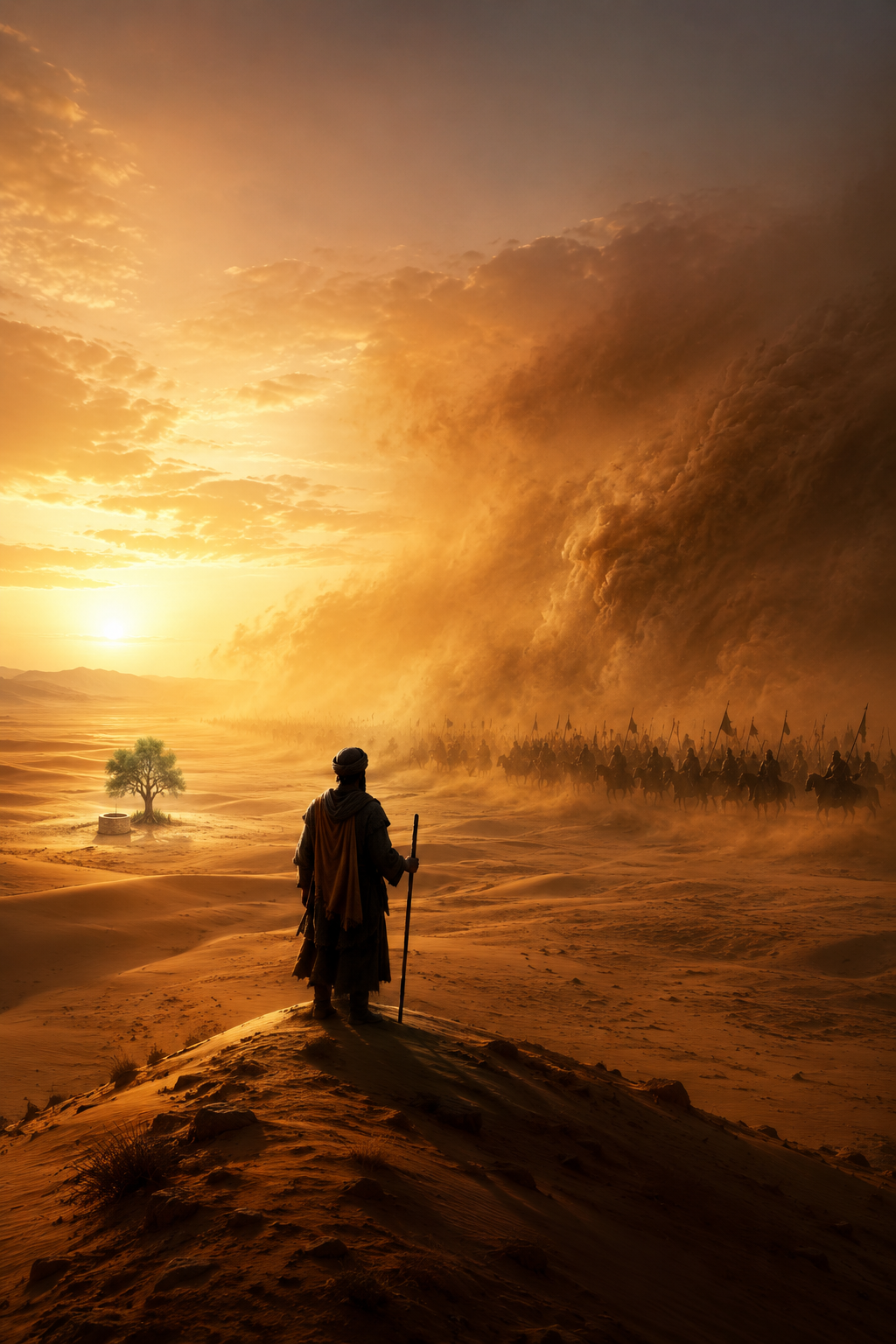
In ancient times, the shadow of war rolled in like a black storm cloud over the quiet villages scattered along the edge of the Kyzylkum Desert. Long before the enemy appeared on the horizon, the land itself sensed their approach.
The thunder of hooves shook the ground and sent tremors through the sands. The desert air grew heavy with dust and the bitter scent of blood. With every pounding hoofbeat, fear tightened its grip on the people’s hearts, extinguishing their fragile hopes.
The thunder of hooves shook the ground and sent tremors through the sands. The desert air grew heavy with dust and the bitter scent of blood. With every pounding hoofbeat, fear tightened its grip on the people's hearts, extinguishing their fragile hopes.
The elders clutched their heads with trembling hands and breathed heavily, as if surrendering to fate’s verdict. Each breath carried the weight of years and the dread of loss.
The elders clutched their heads with trembling hands and breathed heavily, as if surrendering to fate's verdict. Each breath carried the weight of years and the dread of loss.
In the mothers’ eyes, pleading, terror, and an unbroken thread of hope mingled; they could not look away from the young men standing on the brink of battle, silent and resolute. The youths said nothing — reading resolve and unspoken oaths in each other’s eyes — as they gripped their weapons tightly and stepped forward, walking the hard path toward war.
In the mothers’ eyes, pleading, terror, and an unbroken thread of hope mingled; they could not look away from the young men standing on the brink of battle, silent and resolute. The youths said nothing—reading resolve and unspoken oaths in each other's eyes—as they gripped their weapons tightly and stepped forward, walking the hard path toward war.
He did not look back nor speak because this departure was made with the heart, not words. He carried no sword or spear, and no armor weighed upon his body. His only weapons were the fierce love for his homeland burning in his chest and the mind sharpened by hardship. As Jabbar stepped onto the sandy path and turned toward the enemy host, no one in the village knew where he was headed, as if the desert itself had taken his secret into its silent embrace.
The farther Jabbar traveled into the heart of the desert, the more his chest ached with sorrow, and his heart felt as if it were brimming with blood. With each step, the pain pressed further into his soul. Leaving faint traces in the sand, he began to softly murmur a song to himself, as if it were meant only for the desert to hear. It was both a vow and a prayer, a farewell borne of grief:
“My road is long; I must walk it alone.
"My road is long; I must walk it alone.
No foe shall ever tread upon our land,
With longing eyes — oh Child, you remain.”
With longing eyes—oh Child, you remain.”
In the face of this sight, Jabbar carried himself as a weak, frightened, and humiliated man. With his head bowed, he stepped forward to approach the warlord Korakhan. Tall and powerfully built, Korakhan’s harsh features revealed his cruelty without disguise; his eyes showed no trace of mercy. Clad in his distinctive armor with heavy weapons hanging from his belt, Korakhan stood firmly on the sand as if the entire army moved to the rhythm of his breath. Here, he was not merely a commander — he was fear incarnate.
In the face of this sight, Jabbar carried himself as a weak, frightened, and humiliated man. With his head bowed, he stepped forward to approach the warlord Korakhan. Tall and powerfully built, Korakhan’s harsh features revealed his cruelty without disguise; his eyes showed no trace of mercy. Clad in his distinctive armor with heavy weapons hanging from his belt, Korakhan stood firmly on the sand as if the entire army moved to the rhythm of his breath. Here, he was not merely a commander—he was fear incarnate.
"I'm just a shepherd," Jabbar said, lowering his head and forcing his voice to tremble.
"I fled from the village. I want to help you. Please, spare my life.”
He kept his eyes on the ground as he spoke, as though ready to answer for every word. But when he glanced up for a brief moment, his gaze fell upon the finely crafted dagger tucked into Korakhan’s belt. Dark and sharp—a blade that had seen its share of blood. A sudden chill seized his chest, and his breath faltered. Yet Jabbar showed no sign of fear. The image of his child’s wide, longing eyes and his mother’s hands lifted in prayer rose in his mind, and he steadied himself.
“If you speak the truth,” he said with a faint, cruel smile, “then show us the path to the well.”
It was not a request.
It was a command, leaving no room for refusal.
Jabbar stepped forward and took the lead. The enemy host followed him in silence, driven by their thirst for the water of life. Their steps were hurried and impatient. The shepherd guided them deep into the heart of the desert — into a land without paths or shade where the only thing offering shelter was endless, merciless sand.
Jabbar stepped forward and took the lead. The enemy host followed him in silence, driven by their thirst for the water of life. Their steps were hurried and impatient. The shepherd guided them deep into the heart of the desert—into a land without paths or shade where the only thing offering shelter was endless, merciless sand.
As the sun climbed higher, the air burned like fire with every breath. The sand beneath Jabbar's feet glittered and scorched as though each step might set his body aflame. Jabbar’s lips cracked, his tongue clung to his palate, his breath grew short, and his chest ached as if burning from within. The world wavered before his eyes.
He did not look back.
He did not falter.
“If I could lead the enemy astray from the path to the well, I would succeed.
The village will survive.
The children will live.”
These words echoed in his heart like a sworn oath, steadying his steps and hardening his resolve with each one. With each stride, he was not walking upon the desert — he was walking upon fate itself.
These words echoed in his heart like a sworn oath, steadying his steps and hardening his resolve with each one. With each stride, he was not walking upon the desert—he was walking upon fate itself.
Above them, the sun showed no mercy. It hung overhead like a drawn blade, scorching men and beasts alike.
Finally, when they reached a low ridge, the warlord Korakhan lost all patience. He reined in his horse and roared, his voice tearing through the desert:
“Where is the well?!”
"Where is the well?!"
His cry split the sands like a spear thrust. In that instant, every gaze turned toward Jabbar. Deprived of water—and now of breath itself—the host demanded an answer.
“We have won,” he said in a low but clear voice.
"We have won," he said in a low but clear voice.
“There is no well anywhere within days of this place.”
"There is no well anywhere within days of this place."
“Bring him to me!” he roared.
"Bring him to me!" he roared.
Their hands were rough and their grip was firm, yet he offered no struggle.
He did not look to the sky nor at the sand beneath his feet because he had already made his peace with both.
His gaze was fixed on the distant village as if the wind still carried the laughter of children and his mother’s whispered prayers had not yet faded from the air.
In that moment, Jabbar was no longer standing among enemies; he was already walking home.
Korakhan drew the dagger from his belt.
The dark steel flashed in the sunlight, as if offering a final warning.
The air seemed to tighten.
In a single, merciless moment, the blade took Jabbar’s life.
His body fell, but the sand did not cry out.
The desert fell silent.
Not the silence of defeat, but the stillness that comes when something irreversible has been set in motion.
Suddenly, the sky darkened and a fierce wind blew across the desert. Sand swirled around like a storm, burying the path the enemy had taken. It was as if the desert itself, long silent, had finally passed judgment. Unable to tell one direction from another, the warriors collided and grappled in panic. Some fell from their horses, and others were swallowed by the sands. Thirst, sun, and sand — three forces that bow to no man — defeated them one by one.
Suddenly, the sky darkened and a fierce wind blew across the desert. Sand swirled around like a storm, burying the path the enemy had taken. It was as if the desert itself, long silent, had finally passed judgment. Unable to tell one direction from another, the warriors collided and grappled in panic. Some fell from their horses, and others were swallowed by the sands. Thirst, sun, and sand—three forces that bow to no man—defeated them one by one.
The village survived.
Over time, the people realized something remarkable. At the spot where Jabbar had led the enemy astray, a tree began to grow, while the surrounding land remained barren. In the middle of the desert, that lone tree became a sign. When they dug the ground beneath it, clear water burst forth from the sands.
The people did not believe this was mere chance. They saw the water as evidence of Jabbar’s pure intent — his sacrifice and love for his homeland absorbed into the earth itself. In his memory, they named the Well of Jabbar.
The people did not believe this was mere chance. They saw the water as evidence of Jabbar’s pure intent—his sacrifice and love for his homeland absorbed into the earth itself. In his memory, they named the Well of Jabbar.
Years passed, and Jabbar’s son grew into a young man hardened by the desert’s copper-colored winds. He carved a staff with his own hands from the very tree beneath which his father had led the enemy astray. It was no ordinary walking stick — it was shaped from memory itself. Each time he held it, he felt his father’s silent courage and unspoken love for his homeland, which had sunk into the earth. Guided by these feelings, he chose the path of a wanderer and set out in search of justice.
Years passed, and Jabbar’s son grew into a young man hardened by the desert's copper-colored winds. He carved a staff with his own hands from the very tree beneath which his father had led the enemy astray. It was no ordinary walking stick—it was shaped from memory itself. Each time he held it, he felt his father’s silent courage and unspoken love for his homeland, which had sunk into the earth. Guided by these feelings, he chose the path of a wanderer and set out in search of justice.
But on the other side of fate, another path was unfolding.
The warlord Korakhan had a son as well. For years, the son wandered in search of his father, striving to learn how and where he had met his end. At last, he came to Jabbar’s Well. From the stories of the people there, he learned the truth. Intending to place a gravestone in his father’s memory, he began to dig.
Yet beneath the sand, he did not find stone, but rather, the past.
The blood-stained dagger, the same cursed blade that had once terrified Jabbar, emerged from the earth. The moment he grasped it, a chilling cold coursed through his veins as if the weight of unjust blood had passed from steel to flesh. Without saying a word, he put the dagger in his saddlebag, turned away from Jabbar’s Well, and set off for his homeland.
The desert fell silent once more.
But this silence was not an ending.
It was the beginning of two legacies, two paths, and a fate yet to be fulfilled.
This story is inspired by the rich oral traditions and folklore of Uzbekistan.
메타데이터
- post_id
- 8b26490a8adf
- slug
- the-well-of-jabbar-a-legend-of-sacrifice-8b26490a8adf
- url
- https://medium.com/@tadjiyev.s/the-well-of-jabbar-a-legend-of-sacrifice-8b26490a8adf
- canonical_url
- https://medium.com/@tadjiyev.s/the-well-of-jabbar-a-legend-of-sacrifice-8b26490a8adf
- author_url
- https://medium.com/@tadjiyev.s
- status
- ok
- fetched_at
- 2026-07-11 05:25:32