IKEA Flat-Pack Assembly Problems and Smart Fixes
Understanding IKEA Furniture Assembly Tips is essential for anyone dealing with flat-pack furniture, especially when small mistakes can…
IKEA Flat-Pack Assembly Problems and Smart Fixes
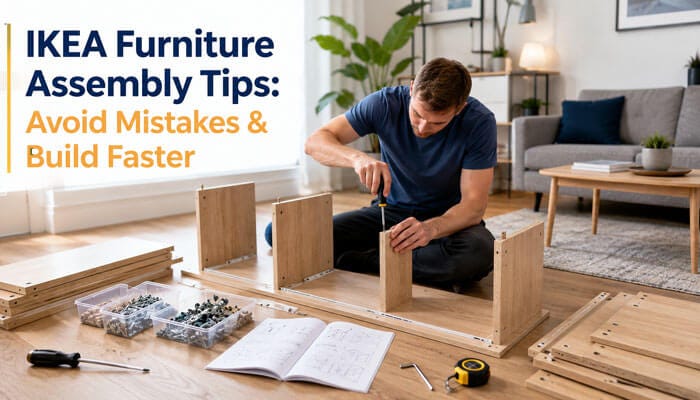
Understanding IKEA Furniture Assembly Tips is essential for anyone dealing with flat-pack furniture, especially when small mistakes can lead to unstable structures, misaligned panels, or missing components. IKEA’s modular system is designed for efficiency and affordability, but it also assumes a certain level of precision from the assembler. In practice, many users struggle with unclear diagrams, similar-looking hardware, and rushed assembly, which often results in errors that are hard to correct later. With a structured approach and awareness of common pitfalls, most of these problems can be avoided entirely.
1. Misreading Instruction Manuals and Diagram Steps
One of the most frequent issues in IKEA assembly is misinterpreting the pictorial instructions. Since IKEA uses minimal text and relies heavily on visuals, users often skip critical orientation details.
Smart Fix:
Work step-by-step without skipping ahead. Match each screw, plank, and connector with the diagram before installation. Lay all parts on the floor and cross-check identifiers before starting. This reduces the risk of assembling components upside down or in the wrong sequence.
2. Mixing Up Similar Hardware Components
IKEA kits often include multiple fasteners that look nearly identical but serve different structural roles. This leads to weakened joints or structural imbalance.
Smart Fix:
Separate screws, dowels, and bolts into labeled containers before starting. Use a simple sorting method such as size-based grouping. This ensures that every fastener is used correctly and prevents over-tightening or using the wrong connector in critical load-bearing sections.
3. Over-Tightening or Under-Tightening Screws
Incorrect torque application is a hidden cause of furniture failure. Over-tightening can crack particleboard, while under-tightening leads to wobbling furniture.
Smart Fix:
Use manual tools instead of power drills whenever possible. Tighten screws gradually and evenly. For cam locks and dowels, stop as soon as resistance is firm. This preserves structural integrity and extends furniture lifespan.
4. Ignoring Surface Alignment Before Final Fixing
Many users fix all parts immediately without checking alignment, resulting in uneven doors, drawers that don’t slide properly, or tilted frames.
Smart Fix:
Perform a “dry fit” before final tightening. Assemble loosely first, check alignment from multiple angles, and only then secure all joints. This allows correction before irreversible fixing.
5. Missing Small Parts or Improper Inventory Checks
Small connectors like pins, cam locks, or plastic inserts are often overlooked but are critical for stability.
Smart Fix:
Before starting, empty the entire package and verify every part against the manual checklist. IKEA packaging is systematic, so missing parts are rare — but incorrect counting during setup is a common user error.
6. Working in Poor Lighting or Confined Spaces
Assembly errors often increase in dim lighting or cluttered rooms, where parts are difficult to distinguish.
Smart Fix:
Use a well-lit, open workspace. Ideally, assemble on a flat surface with enough room to rotate panels freely. Good visibility reduces misalignment and speeds up the entire process.
7. Not Securing Wall Anchors for Tall Units
Skipping wall anchoring is one of the most serious mistakes, especially for wardrobes and bookshelves.
Smart Fix:
Always install anti-tip brackets provided in the kit. Even if the furniture feels stable, anchoring prevents accidents, especially in homes with children or uneven flooring.
Conclusion: Precision Is the Real IKEA Skill
Flat-pack furniture assembly is less about physical strength and more about precision, patience, and system thinking. Most IKEA assembly failures are not due to product flaws but user interpretation errors. By following structured IKEA Furniture Assembly Tips — such as organizing hardware, checking alignment early, and tightening screws correctly — you can significantly improve both speed and durability of the final build. With careful preparation and attention to detail, even complex furniture can be assembled without frustration or rework.
메타데이터
- post_id
- 8b2d7bb7bd42
- slug
- ikea-flat-pack-assembly-problems-and-smart-fixes-8b2d7bb7bd42
- url
- https://medium.com/@hanifatycoonshaik/ikea-flat-pack-assembly-problems-and-smart-fixes-8b2d7bb7bd42
- canonical_url
- https://medium.com/@hanifatycoonshaik/ikea-flat-pack-assembly-problems-and-smart-fixes-8b2d7bb7bd42
- author_url
- https://medium.com/@hanifatycoonshaik
- status
- ok
- fetched_at
- 2026-06-27 07:40:21