How Olectr Helps Cities Respond Faster to Emergencies
Navigating the complexities of urban life means constantly facing the unexpected. From sudden utility failures to natural disasters, cities…
How Olectr Helps Cities Respond Faster to Emergencies
Navigating the complexities of urban life means constantly facing the unexpected. From sudden utility failures to natural disasters, cities are always on alert. Traditionally, responding to these emergencies has been a reactive, labor-intensive process, often relying on public reports or scheduled inspections to identify critical issues. However, the stakes are too high for delays, and the demand for uninterrupted services is growing. Modern cities require a proactive approach, one that leverages advanced technology to detect problems early, understand their scope quickly, and deploy resources efficiently. This shift from reactive crisis management to predictable operational uptime is where innovative solutions make a tangible difference in public safety and urban resilience.
The Problem with Traditional Infrastructure
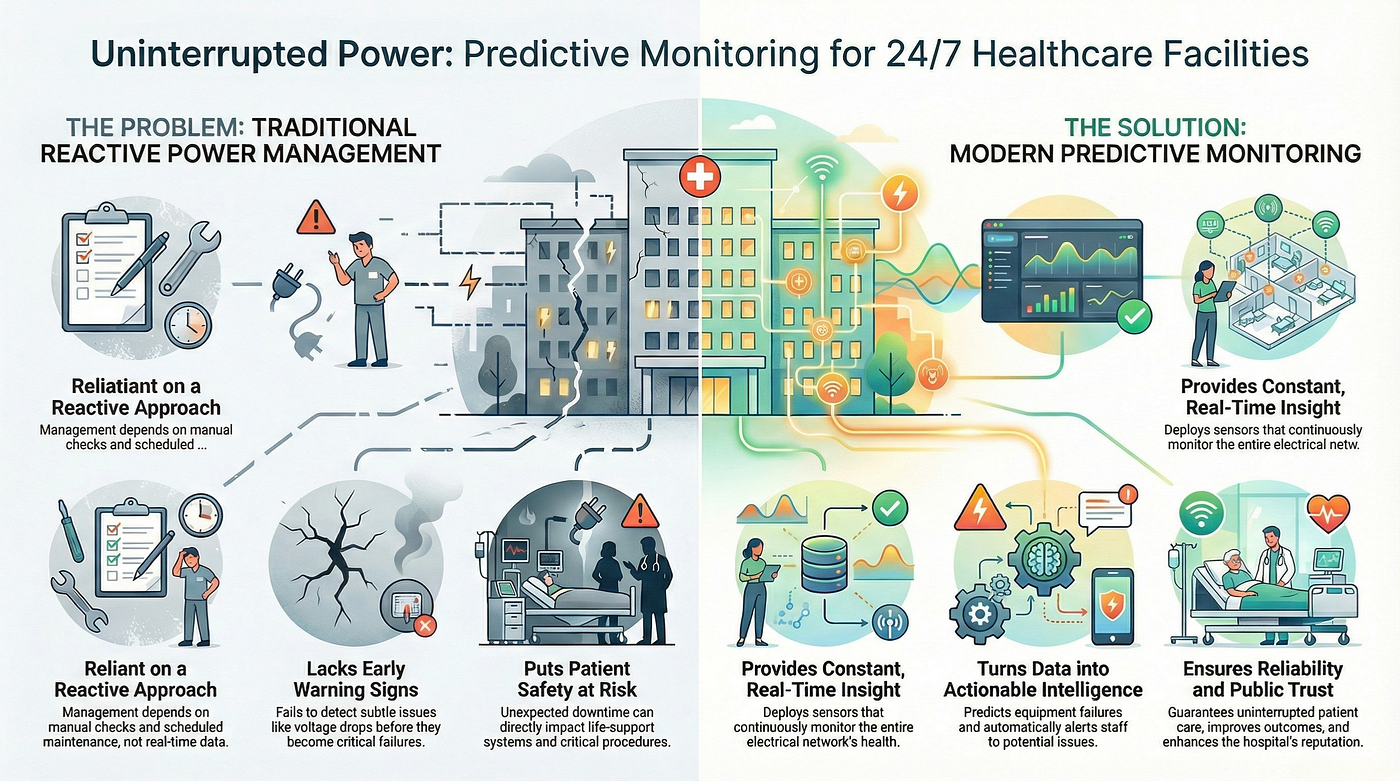
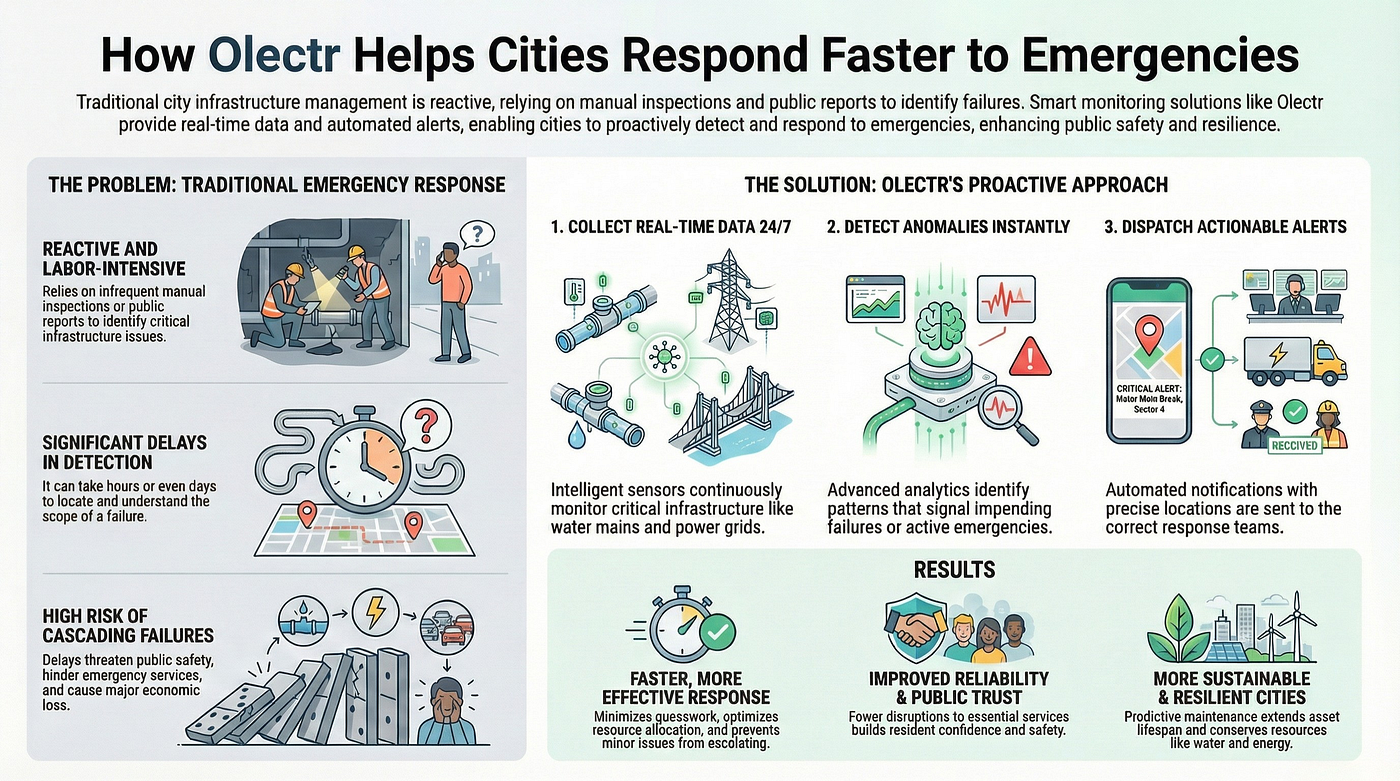
The backbone of any city — its water systems, power grids, transportation networks, and communication lines — is often a patchwork of legacy infrastructure. These systems were not designed for the instantaneous data exchange or predictive analysis that today’s challenges demand. Manual inspections are infrequent and cannot capture rapidly evolving conditions. When a water main bursts, a power line goes down, or a traffic signal malfunctions, it can take hours, even days, for the issue to be fully understood, located, and addressed. This delay is not merely inconvenient; it can lead to cascading failures, significant economic losses, environmental damage, and, critically, threaten public safety by hindering emergency services or disrupting essential supplies. Without real-time visibility, municipalities are often playing catch-up, trying to mitigate symptoms rather than addressing root causes proactively.
How Smart Monitoring Changes the Equation
This is where smart monitoring solutions, like those provided by Olectr, fundamentally transform emergency preparedness and response. By deploying a network of intelligent sensors across critical infrastructure assets — from pipelines and power substations to bridges and traffic intersections — cities gain unprecedented, real-time visibility. These sensors continuously collect data on performance metrics such as pressure, temperature, flow rates, energy consumption, and structural integrity. Instead of waiting for a manual report or a crisis to erupt, Olectr’s integrated platform aggregates this data, providing a holistic, up-to-the-minute operational picture. This immediate data stream means that anomalies, which might signal an impending failure or an active emergency, are detected the moment they occur, not hours later.
Turning Data into Actionable Decisions
The real power of smart monitoring extends beyond mere data collection; it lies in turning that raw information into actionable intelligence. Olectr’s advanced analytics engine processes the torrent of incoming data, identifying patterns, predicting potential failures, and pinpointing the exact location and nature of an incident. Automated alerts are then instantly dispatched to the relevant municipal departments and response teams, ensuring that the right personnel are notified without delay. For example, a sudden pressure drop in a water pipe segment can trigger an alert that indicates a leak or burst, allowing crews to be dispatched with precise coordinates and necessary equipment, drastically reducing water loss and response time. This data-driven approach minimizes guesswork, optimizes resource allocation, and enables targeted interventions that prevent minor issues from escalating into major emergencies.
Improving Reliability and Public Trust
The ability to respond faster and more effectively to emergencies directly translates into enhanced service reliability. When critical infrastructure operates predictably and efficiently, citizens experience fewer disruptions to essential services. Water supply remains consistent, power outages are minimized, and traffic flows more smoothly. This consistent reliability, fostered by proactive monitoring and rapid response capabilities, builds strong public trust. Residents feel safer and more confident in their city’s ability to manage its resources and protect its population. Furthermore, during actual emergencies, a well-coordinated, data-informed response can save lives, reduce property damage, and accelerate recovery, reinforcing the municipality’s commitment to its citizens’ well-being.
Building Sustainable and Resilient Cities
Beyond immediate emergency response, the long-term impact of smart monitoring and automation on urban sustainability and resilience is profound. By extending the lifespan of critical assets through predictive maintenance, cities can reduce capital expenditure and conserve resources. Detecting leaks early saves millions of gallons of water, while optimizing energy distribution reduces waste and carbon emissions. Platforms like Olectr contribute to building an urban fabric that is not only robust enough to withstand shocks but also agile enough to adapt to changing environmental conditions and population growth. This proactive approach ensures that cities are not just surviving, but thriving, preparing for future challenges with a strong, adaptable infrastructure foundation.
The Future of Urban Infrastructure Management
The journey towards fully intelligent urban infrastructure is continuous, with platforms like Olectr leading the way. The future promises even greater integration, where AI-powered analytics can not only predict failures but also suggest optimal preventative measures and even initiate automated corrective actions. Imagine traffic signals that dynamically adjust to emergency vehicle routes, or water systems that automatically reroute flow to isolate a burst pipe with minimal disruption. This level of sophisticated, interconnected management will transform urban operations, making cities more responsive, efficient, and safer than ever before. It represents a paradigm shift where infrastructure actively contributes to the city’s intelligence, learning and adapting in real-time.
Final Thought The demand for resilient, responsive cities is not a trend; it’s an imperative. By embracing advanced monitoring and automation solutions, municipalities can move beyond outdated reactive models, ensuring faster, more effective emergency response and safeguarding the well-being of their communities. The commitment to building smarter infrastructure is a commitment to a safer, more sustainable future for all urban dwellers.
메타데이터
- post_id
- 8b424016e07e
- slug
- how-olectr-helps-cities-respond-faster-to-emergencies-8b424016e07e
- url
- https://medium.com/olectr/how-olectr-helps-cities-respond-faster-to-emergencies-8b424016e07e
- canonical_url
- https://medium.com/olectr/how-olectr-helps-cities-respond-faster-to-emergencies-8b424016e07e
- author_url
- https://medium.com/@olectrcloud
- status
- ok
- fetched_at
- 2026-07-13 20:57:02