The Most Dangerous Linux Admin Is the Confident One
That title probably annoyed some people already.
The Most Dangerous Linux Admin Is the Confident One
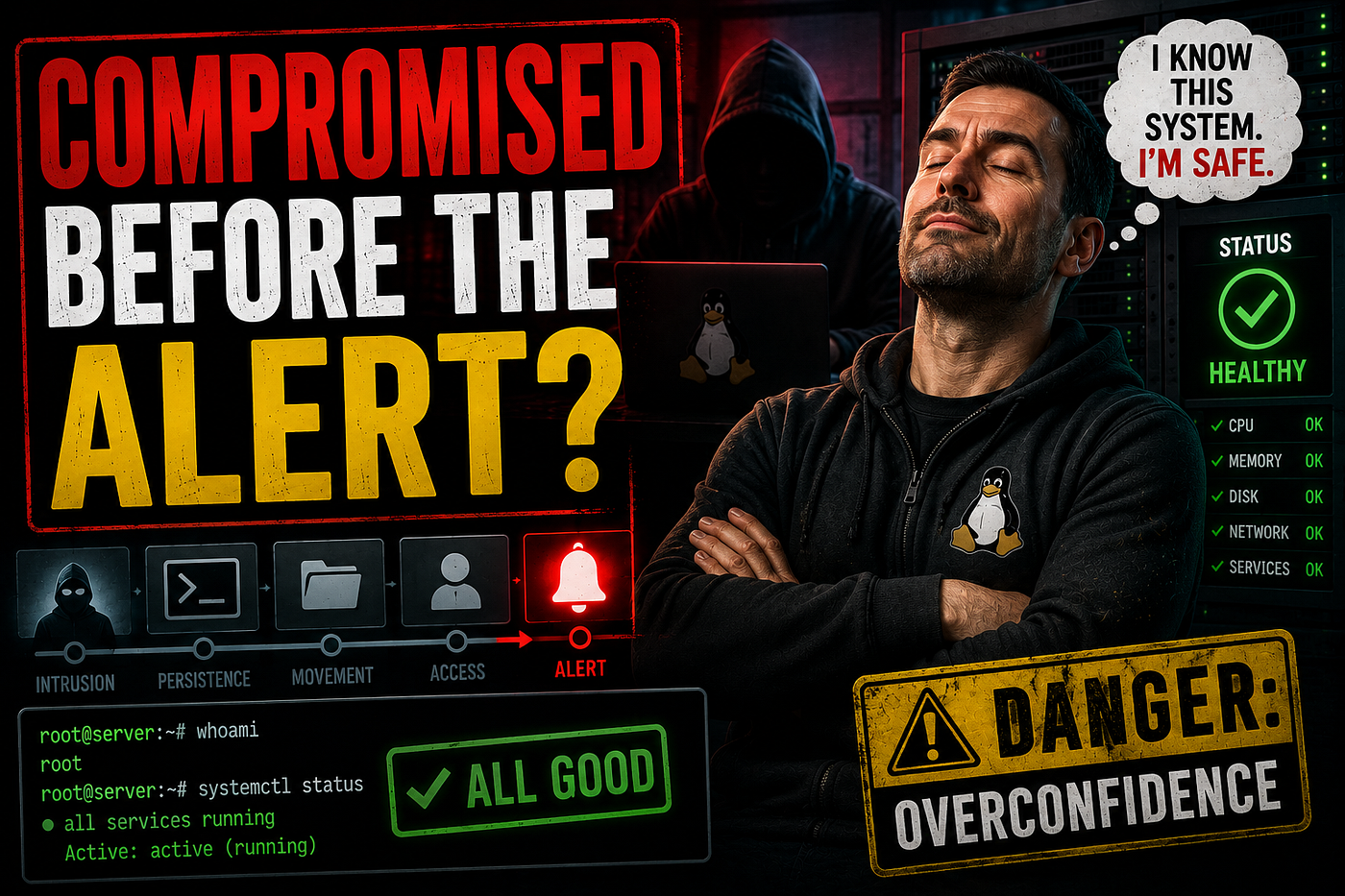
That title probably annoyed some people already.
Good.
Because years ago, it would have annoyed me too.
I used to think confidence was one of the most valuable traits a Linux administrator could have.
Confidence helps during outages.
Confidence helps during troubleshooting.
Confidence helps when production systems fail at 2 AM and everyone is looking for answers.
A hesitant administrator can create problems.
A confident administrator can solve them.
At least that’s what I believed.
Then I spent enough years investigating Linux systems to notice something uncomfortable.
The biggest mistakes weren’t usually made by administrators who lacked confidence.
They were often made by administrators who had too much of it.
Confidence Isn’t The Problem
Before anyone gets angry, let’s clarify something.
Confidence itself isn’t dangerous.
Good Linux administrators need confidence.
Nobody wants an administrator who is afraid to make decisions.
Nobody wants someone who freezes during an incident.
The real danger appears when confidence quietly transforms into certainty.
Because certainty kills curiosity.
And curiosity is one of the most important security tools we have.
The Pattern I Kept Seeing
Over the years, I’ve worked with administrators ranging from complete beginners to people with decades of Linux experience.
The newer administrators often behaved in a predictable way.
They questioned everything.
They double-checked commands.
They verified assumptions.
They asked questions.
Sometimes too many questions.
Experienced administrators often moved faster.
Much faster.
They had seen similar issues before.
They recognized patterns.
They trusted their instincts.
Most of the time, that experience was incredibly valuable.
But occasionally, it created a blind spot.
Because the fastest answer isn’t always the correct answer.
The Three Most Dangerous Words
There are three words that always get my attention.
“I already checked.”
Maybe they checked.
Maybe they checked thoroughly.
But those words often signal something else.
A conclusion has already been reached.
An assumption has already been accepted.
The investigation is beginning to narrow before enough evidence exists.
And that’s where mistakes become possible.
The Server That Looked Familiar
One incident taught me this lesson better than any training course.
A Linux server began showing behavior that seemed familiar.
An experienced administrator reviewed the symptoms and immediately identified what he believed was the cause.
His explanation made sense.
Actually, it made perfect sense.
Everyone agreed.
The troubleshooting effort moved in that direction.
Hours passed.
Nothing improved.
The evidence slowly began pointing somewhere else.
Eventually, the original assumption turned out to be wrong.
The issue wasn’t difficult to solve.
The difficult part was escaping the confidence that had convinced everyone they already knew the answer.
Attackers Love Assumptions
One reason attackers succeed is because they understand human behavior.
They know administrators have routines.
They know defenders have expectations.
They know people naturally look for familiar explanations.
That’s why unusual activity often survives longer than it should.
Because unusual activity doesn’t fit the expected story.
And when something doesn’t fit the story, people often ignore it.
At least initially.
The Most Valuable Skill Isn’t Technical
This might sound strange coming from someone who spends time around Linux systems every day.
But I don’t think the most valuable security skill is technical knowledge.
Technical knowledge matters.
A lot.
But I believe something else matters even more.
The willingness to say:
“I might be wrong.”
That single sentence keeps investigations alive.
It keeps people looking.
It keeps assumptions from becoming conclusions.
And it prevents confidence from turning into complacency.
The Linux Admins I Trust Most
Ironically, the Linux administrators I trust the most are rarely the ones who sound the most certain.
They’re the ones who remain curious.
The ones who ask questions.
The ones who challenge their own assumptions.
The ones who continue investigating even after they think they understand the answer.
Those administrators make mistakes too.
Everyone does.
The difference is that they’re more likely to catch their mistakes before attackers do.
Security Has A Humility Problem
The longer someone works in technology, the easier it becomes to believe they’ve seen everything.
After enough years, patterns start repeating.
Problems start looking familiar.
Solutions appear obvious.
That’s exactly when risk begins increasing.
Because every incident is slightly different.
Every environment is slightly different.
Every attacker is slightly different.
The moment we believe we already know everything worth knowing is usually the moment we stop learning.
And in cybersecurity, that can become expensive very quickly.
The Question I Ask Myself
Whenever I investigate something unusual, I try to ask a simple question:
“What if my first assumption is wrong?”
That question has saved me countless hours.
It’s also helped uncover issues that would have otherwise been missed.
Because the first explanation is not always the correct explanation.
Sometimes it’s simply the most comfortable one.
Final Thoughts
The most dangerous Linux administrator isn’t the beginner.
It isn’t the person asking too many questions.
It isn’t the administrator who admits uncertainty.
The most dangerous Linux administrator is the one who becomes convinced there is nothing left to learn.
Because once curiosity disappears, blind spots begin to grow.
And in Linux security, blind spots are where problems tend to hide.
The best administrators I’ve worked with all shared one trait.
No matter how much experience they had, they never stopped questioning their own assumptions.
Tool Spotlight: Linux Blindspot Report
One reason blind spots survive is because administrators often don’t know what they’re missing.
That’s why I created:
Linux Blindspot Report — One-Command Security Snapshot
It helps uncover security-relevant information and generates:
- HTML report
- TXT report
- Evidence pack
- Security visibility snapshot
🔗 https://ko-fi.com/s/288adc543e
Free SSH Hardening Checklist PDF
Many Linux security issues start with overlooked SSH weaknesses.
I created a free SSH Hardening Checklist PDF covering practical hardening steps I personally review during Linux security assessments.
📥 Download here:
https://subscribepage.io/6lso1l
Subscribe with your email to receive future updates and additional SSH security guidance.
Follow NextGenThreat
I regularly publish Linux security lessons, investigation stories, hardening techniques, and real-world observations from years of working with Linux environments.
Follow NextGenThreat so you don’t miss future articles.
💬 Question:
What’s a Linux issue you were absolutely certain about, only to discover later that you were wrong?
Those stories usually teach the best lessons.
Share yours in the comments.
👏 Before you go:
If you found this useful, consider clapping and following.
Follow me on social media:
🔗 LinkedIn: https://www.linkedin.com/in/bornaly/
✍️ Medium: https://medium.com/@bornaly/subscribe
💬 Discord: https://discord.gg/FkjR2WFs
🐦 X (Twitter): https://x.com/cyberwebpen
📘 Facebook: https://www.facebook.com/nextgenthreat
메타데이터
- post_id
- 8b4b46fb7b9f
- slug
- the-most-dangerous-linux-admin-is-the-confident-one-8b4b46fb7b9f
- url
- https://medium.com/nextgenthreat/the-most-dangerous-linux-admin-is-the-confident-one-8b4b46fb7b9f
- canonical_url
- https://medium.com/nextgenthreat/the-most-dangerous-linux-admin-is-the-confident-one-8b4b46fb7b9f
- author_url
- https://medium.com/@bornaly
- status
- ok
- fetched_at
- 2026-06-20 20:29:01