What Are Cable Seals and How Do Steel Wire Seals Protect Cargo?
A cable seal, commonly referred to as a steel wire seal, is an adjustable, one-time-use mechanical security device designed to secure…
What Are Cable Seals and How Do Steel Wire Seals Protect Cargo?
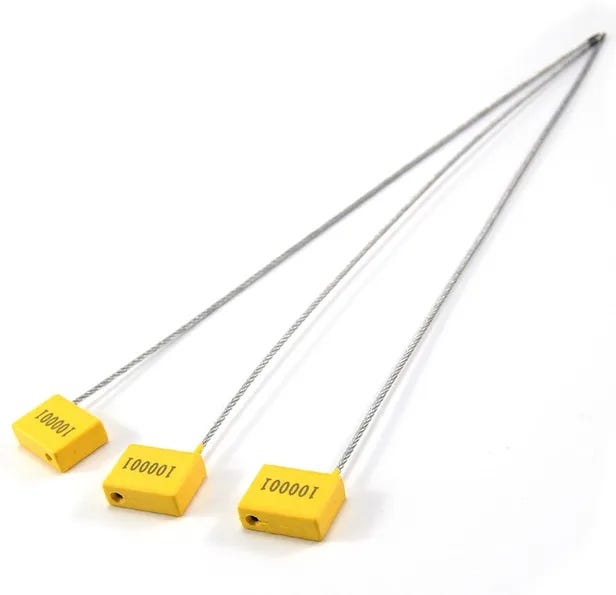
A cable seal, commonly referred to as a steel wire seal, is an adjustable, one-time-use mechanical security device designed to secure high-value cargo during transit. It features a braided metal wire attached to a heavy-duty locking body. The loose end of the wire is threaded through a container’s locking latches and fed into the lock housing, where internal carbon steel locking mechanisms grip the wire, allowing it to pull tight but never back out.
For B2B buyers, fleet managers, and supply chain beginners evaluating barrier security, industrial steel wire seals operate under three core mechanisms:
- Anti-Fray Security Cables: High-quality seals utilize non-preformed galvanized steel wire. When the cable is cut for authorized removal, the braided strands immediately fray and unspool, making it impossible to re-weld or re-insert the wire to hide a theft.
- Variable Loop Adjustability: Unlike fixed-length plastic bands or rigid bolt locks, the flexible steel wire can be pulled down to the exact length needed, minimizing loop slack to prevent thieves from inserting crowbars or prying tools.
- Anodized Traceability Housings: The lock bodies are typically constructed from rugged aluminum alloy or high-impact ABS overmolding, providing an optimal surface for laser-etched barcodes and sequential serial numbers that resist weather and chemical wear.
How Do You Select the Right Steel Wire Thickness for Your Application?
Choosing the proper cable thickness is the most critical factor when balancing cost and physical asset protection.
Lightweight wire seals, featuring diameters between 1.5mm and 2.5mm, serve as standard security or indicative devices. Providing a breaking strength of roughly 200 to 400 kg, these pliable ties are ideal for securing bulk liquid tankers, chemical drums, valves, roll cages, and airline catering trolleys. They show clear evidence of tampering but are thin enough to be removed with basic workshop wire cutters.
Heavy-duty barrier cable seals utilize thick 3.5mm to 5.0mm galvanized steel aircraft cables. These models boast massive pull-load resistances ranging from 1,000 kg to over 2,000 kg (up to 4,400 lbs). They are certified as Class H (High-Security) under ISO 17712 and comply fully with international C-TPAT customs regulations, making them mandatory for protecting cross-border ocean freight and intermodal shipping containers against forced entry.
Why Are Flexible Wire Seals Advantaged Over Rigid Bolt Locks?
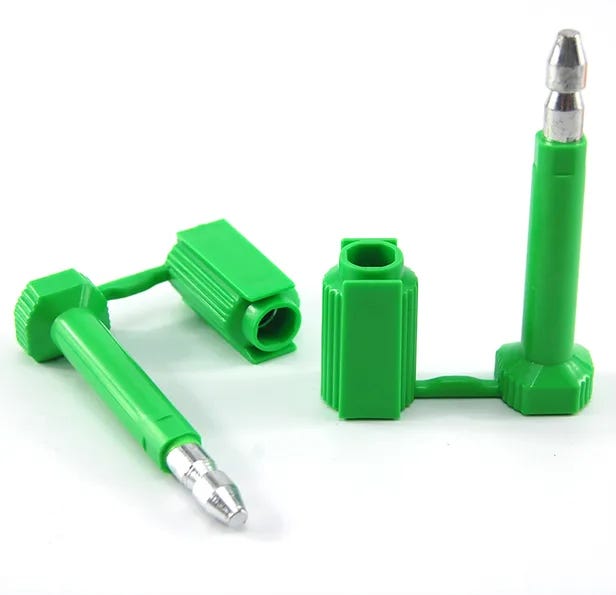
While heavy carbon steel bolt pins are highly effective for standard, perfectly aligned trailer door rods, they fail when encountering distorted hardware. Intermodal shipping containers frequently suffer structural warping, bent latches, or misaligned locking handles due to rough handling at ports.
Flexible steel wire seals solve this physical limitation completely. The braided cable snakes effortlessly through warped brackets, tight apertures, or dual vertical locking rods simultaneously. By threading a long-length wire (such as 36-inch or 48-inch variants) around multiple locking points, a logistics operator can secure both the primary handle latch and the secondary door bars with a single security device, compounding the physical defense of the trailer.
메타데이터
- post_id
- 8b502248b74f
- slug
- what-are-cable-seals-and-how-do-steel-wire-seals-protect-cargo-8b502248b74f
- url
- https://medium.com/@zcqf2020/what-are-cable-seals-and-how-do-steel-wire-seals-protect-cargo-8b502248b74f
- canonical_url
- https://medium.com/@zcqf2020/what-are-cable-seals-and-how-do-steel-wire-seals-protect-cargo-8b502248b74f
- author_url
- https://medium.com/@zcqf2020
- status
- ok
- fetched_at
- 2026-07-11 17:28:47