From Commit Messages to Automated Changelogs: Why I Built a Conventional Commit Hook for Python
Most developers have a complicated relationship with changelogs.
From Commit Messages to Automated Changelogs: Why I Built a Conventional Commit Hook for Python
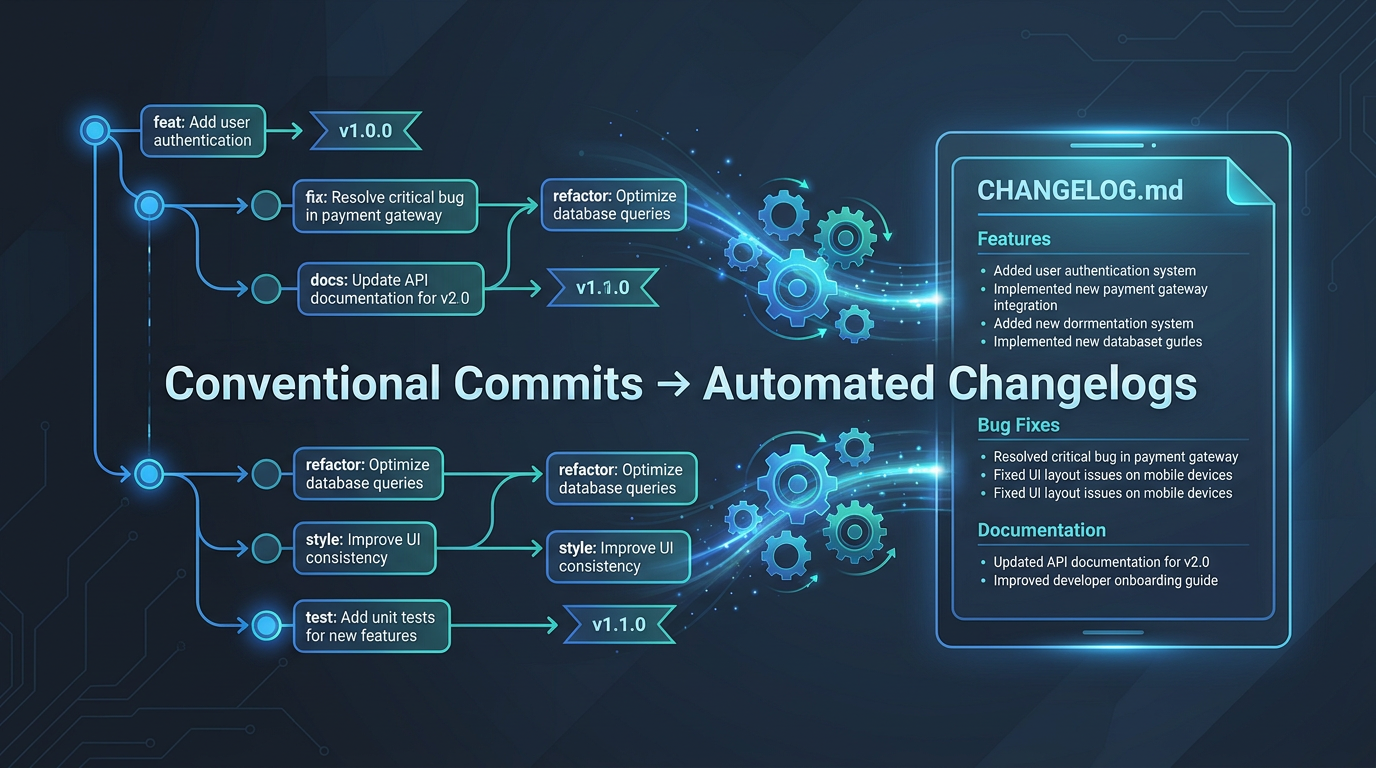
Turning Git commits into an API for your project’s history.
Most developers have a complicated relationship with changelogs.
We know they’re valuable. Users appreciate them. Future maintainers rely on them. Yet maintaining them consistently is often one of the first things to fall by the wayside when a project gets busy.
After working on multiple software projects, I found myself asking a simple question:
What if the Git commit history itself could become the source of truth for changelogs and release notes?
That question led me down the path of Conventional Commits, automated changelog generation with tools like git-cliff, and ultimately to building my own Python project: [conventional-commit-hook](https://github.com/millsks/conventional-commit-hook).
This article explores why Conventional Commits matter, how they enable automated changelog generation, the alternatives that exist, and what motivated me to create a new commit message validation hook for Python projects.
The Problem with Traditional Changelogs
Many teams still maintain changelogs manually.
A typical release workflow looks something like this:
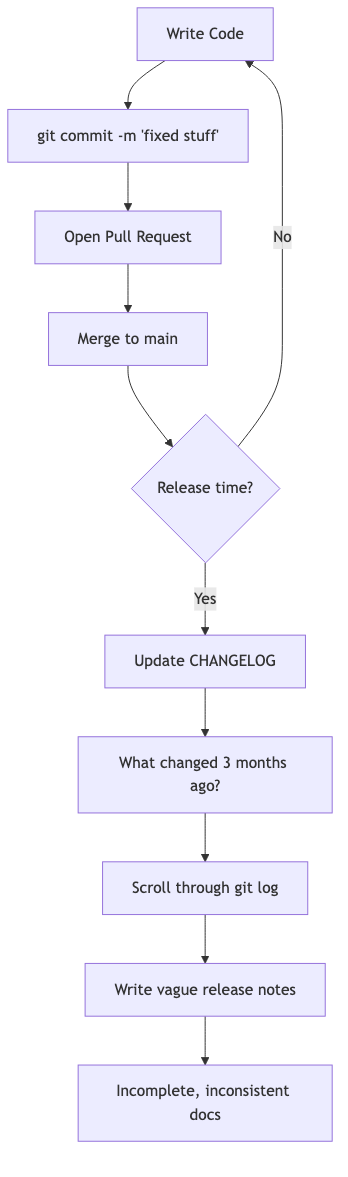
The problem is that the final step is often forgotten, and when it isn’t, the context for each change has long since evaporated from memory.
Over time, changelogs become:
- Incomplete
- Inconsistent
- Outdated
- Difficult to maintain
Meanwhile, Git already contains a detailed record of every change that occurred throughout the project’s history. The challenge isn’t collecting information — it’s transforming that information into structured release documentation.
That’s where Conventional Commits enter the picture.
Enter Conventional Commits
The Conventional Commits specification defines a standard format for commit messages.
Instead of writing something like:
fixed login bugYou write:
fix(auth): resolve null pointer exception during loginOr:
feat(api): add OAuth2 authentication supportOr:
feat!: remove legacy v1 endpointsEach commit message follows a structured format that communicates important metadata at a glance.
Anatomy of a Conventional Commit

The metadata encoded in each commit:
- type — the category of change (
feat,fix,docs,refactor, etc.) - scope — which part of the codebase was affected (optional)
**!** — signals a breaking change directly in the header (optional)- description — a concise summary in the imperative mood
- body — detailed context about the change (optional)
- footers — structured metadata including
BREAKING CHANGE(optional)
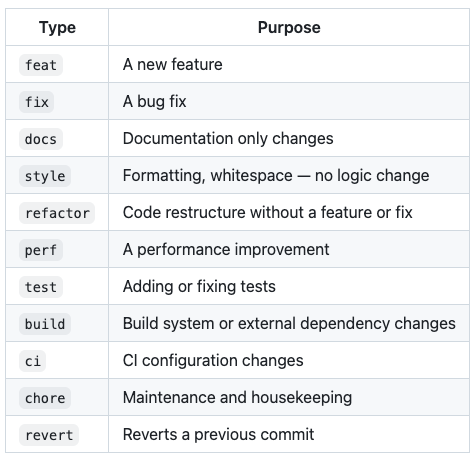
The 11 Standard Types
The Conventional Commits specification defines the feat and fix types explicitly, with BREAKING CHANGE as a special footer. The broader ecosystem has converged on 11 commonly used types:
Turning Commit History into Changelogs
One of the most compelling tools in the Conventional Commits ecosystem is git-cliff.
Rather than manually maintaining release notes, git-cliff analyzes commit history and generates changelog entries directly from commit messages.
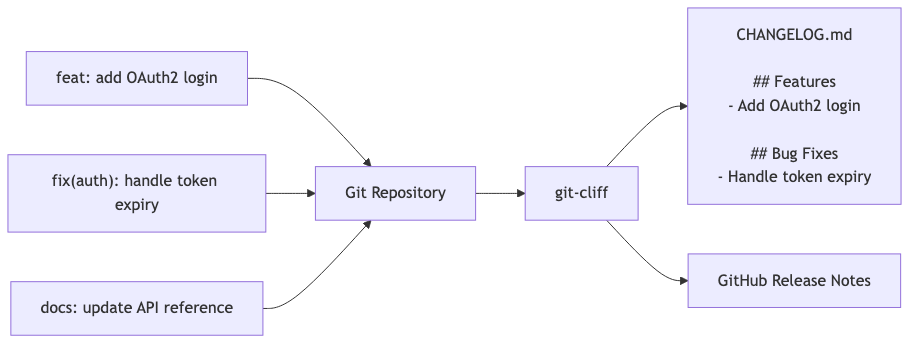
The benefits are significant:
- Automated changelog generation tied directly to commit history
- Consistent release notes with zero manual effort
- Accurate historical records with proper categorization
- Faster release preparation
- Breaking changes surfaced automatically from
BREAKING CHANGEfooters
But this pipeline only works if the commit messages themselves are structured correctly. A single unformatted commit breaks the pattern. That’s why enforcement at commit time matters.
How the Pre-commit Hook Fits In
The pre-commit framework provides a standardized way to run checks before a commit is accepted. A commit-msg hook runs after the developer writes a commit message but before Git records the commit permanently.
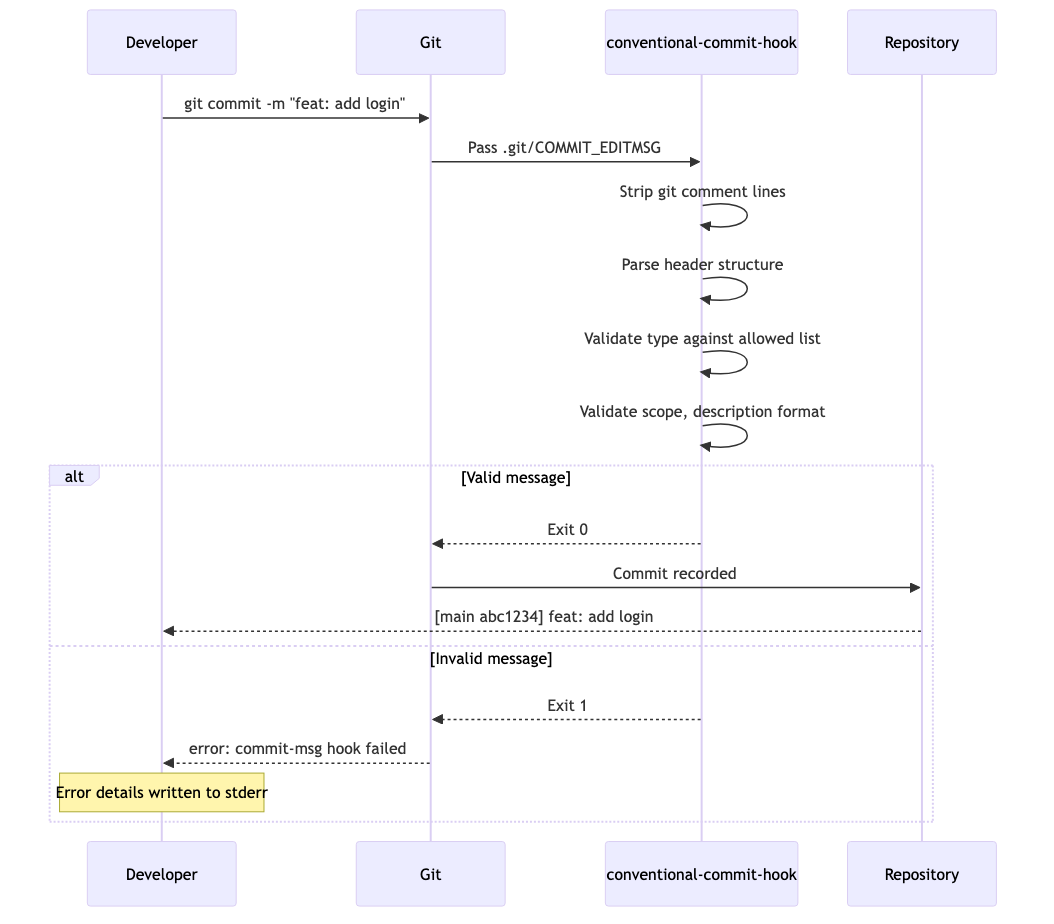
The hook catches formatting problems immediately, before they accumulate in history and before a developer has moved on to the next task.
The Full Commit-to-Release Pipeline
Putting the pieces together, a project using Conventional Commits, pre-commit, and git-cliff gets an end-to-end pipeline from commit message to release documentation:
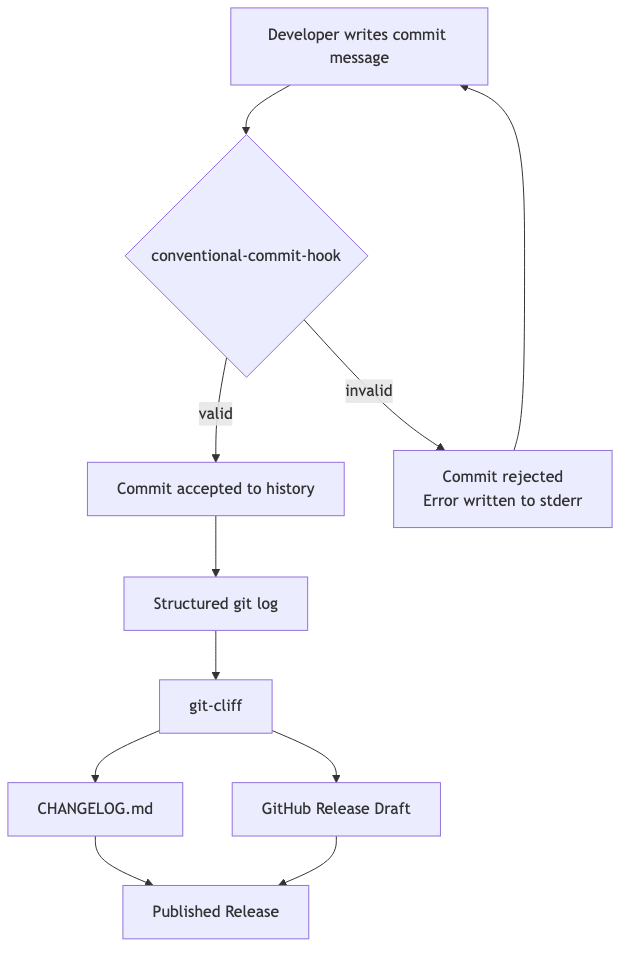
Each step is automated. The only human input required is writing a well-formed commit message — something the hook enforces at the point of commit.
The Open Source Ecosystem: Alternatives and Prior Art
[conventional-commit-hook](https://github.com/millsks/conventional-commit-hook) is MIT licensed and fully open source — contributions, forks, and adaptations are welcome. It is one of several tools in a healthy ecosystem that addresses the same problem from different angles.
Tools in This Space
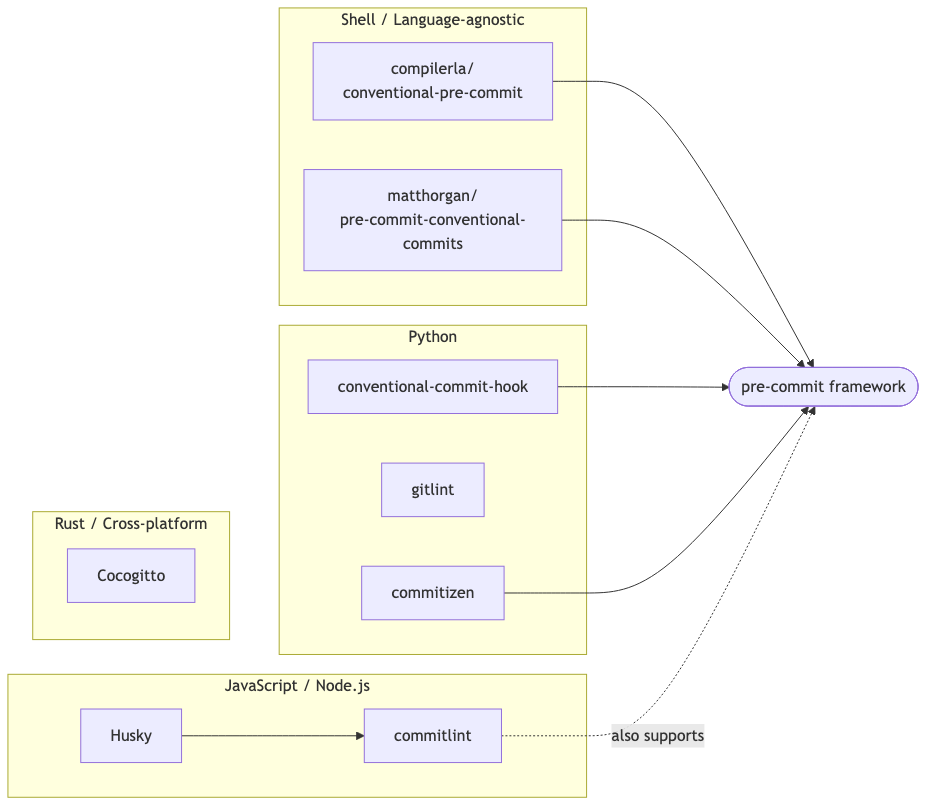
The open source community has built commit message validators across multiple language ecosystems. Choosing the right tool depends on which ecosystem you work in, how you manage git hooks, and how much flexibility you need.
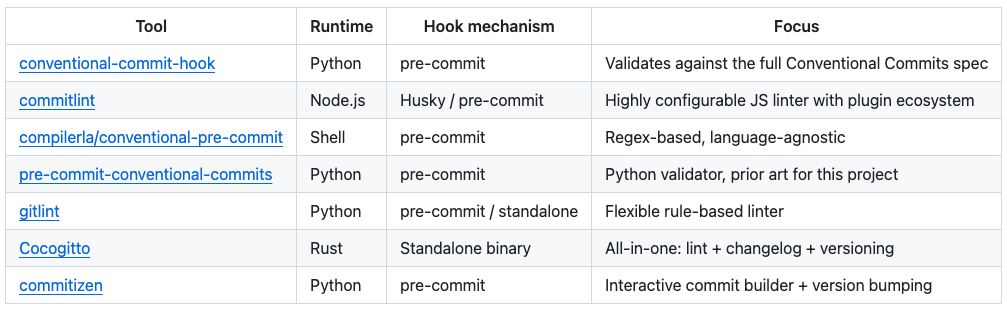
Links for each tool are in the sections below.
The Node.js Ecosystem: commitlint + Husky
The most widely adopted combination in JavaScript projects is commitlint paired with Husky. Commitlint is highly configurable — teams add @commitlint/config-conventional to enforce the same Conventional Commits rules, and Husky manages the git hook wiring. It is the de facto standard for Node.js monorepos and frontend projects.
For Python projects, pulling in a Node.js runtime solely to validate commit messages is an uncomfortable dependency. That friction motivates a Python-native alternative.
The Python Landscape
gitlint is a flexible, rule-based Python commit message linter. It supports custom rules and works well as a general-purpose linter, but enforcing the full Conventional Commits spec requires additional configuration rather than being available out of the box.
commitizen takes a different angle: instead of validating a message after the developer types it, it guides the developer through an interactive prompt to construct a valid commit. It also handles version bumping tied to commit types. It is a richer tool but changes the commit workflow more significantly and requires more setup.
The Rust-Based All-in-One: Cocogitto
Cocogitto (cog) is a Rust-based toolchain that handles linting, changelog generation, and semantic versioning in a single binary. It is cross-platform and fast. If you want one tool that owns the entire Conventional Commits workflow without wiring together pre-commit + git-cliff separately, Cocogitto is worth evaluating.
Prior Art: matthorgan’s pre-commit-conventional-commits
One important influence on this project is [pre-commit-conventional-commits](https://github.com/matthorgan/pre-commit-conventional-commits) by matthorgan. It demonstrated that commit message validation could be delivered as a focused pre-commit hook for Python projects without heavy dependencies — the same model that conventional-commit-hook follows.
Development activity on that project had slowed by the time I started building this, which is common for stable open source tools that reach feature completeness. That wasn’t a criticism — it was the gap I wanted to fill with an actively maintained alternative.
Why I Built conventional-commit-hook
With all these alternatives available, the motivation behind [conventional-commit-hook](https://github.com/millsks/conventional-commit-hook) was specific: I wanted a lightweight, actively maintained commit message validator designed for modern Python development workflows — one that installs cleanly from both PyPI and conda-forge, fits naturally into the pre-commit framework, and requires no Node.js or Rust toolchain.
Key design decisions:
- Silent on success — no output when the commit message is valid; noise only on failure
- Single runtime dependency —
[structlog](https://www.structlog.org/) for structured, machine-parseable error output to stderr - Full spec support — breaking change detection from both the
!header marker andBREAKING CHANGEfooter token - Custom type overrides — the
--typesargument lets teams define their own allowed type set - Available on both PyPI and conda-forge — fitting into conda-based Python workflows in addition to pip-based ones
Using the Hook
Add it to your .pre-commit-config.yaml:
repos:
  - repo: https://github.com/millsks/conventional-commit-hook
    rev: v0.1.0
    hooks:
      - id: conventional-commit-hook
Install the hook:
pre-commit install --hook-type commit-msgTo restrict the allowed types to a custom set:
hooks:
      - id: conventional-commit-hook
        args: [--types, feat, fix, hotfix, chore]
Final Thoughts
Conventional Commits introduce a small amount of discipline at commit time, but they unlock significant benefits throughout the software delivery lifecycle.
If changelogs are generated from commit history, then commit history needs to be reliable.
Git already records what changed. Conventional Commits explain why it changed. Tools like git-cliff transform that information into meaningful release documentation. And a commit hook helps ensure the entire process remains consistent over time.
GitHub Repository: https://github.com/millsks/conventional-commit-hook
메타데이터
- post_id
- 8bbe9b8c1dfd
- slug
- from-commit-messages-to-automated-changelogs-why-i-built-a-conventional-commit-hook-for-python-8bbe9b8c1dfd
- url
- https://medium.com/@millsks/from-commit-messages-to-automated-changelogs-why-i-built-a-conventional-commit-hook-for-python-8bbe9b8c1dfd
- canonical_url
- https://medium.com/@millsks/from-commit-messages-to-automated-changelogs-why-i-built-a-conventional-commit-hook-for-python-8bbe9b8c1dfd
- author_url
- https://medium.com/@millsks
- status
- ok
- fetched_at
- 2026-08-11 23:18:45