Your Team Has Too Many Meetings Because Your Systems Aren’t Trustworthy
Most status meetings exist to compensate for missing visibility, weak processes, and unclear ownership.
Your Team Has Too Many Meetings Because Your Systems Aren’t Trustworthy
Most status meetings exist to compensate for missing visibility, weak processes, and unclear ownership.
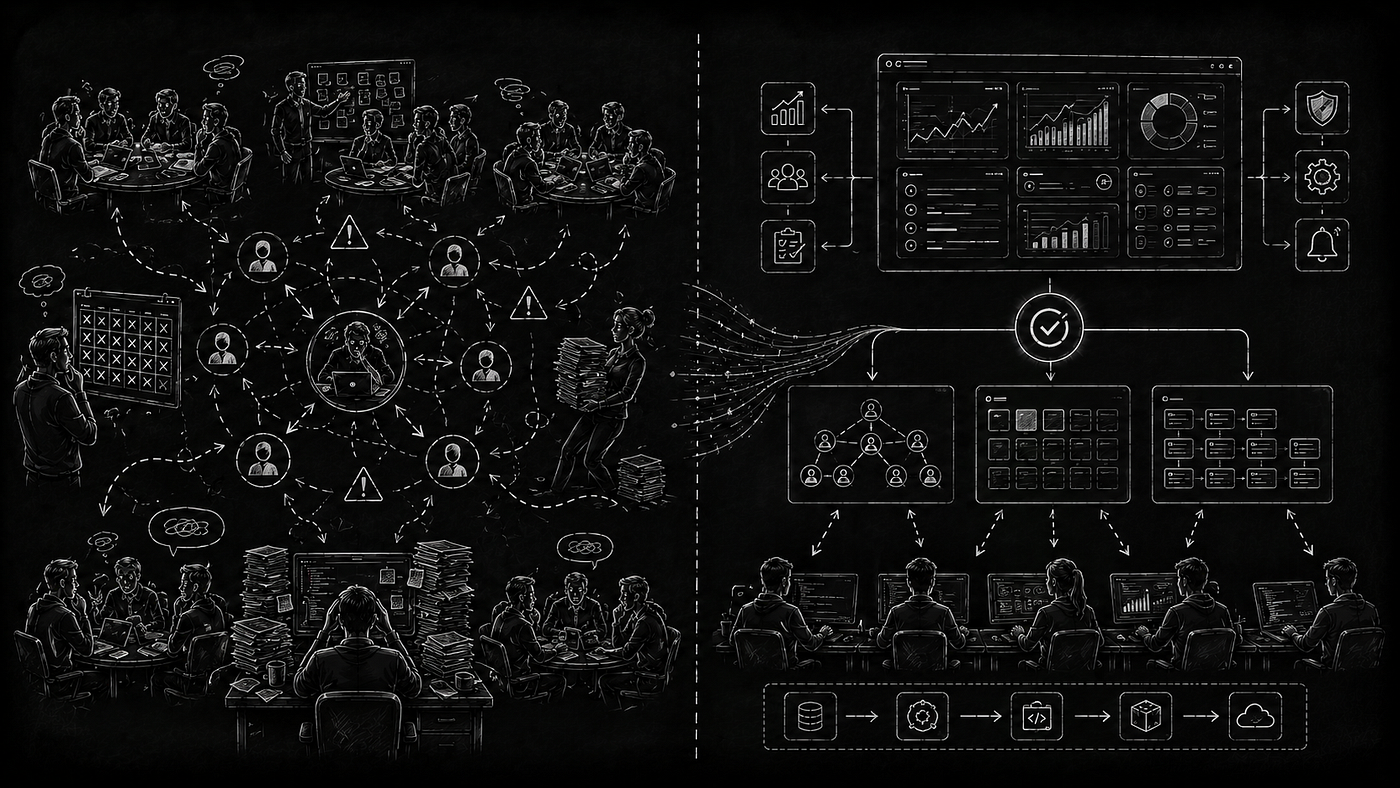
Many engineering teams complain about meetings.
Daily standups.
Sprint planning.
Backlog refinement.
Status updates.
Dependency reviews.
Architecture syncs.
Alignment calls.
Escalation calls.
And yet despite all these meetings:
- projects are still delayed
- priorities remain unclear
- dependencies still surprise people
The common assumption is:
We need better meetings.
But often the real issue is:
We need more trustworthy systems.
Because meetings frequently emerge when information cannot be trusted elsewhere.
**Not a Member? Read for FREE here.**
The Meeting Explosion
Imagine a team asks:
What’s the status of Feature X?
Ideally the answer should be visible immediately.
Instead:
Schedule Meeting
      ↓
Gather Stakeholders
      ↓
Discuss Progress
      ↓
Clarify Ownership
A meeting was used to discover information.
Not to make decisions.
That’s a warning sign.
Why Organizations Add More Meetings
Meetings usually appear when trust decreases.
Examples:
Missing Visibility
Nobody knows:
- what’s blocked
- what’s deployed
- what’s delayed
Result:
Weekly Status MeetingUnclear Ownership
Nobody knows who is responsible.
Result:
Alignment MeetingUnpredictable Delivery
Nobody trusts estimates.
Result:
Progress Review MeetingPoor System Observability
Nobody knows what happened in production.
Result:
Incident Sync MeetingThe Real Problem
Meetings are often symptoms.
The root causes are usually:
- missing dashboards
- unclear ownership
- weak workflows
- poor documentation
- unreliable reporting
- lack of automation
Organizations treat symptoms.
The meeting count grows.
Common Engineering Mistakes
❌ Meeting-Based Coordination
Every dependency requires a call.
Example:
Need Information
      ↓
Book Meeting
instead of:
Need Information
      ↓
Find System Record
This doesn’t scale.
❌ Human APIs
Some organizations rely on specific people.
Need deployment status?
Ask John.
Need architecture information?
Ask Sarah.
Need workflow details?
Ask Mike.
Now knowledge is trapped inside people.
And meetings become mandatory.
❌ Status Through Conversation
Teams communicate progress verbally instead of operationally.
This creates:
- inconsistent reporting
- misunderstandings
- repeated questions
The same conversations happen every week.
What Strong Engineering Organizations Do
Great teams make information discoverable.
Examples:
- deployment dashboards
- ownership maps
- architecture documentation
- incident timelines
- workflow visibility
- operational metrics
Now information retrieval becomes self-service.
Meetings become optional.
Bad System
❌ People-Centric Visibility
Question
    ↓
Ask Person
    ↓
Wait
    ↓
Meeting
    ↓
Answer
Slow.
Expensive.
Difficult to scale.
Better System
✅ System-Centric Visibility
Question
    ↓
Dashboard
    ↓
Answer
Fast.
Reliable.
Scalable.
Real Enterprise Example
A production deployment fails.
In some organizations:
Emergency Meeting
      ↓
Investigate
      ↓
Find Logs
      ↓
Find Owner
      ↓
Understand Timeline
Takes hours.
In mature organizations:
Deployment Dashboard
      ↓
Incident Timeline
      ↓
Responsible Service
      ↓
Root Cause
Takes minutes.
The difference isn’t intelligence.
It’s system design.
Important Engineering Principle
Visibility Reduces Coordination Cost
As organizations grow:
- people scale poorly
- systems scale well
Every piece of discoverable information reduces future meetings.
And every hidden dependency creates new ones.
Practical Example
❌ Organization A
Needs:
5 Meetingsto understand project status.
✅ Organization B
Uses:
Project Dashboard
Ownership Map
Delivery Metrics
The same information is available instantly.
Senior-Level Insight
Junior organizations believe:
Better communication solves scaling problems.
Mature organizations understand:
Better systems reduce the amount of communication required.
The goal isn’t more meetings.
The goal is fewer meetings needed.
Final Takeaway
Meetings are not inherently bad.
Decision-making meetings are valuable.
Problem-solving meetings are valuable.
Alignment meetings are valuable.
But status-discovery meetings often signal deeper issues.
Because every unnecessary meeting is usually compensating for:
- missing visibility
- unclear ownership
- weak systems
- unreliable information
Strong engineering organizations don’t scale communication endlessly.
They build systems people can trust.
Connect with Me
If you enjoyed this post and would like to stay updated with more content like this, feel free to connect with me on social media:
- Twitter : Follow me on Twitter for quick tips and updates.
- LinkedIn : Connect with me on LinkedIn
- YouTube : Subscribe to my YouTube Channel for video tutorials and live coding sessions.
- Dev.to : Follow me on Dev.to where I share more technical articles and insights.
- WhatsApp : Join my WhatsApp group to get instant notifications and chat about the latest in tech
Email: Email me on dipaksahirav@gmail.com for any questions, collaborations, or just to say hi!
I appreciate your support and look forward to connecting with you!
메타데이터
- post_id
- 8bc0aca83e82
- slug
- your-team-has-too-many-meetings-because-your-systems-arent-trustworthy-8bc0aca83e82
- url
- https://medium.com/angular-engineering/your-team-has-too-many-meetings-because-your-systems-arent-trustworthy-8bc0aca83e82
- canonical_url
- https://medium.com/angular-engineering/your-team-has-too-many-meetings-because-your-systems-arent-trustworthy-8bc0aca83e82
- author_url
- https://medium.com/@dipaksahirav
- status
- ok
- fetched_at
- 2026-06-14 11:28:49