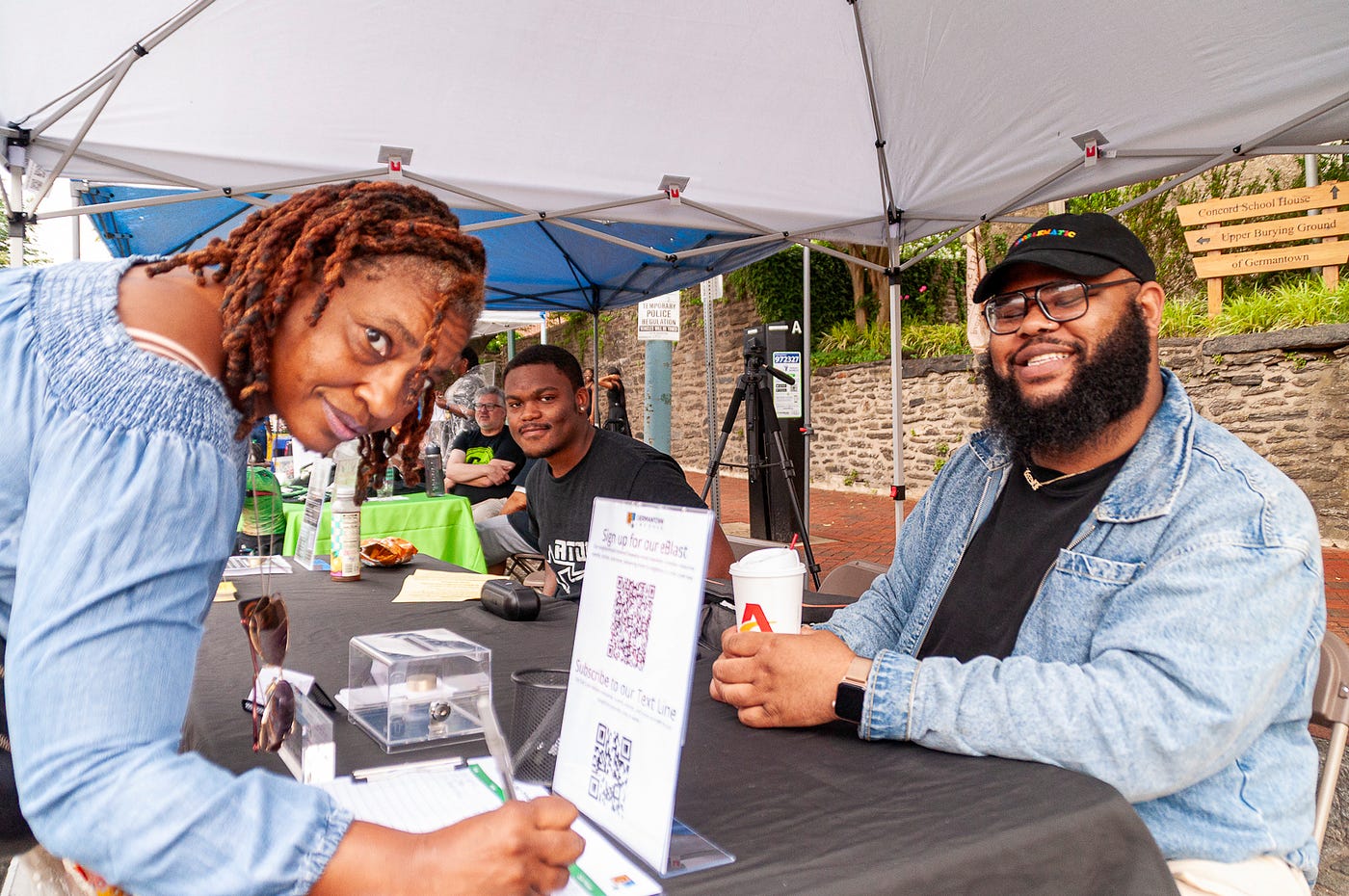
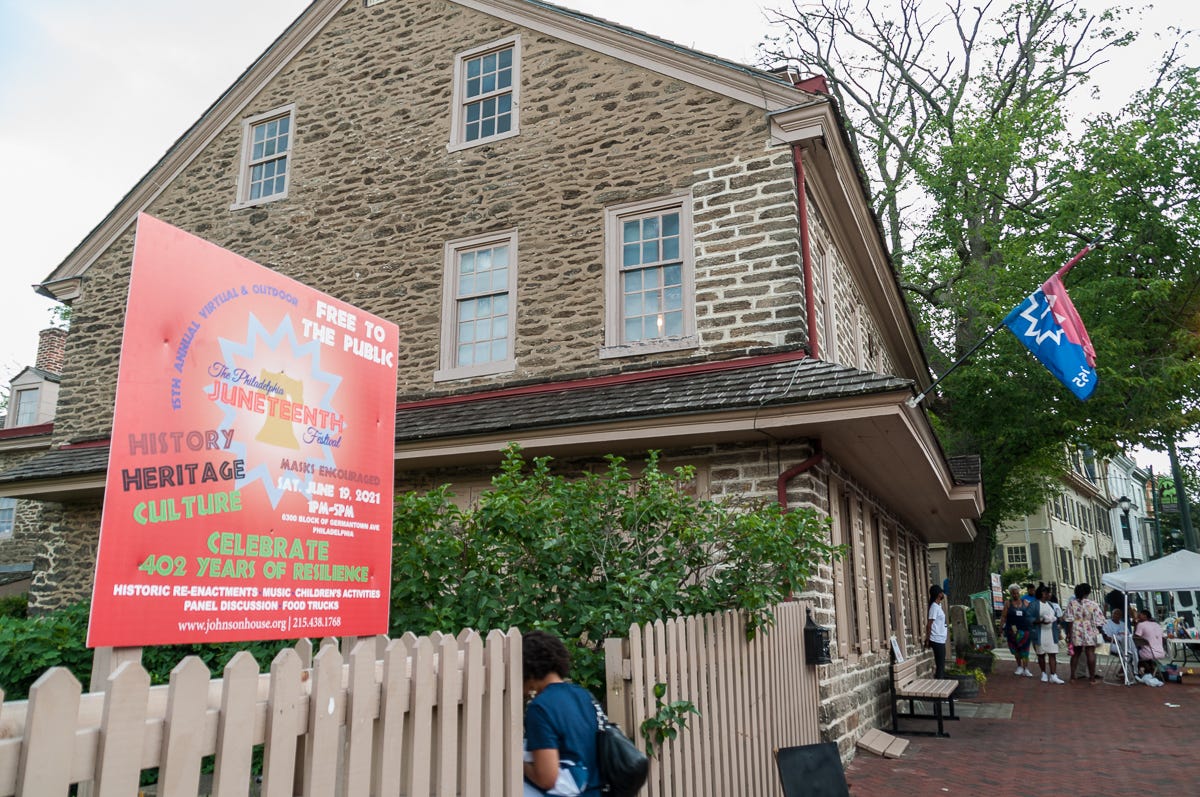
When Attention Becomes the Measure of Everything
What gets lost when visibility is treated as value
When Attention Becomes the Measure of Everything
What gets lost when visibility is treated as value
April 13, 2026
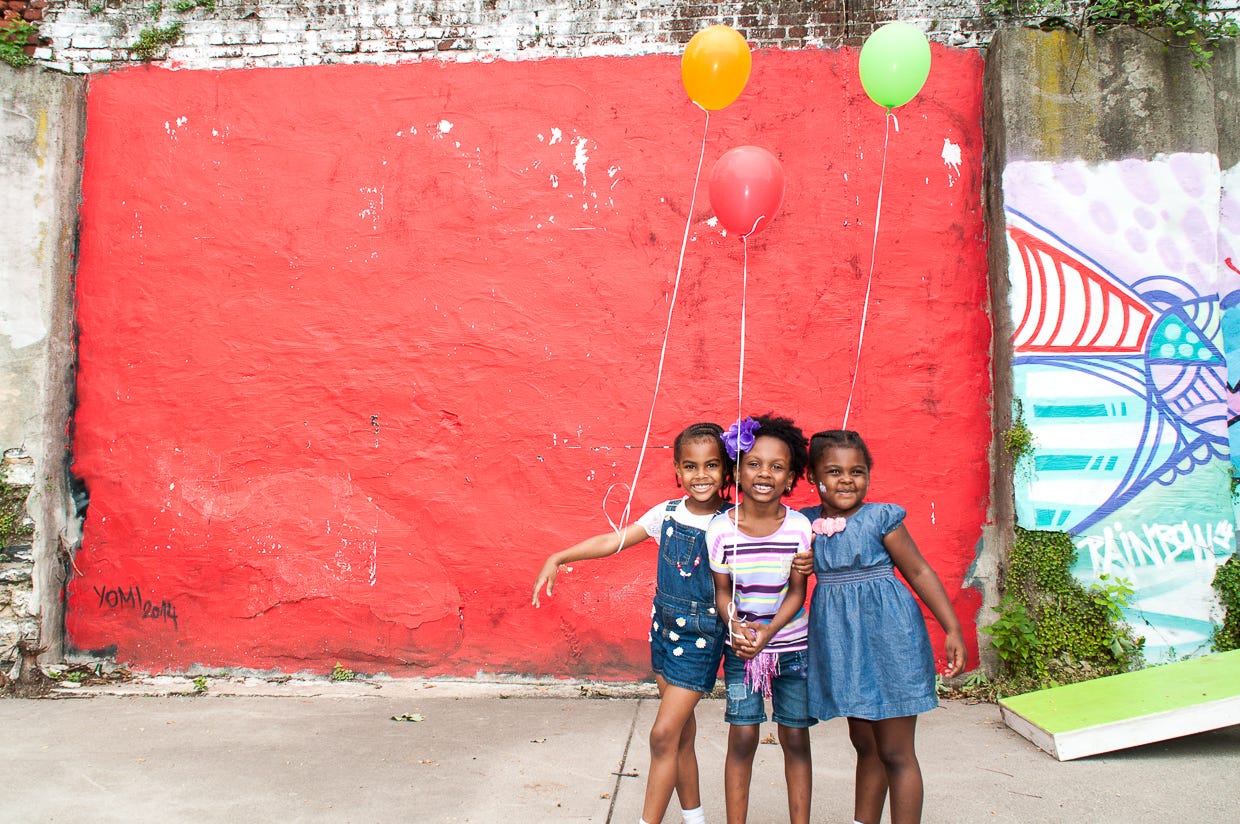
Photographed by Tieshka K. Smith in 2015 at the 9th annual Philadelphia Juneteenth Festival in Germantown. This image is protected by copyright.
I didn’t begin photographing the Philadelphia Juneteenth Festival in Germantown because I was looking for attention: I began because I was asked.
In 2015, Cornelia Swinson — Executive Director of the Johnson House Historic Site in Germantown, and the event organizer — invited me to serve as the Festival’s photographer. I understood it to be an invitation grounded in trust, and I responded to it as such.
[It’s generally accepted that 2015 was the first year that I photographed the Festival. In fact, 2015 was actually the second year I photographed the Festival while living there (the first year was in 2013, when I photographed it for Germantown United, CDC).]
Anyway, I certainly wasn’t engaged in this work for the visibility; it was a gig that involved eight or nine hours of being on my feet, walking up and down a mile-long stretch of Germantown Avenue, , much of it spent shooting outdoors during the hottest part of the afternoon (noon-4pm).
Beginning in 2016, after I moved away from Germantown to southwest, and later, west Philadelphia, I returned to Germantown to document the rhythms of the Festival, the people who showed up, the ways Black joy made itself visible in real time. I viewed it as a long-term commitment to seeing, deepening my practice of paying attention, and honoring what unfolded.
In 2023, that body of work became an exhibition. And eventually, a book, ***Compositions of Black Joy***. None of this was optimized for attention. Instead, the work had accumulated enough depth to warrant being shared. That distinction matters.
Because alongside this kind of long-term, relational practice exists another framework — one that has increasingly shaped how creative and intellectual work is evaluated: the attention economy.

Photographed by Tieshka K. Smith in 2022 at the 16th annual Philadelphia Juneteenth Festival in Germantown. This image is protected by copyright.
Introducing the Attention Economy
When I began reflecting on this idea known as the “attention economy,” I quickly learned that it is not a new concept.
As early as 1971, economist and psychologist Herbert A. Simon observed that in a world rich with information, attention — not information — becomes the scarce resource. What we choose to pay attention to, and how long we are willing to sustain that attention, begins to shape what is seen, what is valued, and ultimately, what is remembered.
Decades later, Simon’s observation, rooted in theory, has evolved into an infrastructure whose timing is in tension with the timing of where I was with my Germantown Juneteenth Festival photography practice. I’ll talk more about that later.
In 2022, Rice University professor Adrian Lenardic and his co-authors wrote about how attention economics has begun to shape scientific research itself. They noted that scientists now include media exposure counts on their résumés, and that the visibility of a study can influence how its value is perceived — sometimes independent of peer review or reproducibility. Science, they argue, has not escaped the pull of attention. It has been reorganized by it. It would be easy to see this as a problem confined to academia. But it isn’t.
Sadly, the same logic extends to artmaking of any kind and to cultural production more broadly. It not only matters what is created in the way of ideas or bodies of work, but how much attention it can generate and how far and how fast news about the work travels. Visibility and virality becomes both the goal and the reward. And in that shift, something subtle but significant begins to change: the relationship between value and attention starts to loosen.
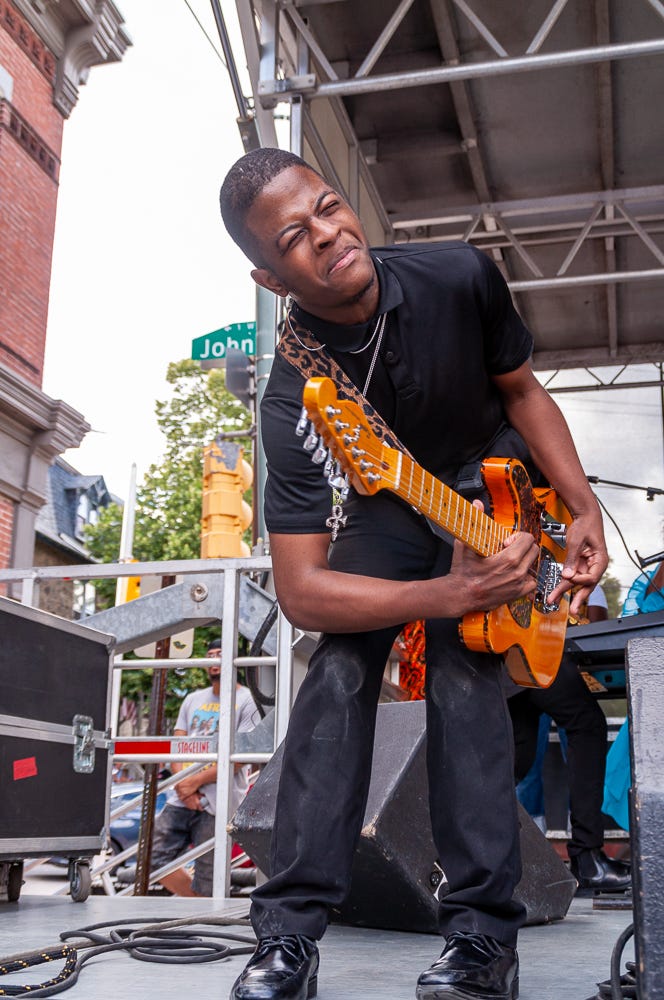
Photographed by Tieshka K. Smith in 2022 at the 16th annual Philadelphia Juneteenth Festival in Germantown. This image is protected by copyright.
Practice Versus Incentive
I want to be clear about something: I understand the value of attention.
I am not indifferent to it, nor am I operating outside of it. I move with intention on the platforms I use. I share when there is something worth sharing — a professional reflection, news of an upcoming exhibition, a book launch, an event appearance, or a celebratory moment that asks for people’s time and consideration. I am mindful that attention is finite, and that people are being pulled in a thousand different directions at any given moment.
So I don’t treat attention casually. I treat it with care. But care is not the same thing as optimization. The kind of work I do as a photographer, writer and community archivist — and the kind of work many artists, writers, and thinkers commit themselves to over the long term — does not always align with the incentives of the attention economy.
This work takes time. It requires sitting with ideas before they are fully formed. It requires returning to the same subject or community over and over again. It requires periods of quiet, of invisibility, of deep reflection, where nothing is being produced for public consumption because something is still being worked out.
This is what it looks like to play the long game, one that often prioritizes quality over quantity. Some may feel I’m being reductive by evoking a slogan, but I’m speaking about what emerges from sustaining an ongoing practice — a way of working that tends to value depth, context, and integrity, even when that means moving slowly and with the fullest intention.
Unfortunately, the attention economy, as it is currently configured, does not meaningfully reward that kind of timeframe. The effort and time investment it takes to produce something thoughtful — something layered, something considered — can easily be seen, within this system, as time that could have been spent producing more content like posts, updates, or other ways of maintaining a visible presence. In that framing, spending time developing a deeper understanding, making meaning of things, bringing a work from conception to completion, becomes a kind of liability.
And what emerges as a byproduct of the attention economy is a quiet but persistent pressure to produce with the goal of solely maintaining a superficial connection, done through efforts to keep viewers hooked. That is a different kind of work altogether, work that doesn’t always align with that of an artist or writer.
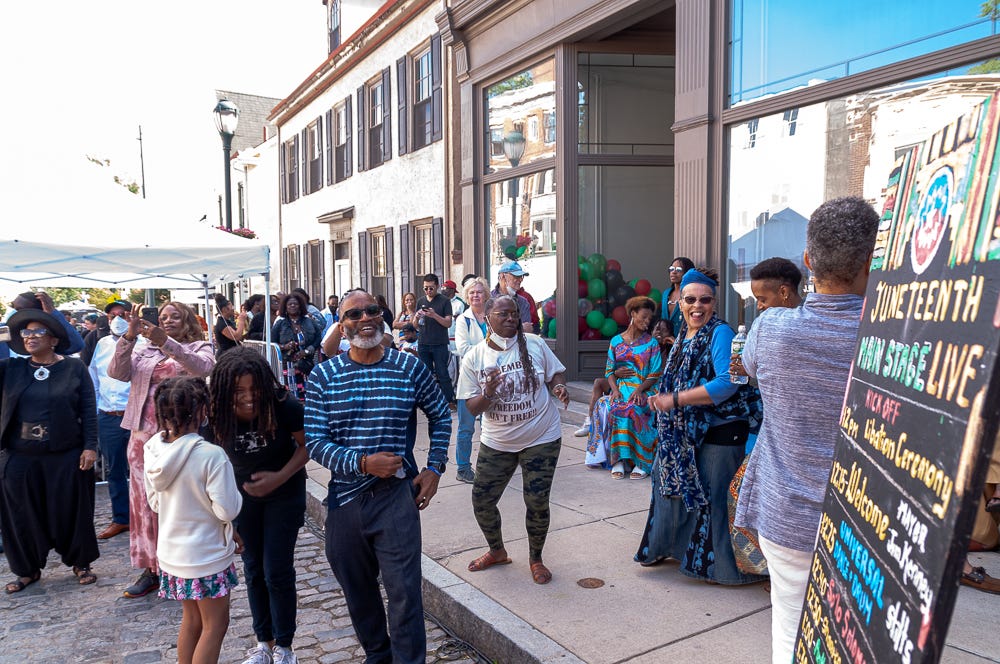
Photographed by Tieshka K. Smith in 2022 at the 16th annual Philadelphia Juneteenth Festival in Germantown. This image is protected by copyright.
Misreading, Performance, and the Cost of Mismatch
This misalignment between practice and incentive does not stay confined to systems. It shows up in how we engage with one another, particularly in spaces where artists, writers, and cultural workers gather. Where I expected to find people who have made a commitment to depth, inquiry, and critical thought — I have found something else operating just beneath the surface: A kind of performance.
It doesn’t manifest in an overt or intentional way, but in the sense that depth is often signaled rather than practiced. It is articulated in public-facing contexts — panels, talks, social media — but less consistently sustained in one-on-one interactions, where there is no audience and no structure to hold the exchange.
This is where the disconnect becomes most visible, and frankly, more frustrating for and to me. I can’t tell anyone else what to do, but I am not approaching interactions with a script, nor am I interested in embodying a version of myself that is optimized for reception. I engage directly. I listen. I reflect back what I hear. I ask questions when something does not sit right. Not to challenge for the sake of it, but to understand more clearly what is being said.
And in doing so, I have found that I am often misread.
People approach with an expectation — shaped, perhaps, by the surface-level cues of friendliness, openness, or ease — and when the interaction moves into something more direct, more reflective, or more grounded in inquiry, there is a shift. Sometimes it is subtle: a pulling back, a change in tone, a closing off.
Other times, it becomes something else entirely: a simplification of the interaction into a judgment. A quiet reframing that places the weight of the mismatch on me, without acknowledging the expectations that were brought into the encounter in the first place.
From where I sit, what seems to be missing in these moments is curiosity, not about ideas in the abstract, but curiosity about the person in front of them. A willingness to pause and ask: What is actually happening here? What is being offered? What assumptions did I bring into this interaction?
Not, what can I extract from this person, what can this person do for me, or my favorite: how can I leverage their “platforms” and “positioning” to enrich myself.
Instead, the interaction is filtered through an internal script — one that was never named, never shared, but still shapes how the encounter is interpreted. And when that script is not met, the response is not always reflection. It is often retreat, or reinterpretation.
This is the cost of a culture that rewards performance over presence. This is what I fear the attention economy has done in the shaping of the next generation of creatives.
Because when depth becomes something that is displayed rather than practiced, it becomes harder to recognize when it is encountered in its unembellished form.
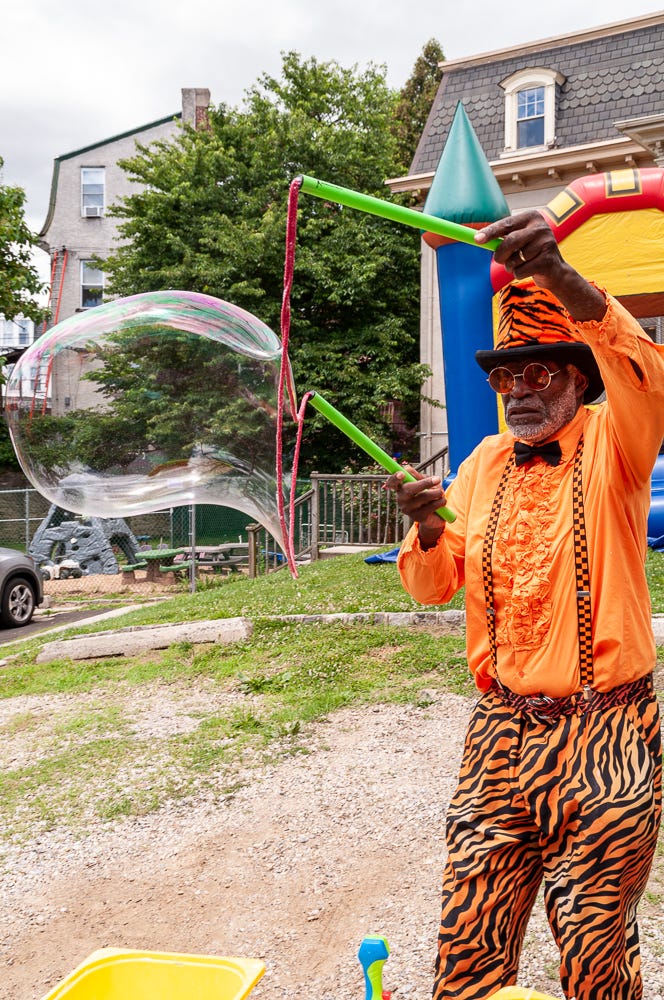
Photographed by Tieshka K. Smith in 2022 at the 16th annual Philadelphia Juneteenth Festival in Germantown. This image is protected by copyright.
What Gets Lost
When misreading becomes a pattern rather than an isolated experience, it does not remain personal. It becomes cultural.
The tendency to simplify interactions — to reduce a moment of mismatch into a fixed judgment — does not stay contained between two people. It replicates and reproduces. It becomes a troublesome way of interpreting others that requires very little reflection and even less accountability.
And over time, that way of interpreting begins to shape discourse. Unfortunately, nuance is one of the first things to erode. Not because people are incapable of nuance, but because nuance requires time, focus, and a willingness to hold complexity without immediately resolving it. It asks more of us than quick interpretation allows. It resists easy categorization.
But in environments where attention is constantly being pulled, where speed is rewarded, and where visibility is often tied to immediacy and “hot takes”, nuance can begin to feel inefficient. As a result, ideas are often condensed into shorter, more immediately digestible forms. In that process, some of the surrounding context — the conditions, intentions, and nuances that give those ideas their full meaning — can gradually fall away. Positions are flattened into something more easily recognizable, more easily shareable, more easily consumed. And in that flattening, something important is lost: the ability to encounter an idea — or a person — on its own terms.
This has broader implications, particularly in conversations around class, race, gender, and identity — areas that already demand care, specificity, and historical awareness. When these encounters are filtered through systems that reward speed and visibility over depth and context, the risk of distortion increases.
Complex realities become reduced to opposing positions. Inquiry gives way to assertion. And disagreement, rather than opening space for deeper understanding, can quickly harden into division and even worse, polarization.
Yes, this is a reflection of the conditions under which we are being asked to engage. But as intelligent beings, we have a responsibility to critique these conditions and choose when and how to engage.
The moment calls for us to push back against the conditions that have birthed the moment when attention became the primary currency, and visibility the primary reward, and find a way to open a lane to reproduce the kind of conditions necessary for sustained, thoughtful engagement.
For those who are committed to working differently — to sitting with questions, to allowing ideas to develop over time, to engaging with others in ways that prioritize understanding over performance — isn’t this what we want?
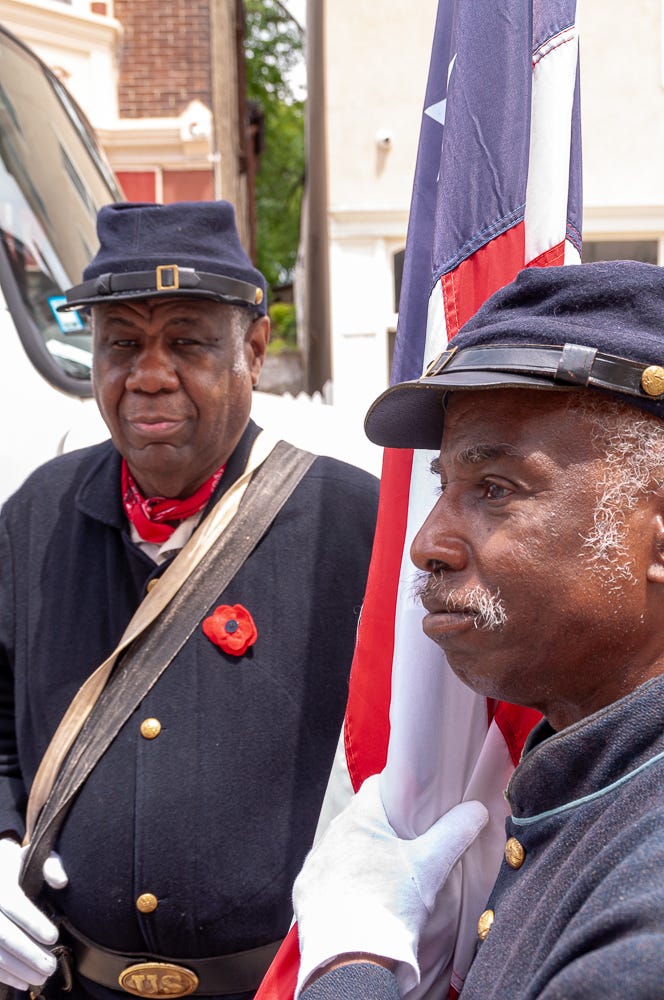
Photographed by Tieshka K. Smith in 2022 at the 16th annual Philadelphia Juneteenth Festival in Germantown. This image is protected by copyright.
Where The Attention Economy Leaves Us
So where does this leave those of us who are not indifferent to attention, but refuse to let it dictate the terms of our practice?
Where does this leave those of us who are committed to working differently, meaning those of us who opt into playing the long game?
Where does it leave those of us who choose to move with intention rather than urgency?
Where does it leave those of us who share when there is something to offer, rather than something to maintain?
Where does it leave those of us who understand that visibility has value, but do not confuse it with substance?
Well, it leaves us in a position that is, at times, uncomfortable.
People like us occupy a very unique position. We’re not off the grid, meaning that we’re fully outside of the attention economy, but we’re not fully aligned with it either. We’re still participating in these systems, but we do so with a degree of selectivity, choosing when and how to engage rather than defaulting to constant presence. We allow ourselves to be visible when there is something meaningful to share, rather than maintaining visibility for its own sake. And while we remain present within these spaces, that presence is not driven by the need to perform or to meet external expectations, but by a more deliberate and considered approach to how we show up.
It also requires a level of acceptance that the work may not always be immediately recognized. That it may take longer to find its audience, or that it may be misread by those who are accustomed to engaging through different frameworks. And still, to continue is the choice, time and time again. Compositions of Black Joy was my first book, and sure, like many of us who self-publish, it takes a lot of work to generate sustained interest. But I won’t let that deter me.
People like us don’t give up because our work isn’t optimized for the spaces that dominate the collective imagination. We’re committed to something deeper: to the integrity of the work, to the conditions under which it is created, and to the possibility of meaningful exchange. This means accepting that the pace of the work may not align with the pace that is often rewarded, and that the process itself may require more time, more attention, and more care than what is typically encouraged.
Because not all work is meant to move quickly. Some ideas need space to develop, to be questioned, and to evolve before they can be shared in a way that feels complete. Not all engagement is meant to be scaled or optimized; sometimes it exists in smaller, more focused interactions that carry their own kind of significance.
And not all value can be measured by attention. Metrics can indicate reach, but they do not always reflect depth, understanding, or impact in any meaningful sense.
There is another kind of recognition — one that is slower, quieter, and less visible, but no less real. It shows up in sustained engagement over time, in thoughtful responses that extend beyond surface-level interaction, and in exchanges that are meaningful regardless of how widely they are seen.
That is the space I continue to work from.
It is not always the most visible or the most immediately rewarding, but it allows for a kind of consistency and integrity that feels necessary to maintain, particularly in this time in which we live.
메타데이터
- post_id
- 8bc6c25da5c5
- slug
- when-attention-becomes-the-measure-of-everything-8bc6c25da5c5
- url
- https://medium.com/@tieshka/when-attention-becomes-the-measure-of-everything-8bc6c25da5c5
- canonical_url
- https://medium.com/@tieshka/when-attention-becomes-the-measure-of-everything-8bc6c25da5c5
- author_url
- https://medium.com/@tieshka
- status
- ok
- fetched_at
- 2026-06-16 19:09:56