Dagashi Diaries #9: Baby Star Ramen Maru — The Same Snack, Rolled Into a Ball
Baby Star Ramen needs no introduction in Japan. The thin fried noodle snack from Oyatsu Company has been a fixture of dagashi culture since…
Dagashi Diaries #9: Baby Star Ramen Maru — The Same Snack, Rolled Into a Ball
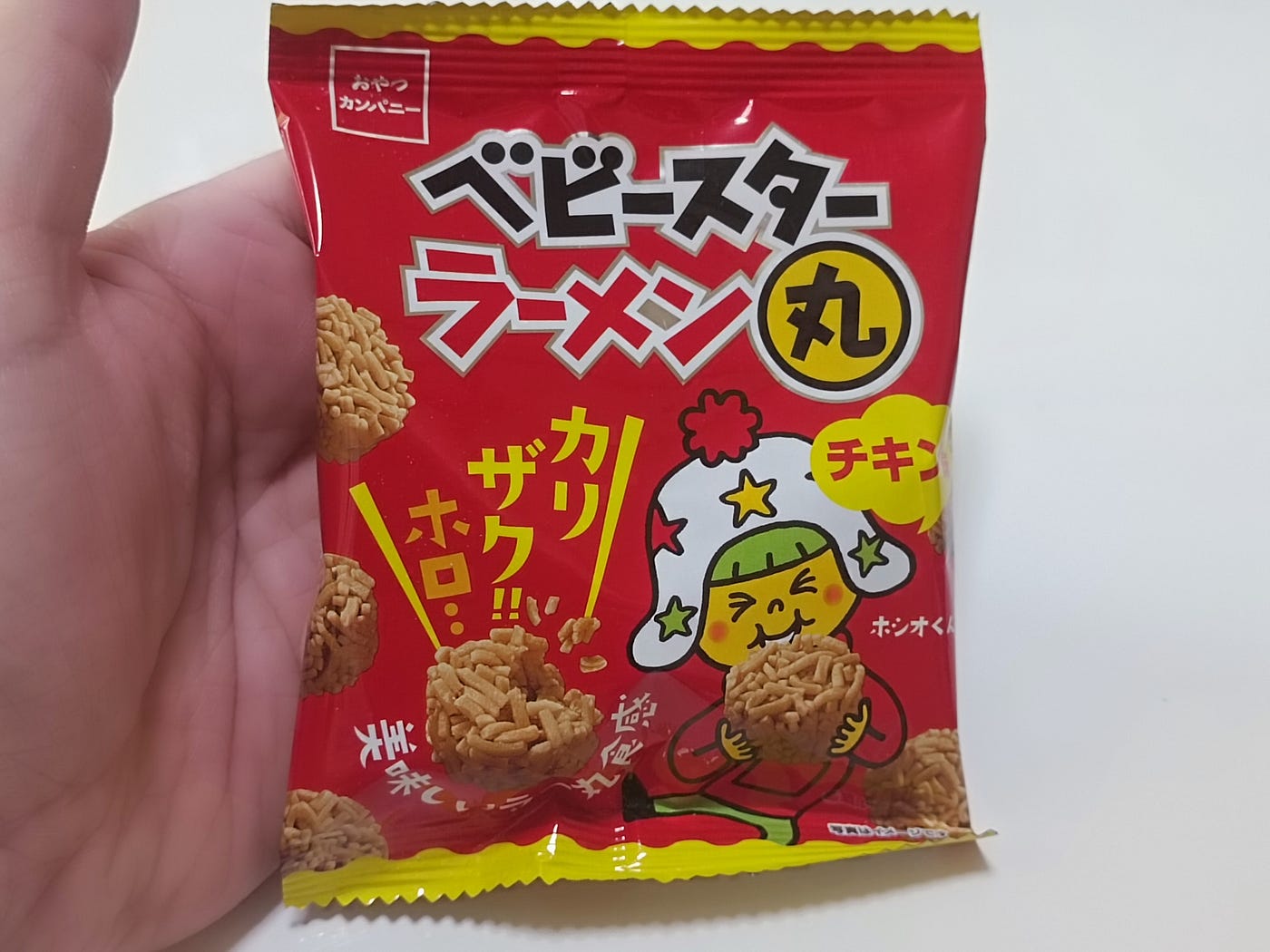
Baby Star Ramen needs no introduction in Japan. The thin fried noodle snack from Oyatsu Company has been a fixture of dagashi culture since the 1950s — a loose tangle of crispy wheat noodles seasoned with chicken flavour, eaten by the handful, reliably messy. Baby Star Ramen Maru is the same thing, compressed into a single bite-sized ball and held together with a dried seasoned egg piece at the centre. It costs ¥69 (about $0.43) for 22g.
The word maru means round. The concept is simple: take what works, remove the inconvenience.
THE TEXTURE — THREE STAGES
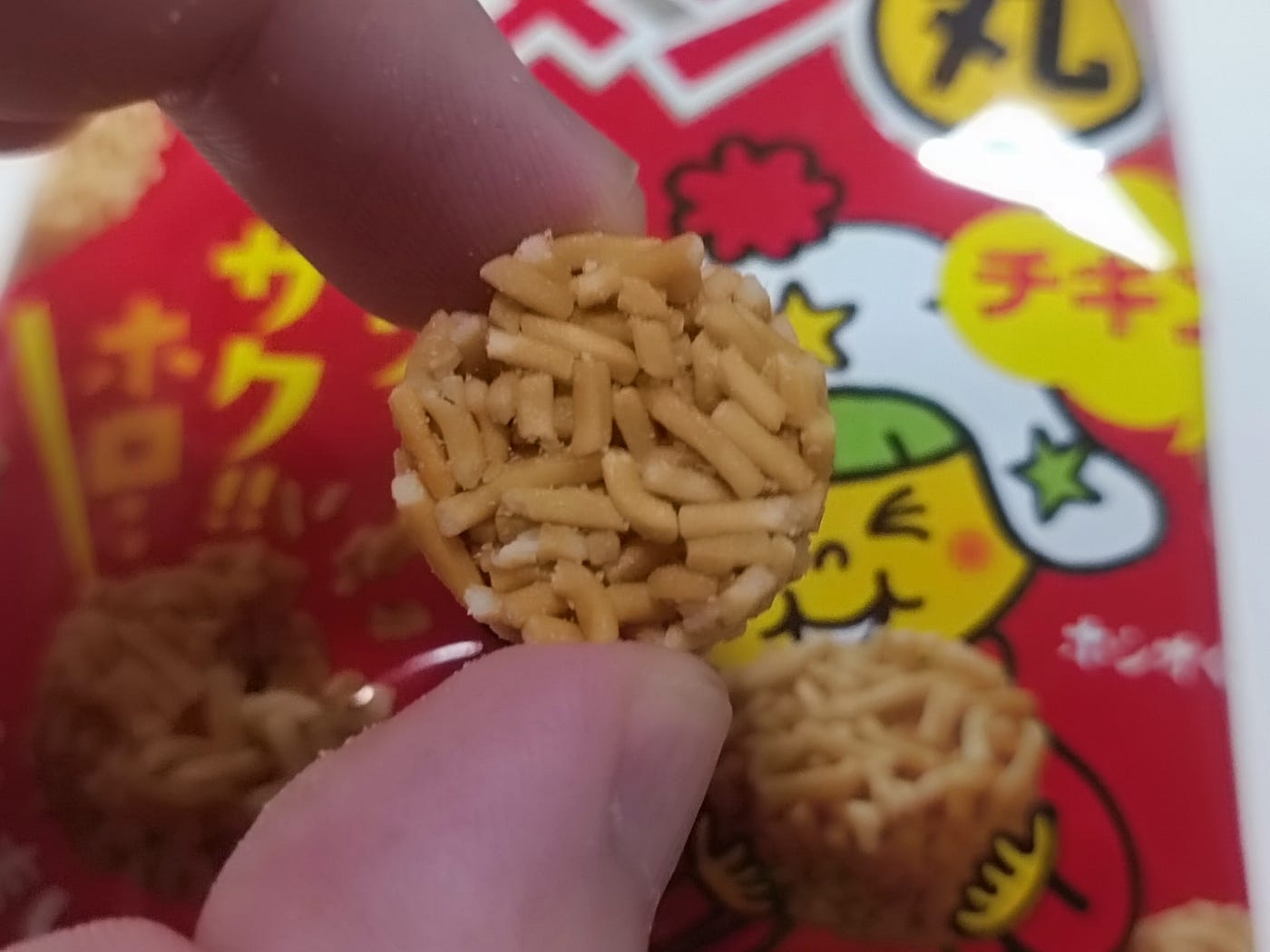
The marketing claims three distinct texture stages, and the claim is mostly accurate. The first contact is a light crunch — kari — as the outer surface gives way. The second is a deeper crunch as the compressed noodles break apart — zaku. The third, as the noodles fully separate in the mouth, is a softer dissolution — hororo, the way dry noodles crumble when they’ve been pressed together and then released.
In practice, the dominant sensation is still the zaku. The traditional Baby Star Ramen noodle format delivers a more sustained chew — each strand offers its own resistance before breaking. The Maru version compresses that experience into a shorter, slightly softer sequence. Whether this is better or worse is a matter of preference: the ball format is tidier, but the noodle format has more bite. Both are correct answers.
THE FLAVOUR
Chicken is the original and most widely available flavour, and the one eaten here. The seasoning doesn’t announce itself immediately — the first second or two is mostly texture. Then, as the noodles break down, the chicken flavour spreads across the palate and stays there. It’s on the lighter side for a ramen-themed snack, which actually works in its favour: the seasoning is present without being aggressive, which means you can eat through a bag without the flavour becoming exhausting.
The dried egg piece at the centre adds a brief moment of concentrated umami. It’s small, but it changes the last few chews.
THE PRACTICAL CASE
The original Baby Star Ramen scatters. Noodles escape the bag, land on keyboards, fall into gaps. Baby Star Ramen Maru does not scatter. Each ball stays intact until you bite it, and even then the pieces are contained enough to manage. This is why the product exists — not as an improvement on the original, but as a different format for different situations. Studying, working at a desk, eating while doing something else: the ball format handles all of these without incident.
THE PRICE
This used to cost around ¥30. The memory is reliable — most people who grew up eating dagashi in Japan have the same recollection. It now costs ¥69, which is roughly double. The snack itself hasn’t changed. The price has simply caught up with everything else.
At ¥69 it remains one of the cheaper options for a moment of something crunchy between meals. The value calculation still works.
Baby Star Ramen Maru (Chicken flavour) is available at dagashi shops, convenience stores, and supermarkets across Japan. ¥69 per bag (about $0.43 at April 2026 rates), 22g. Made by Oyatsu Company.
메타데이터
- post_id
- 8bd9d8dea932
- slug
- dagashi-diaries-9-baby-star-ramen-maru-the-same-snack-rolled-into-a-ball-8bd9d8dea932
- url
- https://medium.com/@hiro3714/dagashi-diaries-9-baby-star-ramen-maru-the-same-snack-rolled-into-a-ball-8bd9d8dea932
- canonical_url
- https://medium.com/@hiro3714/dagashi-diaries-9-baby-star-ramen-maru-the-same-snack-rolled-into-a-ball-8bd9d8dea932
- author_url
- https://medium.com/@hiro3714
- status
- ok
- fetched_at
- 2026-06-21 20:33:08