Identifying Critical Tasks in Crisis Management: Why Prioritization and Planning Matter
In every organization, there comes a moment when everything feels urgent. Systems fail, customers escalate issues, deadlines collide, and…
Identifying Critical Tasks in Crisis Management: Why Prioritization and Planning Matter

In every organization, there comes a moment when everything feels urgent. Systems fail, customers escalate issues, deadlines collide, and teams start reacting emotionally instead of strategically. During such situations, one skill separates resilient organizations from chaotic ones: the ability to identify critical tasks.
Crisis management is not about doing more work. It is about doing the right work first.
For technology companies, startups, cloud operations teams, logistics platforms, and enterprise environments, poor prioritization during a crisis can multiply losses within minutes. On the other hand, a well-planned response can stabilize operations quickly and protect both reputation and revenue.
Not Every Task Is Critical
One of the biggest mistakes during a crisis is treating every issue with equal importance.
When teams panic, they often:
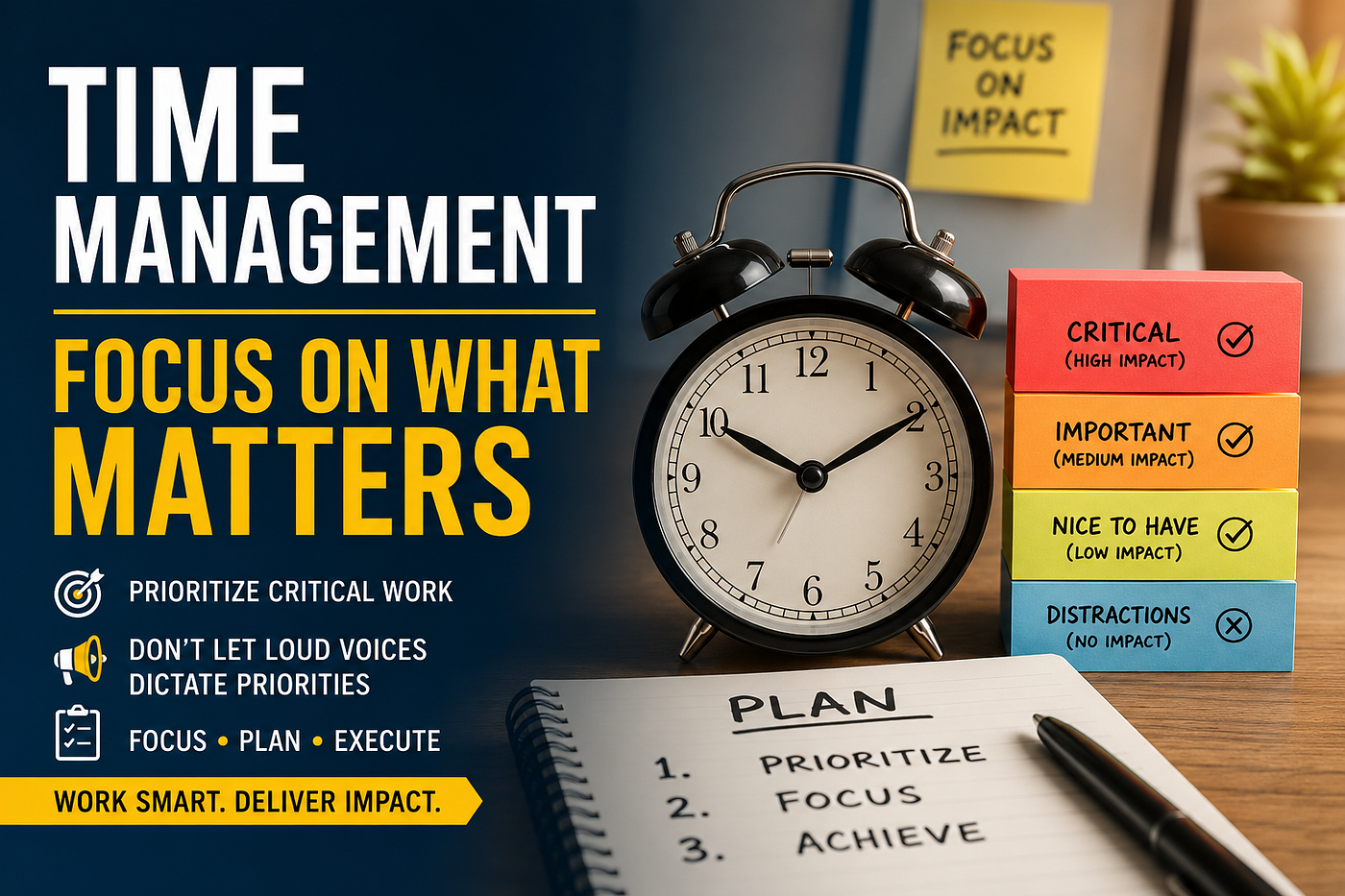
- Respond to the loudest person instead of the biggest risk
- Start multiple activities simultaneously
- Shift focus constantly
- Ignore dependencies
- Spend time on cosmetic problems instead of operational failures
This creates operational noise.
Critical task identification means understanding:
- What directly impacts business continuity
- What affects customer trust immediately
- What can cause cascading failures
- What must remain operational at all costs
Everything else can wait temporarily.
The Concept of “Keep the Core Alive”
In crisis situations, the first objective is survival and stabilization.
For example, in a logistics or fleet platform: Critical tasks may include:
- Keeping APIs operational
- Maintaining authentication systems
- Ensuring booking and tracking services remain active
- Preserving database integrity
- Keeping communication channels alive
Non-critical tasks may include:
- UI redesign discussions
- Feature enhancements
- Analytics dashboard polishing
- Documentation formatting
- Internal reporting beautification
If the core system remains active, recovery becomes possible.
If the core collapses, secondary improvements become meaningless.
This philosophy applies across industries:
- Hospitals prioritize emergency care first
- Data centers prioritize uptime
- Airlines prioritize safety systems
- Governments prioritize communication infrastructure
- Cybersecurity teams prioritize containment before reporting
Crisis Creates Cognitive Overload
During emergencies, humans naturally lose prioritization clarity.
Common symptoms include:
- Decision fatigue
- Random multitasking
- Duplicate efforts
- Excessive meetings
- Emotional reactions
- Blame shifting
This is where planning becomes extremely important.
A predefined crisis response framework reduces confusion because teams already know:
- Who handles what
- Which systems are highest priority
- What escalation path exists
- Which tasks are temporarily paused
- Which communication channels are official
Good planning reduces panic.
Planning Before Crisis Is the Real Strength
The best crisis management happens before the crisis occurs.
Strong organizations build:
- Incident response plans
- Backup strategies
- Disaster recovery mechanisms
- Communication protocols
- Access control policies
- Escalation matrices
- Technical ownership clarity
Without planning, teams waste valuable time deciding what to do while the damage continues growing.
In software systems, this often means:
- No rollback strategy
- No monitoring alerts
- No ownership mapping
- No backup verification
- No load handling preparation
- No failover design
Planning converts uncertainty into process.
Critical Tasks Usually Have Dependencies
A task may appear small but can be operationally critical.
For example:
- SSL certificate expiry
- Database disk space monitoring
- API gateway authentication
- DNS configuration
- Cloud firewall rules
- Token refresh services
If ignored, these “small” tasks can bring down entire platforms.
This is why experienced technical leaders focus heavily on dependency analysis.
They ask:
- What breaks if this fails?
- Which services depend on this?
- Is there a fallback?
- How fast can we recover?
Critical thinking is often more valuable than fast execution.
Why Multitasking Fails During Crisis
In crisis situations, multitasking often slows teams down.
Context switching:
- Increases mistakes
- Reduces concentration
- Creates communication gaps
- Delays resolution timelines
High-performing incident response teams usually operate with:
- Clear ownership
- Single-task focus
- Dedicated coordinators
- Structured updates
- Prioritized execution queues
Focused execution resolves crises faster than chaotic activity.
Communication Is Also a Critical Task
Many organizations focus only on technical recovery and ignore communication.
This creates secondary damage:
- Customers lose trust
- Teams become confused
- Rumors spread internally
- Stakeholders panic
Good crisis management includes:
- Accurate status updates
- Clear escalation communication
- Honest timelines
- Defined spokespersons
- Centralized reporting
Silence during crisis is often interpreted as loss of control.
The Role of Leadership
Strong leaders do not try to solve everything personally.
They:
- Prioritize effectively
- Delegate clearly
- Reduce noise
- Keep teams calm
- Focus on stabilization
- Make decisions with incomplete information when necessary
Leadership during crisis is less about authority and more about clarity.
Lessons for Technology Teams
Modern software ecosystems are highly interconnected.
A single failure in:
- Authentication
- Cloud networking
- Payment processing
- Notification systems
- Database replication
- API throttling
can impact thousands of users instantly.
This is why engineering teams should continuously:
- Identify critical services
- Map dependencies
- Define recovery priorities
- Simulate failures
- Maintain monitoring visibility
- Document emergency procedures
Prepared teams recover faster.
Conclusion
Crisis management is fundamentally about prioritization.
Not every task deserves immediate attention. Not every alert is equally dangerous. Not every failure threatens the business.
The ability to identify critical tasks, stay focused on core operations, and execute according to a well-defined plan is what keeps organizations stable during uncertainty.
In technology, operations, cybersecurity, logistics, and business management, planning is not bureaucracy.
Planning is operational survival.
CrisisManagement #Planning #Leadership #BusinessContinuity #CyberSecurity #CloudComputing #IncidentManagement #SoftwareEngineering #Operations #SystemsIndia #ProjectManagement
메타데이터
- post_id
- 8befccd316ff
- slug
- identifying-critical-tasks-in-crisis-management-why-prioritization-and-planning-matter-8befccd316ff
- url
- https://medium.com/%E0%A4%9C%E0%A5%8D%E0%A4%9E%E0%A4%BE%E0%A4%A8%E0%A4%B8%E0%A5%8D%E0%A4%B0%E0%A5%8B%E0%A4%A4%E0%A4%B8%E0%A5%8D/identifying-critical-tasks-in-crisis-management-why-prioritization-and-planning-matter-8befccd316ff
- canonical_url
- https://medium.com/%E0%A4%9C%E0%A5%8D%E0%A4%9E%E0%A4%BE%E0%A4%A8%E0%A4%B8%E0%A5%8D%E0%A4%B0%E0%A5%8B%E0%A4%A4%E0%A4%B8%E0%A5%8D/identifying-critical-tasks-in-crisis-management-why-prioritization-and-planning-matter-8befccd316ff
- author_url
- https://medium.com/@geeky.vartika
- status
- ok
- fetched_at
- 2026-06-15 22:55:51