Your Brain Was Never Designed for This Many Choices
Why endless optimization quietly exhausts the modern mind

Your Brain Was Never Designed for This Many Choices
Why endless optimization quietly exhausts the modern mind
A patient recently told me she had spent nearly three hours researching magnesium supplements before bed. By the time she finally ordered one, she felt more anxious than when she started.
Not cancer treatments. Not surgery options. Magnesium.
I understood exactly what she meant because I have watched versions of this happen repeatedly over the past few years, both in the clinic and outside it. A person starts by looking for information and ends up trapped inside an expanding maze of conflicting opinions, Reddit threads, wellness influencers, contradictory studies, optimization strategies, and subtle warnings suggesting that one wrong decision could quietly damage their health or future. The search itself becomes psychologically exhausting long before any decision is made.
A few days after that conversation, I caught myself standing motionless in front of a refrigerated wall of yogurt at a grocery store near my house, staring at labels with the kind of concentration that should probably be reserved for emergencies. There were dozens of options competing for attention: high protein, low sugar, grass-fed, keto-friendly, enhanced probiotics, added collagen, gut-supporting bacteria, promises of longevity. Somewhere in the middle of this ridiculous modern ritual, I realized I was no longer choosing yogurt. I was trying to avoid regret.
That increasingly feels like the hidden psychological project beneath modern life.
We evaluate careers, cities, schools, mattresses, supplements, diets, productivity systems, parenting philosophies, and relationships with the same vigilance previous generations might have reserved for genuine threats. Because information never ends, the brain never fully exits evaluation mode. A decision that once would have taken ten minutes now expands into an evening-long comparative analysis involving dozens of browser tabs and a lingering suspicion that a slightly better option remains undiscovered.
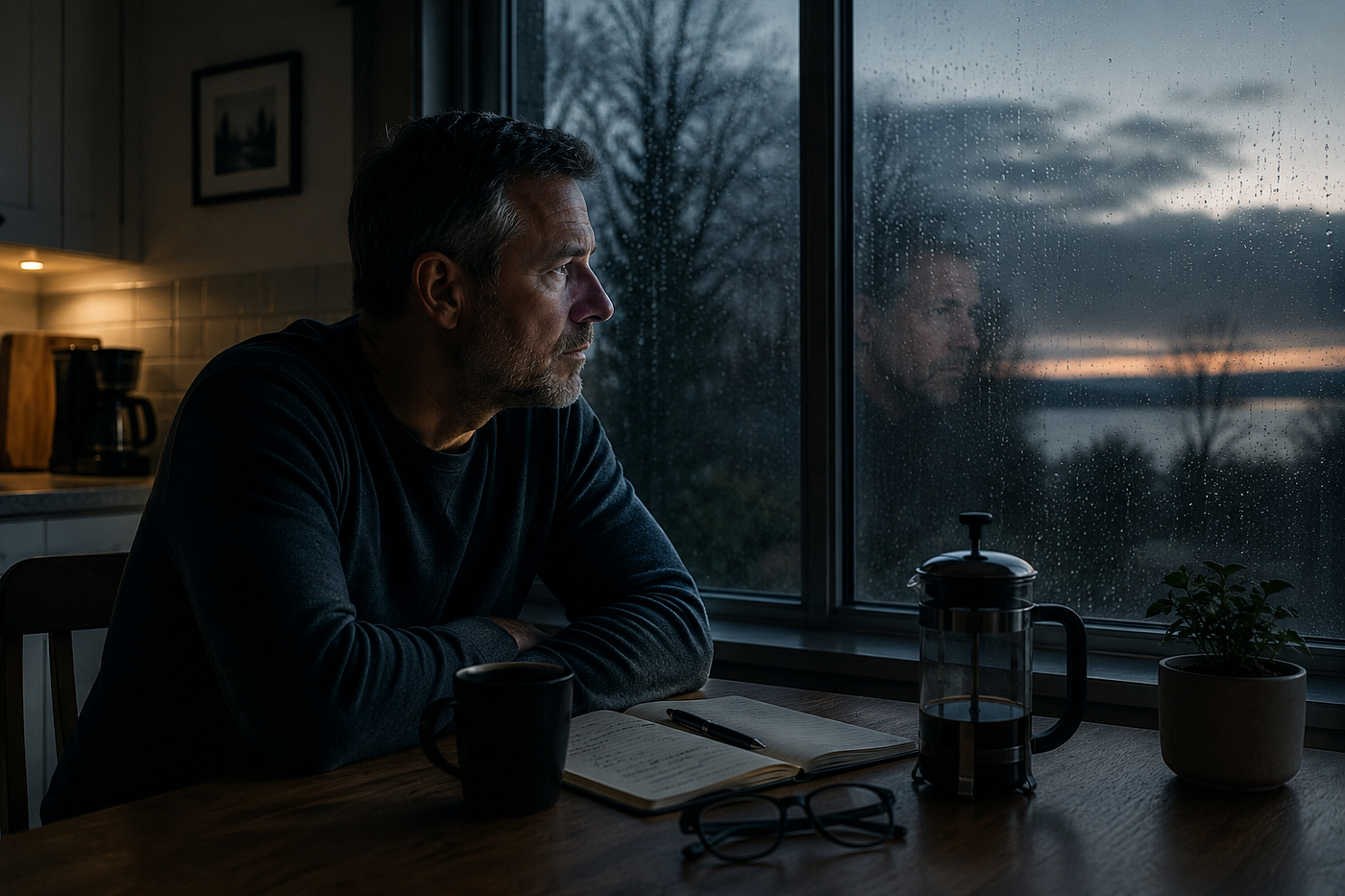
In the clinic, I often meet people who appear healthy by nearly every conventional measure. Their lab work looks good. Their routines are disciplined. They exercise consistently and seem outwardly functional. Yet many of them carry a strange form of mental overextension that sleep alone does not fix. Their attention feels fragmented. Small decisions consume disproportionate amounts of energy. Even enjoyable experiences sometimes carry a faint undertone of tension, as if part of the mind remains elsewhere, quietly comparing the present moment to all the other possible versions that might have been better.
I explored a related pattern recently in my essay Why Simple Tasks Feel Harder Than They Should (What’s Really Changing in Your Brain), because many people who appear physically healthy are quietly carrying enormous amounts of cognitive friction that modern life now treats as normal.
If you want to stay with these ideas a little longer, you can join me here:
The Hidden Cost of Trying to Optimize Everything
The Nobel Prize-winning psychologist and economist Herbert Simon understood this problem long before smartphones and social media intensified it. Simon believed humans are not actually built to optimize most decisions because the number of variables in real life quickly becomes overwhelming. Information is incomplete, outcomes remain uncertain, and the brain has limited bandwidth for evaluating endless possibilities.
Instead of endlessly searching for the absolute best option, Simon argued for something he called “satisficing,” a combination of satisfy and suffice. The idea was deceptively simple: define what is good enough, choose when that threshold is met, and move forward with life. What fascinated me when I first encountered Simon’s work was not merely the efficiency of the approach, but the psychological relief hidden inside it. The modern mind spends astonishing amounts of energy trying to prevent future regret.
Modern culture relentlessly rewards maximization. We are taught, both subtly and explicitly, that better outcomes belong to people who keep searching, tweaking, comparing, refining, and optimizing. The better supplement stack. The better morning routine. The better school district. The better investment strategy. The better city. The better version of yourself.
At some point, many people stop fully inhabiting their lives and begin managing them like permanently unfinished renovation projects. The mind never quite settles because another improvement always appears possible. A newer study appears. Another expert contradicts the previous one. Someone on social media seems healthier, calmer, fitter, or more successful using an entirely different system. Instead of creating peace, abundance begins producing chronic low-grade evaluation.
Why So Many High-Functioning People Feel Mentally Tired
People spend weeks researching mattresses, months comparing productivity systems, and astonishing amounts of time choosing restaurants while already sitting in the parking lot. None of these behaviors sounds pathological in isolation. Together, though, they create a level of cognitive friction that many people now mistake for ordinary life.
The brain rarely experiences closure anymore because closure requires stopping the search. Unfortunately, stopping the search increasingly feels psychologically uncomfortable. Many people quietly fear that a better option remains undiscovered somewhere beyond the next article, the next podcast, the next Amazon review, or the next expert opinion. The internet has effectively transformed uncertainty into a permanent environment rather than an occasional human experience.

The search for certainty often creates more anxiety instead of less.
Social media intensifies this dramatically. For most of human history, people compared themselves to a relatively small social circle. Now, comparison is effectively infinite. Someone always appears healthier, more productive, more emotionally balanced, more disciplined, more financially successful, and somehow calmer while doing all of it.
When the brain is continuously exposed to curated evidence that better versions of life exist everywhere, ordinary satisfaction becomes harder to maintain. Psychologists who studied Herbert Simon’s work later found that “maximizers,” people constantly searching for the absolute best outcome, tend to report lower happiness, more regret, and less satisfaction with their decisions than “satisficers.” That finding feels increasingly relevant because many people are no longer overwhelmed by scarcity. They are overwhelmed by possibility.
If this pattern feels familiar, I wrote more about these hidden overload loops in my guide Before Burnout.
The Brain Was Never Built for Infinite Comparison
Part of the problem is neurological. Novelty activates dopamine pathways, which means the possibility of discovering something better can itself feel rewarding. In other words, the search begins to acquire emotional momentum independent of the outcome. People continue researching long after additional information is no longer genuinely useful because the brain keeps anticipating the relief of certainty.
The next article might contain the answer. The next video might clarify everything. The next expert might finally remove uncertainty.
But uncertainty is part of being human, and the brain cannot fully eliminate it no matter how much information it consumes. At some point, more information stops reducing anxiety and starts feeding it.
What many people experience now is not a simple distraction but chronic attentional fragmentation. A portion of the mind remains perpetually elsewhere, evaluating alternatives, revisiting decisions, imagining better futures, comparing present reality against hypothetical upgrades. Over time, this creates a subtle but persistent strain on attention that many people struggle to describe clearly.
Patients often tell me they feel “off.” Not deeply depressed or panicked, simply saturated. Their nervous systems rarely settle because part of the brain continues to scan for optimization opportunities long after optimization has stopped being useful.
The Calmest People Often Simplify More Than They Optimize
One of the patterns I have noticed repeatedly, both personally and professionally, is that many psychologically steady people are not necessarily the most optimized. They are often the least cognitively fragmented.
They repeat meals without obsessing over them. They revisit fewer decisions. They maintain simpler routines. They commit more fully and tolerate imperfection more gracefully. Most importantly, they do not spend all day mentally reopening doors they already walked through.
In other words, they conserve attention instead of scattering it across hundreds of unresolved possibilities.
Herbert Simon reportedly intentionally simplified many aspects of his own life. He wore nearly identical clothing, ate the same breakfast daily, and minimized repetitive low-value decisions whenever possible. At first glance, habits like these can seem eccentric. Increasingly, though, they feel adaptive.
The modern world keeps expanding the number of available choices while simultaneously underestimating the cognitive burden those choices create. Freedom is wonderful, but endless evaluation is deeply exhausting for the nervous system.
The Psychological Weight of Keeping Every Door Open
Another quiet source of mental fatigue comes from refusing to fully close alternative paths. Many people now live with multiple parallel identities mentally active at all times: the alternate career, the alternate city, the alternate relationship, the alternate version of themselves that might exist if different decisions had been made years ago.
Every possibility remains psychologically alive, and psychologically alive possibilities consume energy.
The Japanese novelist Haruki Murakami once wrote a story about two people who believed they had found their perfect match but were temporarily separated to test fate. Years later, they pass one another without recognizing what they lost. It is a devastating metaphor for modern maximizing, as many people are not struggling for lack of options. They are struggling because they cannot stop evaluating them.
At some point, meaningful living requires the exclusion of alternatives. Not because every choice is perfect, but because endless reconsideration prevents full participation in the life already unfolding.
Five Quiet Ways to Reduce Cognitive Overload
None of this requires abandoning ambition or becoming passive. It simply requires recognizing that the nervous system functions better when every corner of life is not treated like a high-stakes optimization problem.
Create intentional defaults
Repeated routines reduce cognitive load. Similar breakfasts, recurring workouts, and simplified wardrobes are not signs of limited imagination. They are ways of conserving attention for decisions that actually matter.
Set boundaries before researching
Before opening the browser, decide how much information is enough. Three articles. Twenty minutes. Five options. Without predefined stopping points, the search naturally expands.
Stop optimizing low-consequence decisions
Many choices have minimal long-term impact, yet people often spend extraordinary amounts of mental energy trying to perfect decisions that will barely affect their lives a week later.
Reduce comparison exposure
The brain treats repeated exposure as meaningful. If certain digital environments consistently produce agitation, a sense of inadequacy, or restless dissatisfaction, the issue may not be weakness. It may simply be overload.
Define what “enough” means personally
This may be the most important step because modern life rarely supplies a natural stopping point on its own. Enough income. Enough productivity. Enough achievement. Enough optimization. Without internal definitions of enough, the modern world supplies endless external targets.
The Quiet Relief of Ending the Search
One of the great paradoxes of modern life is that abundance has not necessarily made people feel calmer. In many cases, it has made them feel perpetually unfinished.
The brain evolved to solve immediate survival problems. It did not evolve to compare hundreds of life trajectories, thousands of strangers, infinite consumer options, and nonstop streams of self-improvement advice before lunch.

The calmest people are often the least cognitively fragmented.
Sometimes the healthiest psychological decision is not discovering the perfect option but deciding the search has gone on long enough.
A meal enjoyed without comparison. A conversation experienced without distraction. A walk taken without optimization metrics. An ordinary evening left uninterpreted. These moments sound small until you realize how rarely many people actually experience them now.
I sometimes think the modern brain is starving less for information than for completion. For the feeling that a decision has ended, that a path has been chosen, that a moment can simply be experienced without being compared against a thousand hypothetical alternatives.
And increasingly, peace may belong less to people who optimize perfectly than to people who finally decide they have seen enough.
If you want to stay with this idea a little longer, you can find my guide Before Burnout here:
Michael Hunter, MD, is a radiation oncologist who writes about health, attention, and how small, quiet changes reduce strain before burnout.
메타데이터
- post_id
- 8c60e1dfcf5d
- slug
- your-brain-was-never-designed-for-this-many-choices-8c60e1dfcf5d
- url
- https://medium.com/dr-michael-hunters-wellness/your-brain-was-never-designed-for-this-many-choices-8c60e1dfcf5d
- canonical_url
- https://medium.com/dr-michael-hunters-wellness/your-brain-was-never-designed-for-this-many-choices-8c60e1dfcf5d
- author_url
- https://medium.com/@drmichaelhunter
- status
- ok
- fetched_at
- 2026-06-09 15:37:30