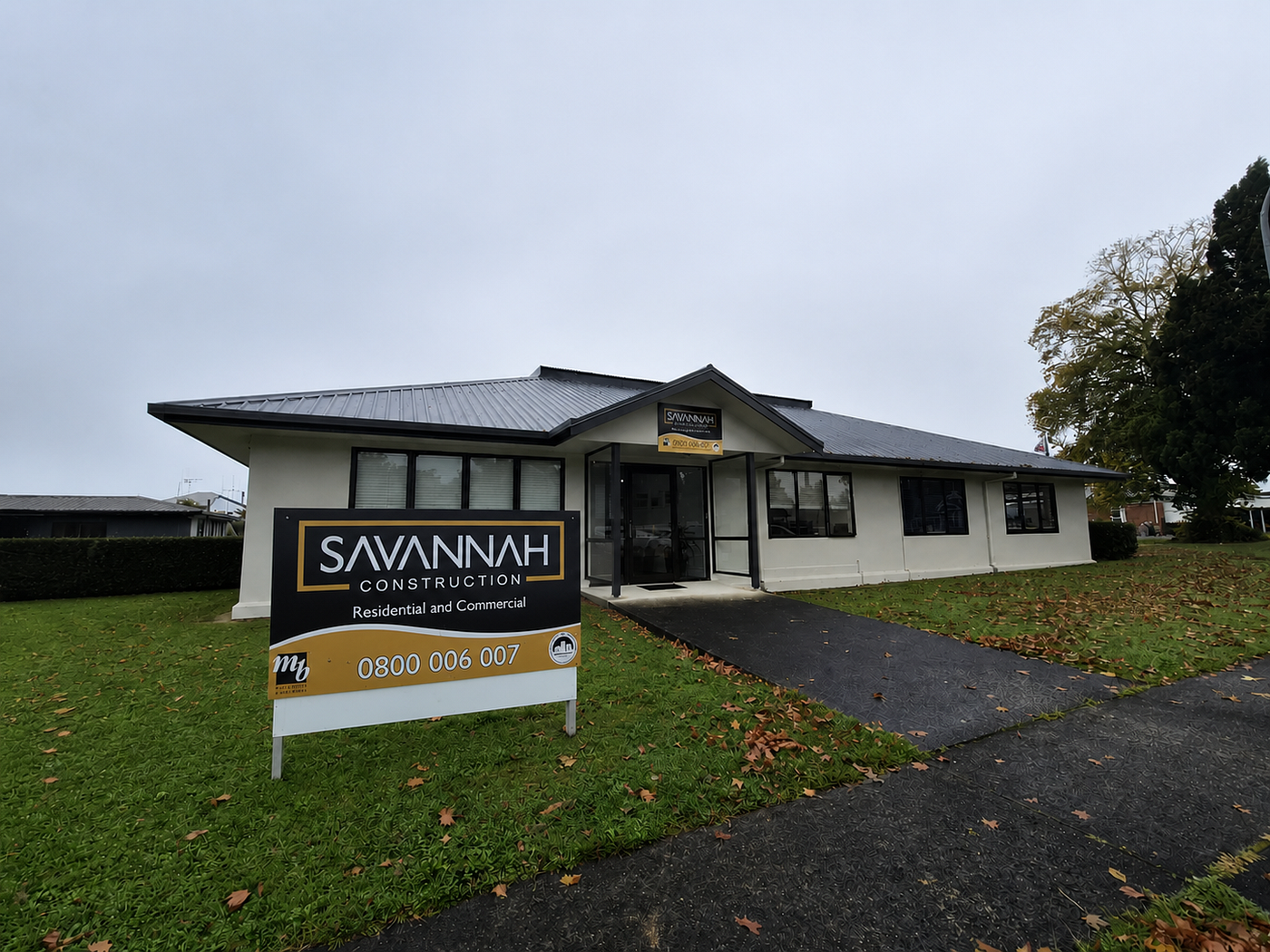
Commercial Construction Company Waikato: Programmes
A construction programme is only useful if the people responsible for delivering the work believe it can be achieved.

Savannah Construction Commercial Construction Company Waikato
Commercial Construction Company Waikato: Programmes
A construction programme is only useful if the people responsible for delivering the work believe it can be achieved.
For developers and project managers selecting a commercial construction company in Waikato, programme capability should be tested before a package is awarded.
The national construction pipeline is starting to strengthen.
As workloads increase, labour and supervision will become more important.
A contractor accepting every programme without challenging it is not necessarily being cooperative.
They may simply be delaying a difficult conversation.
How a Commercial Construction Company Waikato Reviews a Programme
The first question is not, “What is the completion date?”
The first question is, “What needs to happen to reach the completion date?”
Commercial construction programmes are a chain of dependencies.
Framing may depend on structure.
Linings may depend on services.
Stopping may depend on inspections.
Doors may depend on floor finishes.
Ceilings may depend on mechanical and electrical work.
One delayed activity can affect several following trades.
A commercial contractor should review its work against these dependencies.
Start Dates Need to Mean Something
A programme may show framing starting on 1 September.
What does that actually mean?
Is the entire floor available?
Is one room available?
Has material been approved?
Are current drawings issued?
Is survey complete?
Can deliveries reach the work area?
Are required preceding trades finished?
A date in a programme does not create a productive workface.
The site conditions must support the activity.
Project managers should be cautious about measuring contractors solely against planned start dates without confirming whether the work was genuinely available.
Contractors also need to communicate constraints early.
Silence followed by a delay claim helps nobody.
Labour Planning Should Be Based on Output
Construction programmes often focus on worker numbers.
“We need 20 carpenters.”
The better question is, “What output do we need?”
A crew of 20 working in a congested and poorly coordinated area may achieve less than a crew of 12 with clear work.
Labour planning should consider quantities and production rates.
How many walls?
How many rooms?
How many doors?
How many floors?
How many weeks?
From there, the contractor can estimate the labour required.
Peak Labour Is Different From Average Labour
A ten-month package may average 15 workers.
That does not mean 15 workers are required every day.
The project may need eight people initially, 25 during peak production and six during completion.
Developers should ask contractors about expected labour peaks.
This is particularly important where several large projects may compete for the same workforce.
Savannah Construction directly manages a substantial commercial carpentry workforce.
On larger projects, our planning considers both the overall labour requirement and when labour needs to increase or decrease.
A good programme should allow that planning before the project reaches crisis point.
More Workers Do Not Automatically Recover Delay
Adding labour is one of the most common responses to a late programme.
It can be effective.
It is not magic.
There is a practical limit to the number of workers who can operate in one area.
Additional workers require supervision.
They require tools and access.
They need clear instructions.
They may compete with other trades for space.
Before requiring a contractor to double its workforce, the project should identify whether labour is genuinely the constraint.
Find the Actual Constraint
A late activity can be caused by:
Insufficient labour.
Incomplete drawings.
Delayed materials.
Restricted access.
Late preceding trades.
Inspection delays.
Design changes.
Rework.
Poor productivity.
These problems require different solutions.
If material has not arrived, more carpenters will not help.
If the design is unclear, starting multiple crews may increase rework.
Programme recovery needs diagnosis before action.
Short-Term Planning Improves Long-Term Programmes
A 12-month programme provides direction.
A two-week plan controls tomorrow’s work.
Commercial construction needs both.
Short-term planning gives contractors visibility of upcoming areas and constraints.
It allows material to be organised.
Workers can be moved between activities.
Design information can be requested.
Interfaces can be discussed.
The purpose is not to create another meeting.
The purpose is to make sure the work shown in the programme can actually happen.
Contractors Should Look Ahead
A contractor should not rely entirely on the project manager to identify every problem.
The contractor knows its own scope.
It should understand what is needed for the next stage.
For carpentry and interior construction, this can include checking:
Current drawing revisions.
Material availability.
Services progress.
Framing set-out information.
Door schedules.
Fire details.
Access requirements.
Inspection stages.
Upcoming labour demand.
The earlier a constraint is identified, the more options the project has.
Design Changes Need a Programme Impact Review
A change is often assessed by cost.
It should also be assessed by time.
A revised wall detail may require different material.
The material may have a lead time.
The change may stop one area.
That area may be on the critical path.
The direct variation value could be relatively small while the programme impact is significant.
Project managers should ask two questions when a material construction change occurs.
What does it cost?
What does it affect?
The contractor should provide practical input.
Not every change creates a delay.
The effect should still be considered.
Good Supervision Protects the Programme
Labour without direction is expensive.
Commercial construction requires site leadership.
Supervisors need to understand drawings, coordinate work areas, manage workers and communicate with the wider project team.
As crews increase, supervision becomes more important.
A project with 30 workers cannot rely on instructions being passed informally from person to person.
Savannah Construction’s internal structure includes project leadership, operations support and experienced site supervision.
For project managers, this creates a clearer line between programme expectations and site delivery.
The value of supervision is often difficult to measure when things are going well.
It becomes obvious when it is missing.
Selecting a Commercial Construction Company in Waikato
Before awarding a commercial package, ask the contractor to review the programme.
Do not simply ask whether they accept it.
Ask:
Where are the labour peaks?
Which activities concern them?
What information is required before starting?
What areas can run concurrently?
What production assumptions have been used?
How would they respond to a two-week delay?
A credible contractor should be able to discuss these questions.
Savannah Construction works as a specialist commercial construction subcontractor on projects across the Waikato.
Our focus is delivering labour-intensive construction packages within complex project programmes.
For developers and project managers, choosing a commercial construction company in Waikato should include an honest assessment of programme capability.
The contractor who identifies a problem before starting may be more valuable than the contractor who agrees to everything and explains the delay later.
메타데이터
- post_id
- 8c8bd949e2b4
- slug
- commercial-construction-company-waikato-programmes-8c8bd949e2b4
- url
- https://medium.com/@savannahconstruction/commercial-construction-company-waikato-programmes-8c8bd949e2b4
- canonical_url
- https://medium.com/@savannahconstruction/commercial-construction-company-waikato-programmes-8c8bd949e2b4
- author_url
- https://medium.com/@savannahconstruction
- status
- ok
- fetched_at
- 2026-07-11 23:22:18