How to Choose a hunting rangefinder Based on Terrain, Distance and Use Case
Buying a hunting rangefinder is not just about finding the model with the longest maximum range printed on the box.
How to Choose a hunting rangefinder Based on Terrain, Distance and Use Case
Buying a hunting rangefinder is not just about finding the model with the longest maximum range printed on the box.
That number can be useful, but it does not tell the whole story. A rangefinder that claims long-distance performance may still feel slow in thick woods. A compact model that works well for bow hunting from a tree stand may not be the right tool for open-country rifle hunting. A device with a lot of modes may look impressive, but if you only hunt short distances in familiar terrain, you may not use half of them.
The better way to choose a hunting rangefinder is to start with where you hunt, how far you usually shoot, and what kind of decisions you need to make in the field.
Start With Terrain, Not Specs
Terrain changes the way distance feels.
In flat, open ground, your eyes may be able to judge distance better than they can in broken terrain. In rolling hills, timber edges, creek bottoms, and ridgelines, visual distance can become misleading fast. A deer standing across a shallow draw may look closer than it really is. A target below your tree stand may look farther because of the angle. A clearing at last light may flatten everything into one confusing shape.
That is where a hunting rangefinder becomes more than a gadget. It helps turn a guess into a usable number.
If you hunt mostly in dense woods, your priority should be fast target pickup at short to medium range. You may be ranging through branches, around brush, or toward small openings. In that situation, optical clarity, scan mode, and a steady grip often matter more than extreme range.
If you hunt open fields, western terrain, crop edges, or high ridges, you may need stronger long-range performance. You are not only measuring animals. You may also be ranging trees, rocks, fence posts, field edges, and landmarks to understand the space before anything moves into it.
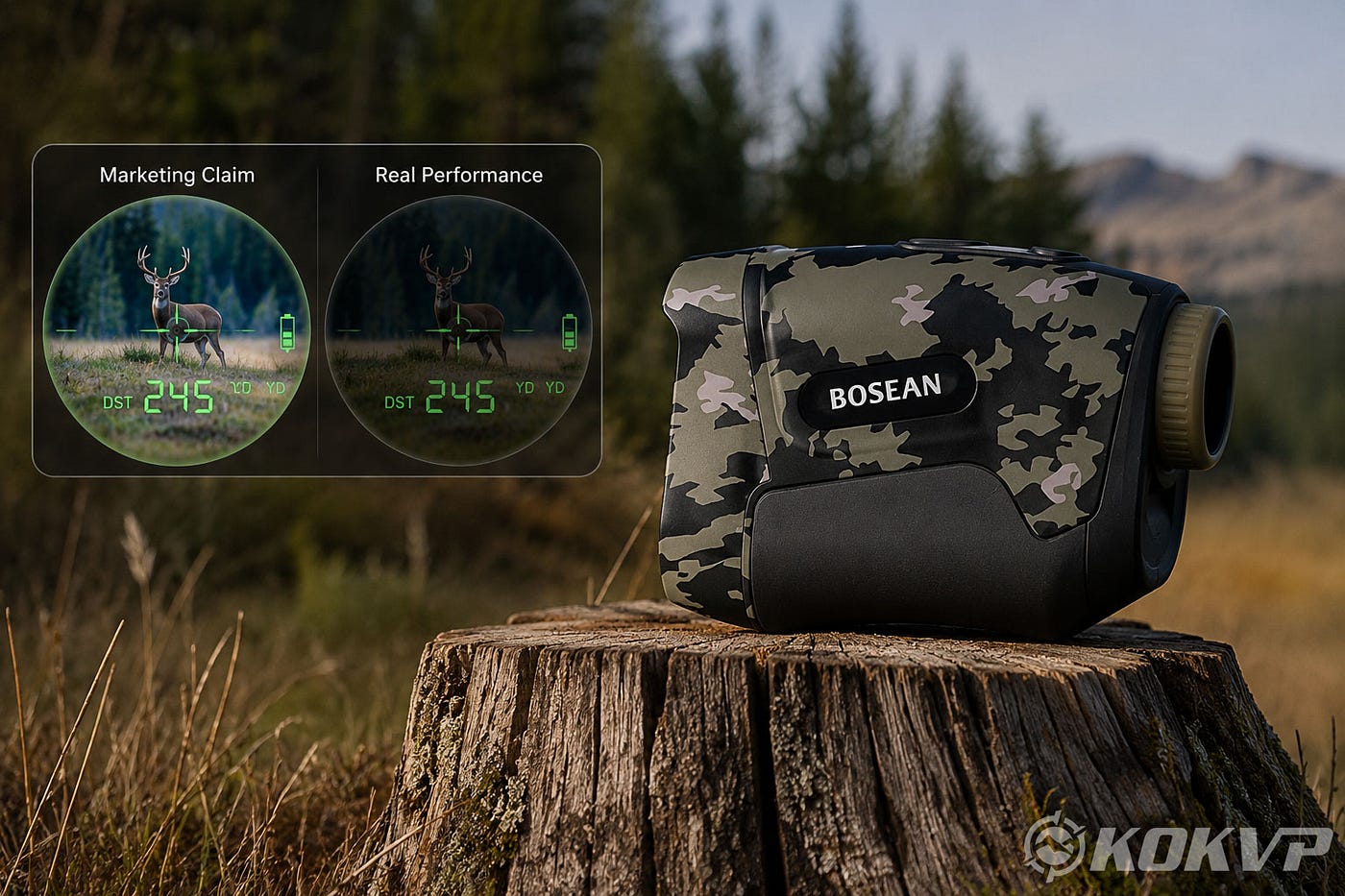
A rangefinder should match the terrain you actually stand in, not the terrain shown in a clean product photo.
Distance Needs Are Different for Bow Hunters and Rifle Hunters
Bow hunting and rifle hunting create very different rangefinder needs.
For bow hunters, small distance errors matter quickly. The difference between 22 yards and 31 yards can be a real decision, especially from an elevated stand or in uneven terrain. A bow hunter usually does not need a rangefinder that reads extremely far, but they do need one that is fast, quiet, compact, and reliable at close distances.
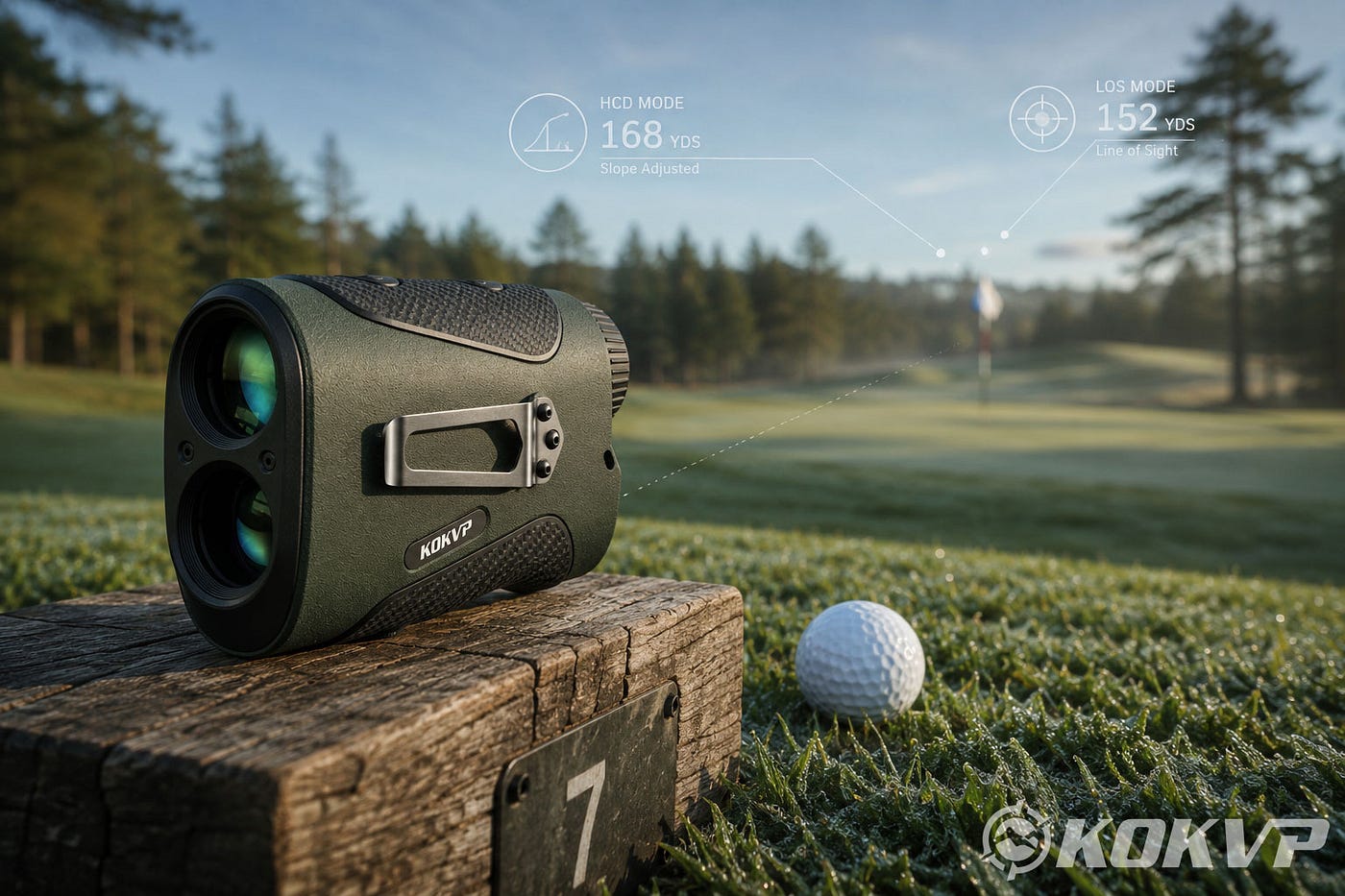
Angle compensation is especially useful for bow hunting. When you are in a tree stand, the straight-line distance to the target is not always the distance your shot behaves like. A rangefinder with angle-adjusted distance can help you make a more practical judgment without doing mental math in the moment.
For rifle hunters, the required distance range is often broader. In timber, shots may still be close. In open country, the same hunter may need to range targets several hundred yards away. Rifle hunters often benefit from a rangefinder with a stronger laser, better reflective target performance, and a clear display that can be read in changing light.
That does not mean every rifle hunter needs a long-range tactical-style device. It means you should be honest about your real shot distances and your scouting style.
If most of your shots happen inside 150 yards, buying only for extreme distance may not improve your field experience. If you regularly glass across valleys, fields, or long slopes, then a more capable laser rangefinder makes practical sense.
Think About What You Range Before the Animal Appears
A good hunter does not only range the animal at the last second.
In many real situations, the better approach is to range landmarks before anything happens. You might range the edge of a food plot, a large oak tree, a trail crossing, a fence corner, a rock, or the far side of a clearing. Then, when an animal steps out, you already have a mental map of the area.
This is where scan mode becomes useful. Instead of pressing the button over and over, scan mode lets you move across the landscape and get continuous readings. For hunters watching a field edge or tracking movement across uneven ground, that can make distance measurement feel faster and more natural.
It also reduces pressure. When the moment comes, you are not trying to do everything at once.
Dense Woods: Look for Speed and Clarity
In wooded terrain, you may not have much time. The target may appear between trees, stop for a few seconds, and move again. In this kind of environment, a rangefinder should be simple to operate with one hand and quick to return a reading.
Magnification should be useful, but not excessive. Too much magnification can make it harder to find a close target quickly. A clear view, comfortable eye relief, and readable display are more important than chasing the highest magnification number.
Weather resistance also matters in the woods. Moisture, fog, light rain, and cold mornings are common. A hunting rangefinder does not need to be treated like a piece of delicate office equipment. It should be able to handle real field use.
For this use case, compact size is a real advantage. If the rangefinder is small enough to keep in a chest pocket or attach to a harness, you are more likely to use it when it matters.
Open Terrain: Prioritize Reach and Target Confidence
Open terrain creates a different problem. The animal may be visible, but distance can be hard to judge because there are fewer close references. Across a field or valley, 250 yards and 350 yards can look surprisingly similar.
Here, long-range capability becomes more relevant. You want a rangefinder that can read beyond your usual shot distance because real-world conditions are not always perfect. Manufacturers often list maximum range under ideal conditions, usually on reflective targets. Animals, brush, and dull surfaces can be harder to range.
That means a rangefinder rated for a longer distance may perform more confidently at moderate hunting distances.
For open terrain, also pay attention to optical quality. If you are ranging across bright fields, shaded ridges, or low-light openings, you need an image that stays clear enough to identify the target and surrounding landmarks.
Do Not Overlook Low-Light Use
Many hunting decisions happen early or late in the day. That is also when cheap optics can feel frustrating.
Low-light performance does not only come from the rangefinder’s laser. It also depends on lens quality, coating, display visibility, and how cleanly the device presents the target. If the display is too dim, too cluttered, or hard to read against a dark background, the rangefinder becomes less useful at exactly the wrong time.
For casual hunters, this is one of the most practical reasons to avoid choosing purely by price. A rangefinder that feels acceptable at noon may not feel as helpful at sunrise.
Match the Mode to the Use Case
Not every mode is equally important for every hunter.
Angle compensation is valuable in steep terrain, tree stands, mountain hunting, and any situation where uphill or downhill shots are common.
Scan mode helps when you are reading terrain, following movement, or mapping multiple landmarks in a field.
Line-of-sight distance is still useful when you want the raw distance to a target, especially for general scouting or when comparing landmarks.
Some rangefinders also include different priority modes, such as focusing on the closest object or a farther object. These can help when brush, branches, or background objects interfere with clean readings.
The point is not to buy the most complicated rangefinder. The point is to choose modes that solve real field problems.
Where a Practical Brand Fit Comes In
When comparing options, it helps to look at hunting rangefinders as field tools rather than tech accessories. A useful model should be easy to carry, quick to read, stable in the hand, and clear enough for real outdoor distance measurement.
KOKVP is one example of a brand positioned around practical laser rangefinder and outdoor optics use, which can make it worth considering for hunters who want functional distance measurement without turning the purchase into a luxury optics decision. The important part is still fit: terrain, distance, and how you actually hunt.
A Simple Buying Framework
Before choosing a hunting rangefinder, ask yourself three questions.
Where do I hunt most often?
How far do I realistically need to range?
What decision do I need the rangefinder to help me make?
A bow hunter in thick woods may want compact size, fast short-range readings, angle compensation, and quiet handling. A rifle hunter in open country may care more about longer ranging capability, optical clarity, scan mode, and strong target confidence. A casual hunter who does a bit of everything may want a balanced laser rangefinder that is simple enough for quick use but capable enough for varied terrain.
The best hunting rangefinder is not always the one with the biggest number. It is the one that gives you the right information quickly, in the place where you actually hunt.
메타데이터
- post_id
- 8ca9cbcb35fd
- slug
- how-to-choose-a-hunting-rangefinder-based-on-terrain-distance-and-use-case-8ca9cbcb35fd
- url
- https://medium.com/@velluvangadniyamuddin/how-to-choose-a-hunting-rangefinder-based-on-terrain-distance-and-use-case-8ca9cbcb35fd
- canonical_url
- https://medium.com/@velluvangadniyamuddin/how-to-choose-a-hunting-rangefinder-based-on-terrain-distance-and-use-case-8ca9cbcb35fd
- author_url
- https://medium.com/@velluvangadniyamuddin
- status
- ok
- fetched_at
- 2026-06-16 19:09:56