Only in America: The World Cup Comes Home
A young man from Morocco lands at Dallas Fort Worth International Airport three weeks ago. He has never been to America. He is wearing his…
Only in America: The World Cup Comes Home
A young man from Morocco lands at Dallas Fort Worth International Airport three weeks ago. He has never been to America. He is wearing his national team jersey, a red and green scarf wrapped around his neck despite the Texas summer heat, and he is carrying a handmade sign that says: “We came for football. We stayed for everything else.”
He does not make it twenty feet past customs before a complete stranger in a Cowboys hat stops him, shakes his hand, and says: “Welcome to America, brother. You need anything, you just ask.”
He posts the video. It goes everywhere.
That is how the 2026 FIFA World Cup is revealing America to the world. Not through a press release or a tourism campaign. Through a million small moments of genuine human decency that travelers from Morocco, Argentina, South Korea, Senegal and Portugal and every other corner of the globe are capturing on their phones and sending home in disbelief. Even though the USA has been knocked out by Belgium in the Round of 16, the tournament continues on.
The message and the feeling, in every language, is the same.
Only in America.
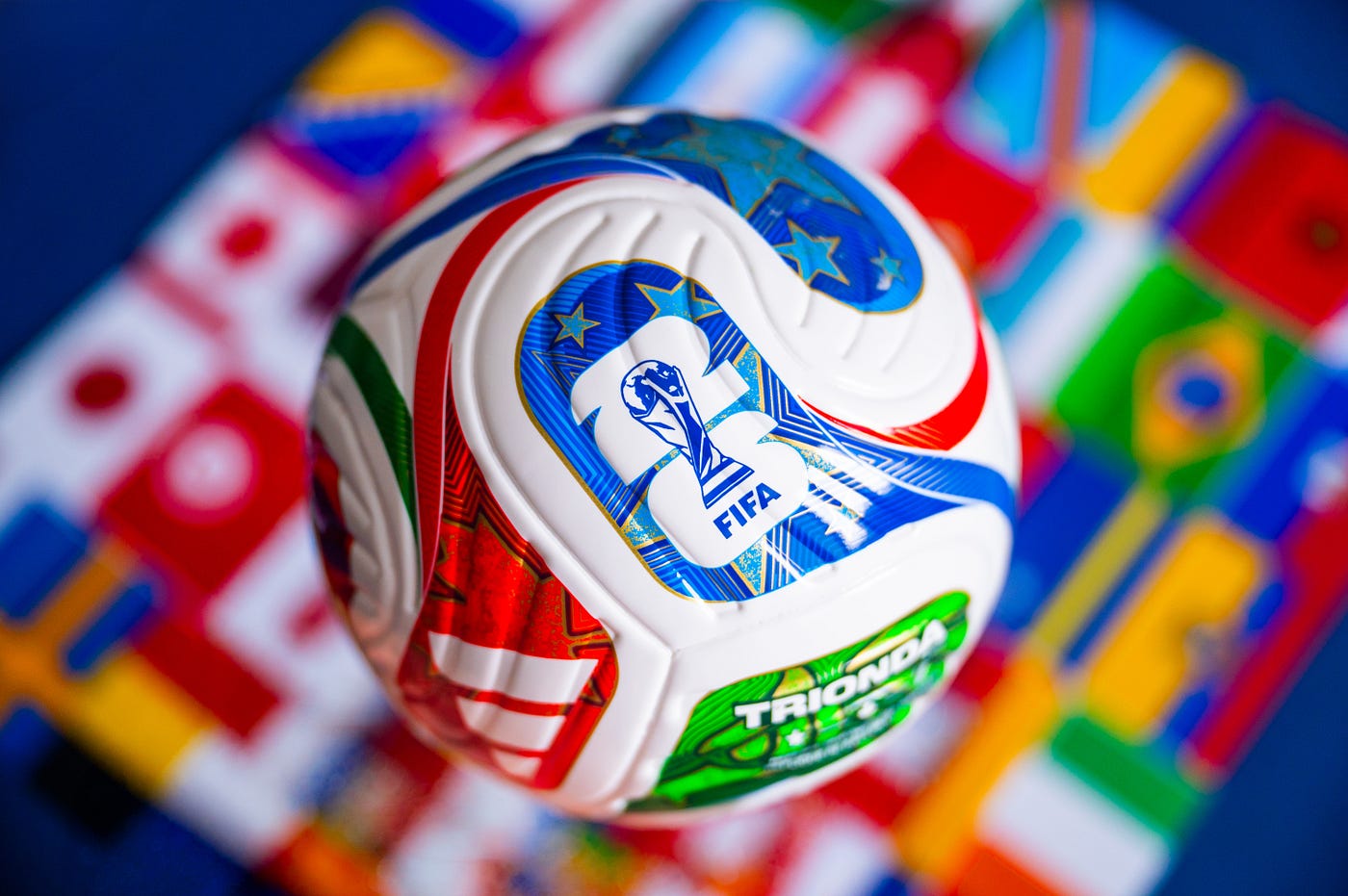
FIFA made history when it announced that the 2026 World Cup would be the largest in the tournament’s storied history: 48 nations, 104 matches, and a co-host arrangement spanning the United States, Canada, and Mexico. The United States alone is staging 78 of those matches across eleven host cities, from the sun-drenched city of Los Angeles to the windswept shores of Boston Harbor, from the humid warmth of Miami to the evergreen grandeur of Seattle; from the honky-tonk heart of Dallas to the skyscraper canyons of New York City. There is no other country on earth that could host a tournament at this scale and offer visitors this much variety in a single trip.
But what nobody quite anticipated is what happens when you bring more than one million international visitors into contact with ordinary Americans.
The result has been extraordinary.
Start with the hospitality, because that is where every story seems to begin.
Fans from Japan arrived in Kansas City late at night and found themselves lost, jet-lagged, unable to locate their hotel, and surrounded by a city that had waited decades for this kind of global spotlight. Within minutes, accounts shared across social media described a group of locals who had not only given directions but had personally walked the visitors to their door, insisted on carrying the luggage, and left them with a handwritten list of the best barbecue spots in town. This is Kansas City, after all.
Fans from Brazil touched down in Miami and discovered, to their delight, that half the city already speaks Portuguese. Latin American visitors feel at home and love Miami because as they say, “It is so close to America!” What began as a soccer pilgrimage turned into a homecoming of sorts, with Brazilian visitors posting videos of themselves dancing in Wynwood alongside Cuban American neighbors and Haitian American families, all of them united by rhythm and the shared understanding that Miami is one of those places that belongs to everyone.
A group of fans from Saudi Arabia made their way to Philadelphia and wandered, almost by accident, into a neighborhood block party. They were handed plates of food before anyone asked their names. They ended up staying for four hours. The video they posted from the party, laughing with strangers on a front stoop in South Philly, accumulated millions of views. The caption, translated from Arabic, read something like: “We thought we were going to a football match. We went to a family dinner instead.”
Only in America do you end up at a stranger’s block party with a plate of rigatoni in your hands before the match has even kicked off.
Then there is the geography, which has been stunning international visitors.
A fan from the Netherlands, a country where a two-hour drive takes you across multiple borders, boarded a train in Los Angeles and watched the landscape transform from Pacific coastline to desert to mountain range to valley floor over the course of a single afternoon. She posted it in silence. No caption. Just the window and the moving world beyond it. The comments filled in the words for her. “How is one country so big?” “Is this real?” “I thought America was just cities.”
Fans making the journey from match to match have inadvertently become tourists in the truest sense. A Moroccan fan flying from New York to Seattle looked out his window at the Cascades and posted a single word: “SubhanAllah.” Praise be to God. It translated perfectly across every faith and language in his comments section.
The geography of America has always been one of its most underappreciated assets. It is a country where you can ski in the morning and swim in the Pacific by afternoon, where the red rock of Utah and the live oak forests of Texas and the tidal marshes of Georgia all exist within the same passport. International visitors who had spent years forming their image of America from television screens are confronting something entirely different: a landscape of staggering, humbling, almost unfair beauty.
Only in America does the journey to the stadium feel like a nature documentary.
Now consider the food, which has become its own subplot of this World Cup.
One of the most persistent myths about America, beloved by critics and comedians in equal measure, is that American food is a wasteland of fast food and portion excess. The visitors arriving for this tournament are filing a spirited rebuttal. They are eating their way through New York’s outer-borough food halls and discovering dumplings better than some they have had in Asia. They are wandering into Atlanta and finding Ethiopian restaurants, Vietnamese pho shops, and Ghanaian stalls all within the same city block. They are showing up in Houston, which is by many measures the most ethnically diverse city in the United States, and realizing that the whole world has already been cooking there for decades.
This is America’s melting pot made edible. This is what happens when you build a nation from every corner of the world, and everyone brings their grandmother’s recipe. The World Cup has brought visitors who braced for drive-thru windows and value menus and found instead that America had already absorbed the food of their home countries and made it extraordinary.
But perhaps the most surprising revelation, for many international visitors, has been the safety and the warmth between rival fans.
Global soccer has a complicated history. In many countries and at many tournaments, rival supporter groups must be kept physically separated. Flares, violence, and chaos are not unknown. Experienced global soccer fans arrive at international matches with a certain wariness built in from years of experience.
What they are finding in America is something different.
In the fan zones scattered across host cities, supporters wearing the colors of competing nations are sitting side by side, sharing food, taking photographs together, teaching each other songs. A video that circulated widely showed fans from Argentina and England sharing a table in a Dallas sports bar, arms around each other’s shoulders, mid-chorus of a song neither one of them could fully remember the words to. The two nations have one of the most charged histories in World Cup lore, yet there they were, laughing like old friends.
American fans, who bring to global soccer the same uncomplicated enthusiasm they bring to every sport they love, have been singled out in countless posts for their genuine warmth toward visitors. They do not know all the rules of the beautiful game. They are learning. They are asking questions, making new friends, and showing up to matches wearing the jerseys of four different nations because they genuinely enjoy rooting for everyone.
There is something disarming about that. Something that travelers from countries with older, harder soccer cultures are not quite expecting.
Only in America do the rival fans end up as friends before halftime.
Then lastly, and maybe most importantly, there is the generosity.
A family from Senegal ran into travel trouble in Atlanta: delayed flights, a hotel booking lost in the chaos of tournament week, two exhausted children, and no clear plan. The story, as it spread across social media, described a series of strangers stepping in, one after another, without being asked. A rideshare driver who refused payment. A hotel front desk manager who found them a room when the computer said there were none. A family in the neighborhood who heard about the situation through a mutual acquaintance and offered their guest room until flights could be rearranged.
The family posted a video from the airport on their way home. The mother was crying. She said she had come to America afraid of what she had heard, and she was leaving with a different picture entirely. Stories like this are multiplying daily.
An elderly supporter from Japan who got separated from his group in Philadelphia was personally escorted home by a local family who fed him dinner and would not let him leave without a jersey. A young couple from Portugal whose car broke down outside Dallas found themselves, within the hour, surrounded by neighbors who had materialized from seemingly nowhere with tools, cold drinks, and strong opinions about the best auto mechanic in town.
This is not a curated highlight reel. These are ordinary Americans behaving the way they have always behaved when someone needs help: by showing up.
Only in America does a stranger’s problem become a neighborhood’s project.
There is a version of America that gets exported to the world through news feeds and political arguments and the loudest, angriest voices on every platform. That version is real, in the way that all partial pictures are real. It captures something, but it does not capture everything.
What the world is seeing right now, through the phones and posts and teary airport videos of one million visitors who came for soccer and found something they did not expect, is the other version. The version that has always been here, humming along beneath the noise.
It is the version where a stranger in a Cowboys hat welcomes a Moroccan fan at the airport before he has even claimed his luggage.
Where a block party in South Philly absorbs a group of Saudi supporters into the fold within minutes.
Where the ride to the stadium leaves a Dutch fan speechless at a window.
Where rival fans discover, somewhere around the second half, that they actually have more in common than not.
Where a family from Senegal boards a plane home with a different understanding of a country they thought they already knew.
The world came to America for a soccer tournament, but they are leaving with something harder to name and easier to remember. They are leaving with the experience of encountering a country that is, in spite of everything, genuinely glad they came.
Only in America is the World Cup also a welcome home.
Only in America is the whole world already here, waiting to meet itself.
메타데이터
- post_id
- 8cd62316057b
- slug
- only-in-america-the-world-cup-comes-home-8cd62316057b
- url
- https://medium.com/@shermanbaldwin/only-in-america-the-world-cup-comes-home-8cd62316057b
- canonical_url
- https://medium.com/@shermanbaldwin/only-in-america-the-world-cup-comes-home-8cd62316057b
- author_url
- https://medium.com/@shermanbaldwin
- status
- ok
- fetched_at
- 2026-08-01 18:39:04