AI’s Real Bottleneck Is Electricity
AI isn’t limited by algorithms. It’s limited by electricity. The future of innovation depends on how much power we can sustain.
AI’s Real Bottleneck Is Electricity
AI isn’t limited by algorithms. It’s limited by electricity. The future of innovation depends on how much power we can sustain.
The global race for artificial intelligence is often framed as a battle over models, data, and algorithms.
But the real constraint is far more physical.
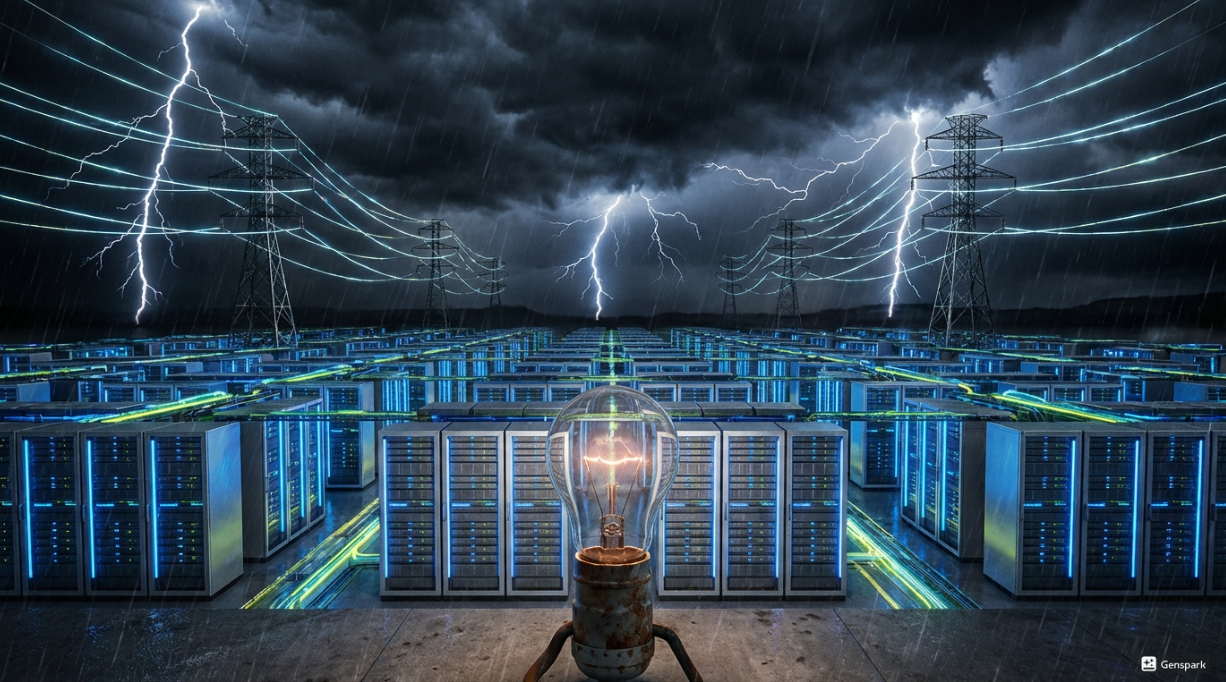
AI data centers consume enormous amounts of electricity. As computing power scales, electricity demand rises exponentially. The question is no longer how intelligent AI can become — it is how much power our energy infrastructure can support.
1. AI Data Centers Run on Power, Not Code
Large AI data centers operate 24/7. Training and running large language models requires vast computing power. That computing power translates directly into electricity consumption.
Cooling systems alone add another layer of energy demand.
This is not a software issue. It is an energy issue.
Without stable electricity supply, there is no computing. Without computing, there is no AI.
2. Electricity Is the Core Infrastructure of the 21st Century
The Industrial Revolution was built on coal. The 20th century was built on oil. The 21st century runs on electricity.
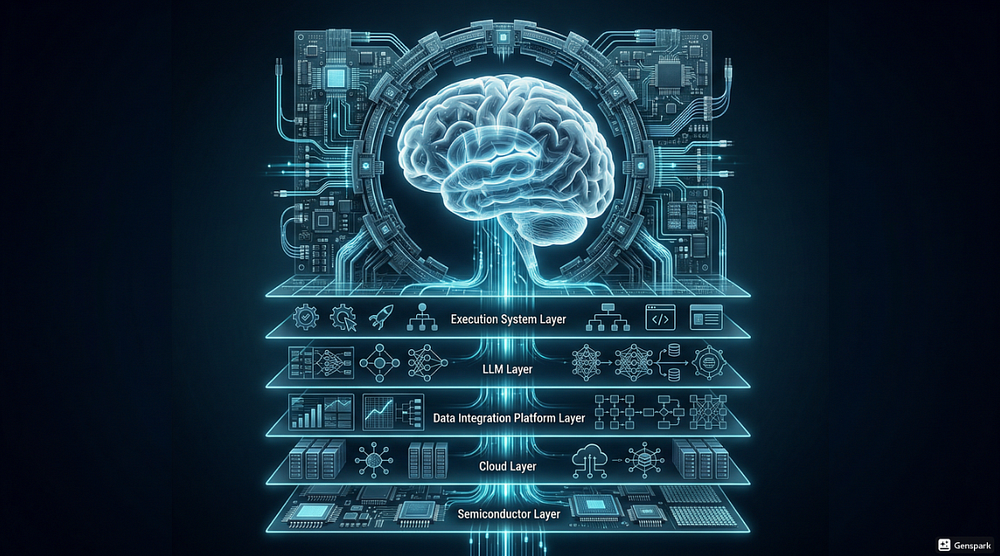
Semiconductors, cloud systems, telecommunications networks, and AI platforms all rely on continuous electrical input.
As AI adoption accelerates, global electricity demand from data centers is rising rapidly. Energy infrastructure is becoming the true foundation of technological competitiveness.
3. Computing Turns Electricity Into Intelligence
Computing is the process of converting energy into information.
Electricity → Signals Signals → Computation Computation → Decisions Decisions → Automation
AI systems transform electrical power into intelligence.
This is why the AI race is simultaneously:
- A semiconductor efficiency race
- A power grid stability race
- An energy infrastructure race
The key metric of the future may not be model size, but this:
How much intelligence can be produced per kilowatt-hour?
4. The Innovation Formula: Energy × Computation × Networks
Modern innovation scales on three pillars:
Energy enables execution. Computation enables optimization. Networks enable expansion.
All three are electricity-dependent.
When AI data center electricity demand outpaces energy supply, innovation slows — regardless of how advanced the algorithms are.
We often assume AI progress is purely digital.
It isn’t.
It is physical.
Electricity and computing form the structural foundation of modern civilization. As AI scales, power availability — not model architecture — may determine the speed of human progress.
The future of innovation depends on electricity.
More power. More computation. More intelligence.
Nothing beyond that.
The world looks complex — until you see the frame. — FrameLAB by BeomView
메타데이터
- post_id
- 8cef9e47c8be
- slug
- ais-real-bottleneck-is-electricity-8cef9e47c8be
- url
- https://medium.com/@beomview/ais-real-bottleneck-is-electricity-8cef9e47c8be
- canonical_url
- https://medium.com/@beomview/ais-real-bottleneck-is-electricity-8cef9e47c8be
- author_url
- https://medium.com/@beomview
- status
- ok
- fetched_at
- 2026-06-17 12:55:42