ReWet Dhaka: Building a New Generation of Climate Leaders for Urban Wetland Restoration
From restoring biodiversity to building climate movements, Korail offers a powerful lesson in locally led adaptation for a warming world.
ReWet Dhaka: Building a New Generation of Climate Leaders for Urban Wetland Restoration
From restoring biodiversity to building climate movements, Korail offers a powerful lesson in locally led adaptation for a warming world.
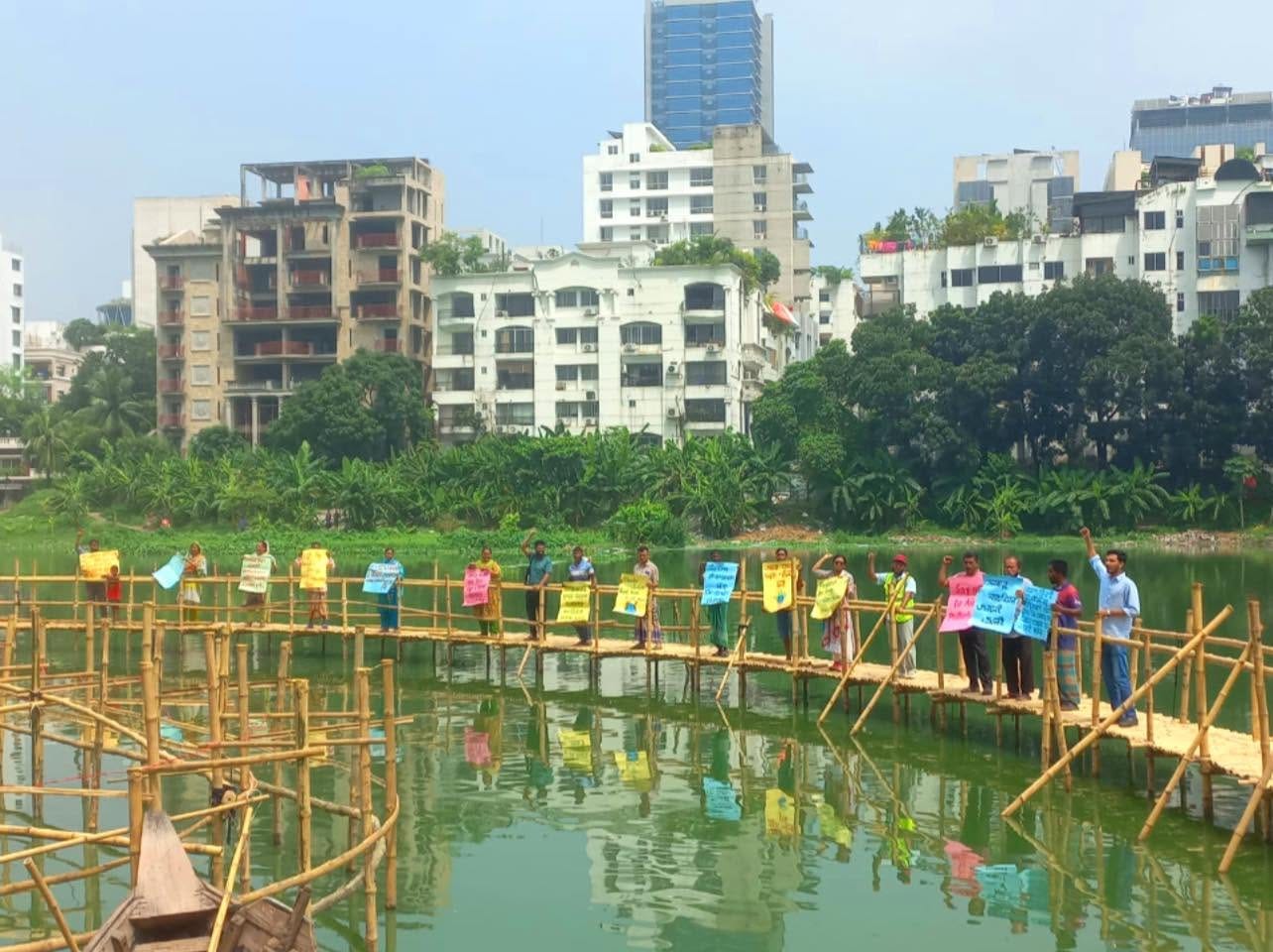
As cities across the globe struggle with floods, rising temperatures, and disappearing wetlands, a quiet movement in one of Dhaka’s largest informal settlements is showing that the future of climate resilience may not be engineered first. It may be cultivated.
At sunrise in Korail, where one of Dhaka’s largest informal settlements meets the shrinking waters of Gulshan-Banani Lake, a quiet climate revolution is already underway.
Urban farmers move through rows of vegetables growing on land that was once degraded and neglected. Bees drift between flowering plants. Birds that had long disappeared are beginning to return. Floating gardens rise gently with changing water levels, while residents harvest fresh food from spaces many once considered beyond recovery.
It is an ordinary morning.
Yet it offers an extraordinary glimpse into what climate adaptation could look like in cities around the world.
Just a few kilometres away, another reality unfolds. Heavy rainfall leaves roads underwater, neighbourhoods remain flooded for days, temperatures continue to climb, and natural wetlands disappear beneath concrete and uncontrolled urban expansion. For millions of Dhaka’s residents, particularly those living in informal settlements, climate change is not a distant threat. It is part of daily life.
For decades, the conversation around urban climate resilience has centred on engineering, infrastructure, and public investment. Those solutions remain indispensable. But they are only part of the answer.
Korail poses a different question.
What if the strongest foundation for climate resilience is not concrete, but people?

The disappearing landscapes beneath our cities
Wetlands are often called the kidneys of the landscape because they filter water, absorb floods, recharge groundwater, regulate temperatures, and sustain biodiversity. In rapidly growing cities, they also function as natural infrastructure, delivering environmental services that would cost billions to replicate through engineered solutions.
Dhaka has lost a substantial share of its wetlands over recent decades as rapid urbanisation, land filling, and poorly planned development have transformed floodplains into built-up areas. The consequences are increasingly visible in more frequent urban flooding, stronger heat island effects, declining biodiversity, and greater exposure to climate risks.
Bangladesh, one of the world’s most climate-vulnerable countries, is experiencing these pressures with particular urgency. Yet the challenge extends far beyond its borders.
From Jakarta and Manila to Lagos, Nairobi, and Kolkata, expanding cities are confronting remarkably similar dilemmas. Natural ecosystems continue to shrink even as climate change intensifies extreme rainfall, prolonged heatwaves, and environmental degradation.
The challenge is no longer simply how cities can become more resilient.
It is who gets to shape that resilience.

Korail is changing the conversation
In Korail, climate adaptation is not beginning with large infrastructure projects.
It is beginning with local stewardship.
Through the Re-WET initiative, implemented by the ReWET Consortium under the Reversing Environmental Degradation in Africa and Asia (REDAA) programme with support from the UK Foreign, Commonwealth and Development Office (FCDO), a diverse partnership is demonstrating how global research can drive locally led climate action. The consortium brings together academic institutions including the University of Sheffield (UK), Sheffield Hallam University (UK), and Smith College (USA), alongside Bangladeshi partners such as the River and Delta Research Centre (RDRC), Nogor Abad, the Prochesta Foundation and YouthNet Global. Together, they are working with local residents to restore urban wetlands through nature-based solutions and agroecological practices while strengthening youth leadership, environmental communication, and grassroots advocacy.
In doing so, the initiative challenges one of the most persistent assumptions in development: that meaningful climate solutions must be designed from the top down. Instead, Re-WET demonstrates that when scientific research is combined with local knowledge, community ownership, and youth leadership, urban wetland restoration can become a powerful pathway for climate resilience, biodiversity conservation, and more inclusive urban development.
People living on the frontlines of climate change are too often treated primarily as beneficiaries.
In reality, they are also experts.
They understand local ecosystems.
They know how neighbourhoods have changed over time.
They recognise risks long before they appear in official reports.
And when given the opportunity, they become some of the most effective environmental leaders.
Perhaps that should not surprise us.
After all, those who depend most directly on nature often understand its value better than anyone else.

Restoring ecosystems begins with restoring ownership
One of the clearest examples of this philosophy is the “Nogor Abad” initiative.
Urban farmers’ leader Shahiduzaman Shyamal describes how residents came together to reclaim degraded land surrounding the Gulshan-Banani Lake. Today, more than 100 urban farmers cultivate over 30 varieties of vegetables using environmentally friendly methods, including floating gardens and pesticide-free farming.
The results extend far beyond food production.
Residents have witnessed the gradual return of birds, bees, frogs, ducks, and other wildlife, suggesting that biodiversity can recover even within one of South Asia’s most densely populated cities.
Families now spend less on vegetables.
Children have improved access to nutritious food.
Shared green spaces have strengthened cooperation among neighbours.
Local stewardship has become both an environmental strategy and a social one.
“Wetland restoration is not just an environmental intervention,” Shyamal explains. “It is closely linked to food security, livelihoods, and community resilience in informal settlements.”
His observation reflects an important lesson.
Restoring ecosystems is also about restoring people’s relationship with those ecosystems.

Every environmental movement needs storytellers
Yet restoring landscapes alone does not guarantee lasting change.
Communities must also shape the stories that influence public opinion, policy, and investment.
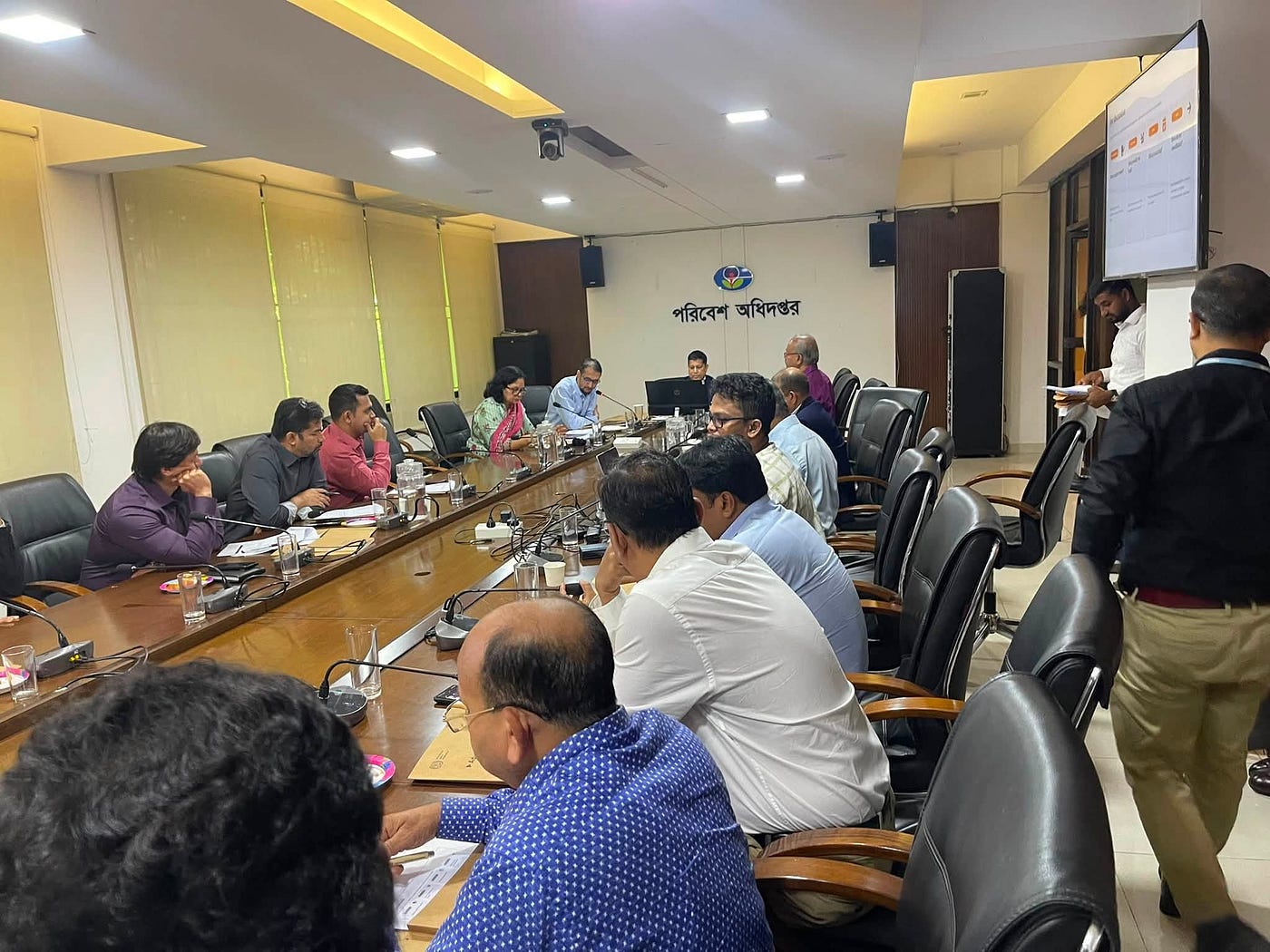
That idea became the focus of a recent gathering where YouthNet Global brought together young climate leaders, urban growers, and local representatives for a workshop on advocacy, media, and movement building. Rather than treating communication as an afterthought, the programme recognised storytelling as a core component of climate action.
As Sohanur Rahman, Executive Coordinator of YouthNet Global, told participants:
“Local experiences must be translated into strong public narratives if we want real change in climate action.”
Scientific evidence is essential.
Policy matters.
But people connect through stories.

Participants explored photography, filmmaking, strategic communication, and digital storytelling to document environmental change and communicate their experiences more effectively.

Maria Akter Baby, One young participant reflected that they had previously viewed climate action primarily as tree planting or environmental clean-up campaigns. The workshop helped them recognise that advocacy, communication, and community mobilisation are equally important because lasting environmental change also depends on changing how society understands the problem.
The workshop itself was not the story.
It was one chapter in a much larger movement.

Technology should amplify people, not replace them
Artificial Intelligence has become part of nearly every conversation about the future of communication.
For grassroots organisations, however, its greatest value is surprisingly practical.
Many local organisations operate with limited staff, restricted budgets, and little access to communications specialists or researchers. AI can help bridge those capacity gaps by supporting research, translation, content development, campaign planning, and information management, allowing local leaders to spend more time organising, restoring ecosystems, and engaging their neighbours.
But the workshop also emphasised an equally important principle.
Technology should never replace authentic voices.
It should strengthen them.
The credibility of climate movements will always depend on lived experience rather than algorithms.

Why this matters for cities everywhere
Korail is not important simply because it is located in Bangladesh.
It matters because it offers lessons for cities across the world.
Many urban climate projects succeed while funding lasts but struggle once external support ends. Long-term resilience depends on something less visible but far more durable: local ownership.

When residents become stewards of restored ecosystems, they continue protecting them long after individual projects conclude.
That is one reason why community-led restoration deserves far greater attention within urban climate policy.
Governments are rightly investing in flood barriers, drainage systems, embankments, and resilient infrastructure. Yet resilient cities also require investments in people, relationships, local knowledge, and citizen leadership.
Korail demonstrates that restoring wetlands can simultaneously strengthen biodiversity, improve food security, create livelihoods, build social cohesion, and nurture a new generation of climate leaders.
That combination is difficult to engineer.
It can only be cultivated.

Beyond restoration: rethinking urban policy
If cities are serious about protecting wetlands, restoration alone will not be enough.
Urban planning must stop treating wetlands as vacant land waiting for development.

Master plans should integrate wetland conservation into future growth strategies rather than viewing environmental protection and urban development as competing priorities.
Equally important, local residents should be recognised as partners in environmental governance rather than consulted only after major planning decisions have already been made.
The experience emerging from Korail suggests that the future of resilient cities depends as much on inclusive governance as it does on physical infrastructure.

The lesson Korail offers the world
Korail reminds us that healthy ecosystems remain among the most valuable forms of climate infrastructure.
It reminds us that local knowledge deserves a central place in environmental planning.
It reminds us that communication can be as important as conservation because climate solutions only gain momentum when people understand, support, and champion them.
Above all, it reminds us that investing in young people may be one of the smartest climate investments any city can make.
They are restoring ecosystems.
They are rebuilding biodiversity.
They are strengthening neighbourhoods.
And they are changing the way cities think about resilience.
As governments prepare new climate adaptation strategies and international discussions continue to focus on financing resilient cities, Korail offers a powerful example of what locally led adaptation looks like in practice.
The future of Dhaka’s wetlands will undoubtedly require stronger governance, better planning, and sustained public investment.
But infrastructure alone will not protect the city’s future.
Neither will policy.
The greatest investment any city can make is in the people who already know its landscapes, understand its challenges, and are willing to restore them.

If a neighbourhood like Korail can begin restoring nature in one of the world’s fastest-growing cities, what untapped potential exists in communities across the globe?
Perhaps the future of climate resilience will not be designed first in conference halls or government offices.
Perhaps it is already taking root beside a restored wetland, where every seed planted is also an investment in a more resilient, more inclusive, and more hopeful urban future.
메타데이터
- post_id
- 8cf08167ca75
- slug
- rewet-dhaka-building-a-new-generation-of-climate-leaders-for-urban-wetland-restoration-8cf08167ca75
- url
- https://medium.com/@youthnetglobal/rewet-dhaka-building-a-new-generation-of-climate-leaders-for-urban-wetland-restoration-8cf08167ca75
- canonical_url
- https://medium.com/@youthnetglobal/rewet-dhaka-building-a-new-generation-of-climate-leaders-for-urban-wetland-restoration-8cf08167ca75
- author_url
- https://medium.com/@youthnetglobal
- status
- ok
- fetched_at
- 2026-08-20 10:17:55