Art, Power, and Responsibility: Reflections from Painting Practice
Throughout history, art has often been closely connected to systems of power. In different societies, artists have relied on religious…
Art, Power, and Responsibility: Reflections from Painting Practice
Throughout history, art has often been closely connected to systems of power. In different societies, artists have relied on religious institutions, governments, or cultural organisations for financial support and public recognition. Because of this relationship, artworks are sometimes created to promote certain values or political messages. However, artists are not always passive followers of authority. Some artists choose to express difficult emotions or reveal uncomfortable truths about society. The Spanish painter Francisco Goya provides an important example of how art can both serve power and challenge it. His work has also influenced the way I understand the role of painting in contemporary exhibitions in China.
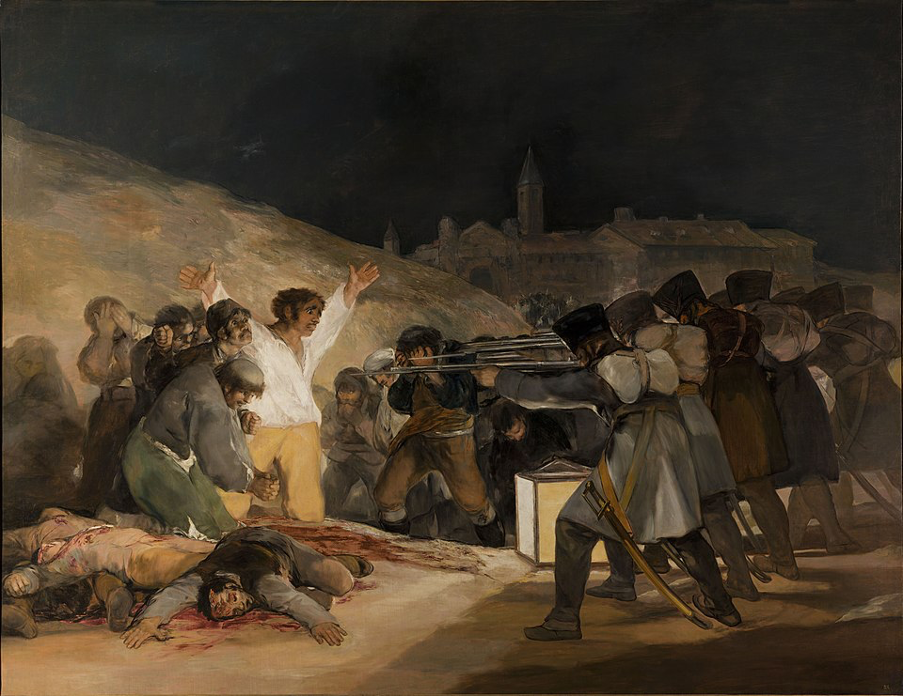
The Third of May 1808
During my undergraduate study in oil painting, I was introduced to Goya’s work *The Third of May 1808*. What struck me first was the very specific title of the painting. Unlike many artworks that use symbolic or poetic names, this work directly refers to a particular historical date. At that time, I needed to memorise the title for exams, and remembering such a long and detailed name felt quite difficult for me. Because of this challenge, I started to pay more attention to the work itself. Instead of simply memorising the title, I became curious about why the artist chose such a precise date and why this painting was considered so important in art history.
As I explored the background of the painting, I learned that it depicted the execution of Spanish civilians during a time of war. I started to understand why the work is considered so significant in Western art history (Tomlinson, 1992). It does not celebrate victory or heroism. Instead, it focuses on fear, suffering, and the vulnerability of ordinary people. This discovery made me realise that painting is not only about visual beauty, but also about recording history and expressing emotional responses to violence and injustice. As a student of oil painting, this experience gradually changed the way I think about the social responsibility of artists.
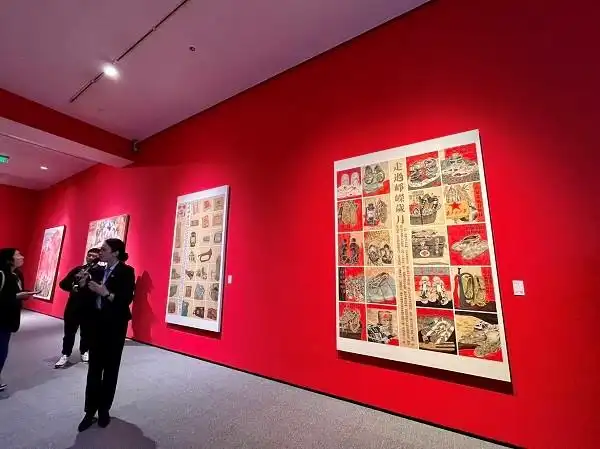
Exhibition of Art Works on incorruptible culture
This reflection also made me think about my own experiences of visiting and participating in painting exhibitions in China. Many exhibitions were organised by official institutions and often focused on themes such as historical events, national development, or collective achievements (Wu, 2014). Chinese cultural policy documents also emphasise the social role of art. For example, the Ministry of Culture and Tourism of the People’s Republic of China (2021) states that “Literature and art should reflect the spirit of the times and promote core social values.” This suggests that art is often expected to support social values and communicate shared ideas to the public.
In my experience, these themes appeared frequently in large exhibitions organised by official institutions, which helped me realise that cultural policy can influence what kinds of artworks are displayed. At the same time, learning about the work of Francisco Goya reminded me that artists can still express personal feelings and ideas, even when working within official systems.
When preparing works for exhibitions or competitions, students were sometimes encouraged to choose subjects that reflected positive social values or important historical narratives. At the time, I accepted this as a normal part of artistic practice. However, after learning about Goya’s work, I began to see these exhibitions in a slightly different way. I started to realise that art exhibitions are not only spaces for creative expression, but can also reflect broader social ideas.
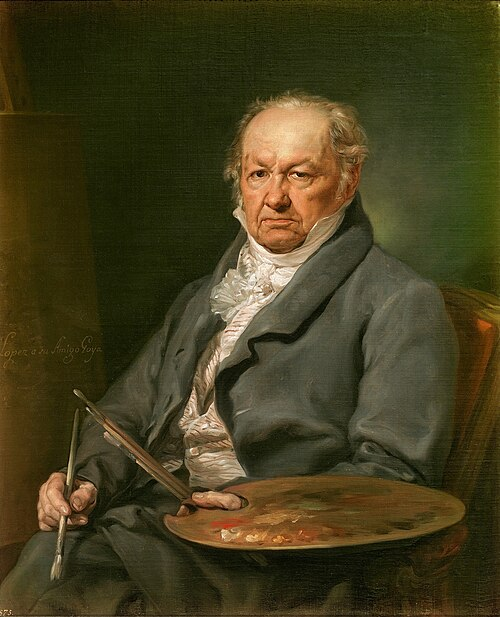
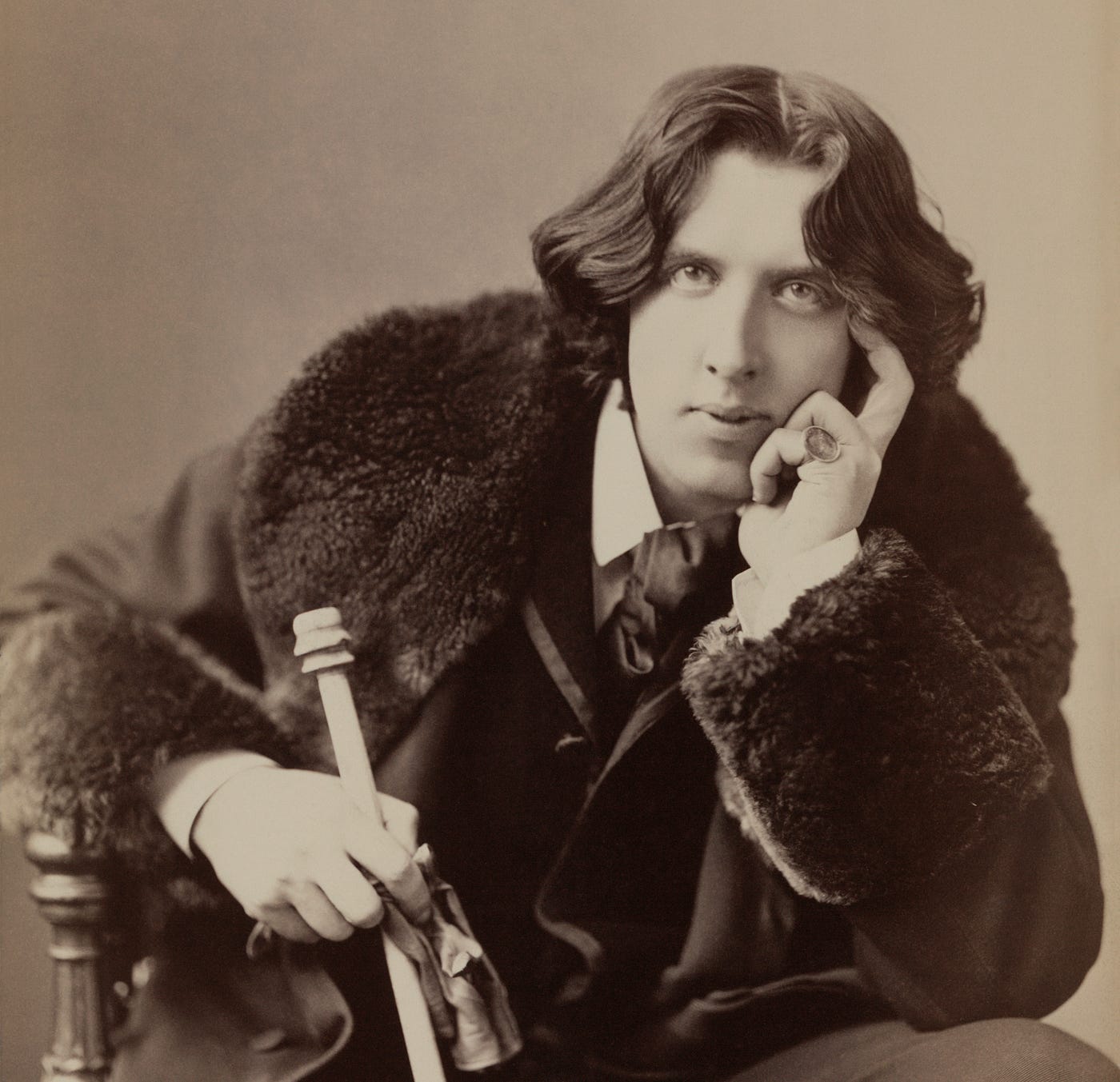
Francisco Goya
At the same time, Goya’s work also shows that artists can still express personal views within such systems. They may follow dominant narratives or challenge them in different ways. This tension between conformity and independence exists in many places.
In conclusion, the relationship between art and power is complex. From Goya’s historical paintings to contemporary exhibitions in China, art can both reflect and question society. Through my own experience in oil painting, I have gradually realised that artists are not only creators of images, but also individuals who make choices about what to express and how to respond to their social environment. This understanding has encouraged me to think more carefully about my own responsibilities as an artist in the future.
References
Clark, T. J. (1999). Farewell to an idea: Episodes from a history of modernism. Yale University Press.
Ministry of Culture and Tourism of the People’s Republic of China. (2021). Development plan for cultural and artistic work. Government of China.
Tomlinson, J. (1992). Goya: Order and disorder. Princeton University Press.
Wu, H. (2014). Contemporary Chinese art: A history. Thames & Hudson.
메타데이터
- post_id
- 8d2bf9bcd5a2
- slug
- art-power-and-responsibility-reflecting-on-goya-and-contemporary-chinese-art-exhibitions-8d2bf9bcd5a2
- url
- https://medium.com/@ytan0450/art-power-and-responsibility-reflecting-on-goya-and-contemporary-chinese-art-exhibitions-8d2bf9bcd5a2
- canonical_url
- https://medium.com/@ytan0450/art-power-and-responsibility-reflecting-on-goya-and-contemporary-chinese-art-exhibitions-8d2bf9bcd5a2
- author_url
- https://medium.com/@ytan0450
- status
- ok
- fetched_at
- 2026-06-20 20:29:01