Why We Trust Information We Know We Should Question
Michael Crichton described it years ago. I think modern life runs on it now.

Why We Trust Information We Know We Should Question
Michael Crichton described it years ago. I think modern life runs on it now.
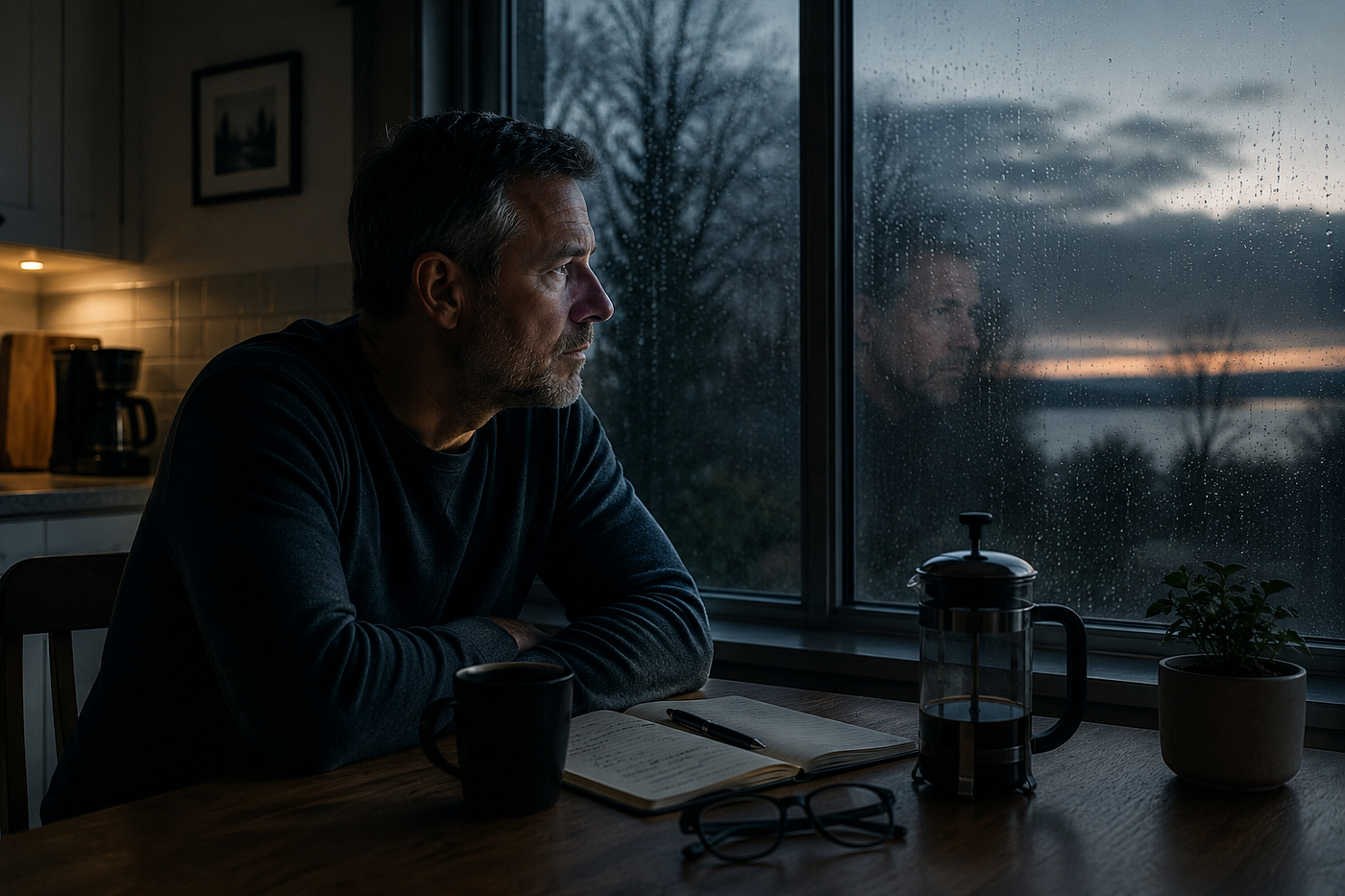
A few months ago, between patients, I read an article about cancer prevention that I knew was misleading within thirty seconds.
The writing was polished. The conclusions sounded reasonable. The confidence was unmistakable.
Then the problems started appearing.
Correlation quietly became causation. Relative risk became inevitability. Complex biology was compressed into a simple moral story about discipline, cleaner eating, stress reduction, and environmental toxins. At one point, the article strongly implied that people who developed cancer had largely failed to protect themselves adequately.
I remember leaning back in my chair and thinking, “This is going to make frightened people feel guilty for getting sick.”
The reaction arrived almost instantly. Years of oncology had trained me to recognize the distance between biological reality and the cleaner stories people naturally prefer. Cancer is full of uncertainty, randomness, and exceptions.
Then I closed the article and moved on with my day.
A few minutes later, I found myself reading an analysis of artificial intelligence and labor markets. The author sounded informed. The argument was coherent. The predictions felt plausible. I accepted almost everything I was told without much resistance.
That should have made me more skeptical.
Instead, I made the exact same mistake myself.
In one domain, I had immediately recognized oversimplification, false certainty, and narrative distortion. In another, I had accepted a confident argument with very little skepticism. The transition happened so automatically that I barely noticed it.
The bad cancer article was not the unsettling part. Every field produces explanations that flatten complexity into something easier to understand. What unsettled me was how quickly I forgot the lesson it had just taught me.
Years ago, Michael Crichton described this phenomenon so well that I have carried it around in my mind ever since. He called it the Gell-Mann amnesia effect. Readers encounter an article about a subject they understand deeply, recognize that the writer fundamentally misunderstands the material, then calmly turn the page and trust the reporting on economics, politics, science, or world events.
You catch the error clearly in one place, then somehow assume accuracy everywhere else.
Lately, I have started wondering whether modern life depends on this blind spot more than we realize.
The Emotional Relief of Certainty
Most people are not searching for truth as much as for relief.
Modern life demands that the brain process an extraordinary amount of information every day. Before noon, many people have already encountered conflicting claims about nutrition, politics, parenting, artificial intelligence, financial markets, aging, mental health, cancer risk, and longevity.
The volume alone is exhausting. Evaluating which sources deserve trust requires even more effort. At some point, the brain begins looking for shortcuts.
Confidence is one of them.
The polished podcaster starts sounding authoritative through repetition alone. The charismatic wellness influencer becomes persuasive because certainty itself feels reassuring. Viral threads create the illusion of mastery by reducing complex subjects to stories with obvious villains and solutions.
The deeper problem is not misinformation by itself. It is the strain of living in an environment where almost every important question arrives with multiple competing answers.
I explored a related pattern recently in Your Brain Was Never Designed for This Many Choices, where I wrote about how cognitive overload quietly changes not only attention span, but judgment itself.
Increasingly, I suspect the consequences extend even further. The harder it becomes to process everything, the more appealing certainty becomes. Uncertainty requires energy to tolerate, and energy is often in short supply.
And uncertainty, it turns out, is surprisingly heavy to carry for long. https://michaelhunterwellness.kit.com
What Oncology Quietly Teaches You About Expertise
One of the humbling things about medicine is how quickly certainty begins to dissolve once you spend enough time around real patients.
A treatment that looks promising in early trials fails in larger studies. Two patients with nearly identical diagnoses respond completely differently. A risk factor matters profoundly in one context and barely at all in another. Outcomes shift because of variables no one fully understands.
The longer I practice medicine, the more suspicious I become of explanations that sound complete.
A few weeks ago, one of my patients brought me a thick stack of printed articles about an experimental cancer treatment circulating online. Some of the claims were so exaggerated that several members of our staff had already discussed them earlier that morning with a mixture of concern and disbelief. One article implied oncologists were suppressing curative therapies for financial reasons. Another cited laboratory findings in mice as though they represented established outcomes in humans.
The patient listened quietly while we reviewed the material together. Then she said something I have not forgotten.
“I don’t know who to trust anymore.”
She did not sound angry. She did not sound conspiratorial.
She sounded tired.
That may be one of the defining emotional states of modern life.
The public often imagines medicine as a profession built on answers. In reality, much of medicine involves learning how to function responsibly in uncertainty without becoming paralyzed by it. Over time, you become comfortable saying, “We don’t know yet,” or “The evidence is mixed,” or “This may help, but I cannot promise that it will.”
Outside medicine, those answers often feel unsatisfying. Certainty is more reassuring. Simplicity is easier to carry.
But beneath many modern information battles sits a quieter emotional reality that rarely gets discussed honestly enough. People are overwhelmed. And overwhelmed people become increasingly vulnerable to narratives that make a complicated world feel understandable again.
The Marketplace of Certainty

The modern brain is exposed to more confident voices in a single evening than most people encountered in an entire lifetime just a century ago.
The modern information economy does not reward hesitation very well.
A podcast host who says, “The evidence is complicated,” rarely goes viral. A headline that says, “Scientists remain uncertain” struggles to compete with one that promises a hidden cause, a simple solution, or a dramatic prediction.
Confidence travels faster.
As a result, complicated systems are increasingly translated into stories that can be understood in seconds. Cancer becomes entirely preventable if people avoid the right foods. Burnout becomes a personal failure of resilience rather than a predictable consequence of chronic overload. Longevity becomes a purchasable optimization project. Artificial intelligence becomes either civilization’s salvation or its extinction event.
The stories become cleaner as reality becomes more complicated.
I notice the appeal of those stories in myself more often now than I once did. When someone speaks smoothly and confidently about a subject I understand poorly, part of my brain still wants to relax. It is comforting to believe that somebody competent has figured things out. It is comforting to believe that uncertainty belongs to other people.
Perhaps that impulse is deeply human.
Most of us want clarity. Most of us want answers. The problem is not that certainty feels appealing. The problem is that modern life supplies certainty in industrial quantities while giving us fewer and fewer ways to evaluate who has actually earned our trust.
The nervous system did not evolve to handle thousands of competing voices vying for our attention every week.
The Seduction of Intelligent People
One of the stranger things I have noticed about intelligent people is how quickly they recognize bad information in subjects they understand deeply.
An economist can spot a weak economic argument within minutes. A physician can immediately see the flaws in an oversimplified health claim. An engineer can recognize technical mistakes that most people would never notice.
Then all of us leave our areas of expertise and become vulnerable again.
I have seen brilliant physicians make poor financial decisions because the storyteller sounded convincing. I have seen highly educated patients become trapped inside elaborate health conspiracies that collapsed under minimal scrutiny. I have watched otherwise rational people share misleading statistics because the claims aligned emotionally with what they already believed.
The pattern is humbling because it violates the story many of us tell ourselves. We like to imagine that intelligence protects people from misinformation. More often, it seems to help us construct better arguments for conclusions we were already inclined to reach.
Most people imagine misinformation as a problem that affects other people. The older I get, the more suspicious I become of my own certainty, especially in domains where I know just enough to feel informed without fully understanding the deeper complexity beneath the surface.
There is a particular comfort in believing that we understand what is happening.
I have gradually come to suspect that wisdom has less to do with accumulating answers than with becoming more cautious about confidence. The question I return to most often now is surprisingly simple:
How would I know if I’m wrong about this?
That question has become one of the most reliable safeguards I know.
Final Thoughts
The older I get, the less impressed I am by confidence itself.
Some of the wisest people I have known speak carefully. They revise their opinions when new evidence appears. They acknowledge uncertainty. They resist the temptation to turn complicated realities into emotionally satisfying stories.
Many of the loudest voices online seem to do the opposite.
That inversion should probably concern us more than it does.
The Gell-Mann amnesia effect is not really about journalism. It is not even primarily about misinformation. It reflects something deeper about how human beings navigate a world that has become too complex for any one person to understand fully.
Every day, we rely on experts, institutions, headlines, podcasts, books, algorithms, and strangers to help us make sense of reality. Most of the time, we have little choice.
Under those conditions, certainty starts feeling less like accuracy and more like relief.
Perhaps wisdom is not becoming certain about everything. Perhaps wisdom is becoming a little more cautious about certainty itself, especially our own. The longer I practice medicine, the more I appreciate people who can hold strong opinions without becoming trapped inside them.
One habit has become increasingly useful to me over the years. Whenever I feel completely convinced by an idea, I try to pause long enough to ask what evidence would change my mind.
Not because that question guarantees better answers.
But because it reminds me that confidence and understanding are not always the same thing.
If these reflections resonate with you, I write weekly about health, attention, overload, uncertainty, and the subtle ways modern life shapes how we think before we even notice: https://michaelhunterwellness.kit.com
Michael Hunter, MD, is a radiation oncologist who writes about health, attention, and how small, quiet changes reduce strain before burnout. His work focuses on what actually helps people feel better in real life.
메타데이터
- post_id
- 8d45fe8da257
- slug
- why-we-trust-information-we-know-we-should-question-8d45fe8da257
- url
- https://medium.com/dr-michael-hunters-wellness/why-we-trust-information-we-know-we-should-question-8d45fe8da257
- canonical_url
- https://medium.com/dr-michael-hunters-wellness/why-we-trust-information-we-know-we-should-question-8d45fe8da257
- author_url
- https://medium.com/@drmichaelhunter
- status
- ok
- fetched_at
- 2026-06-15 20:49:13