The Complete Guide To The Sync Licensing Industry: Who Does What And Why It Matters
One of the biggest mistakes musicians make when they first start pursuing sync licensing is assuming that everyone in the industry performs…
The Complete Guide To The Sync Licensing Industry: Who Does What And Why It Matters
Photo by Vika Strawberrika on Unsplash
One of the biggest mistakes musicians make when they first start pursuing sync licensing is assuming that everyone in the industry performs the same role. They hear terms like music library, publisher, sync agent, music supervisor, production company, and licensing company and assume they’re all different names for the same thing.
The reality is much more complex than that. The sync licensing industry is made up of many different players, each serving a specific purpose within the licensing ecosystem.
Understanding who does what can dramatically improve your results. When you know exactly who you’re pitching and how they fit into the process, you’re far less likely to waste time sending the wrong music to the wrong people.
Let’s take a closer look at the major players in the sync licensing industry and how they work together.
Music Libraries
Music libraries are often the first stop for musicians entering the sync licensing world. Their primary job is to build catalogs of music that can be licensed to television shows, films, commercials, sports broadcasts, corporate projects, YouTube creators, video games, and many other forms of media.
A music library represents a large collection of songs and instrumental tracks. When a producer, editor, or music supervisor needs music, they often search these catalogs to find tracks that fit their project.
Some libraries operate on a non-exclusive basis, which means you’re free to place your music elsewhere. Others work exclusively and require certain rights to the music they represent.
Libraries are often excellent partners because they spend their time actively seeking licensing opportunities. Instead of you pitching every project individually, the library becomes part of your sales team.
Production Music Companies
Production music companies are closely related to music libraries, but they’re often more focused on creating music specifically for licensing opportunities.
Many production music companies commission composers to create tracks that fit current industry needs. These companies often have direct relationships with television networks, production companies, sports broadcasters, and advertising agencies.
Because their music is typically created specifically for licensing, production music catalogs are often highly organized and easy for clients to search. This makes them particularly attractive to television producers and editors working under tight deadlines.
Many successful sync composers earn a significant portion of their income through production music companies.
Music Publishers
Publishing is one of the most misunderstood areas of the music business. While libraries primarily focus on licensing recordings, publishers focus on the underlying compositions.
A music publisher’s job is to help generate revenue from songs by pursuing licensing opportunities, collecting royalties, administering copyrights, and creating relationships throughout the industry.
Publishers often have strong relationships with music supervisors, production companies, film studios, television networks, and other decision-makers. Because of these relationships, they can sometimes create opportunities that would be difficult for individual songwriters to access on their own.
Many publishers also help register songs, collect royalties internationally, and ensure that songwriters receive the income they’re entitled to.
Where Do You Find These Companies?
By now, you’re probably realizing that the sync licensing industry is much larger than most musicians initially assume. Music libraries are only one piece of the puzzle, and there are hundreds of companies actively licensing music for television, films, commercials, trailers, sports programming, streaming content, and other media.
The challenge isn’t just understanding who these companies are. The challenge is actually finding them.
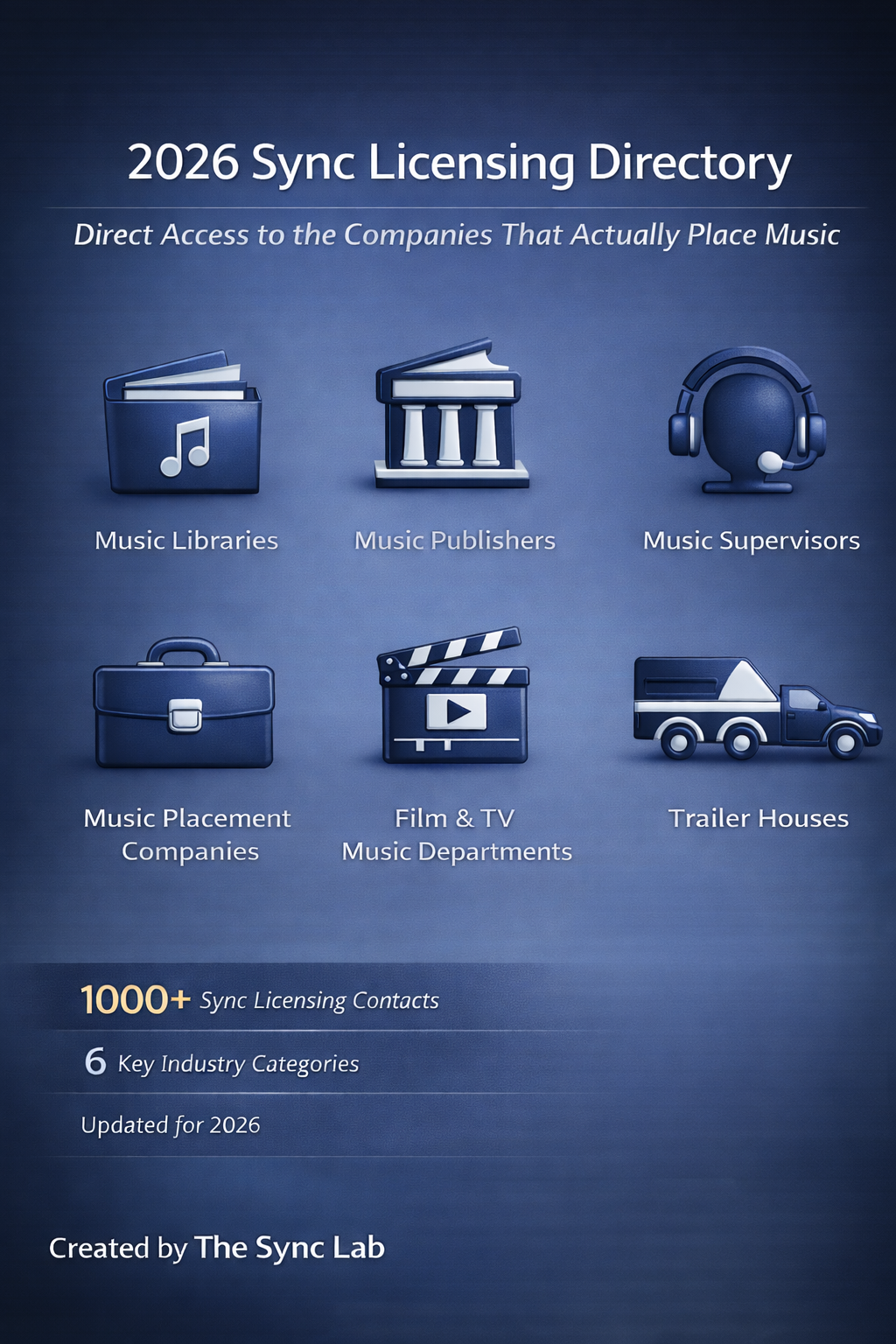
That’s one of the reasons we created our 2026 Sync Licensing Directory. The directory includes hundreds of music libraries, publishers, music supervisors, sync agents, production companies, trailer houses, and other industry contacts, all organized in one place to help musicians spend less time researching and more time pitching.
If you’d like to learn more, you can check out the directory here:
**https://www.htlympremium.com/2026-sync-licensing-directory.html**
Now let’s continue exploring some of the other key players in the sync licensing industry.
Sync Agents
A sync agent is essentially a specialized salesperson focused on licensing opportunities.
Unlike a traditional publisher or library, a sync agent is often highly proactive. Their job is to pitch music directly to music supervisors, advertising agencies, film studios, television producers, trailer houses, and other buyers.
Think of a sync agent as someone whose primary responsibility is opening doors and creating opportunities. Because they spend their days building industry relationships, they often have access to projects that musicians never hear about.
Many sync agents work with carefully curated rosters and are highly selective about the music they represent.
Photo by Troy T on Unsplash
Music Supervisors
Music supervisors are among the most important people in the entire sync licensing ecosystem.
Their job is to find, select, negotiate, and license music for television shows, films, commercials, trailers, video games, documentaries, and other projects. They act as the bridge between the creative needs of a production and the music industry.
If a television producer needs a specific type of song for a scene, the music supervisor is often the person responsible for finding it.
Many musicians focus heavily on music supervisors because they are direct decision-makers. However, supervisors are often extremely busy and receive a tremendous number of submissions, which makes targeted and professional outreach especially important.
Film And Television Music Departments
Many large television networks, studios, and production companies have internal music departments.
These departments help coordinate music licensing, clear rights, negotiate agreements, manage budgets, and oversee the music used within productions. Depending on the organization, they may work alongside music supervisors or perform similar functions internally.
Large companies often process enormous amounts of music each year. As a result, these departments can become valuable long-term relationships for composers, publishers, libraries, and licensing professionals.
Many musicians overlook these departments entirely because they’re less visible than music supervisors.
Video Editors
This is a category that many musicians completely ignore.
Editors are often deeply involved in selecting temporary music during the editing process. While they may not always have final approval authority, their musical preferences can strongly influence the direction of a project.
An editor who repeatedly uses a particular library or catalog can indirectly create substantial licensing opportunities. This is one reason many libraries spend significant time building relationships with editors.
While musicians rarely pitch editors directly, understanding their role helps explain how music often finds its way into productions.
Advertising Agencies
Advertising agencies are responsible for creating marketing campaigns for brands and businesses.
Music plays a critical role in advertising because it helps shape emotion, identity, and brand perception. Agencies frequently work with music supervisors, publishers, sync agents, libraries, and composers to find music that supports their creative vision.
Commercial placements can sometimes generate substantial fees, making advertising one of the most attractive sectors of the sync licensing industry.
Many agencies actively seek fresh music because they want campaigns that feel unique and memorable.
Trailer Houses
Trailer houses specialize in creating film trailers, television promos, streaming platform campaigns, and other promotional content.
The music used in trailers often differs significantly from music used in television shows or films. Trailer music tends to be highly dramatic, emotional, and designed to capture attention quickly.
Because of this, trailer houses often maintain relationships with specialized libraries, composers, and publishers that understand the unique requirements of trailer music.
For musicians who create cinematic music, trailer houses can represent an exciting niche within the larger licensing industry.
Production Companies
Production companies create the actual content that audiences watch. They produce television shows, films, documentaries, streaming content, commercials, and many other forms of media.
Depending on the size of the company, they may work with music supervisors, internal music departments, editors, publishers, libraries, and composers throughout the production process.
Building relationships with production companies can sometimes lead directly to licensing opportunities, particularly within smaller productions where decision-making is more centralized.
Performing Rights Organizations
Organizations such as ASCAP, BMI, SESAC, SOCAN, PRS, and others play a different role than the companies we’ve discussed so far.
Rather than licensing music directly, performing rights organizations collect and distribute performance royalties when music is publicly performed, broadcast, or transmitted.
These organizations help ensure that songwriters and publishers receive compensation when their music is used. While they aren’t typically a source of placements, they are an essential part of the revenue ecosystem that supports successful licensing careers.
Why Understanding These Categories Matters
Many musicians spend years pitching blindly because they don’t understand who they’re contacting or why. They send music to companies that don’t accept submissions, pitch songs to organizations that aren’t looking for that style, or overlook entire categories of opportunities.
The more clearly you understand the sync licensing ecosystem, the more strategically you can approach it. Instead of treating every contact the same, you can tailor your approach based on the specific role that person or company plays within the industry.
This often leads to better conversations, stronger relationships, and ultimately better results.
You Don’t Have To Research Everything Yourself
One reason we created The Sync Lab and our online sync licensing directory is because researching all of these different categories can take an enormous amount of time.
Inside The Sync Lab, you’ll find access to our sync licensing directory, which includes music libraries, publishers, music supervisors, sync agents, production companies, and many other industry contacts. You’ll also gain access to our free four-hour sync licensing course, music licensing briefs, AI resources, educational materials, trend reports, contract templates, and additional tools designed to help musicians navigate the industry more effectively.
Instead of spending months trying to figure out who does what and where to find them, you can start learning from resources specifically designed for musicians pursuing sync licensing opportunities.
Want To Explore The Free Version Of The Sync Lab?
The free version includes access to our online sync licensing directory, educational resources, and a free four-hour sync licensing course designed to help musicians better understand how the industry works.
Whether you’re brand new to sync licensing or looking to take your efforts to the next level, The Sync Lab was built to help musicians save time, build relationships, and create more opportunities for their music.
Join The Sync Lab Free Here:
메타데이터
- post_id
- 8d56451d6402
- slug
- the-complete-guide-to-the-sync-licensing-industry-who-does-what-and-why-it-matters-8d56451d6402
- url
- https://medium.com/@htlympremium/the-complete-guide-to-the-sync-licensing-industry-who-does-what-and-why-it-matters-8d56451d6402
- canonical_url
- https://medium.com/@htlympremium/the-complete-guide-to-the-sync-licensing-industry-who-does-what-and-why-it-matters-8d56451d6402
- author_url
- https://medium.com/@htlympremium
- status
- ok
- fetched_at
- 2026-07-11 08:43:39