What We Lost When We Left the Mall
A Eulogy of Sorts
What We Lost When We Left the Mall
Originally posted to Musings of an Indie D-Lister on Substack
A Eulogy of Sorts
Did you grow up in a town of at least 10,000 people somewhere in North America? If so, you probably spent countless hours wandering around your local mall, henceforth referred to as “The Mall.” Its anchor department store was someplace like Target or Macy’s in the US or The Bay or Zellers in Canada (or Eaton’s if you go back far enough). There were cheap gift stores that had sketchy adult sections hidden behind black curtains, and expensive gift stores with gauche animal prints and vaguely “ethnic” designs on everything.
Perhaps the most memorable of all were the smells. As trends shifted, hair salons that reeked of perming solution eventually gave way to nail salons that reeked of acetone and were usually situated in the middle of The Mall far from any open windows. Thankfully, you could find refuge for your olfactory system if you walked a few feet further, because without fail, one wing of The Mall would radiate the smell of fresh-baked cinnamon rolls, while the other smelt of cinnamon roll candles.


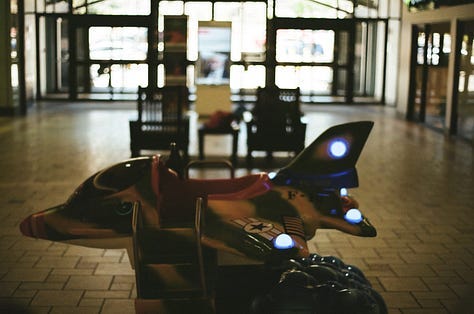
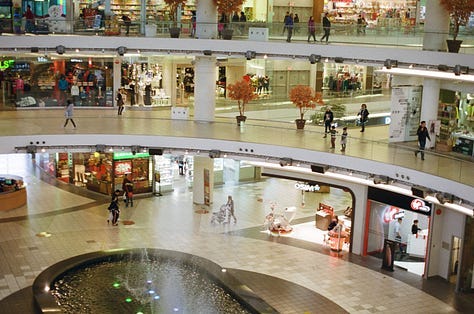


Photos from various malls in BC and Alberta, taken by Ashley Good
Distracted by whatever drama was happening in class, and fixated on the clothes hanging on the mannequins, you might not have noticed that the floor resembled sand, that everything had a sort of “beach aesthetic” to it. Inspired by the Southdale Center, which was built in 1956 in Edina, Minnesota, Austrian-born architect Victor Gruen envisioned The Mall as a fully enclosed community hub, a place where North Americans could gather year-round, no matter the season. Gruen’s design was deliberately beachy, with artificial gardens, fountains, and other warm design elements meant to make shoppers feel at home. Gruen wanted people to spend time in his mall, to linger, and to socialize. Because of the success of the Southdale Center, largely attributed to Gruen’s designs, nearly identical malls began to emerge all around Canada and the United States.
And yet, despite their homogenized designs, there was a warmth to The Mall. You probably felt a familiarity while reading the opening paragraph. And that was because, despite their (nearly identical) interiors, each location of The Mall was made unique and special because of the people in them and the memories that were formed there.
The Mall wasn’t just a place to consume; it was a place to be shared with others. Stores, food courts, booths that showed off the newest trendy gadget or skin-burning acne treatments, and occasionally a mismanaged zoo or water park made The Mall a place where you could easily waste hours without ever spending a dime. It was like walking through a living catalog or tabloid magazine. Safe from the weather, free from car traffic, and often home to a collection of “international” cuisines like bad Italian food, bad Chinese food, bad Mexican food, and more recently bad Korean, Japanese, and Indian food, The Mall was as close as many suburban teens would ever get to wandering around an international city.


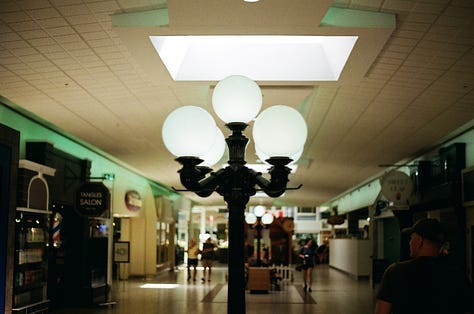

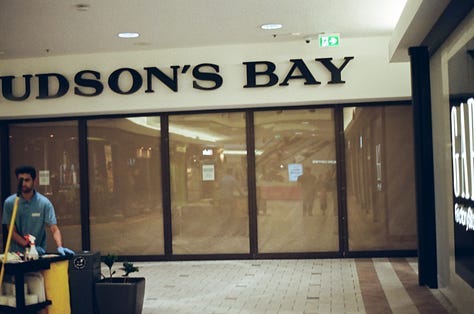
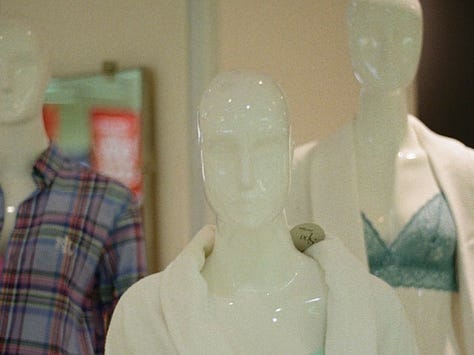


More photos from malls across BC and Alberta, taken by Ashley Good
While shopping was an excuse to visit The Mall, it wasn’t necessarily the reason. Ironically, while it was at one time considered the peak of capitalism, The Mall was the key praxis to the performative consumption now on display in social media. Think about the flocks of teenagers peacocking in their new clothes, and now put a phone in each of their hands. As social media emerged, we eventually found ourselves interacting more online and less in person. We lost the excuse to visit The Mall. Then, as the prevalence of online shopping continued to grow, we lost our reasons to visit The Mall. Over time, the aesthetics of malls began to shift to appear more “social media friendly.” Small reminders of the old designs remain if you look hard enough, but the heart of The Mall was stripped out because the atmosphere that the people used to bring has forever shifted. Just as clones of the Southdale Center popped up all around North America, social media’s algorithms keep homogenizing all aspects of the human experience because it’s seen as the most efficient way for companies to make profits. As The Mall emulated and eventually subsumed much of our small towns’ main streets, social media and e-commerce swallowed up The Mall.
Shopping malls still exist, just as each town still has a “main street,” except they both now exist primarily as aesthetic backdrops in people’s lives instead of being places of cultural importance. If one thinks hard enough, you can probably visualize a bleak future where social media has been overtaken by “the metaverse,” where we long for the days of shopping online from the comfort of our couches (because at least then we didn’t have this annoying zapping feeling caused by the chips in our heads). Because if one thing is for certain, it is that the hunger march of late-stage capitalistic consumption is relentless.
While the mall wasn’t perfect, it was a great compromise: consumerism balanced with being a third place, where you could shop if you wanted, or hang out with friends amongst the plastic ferns if you didn’t. It was a place of employment for many, and working there as a teen was even sometimes seen as cool. It gave us all a place to go without the social pressures of being on display. The Mall allowed middle-class North Americans to be participants in capitalism, instead of being the products. It was commercial, sure, and at times a bit tacky, but The Mall was one of the last places that the middle class could gather without paying for admission or signing up for a subscription.
xxx
How has “The Mall” impacted your life? Reminisce in the comments below!
메타데이터
- post_id
- 8d72ee64abb6
- slug
- what-we-lost-when-we-left-the-mall-8d72ee64abb6
- url
- https://medium.com/@ashleygood/what-we-lost-when-we-left-the-mall-8d72ee64abb6
- canonical_url
- https://medium.com/@ashleygood/what-we-lost-when-we-left-the-mall-8d72ee64abb6
- author_url
- https://medium.com/@ashleygood
- status
- ok
- fetched_at
- 2026-06-23 17:05:31