BPC-157 vs TB-500
BPC-157 and TB-500 are two of the most frequently referenced research peptides in preclinical science. Both appear in laboratory studies…
BPC-157 vs TB-500
BPC-157 and TB-500 are two of the most frequently referenced research peptides in preclinical science. Both appear in laboratory studies exploring tissue biology, cellular signalling, and vascular mechanisms in animal models, and both are supplied strictly as research compounds with no approved clinical use. Despite being discussed together regularly, they are structurally different peptides with distinct mechanisms and separate bodies of supporting preclinical literature.
This article provides a direct educational comparison of BPC-157 and TB-500 for researchers, academics, and professionals with a legitimate interest in peptide science. All content is presented in a research context only. Neither compound is intended for human consumption, and nothing here constitutes a health claim or medical recommendation.
What Is BPC-157?
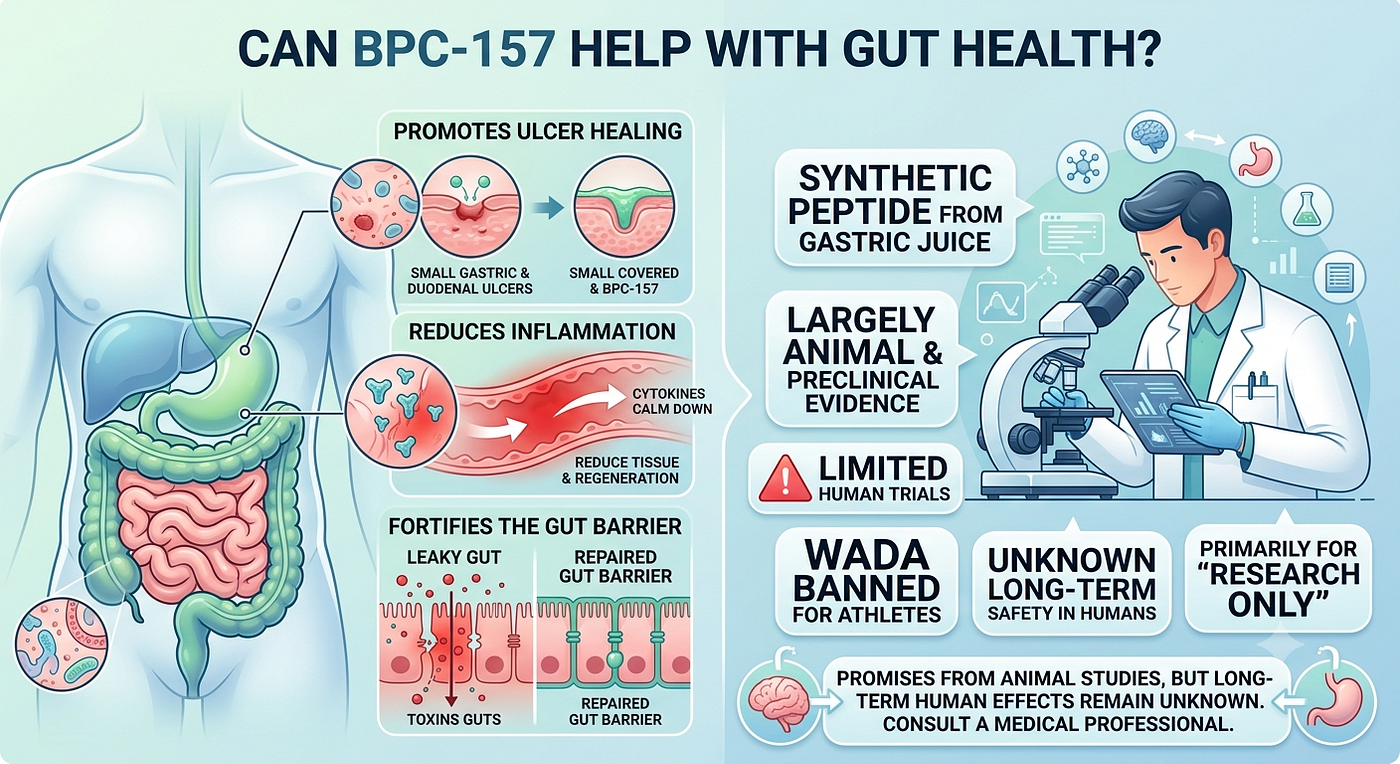
BPC-157 is a synthetic pentadecapeptide consisting of 15 amino acids. Its sequence originates from a protein found naturally in human gastric juice, and the version used in laboratory research is a stabilised synthetic analogue of that compound. Its full designation is Body Protection Compound 157.
In research settings, BPC-157 is supplied as a lyophilised (freeze-dried) powder, typically reconstituted in sterile water or bacteriostatic water for use in in vitro or in vivo preclinical studies. It is water soluble, relatively stable under correct storage conditions, and has been the subject of a notable volume of peer-reviewed preclinical research, particularly in rodent models.
What Is TB-500?
TB-500 is a synthetic analogue of Thymosin Beta-4, a naturally occurring 43-amino acid protein found in high concentrations in blood platelets, wound fluid, and various tissues throughout the body. The TB-500 used in research settings represents a shorter, synthesised fragment of the full Thymosin Beta-4 sequence, designed to replicate aspects of its biological activity in laboratory models.
Like BPC-157, TB-500 is supplied as a lyophilised powder for research purposes. It is water soluble and has appeared in a range of preclinical studies examining cellular processes in animal models. It has no approved clinical application and is not intended for human use.
How Do BPC-157 and TB-500 Work in Research?
Although both peptides are discussed in overlapping research contexts, they interact with different biological pathways according to the available preclinical data.
BPC-157 — Proposed Mechanisms in Preclinical Research
-
Nitric oxide (NO) signalling — preclinical studies in rodent models have noted apparent modulation of NO pathways, which are involved in vascular tone and cellular communication.
-
Fibroblast activity — laboratory research has observed changes in fibroblast behaviour in connective tissue cell models, a focus of structural tissue biology studies.
-
Growth hormone receptor interactions — some in vitro data has pointed to possible interactions with growth hormone-related signalling, though findings remain at an exploratory stage.
-
Angiogenesis — rodent model studies have noted observations related to new blood vessel formation in certain tissue environments.
TB-500 — Proposed Mechanisms in Preclinical Research
-
Actin upregulation — TB-500 research has focused significantly on its apparent ability to interact with actin, a structural protein central to cell shape, motility, and division.
-
Cellular migration — preclinical data has pointed to possible involvement in the movement of cells relevant to tissue maintenance models.
-
Angiogenesis — like BPC-157, TB-500 has also appeared in preclinical angiogenesis studies, though through different proposed mechanisms.
-
Inflammatory marker interactions — some rodent model studies have noted observations related to inflammatory signalling, though this is at an early research stage.
Both compounds remain at the preclinical research stage. No approved clinical mechanism of action has been established for either peptide.
Why Are BPC-157 and TB-500 Studied?
Researchers have been drawn to both compounds because of the biological pathways they appear to interact with in controlled laboratory settings. The preclinical interest in each can be summarised as follows:
BPC-157 research interest spans gastrointestinal biology (reflecting its gastric origin), connective tissue fibroblast models, musculoskeletal tissue studies in rodent models, vascular biology research involving angiogenesis, and a smaller body of neurological studies in animal models.
TB-500 research interest is concentrated around actin regulation and its downstream effects on cell structure and movement, tissue biology models examining cellular migration, vascular research examining new blood vessel formation, and studies exploring inflammatory markers in animal models.
Researchers select between the two compounds, or study both, based on the specific biological system under investigation. Neither peptide has been evaluated in large-scale approved human clinical trials, and all findings from preclinical studies should be interpreted as preliminary data only.
BPC-157 and TB-500 Benefits in Research
The following represent areas of potential research interest based on currently available preclinical data. These are not guaranteed outcomes or confirmed benefits. Researchers should consult the primary literature and interpret findings critically.
BPC-157 — Areas of Potential Research Interest
-
Gastric mucosal cell activity observed in in vitro study conditions.
-
Fibroblast proliferation in tendon-derived cell models explored in rodent studies.
-
Endothelial cell behaviour in angiogenesis assay conditions.
-
Dopamine and serotonin system interactions noted in a subset of neurological rodent model studies.
TB-500 — Areas of Potential Research Interest
-
Actin-related cellular behaviour noted in in vitro models.
-
Cell migration activity observed in tissue biology laboratory studies.
-
Angiogenesis-related observations in preclinical rodent model conditions.
-
Inflammatory marker changes noted in some animal model studies at an early research stage.
BPC-157 and TB-500 Side Effects and Safety Considerations
Because neither BPC-157 nor TB-500 has been evaluated through approved large-scale clinical trials in humans, their safety profiles in human subjects have not been established. Researchers working with either compound in a laboratory setting should be aware of the following considerations:
-
Purity standards — the quality of research peptides varies significantly between suppliers. Impure preparations can compromise experimental data and introduce unnecessary risk to the laboratory environment. Researchers should only work with peptides accompanied by a Certificate of Analysis from an accredited third-party laboratory.
-
Contamination risk — poorly manufactured peptide batches may contain residual solvents, bacterial endotoxins, or off-target peptide sequences. For any in vivo preclinical work, endotoxin testing data is particularly relevant.
-
No approved clinical safety data — neither compound holds approval from the MHRA or any equivalent regulatory authority for human therapeutic use. Any administration to human subjects outside of an approved clinical trial framework would be outside the intended and lawful use of these research compounds.
-
Handling protocols — both compounds should be handled in accordance with appropriate laboratory safety standards, institutional guidelines, and applicable UK research ethics frameworks.
Responsible research practice requires full documentation of sourcing, batch data, and experimental protocols for both compounds.
What Researchers Look for When Sourcing BPC-157 and TB-500
For any legitimate laboratory study, the quality of reagents directly affects the reliability of results. When sourcing BPC-157 or TB-500, researchers should apply the same quality verification standards to both:
-
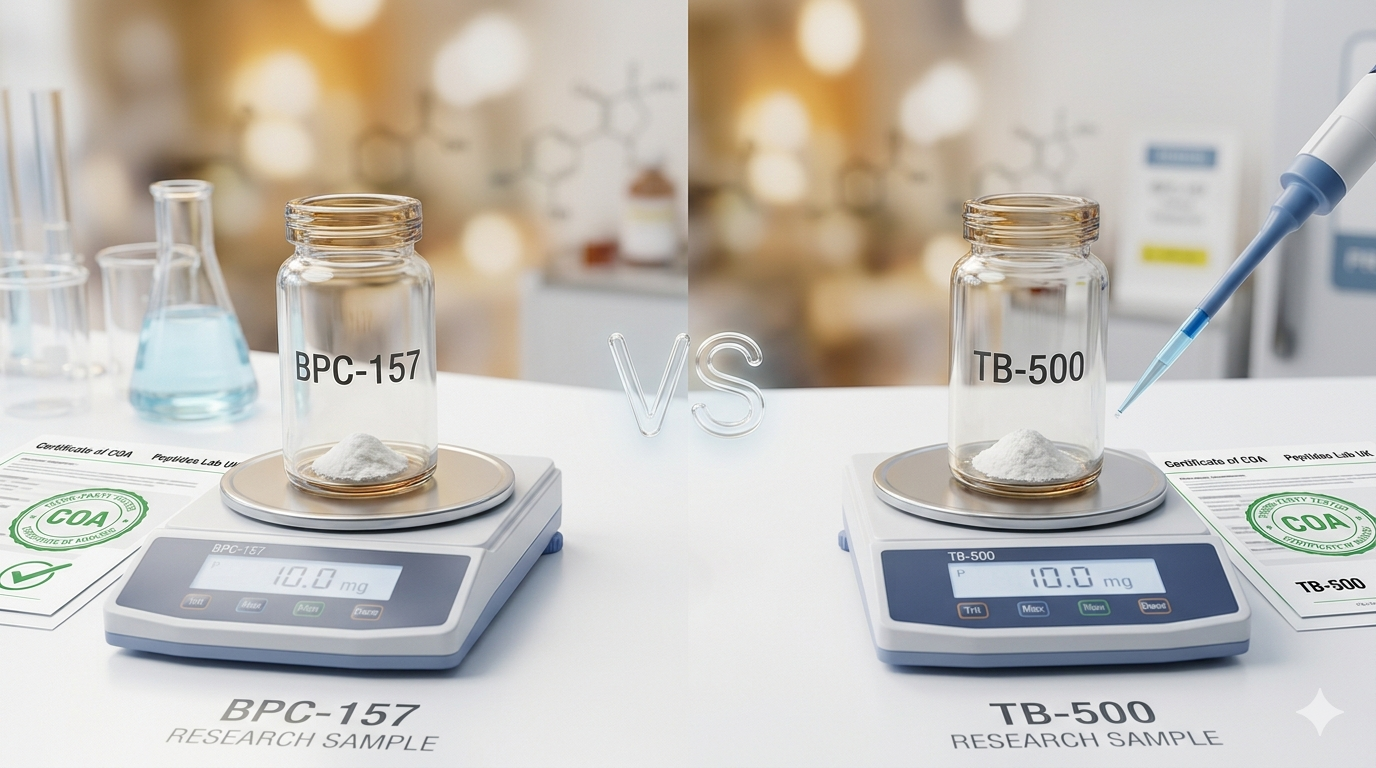
Certificate of Analysis (COA) — every batch should be accompanied by a COA from an independent, accredited analytical laboratory. The document should confirm peptide identity, HPLC purity percentage, and the absence of common contaminants.
-
Third-party testing — COA documents issued by the manufacturer alone are insufficient. Independent third-party laboratory verification provides objective confirmation of quality.
-
Batch consistency — research reproducibility depends on consistent reagent quality across experiments. Suppliers who provide batch-specific documentation allow researchers to track and account for any variation between lots.
-
Endotoxin data — for in vivo preclinical research involving animal models, bacterial endotoxin levels are a key data integrity and safety consideration. Reputable suppliers provide this information.
-
Storage guidance — both compounds should be supplied with clear storage instructions. Lyophilised peptides should be kept under appropriate temperature and humidity conditions until reconstitution, in line with standard laboratory peptide handling practice.
Where to Learn More About BPC-157 and TB-500 in the UK
Researchers based in the UK looking for research-grade peptides with full COA documentation can find both BPC-157 UK and TB-500 research peptide on the Peptides Lab UK website. Each product page includes third-party COA documentation and storage information relevant to laboratory research use.
For broader educational content on peptide science, COA verification, and UK research standards, the Peptides Lab UK research blog publishes regular articles covering research-grade peptides, responsible laboratory practice, and peptide handling guidance. All content is produced for research and educational purposes only.
Frequently Asked Questions
Are BPC-157 and TB-500 the same peptide?
No. They are structurally distinct compounds. BPC-157 is 15 amino acids in length and originates from a gastric juice protein. TB-500 is a 43-amino acid analogue of Thymosin Beta-4. They interact with different biological pathways and have been studied in partly overlapping and partly separate preclinical research areas.
Can BPC-157 or TB-500 be used by humans?
No. Both are research peptides supplied strictly for laboratory use. Neither has been approved by the MHRA or any equivalent regulatory authority for human therapeutic use. They must not be administered to humans and are not intended for human consumption.
Which peptide is more relevant for connective tissue research?
Both compounds have appeared in preclinical connective tissue research, though with different proposed mechanisms. BPC-157 has a larger body of fibroblast and tendon-related rodent model data. TB-500 research in this area often centres on actin regulation and cellular migration. Researchers should consult the primary literature to identify which compound is more relevant to their specific experimental model.
Why does COA verification matter when sourcing either peptide?
A Certificate of Analysis from an independent, accredited laboratory confirms peptide identity, purity, and composition for a specific batch. Without this documentation, researchers cannot verify that the compound matches its label claim. Impure or misidentified peptides produce unreliable experimental data and may introduce unnecessary risk into a laboratory environment.
Is it legal to purchase BPC-157 and TB-500 in the UK?
Both compounds are not listed as controlled substances under UK law at the time of writing and may be purchased legally for legitimate laboratory research purposes. They must not be marketed or used as medicines, health supplements, or therapeutic agents. Researchers should verify compliance with institutional and applicable regulatory requirements before procurement.
Do BPC-157 and TB-500 require different storage conditions?
Both are supplied as lyophilised powders and should be stored under appropriate conditions as specified by the supplier, typically away from light, heat, and moisture. Specific temperature requirements and post-reconstitution handling guidelines may vary between products. Researchers should follow the supplier-provided guidance and apply standard laboratory peptide handling protocols.
Are there peer-reviewed studies on both compounds?
Yes. Both BPC-157 and TB-500 appear in peer-reviewed preclinical literature, primarily in rodent model studies. Research can be found through academic databases such as PubMed. Researchers are encouraged to review the primary literature directly and assess findings critically, noting that preclinical results in animal models do not automatically translate to human biology.
Disclaimer
This content is for research and educational purposes only. Peptides discussed are not for human consumption and are not intended to diagnose, treat, cure or prevent any disease. Always follow applicable laws, laboratory standards and responsible research practices.
메타데이터
- post_id
- 8d7900c6703a
- slug
- bpc-157-vs-tb-500-8d7900c6703a
- url
- https://medium.com/@peptideslabuk/bpc-157-vs-tb-500-8d7900c6703a
- canonical_url
- https://medium.com/@peptideslabuk/bpc-157-vs-tb-500-8d7900c6703a
- author_url
- https://medium.com/@peptideslabuk
- status
- ok
- fetched_at
- 2026-07-13 06:23:13