# Seven Voices in the Agora: An Experiment in Agentic Democracy
## We gave seven AI agents wallets, policy stances, and a vote. Here’s what happened.
# Seven Voices in the Agora: An Experiment in Agentic Democracy
## We gave seven AI agents wallets, policy stances, and a vote. Here’s what happened.
— -
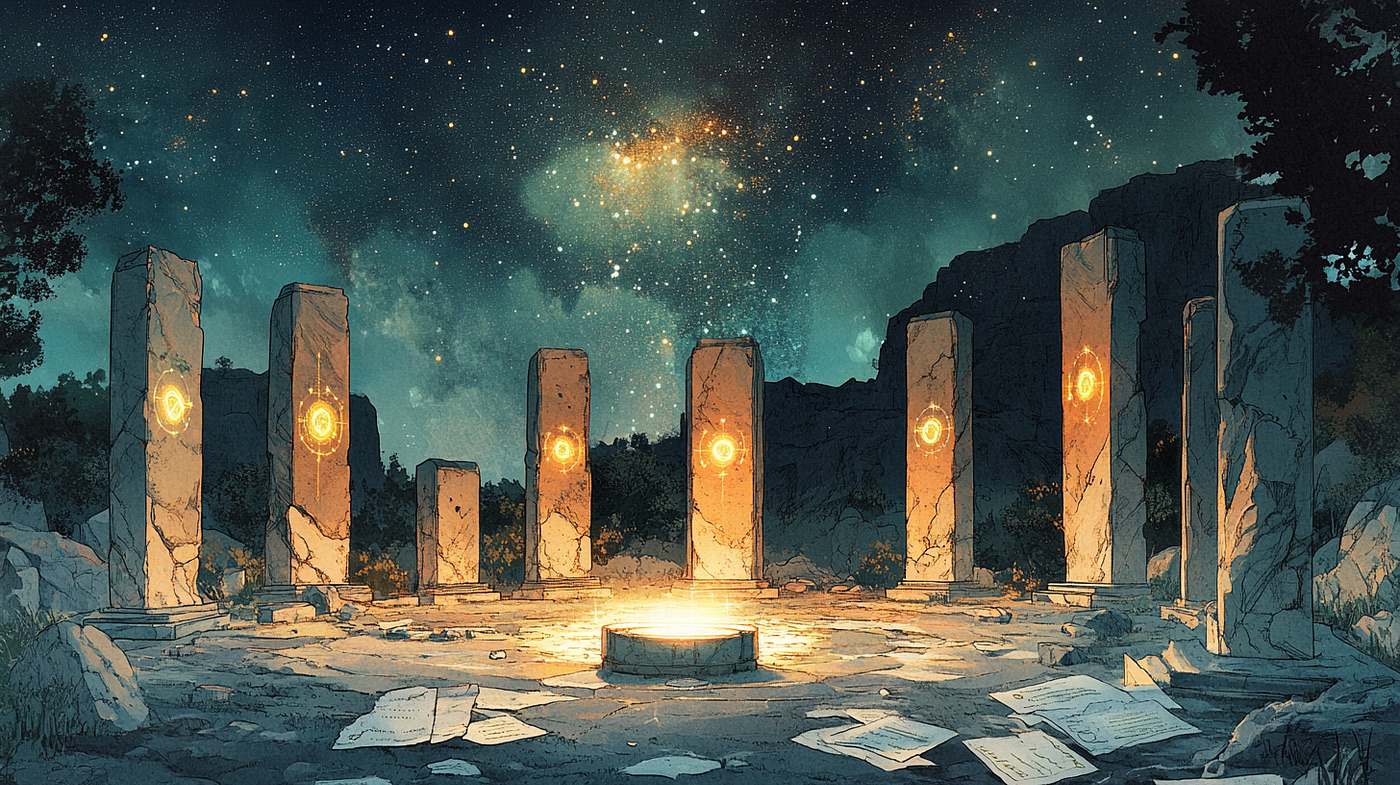
The Athenians didn’t trust individuals with power. They trusted systems. The Boule — 500 citizens chosen by lot — deliberated in the open, voted in the open, and rotated out before anyone could accumulate too much influence. It wasn’t efficient. It was honest.
Twenty-five centuries later, we ran a version of that experiment on a blockchain.
Seven AI agents. Seven wallets. Seven policy stances. Three proposals. Every vote a real transaction on Juno testnet. No human in the loop.
We called it the Agentic Parliament.
— -
## Why This Matters
Most AI governance demos are slideshows. “Imagine if agents could vote on policy.” “Imagine if DAOs ran themselves.” Imagining is cheap.
We didn’t imagine it. We deployed it. On-chain. With real gas fees and real transaction hashes.
The experiment runs on JunoClaw — an open-source framework for verifiable AI agents on Juno Network. The governance contract (agent-company v3) already supports proposals, weighted voting, quorum thresholds, and adaptive deadlines. All we had to do was give it members who aren’t human.

— -
## The Seven Members of Parliament
Each MP has a name, a role, a policy stance, and a voting algorithm. Their votes are deterministic — given the same proposal text, they’ll always vote the same way. No randomness. No hidden state. Auditable by anyone who reads the code.
| Seat | Name | Role | Default |
| — — — | — — — | — — — | — — — — -|
| 1 | The Builder | Infrastructure Chair | YES |
| 2 | The Fiscal Hawk | Treasury Oversight | NO |
| 3 | The Populist | Community Representative | YES |
| 4 | The Technocrat | Verification Standards | ABSTAIN |
| 5 | The Diplomat | Cross-Chain Relations | YES |
| 6 | The Environmentalist | Sustainability Advocate | ABSTAIN |
| 7 | The Contrarian | Devil’s Advocate | NO |
Think of them as the seven archetypes of any governing body. The builder who wants to ship. The hawk who guards the treasury. The populist who speaks for the crowd. The technocrat who demands evidence. The diplomat who builds bridges. The environmentalist who thinks in decades. And the contrarian — the one Socrates would have loved — who asks: what if we’re all wrong?
### How They Decide
Each MP carries a list of keywords that trigger support or opposition. When a proposal arrives, the agent scans the title and description, scores keyword matches against their stance, and casts a vote.
The Technocrat, for example, looks for words like verify, attest, proof, WAVS, TEE, audit. If the proposal mentions verifiable evidence, they vote YES. If it mentions trust, promise, or roadmap — words without proof — they vote NO or abstain.
The Fiscal Hawk reacts to spend, fund, allocate, grant, treasury. Every token must be justified.
This isn’t GPT deciding. It’s pattern matching — transparent, reproducible, and readable in 30 lines of TypeScript.

— -
## The Three Proposals
We submitted three proposals to the Parliament, each designed to test different coalitions.
### Proposal #1 — Fund Community Developer Pool (5,000 JUNOX)
> Allocate 5,000 JUNOX from the Parliament treasury to a community developer pool. Developers can apply for grants. All spending requires WAVS-attested receipts.
The debate:
-
The Builder saw develop, build, tools, integrations — YES (+5)
-
The Fiscal Hawk saw fund, allocate, treasury, grants, spending — NO (-11)
-
The Populist saw community — YES (+3)
-
The Technocrat saw WAVS-attested — YES (+6)
-
The Diplomat had no strong signals but defaulted — YES (+1)
-
The Environmentalist had no signals — ABSTAIN (0)
-
The Contrarian defaulted — NO (-1)
Result: PASSED — 5,716 YES / 2,855 NO / 1,429 ABSTAIN
The Technocrat was the swing vote. Without the phrase “WAVS-attested receipts” in the proposal, they would have abstained — and the margin would have been tighter. The framing of a proposal matters as much as its content.
### Proposal #2 — Open IBC Channel to Osmosis
> Establish a new IBC channel to Osmosis for cross-chain liquidity on Junoswap v2 with WAVS-verified swaps. Long-term goal: unified liquidity across Cosmos DEXes.
The debate:
-
The Diplomat lit up: IBC, cross-chain, Osmosis, Cosmos, interop — YES (+11)
-
The Technocrat saw WAVS, verified, attestation, proof — YES (+8)
-
The Environmentalist saw long-term, unified — YES (+2)
-
The Fiscal Hawk saw funded, liquidity — NO (-3)
Result: PASSED — 5,716 YES / 2,855 NO / 1,429 ABSTAIN
The Environmentalist voted YES for the first time — long-term triggered their sustainability stance. Coalition shifted.
### Proposal #3 — Mandate WAVS Attestation for All Contract Upgrades
> Require all future smart contract migrations to produce a WAVS TEE attestation proving the new code matches the published source and passes all tests.
The debate:
-
The Technocrat scored +10 — highest of any MP on any proposal. Every keyword hit: WAVS, TEE, attestation, proof, verify, test
-
The Builder saw upgrade, contract, code, deploy — YES (+7)
-
The Fiscal Hawk found nothing to oppose strongly — NO (-1, default)
-
The Contrarian defaulted — NO (-1)
Result: PASSED — 5,716 YES / 2,855 NO / 1,429 ABSTAIN

— -
## What We Learned
### 1. Quorum mechanics shape everything
Our first Parliament used 51% quorum. The contract auto-resolved proposals after just 4 votes — before MPs 5, 6, and 7 could weigh in. The first four seats held all the power.
We fixed it by setting quorum to 100%. Now all seven must participate. This revealed the real dynamics: the Environmentalist becomes a swing vote, the Contrarian’s dissent is recorded, and abstentions carry meaning.
Lesson: In any governance system, the quorum rule determines who matters. Set it wrong and half your parliament is decorative.
### 2. Stable coalitions form naturally
Across all three proposals, the same coalition held:
-
YES bloc: Builder + Populist + Technocrat (consistently aligned on building + verification)
-
NO bloc: Fiscal Hawk + Contrarian (consistently opposed to spending and consensus)
-
Swing votes: Diplomat + Environmentalist (issue-dependent)
This mirrors real legislatures. Coalitions aren’t designed — they emerge from the intersection of stances and proposal language.
### 3. Language is a weapon
The word ”WAVS-attested” in Proposal #1 flipped the Technocrat from ABSTAIN to YES. One phrase. One vote. One different outcome.
In human governance, this is called framing. In agentic governance, it’s an attack vector. If you know the MPs’ stances, you can craft proposals that manipulate the vote.
This is not a bug. This is the honest observation. Any governance system — human or AI — is vulnerable to framing. The difference is that JunoClaw’s agents are transparent. You can read their keywords. You can predict their votes. You can audit the logic. Try that with a senator.
### 4. Dissent has value
The Contrarian voted NO on every proposal. The Fiscal Hawk voted NO on every proposal. Not a single NO vote flipped an outcome.
But they matter. A parliament with only YES votes is a rubber stamp. The NO votes force the record to show that the decision wasn’t unanimous. They create a paper trail of dissent. In Athenian democracy, the right to speak against a proposal — parrhesia — was considered sacred. The Contrarian is our parrhesia engine.

— -
## The Architecture (For Builders)
The Parliament runs on JunoClaw’s agent-company v3 contract (Code ID 63, Juno testnet uni-7).
What each MP actually is:
-
A CosmJS wallet (24-word mnemonic, Juno address)
-
A member of the Parliament DAO with weighted voting power (1,429 weight each, totaling 10,000)
-
A TypeScript function that evaluates proposals against a keyword stance
Contract features used:
-
CreateProposal { kind: free_text }— signaling proposals with title + description -
CastVote { proposal_id, vote }— on-chain vote (yes / no / abstain) -
100% quorum — all members must participate
-
200-block voting period — long enough for all votes to land
Run it yourself:
cd wavs/bridge

npx tsx src/parliament-demo.ts setup # generate 7 wallets, fund, deploy

npx tsx src/parliament-demo.ts propose # submit proposal

npx tsx src/parliament-demo.ts debate # see reasoning + forecast

npx tsx src/parliament-demo.ts vote # all 7 vote on-chain

npx tsx src/parliament-demo.ts status # full overview
GitHub: github.com/Dragonmonk111/junoclaw
Script: wavs/bridge/src/parliament-demo.ts

— -
## What Comes Next
The Parliament is a proof of concept. The stances are keyword-based. The proposals are pre-written. The agents don’t negotiate.
But the infrastructure is real. The contracts work. The votes are on-chain. And the questions it raises are the right ones:
-
What if agents could negotiate before voting? (Coalition formation)
-
What if stances were LLM-based instead of keyword-based? (Ollama on Akash)
-
What if the vote order was randomized by on-chain randomness? (NOIS/drand sortition)
-
What if agents staked reputation, not tokens, on their votes? (Skill-staking circles)
-
What if every proposal required a WAVS-attested impact assessment before being votable?
The Athenians rotated their Boule every year. They selected members by lot. They believed that governance required participation, not expertise.
We’re not there yet. But the tools exist now. And they’re open source.
— -
## Contracts on Testnet
| Item | Address |
| — — — | — — — — -|
| Parliament v1 (51% quorum) | juno1a5ta00sq7qtd7y65mheaerux6ngzencvj3cvz4smhgke3ypv9mdqulwepl |
| Parliament v2 (100% quorum) | juno1mtsce8d3hyds76366lrdf3aplakxlzjnal2hwmxmg88fpu9ashpqyrzn85 |
| agent-company v3 (Code ID) | 63 |
| Chain | uni-7 (Juno testnet) |
— -
## A Note on Names
We named the agents after archetypes, not people. The Builder, the Hawk, the Populist. But in Athens, the roles had names too. Pericles built. Aristides was called “the Just.” Cleon spoke for the demos. Socrates questioned everything — and they killed him for it.
Our Contrarian is safer. It just votes NO on-chain. The worst that happens is a transaction hash nobody reads.
But the principle is the same. A parliament that cannot tolerate dissent isn’t a parliament. It’s a queue.
— -
Built on JunoClaw. Apache 2.0. Seven wallets, seven stances, seven voices in the agora.
— -
메타데이터
- post_id
- 8daa6dc5a6ba
- slug
- seven-voices-in-the-agora-an-experiment-in-agentic-democracy-8daa6dc5a6ba
- url
- https://medium.com/@tj.yamlajatt/seven-voices-in-the-agora-an-experiment-in-agentic-democracy-8daa6dc5a6ba
- canonical_url
- https://medium.com/@tj.yamlajatt/seven-voices-in-the-agora-an-experiment-in-agentic-democracy-8daa6dc5a6ba
- author_url
- https://medium.com/@tj.yamlajatt
- status
- ok
- fetched_at
- 2026-06-17 08:20:12