The Sound You Didn’t Know You Were Listening For
How the universe learned to hum — and how we’re finally learning to hear it think.
Cosmic Acoustics
The Sound You Didn’t Know You Were Listening For
How the universe learned to hum — and how we’re finally learning to hear it think.

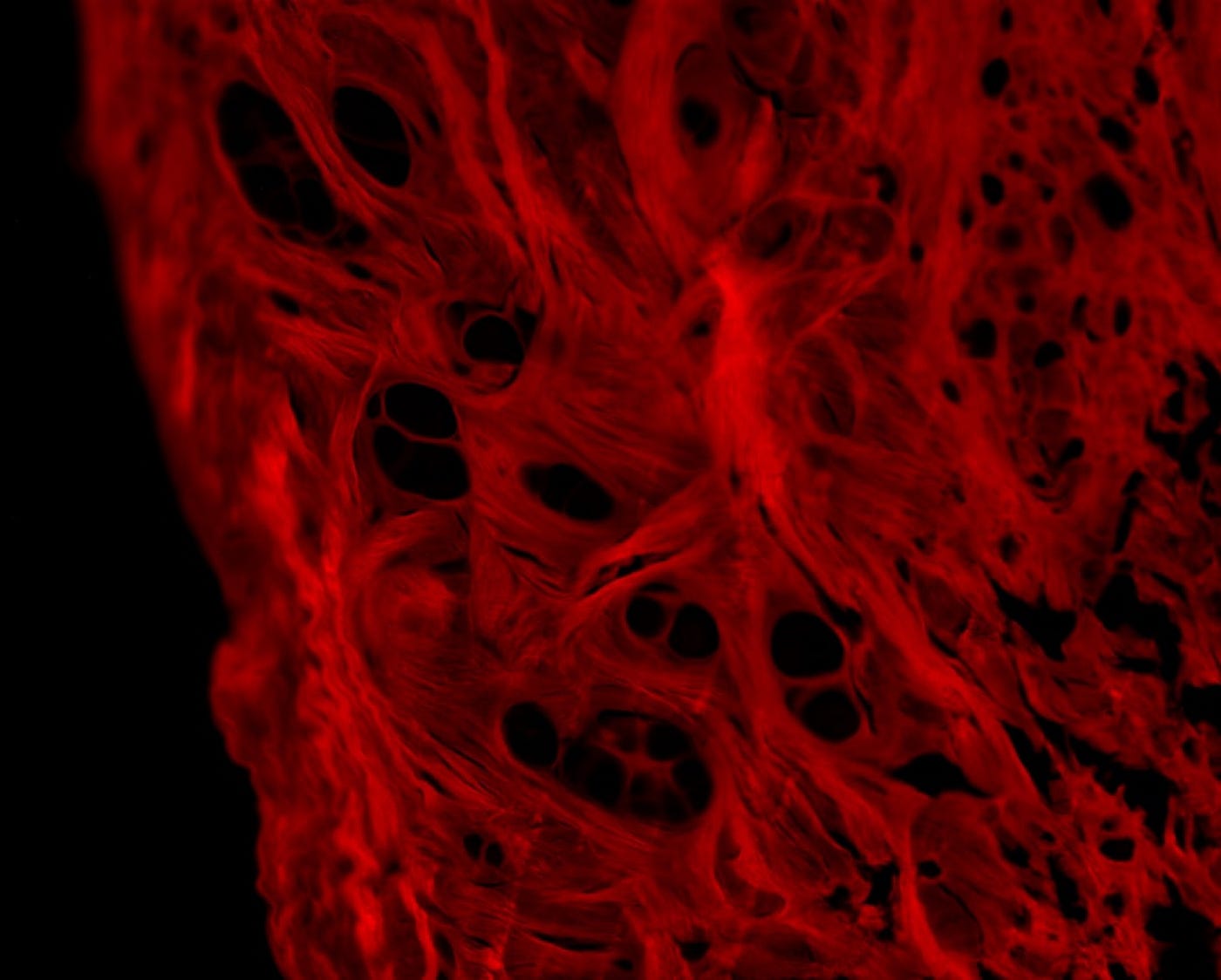
Photo by Daniele Levis Pelusi on Unsplash | Space-time ripples not as chaotic noise, but as a structured, low-frequency “hum” that represents the baseline coherence of the universal substrate.
“I’m gonna live ’til I die.” — Frank Sinatra
For most of human history, gravity was silent. Not metaphorically silent. Literally mute. Mum. We knew that it bent light, shaped galaxies — literally stitched the cosmos together with invisible authority. But never once, to our knowledge, did it make a sound.
Then, roughly a decade ago, we learned that the universe hums.
It hums not with notes you could whistle, but with spacetime itself — stretching and compressing, rhythmically, percussively, like a cosmic breathing you never noticed because you were standing inside of it. Gravitational waves arrived not as a bang, but as a faint whisper — a confirmation that Einstein had left us a message within the geometry of reality, and we had finally built an ear sensitive enough to hear it.
But what we heard first was only the high-pitched chatter: stellar-mass black holes colliding in the final seconds of their lives. These were quick events. Violent ones. The astrophysical equivalent of cymbals crashing in a dark orchestral pit.
The new story is different. This one, like Ravel, is a Bolero.
[embed]Credit: Spotify | M. Ravel’s Bolero
The Long, Slow Spiral
Somewhere at the center of a distant galaxy, two supermassive black holes are circling one another in a cosmic dance. Not crashing. Not screaming. Just orbiting.
Each is millions or billions of times the mass of our Sun. Each bends spacetime so deeply that stars obey them like iron filings around a magnet. And yet, their dance is almost leisurely by cosmic standards. One orbit can take years. Sometimes, centuries. Sometimes longer than human civilization has existed.
As they spiral inward, they do not produce the sharp chirps detected by ground-based observatories. They emit something subtler: gravitational waves so low in frequency that a single oscillation can take years to complete.
For a long time, we didn’t know how to listen to waves that slow.
Now we do.

A Clock That Refused to Lie
The mechanism to capture these notes turned out to be elegant and fitting: use dead stars as clocks.
Pulsars — rapidly spinning neutron stars — emit radio pulses with astonishing regularity. Some rival atomic clocks in their precision. When a gravitational wave passes between Earth and a pulsar, it stretches the fabric of spacetime itself, nudging the arrival time of those pulses by a fraction of a fraction of a second.
Individually, those deviations are meaningless. Collectively, across dozens of pulsars scattered throughout the galaxy, they begin to sing in unison.
What emerges is not a single event, but a background — a gravitational murmur produced by countless supermassive black hole binaries spread throughout the universe.
For years, this background was detected as a statistical presence; A cosmic hiss. It was evidence of something that was enormous and slow — happening everywhere, all the time.
Only now are we beginning to resolve the hiss into sources.
When the Fog Starts Naming Shapes
The new detection framework does something subtle. It doesn’t chase explosions. It waits for persistence.
[embed]Credit: LIGO on X
By combining pulsar timing data with electromagnetic observations — particularly the flickering behavior of quasars — it becomes possible to associate specific gravitational signals with specific galactic centers.
The universe stops being a uniform blur of mergers and starts revealing individual systems in motion.
This is not a simple technical improvement. We are moving from gravitational wave weather to gravitational wave geography. A level of complexity up.
The universe is no longer just noisy. Now it has form. Structure.
[embed]GiF | Credit: Tenor | Gravitational Waves
Suspicion Falls on the Usual Suspects
Quasars — those impossibly bright galactic nuclei powered by accreting supermassive black holes — have long been astrophysical enigmas. Now they are becoming accomplices in our scientific pursuits.
Some quasars flicker with peculiar regularity. Others show long-term variability that refuses to fit simple accretion models. When those rhythms line up with the gravitational wave background, something remarkable happens: light and spacetime begin telling the same story.
This doesn’t mean every quasar hides a binary black hole. But it does mean that the universe can leave fingerprints across multiple channels. We are now, finally learning how to compare them. And so for the first time, gravitational waves aren’t just confirming theory. They’re pointing us in meaningful directions.
The Danger of Listening Too Fast
There is a temptation to treat this as just another confirmation of Einstein. Another box checked. Another prediction verified.
But that would be a failure of ambition.
What’s unfolding here is not a test of general relativity — at least not primarily. It’s the birth of a new observational regime. A regime where time itself becomes the detector. Where persistence matters. Where slow curvature outranks sudden violence.
This is how deep structure reveals itself. Reluctantly. Only after you’ve learned to wait.
The Orchestra Beneath the Noise
If early gravitational wave detections were like hearing thunder for the first time, this new phase is closer to realizing that thunder has harmony.
There are rhythms in the universe that unfold over millennia. There are conversations between galaxies conducted in spacetime strain. There are mergers so slow that they shape cosmic history without ever proclaming themselves.
What Comes After the Hum
As space-based observatories come online and pulsar timing arrays grow more sensitive, the low-frequency gravitational universe will sharpen further. Individual supermassive binaries will be tracked over time. Their orbital decay will be measured. Their environments will be studied. Their role in galaxy evolution will move from speculation to observation.
And somewhere in that slow music, new physics may appear — not because Einstein was wrong, but because the universe is more patient than our experiments used to be.
Gravity was never silent.
Thank you for making it this far! If you enjoyed this dive, feed the hungry algorithms — clap, highlight, or subscribe.
Visit the *MASb* Shop**
ORCID: 0009-0006-5567-7061
Topics to Follow on Medium
LIGO | CERN | Cosmic Microwave Background | Cosmic Gravitation Background | Cosmology | Space | Technology | Science | Physics | Quantum Mechanics | Geometry | Experiment | Structure | Time
메타데이터
- post_id
- 8dba7ed7931d
- slug
- the-sound-you-didnt-know-you-were-listening-for-8dba7ed7931d
- url
- https://medium.com/@joseph.e.julian/the-sound-you-didnt-know-you-were-listening-for-8dba7ed7931d
- canonical_url
- https://medium.com/@joseph.e.julian/the-sound-you-didnt-know-you-were-listening-for-8dba7ed7931d
- author_url
- https://medium.com/@joseph.e.julian
- status
- ok
- fetched_at
- 2026-06-18 07:02:39