He Told the Doctor “I’m Having Homicidal Thoughts” — We Were Sent Home
The most frightening part of our mental health crisis was learning nobody really knew what to do next
He Told the Doctor “I’m Having Homicidal Thoughts” — We Were Sent Home
The most frightening part of our mental health crisis was learning nobody really knew what to do next

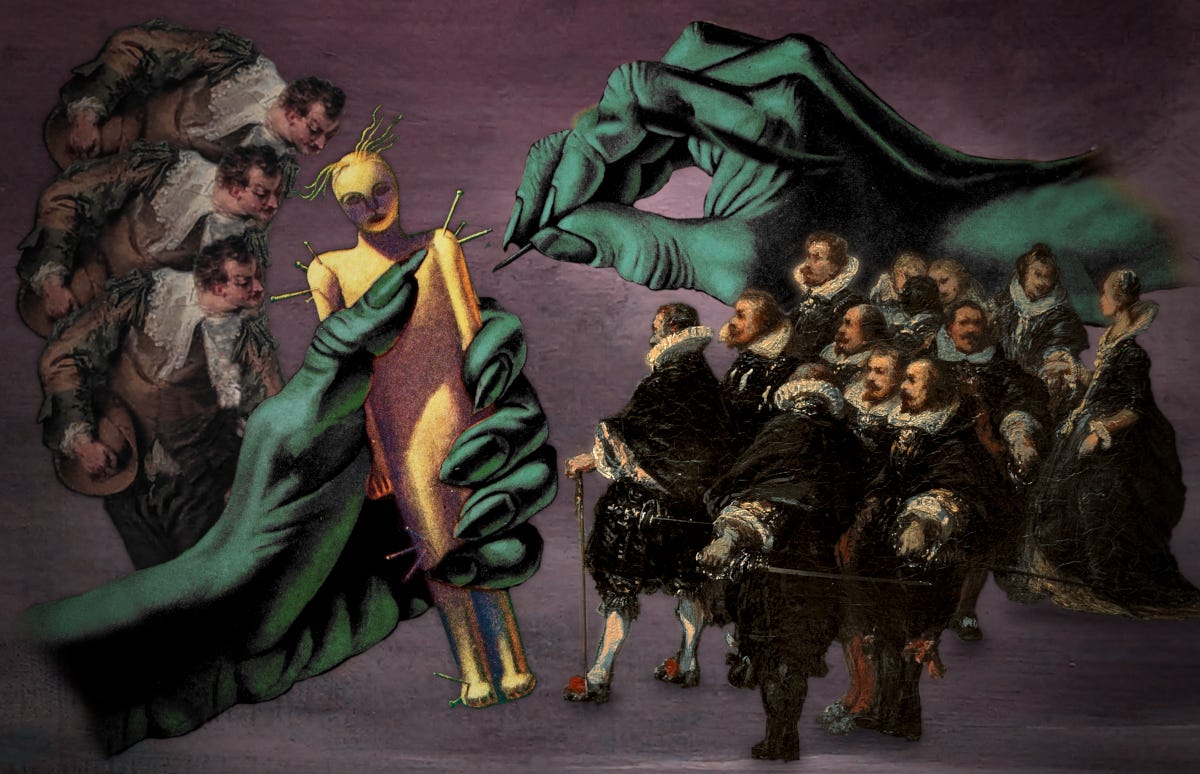
Street art photographed in Reus, Spain (story shared with the express editorial consent of my partner) | Image © Paradis Media llc
I stared ahead at the doctor and listened to my partner of 13-years say the words, “I’ve been having homicidal thoughts.”
The words and thoughts were terrifying, dangerous, and not my own.
Afterward, he cried uncontrollably in the chair next to me. The young, yet-to-be-experienced GP, our first point of contact required for any and all health referrals, looked at me as if he wanted my help. But what I desperately needed was his.
I was looking for any show of confidence that would demonstrate that he knew exactly how to answer the only question that was swirling in my head, “Now what?”
Instead, he shifted uncomfortably in his chair and struck the keys of the desktop in front of him. He looked up at me and asked, “And, what do you see with his behavior?”
What I’d seen was an ever-increasing level of disorganization in thought and action. Our once relatively normal life held little resemblance to what we were facing on that day. For the past three years, we’d been on a downward spiral, and about a year prior, I’d believed we’d hit rock bottom. Apparently, I was wrong.
I feared that the man sitting next to me seemed to be losing his grip on reality. These days, he never left home without a camera slung around his neck to document anything “out of the ordinary.” I wasn’t even sure if he and I shared the same definition of ordinary anymore.
I did my best to detail the slow change from something else to this. I explained real, major stressors in our lives.
It was true we’d been illegally evicted. It was true that over half of our belongings, many essential and becoming more and more essential by the day, were locked in a flat that we’d had legal permission to move into. It was true that the locks had been changed on us, that we had a case moving through the court, and that the other guy’s case was beyond flimsy.
My partner had been in good with his boss, who was also meant to be our new landlord specifically to solve the problem of our current “bad landlord.” But just when all was looking up, another man came on the scene. He was to be our new neighbor in the new building.
The truth is, I’d seen him around and gotten a very bad feeling about him. In fact, after my first brief meeting with him, in the middle of the grocery store no less, I actually said out loud, “I don’t like that guy,” but all I could chalk it up to was “an energy about him.”
In less than two months of that meeting, this man would tell a single bad-faith lie, and snap the first strand of our housing, employment, and immigration trifecta, and once that snapped, all three failed in sequence.
But, while all of that was true, something had shifted from normal to not, and the whole scenario was now entangled with behavior that seemed alarming. What followed that chain of events was bigger than just loss; it was total destabilization. Identity, trust, community, and security — gone.
Now his life suddenly was overcome with constant trips across town to case the flat where our belongings were locked away, checking the locks everywhere multiple times a day, and all-too-frequent beliefs that our life would be better off if he “could just wring that fat fucker’s neck with his bare hands and watch the life drain out of him.”
I confirmed to the doctor that it seemed apparent that he was fantasizing with increasing intensity and organization about committing violent acts. The above wasn’t just a one-off statement said in passing anger.
There was rumination and detailing of plans, “They haven’t even changed the office lock. I could just walk right in, bar the door, and they’d have nowhere to run. They’re just sitting ducks in there.” I could feel myself becoming more and more alarmed, while also sort of switching into survival mode, doing everything I could to turn the volume down on the warning bell.
My partner had proximity and access to the houses of all the people involved. “Since they’re out here saying I’m this and I’m that, why haven’t they changed all the locks? They know I still have all the keys. They’re saying I can’t be trusted, so why are they still trusting me? Doesn’t that seem inconsistent? Don’t they know what I could do to them? Can’t you see what I’m telling you?” And these questions weren’t asked as if he was actually looking for an answer.
The thoughts seemed consumptive and almost beyond his control. I became a broken record, repeatedly and consistently saying, “Please stop speaking like that. Violence won’t help us. We just need to find the right someone who can help us get our stuff back.”
I understood his desperation. I was there myself. We’d already been to the police — multiple divisions, multiple times. We’d been to the court, the court for minors, the public defenders, two private lawyers, social services, and the peace judge. But I still couldn’t make sense of his thinking. Escalating things would only make things worse.
That morning — things had escalated. He’d used the key that he still had to enter the office. Thankfully, no one was there, and I’ll never know what he might have done. What I know was that he was completely enraged, screaming maniacally, and when I’d asked him his intent he’d said, “To get our shit back using any means necessary.”
I watched the doctor sort of freeze up before telling us that this was “out of his competency.” And instead of an immediate referral for a psych eval or putting us in contact with any mental health supports, he simply said, “I’ll refer you up the chain.”
I defaulted to politeness, and walked out of the office. Stunned and completely dejected.
That was November 7, 2025. A few days after that appointment, we got a text that informed us that the appointment with a competent psychiatrist would be in April 2026.
Too unwell to be fine, not unwell enough for action
I think we’d all like to believe that when mental illness crosses over from internal suffering to potential danger, there’s a place for people to actually go and get the help they need. Someone, some professional, who knows what to do in these types of circumstances.
I’m afraid those beliefs are mostly just a comforting fiction.
That day started me off on a journey of learning just how unhelpful the Spanish mental health services really are, and I know that this is not a problem exclusive to here.
Every cop who’s “intervened” to assist me and him in subsequent episodes of rage, property destruction, and suicidal threats has told me, “Yes, it’s clear he’s unwell, but there’s not much we can do.”
Here, there’s no such thing as a psychiatric hold. If he’s threatened suicide they’ll take him to the hospital and essentially “clear him.” I have no idea what that really means from a mental health perspective.
What it means for me functionally is that a man who is mentally unwell and unstable is on his way back home. We might get a good hour and a half lead time before he arrives if he’s got to walk the entire 5km, or less than that if he can manage to hitch a ride.
He now has a team of multiple mental health professionals that he’s been seeing since April. There’s no official diagnosis, just a recognition that he’s not well. To add to it, we’ve thrown an SSRI and Valium into his system without having any idea if they’ll help or not. After a couple of months, I have my doubts.
He meets his therapist for 45 minutes every three weeks or so, but when he left his last appointment, the next one was scheduled for nearly two months out. The care is not consistent enough, and his behavior remains erratic. There are good days, bad days, and days I wish I could just wipe from my memory entirely.
I’m sat on the sidelines feeling responsible for our daughters. Feeling responsible for myself. Feeling responsible for him. It’s like no one really understands what’s happening. They’re not living beside the paranoia and the suspicion that can become so all consuming and overwhelming that it explodes in rage.
Though assigning blame might feel comforting, mental health challenges naturally become a problem for the whole family. I’m also dealing with all of the same stressors as him — plus him — and that keeps me returning to the same question I was stuck on in that first meeting, “Now what?”
I’ve spent the entire year untangling all the overlapping knots between his employment, our family housing, our immigration status, and his mental health. I’ve invested more time and money than I care to even acknowledge to myself.
That November morning when we found ourselves in front of the doctor, the abstract fear of “what might happen” felt very real. We chose not to omit the recurring violent thoughts. We’d told the truth of where we were. I’d explained his family’s extensive mental health history, and that I was worried for him.
I said plainly that it was out of control, and that we were in territory that went beyond something I could manage alone. I feel like I got little more than a shrug emoji and a referral.
No emergency intervention could be enacted without immediate violence.
That evening, he broke down repeatedly, and I sat with an overwhelming sense of worry, somehow feeling like I was failing him.
We know the warning signs, now what?
Just about a month later, Rob and Michele Reiner met the fate they met, and as reluctant as I am to write this, I feel like even though we know this gap exists, we continue to refuse to look at it. It’s this tiny little microspace, a sliver smack dab in the middle of a serious mental health crisis and violence that there’s no turning back from.
I’ve always held the case of James Holmes and the tragedy he caused in a very dichotomous space.
He was unwell. He knew he was unwell. He told clinicians that he was unwell. But none of that mattered. Even when warning signs are recognized, the tools available to everyone are often limited, and can’t prevent the cascade from deteriorating mental health to violence, destruction, and death.
His is a case that makes me sad from every angle. It makes me sad that the loss of life wasn’t prevented. It makes me sad to think of a public that would make a monster out of a man who was in a highly vulnerable state. When it’s said that he downplayed the severity of his symptoms, it makes me sad that people believed him capable of advocating on his own behalf. By its very nature, mental illness doesn’t lend itself to personal advocacy.
This gap clearly exists.
HBO documentary [The Dangerous Son](http://HBO documentary The Dangerous Son) explored exactly this by following families who have children that exhibit severe violent ideation. These aren’t parents in denial. They’re vigilant, terrified, and proactive. Again and again they encounter the same truth. There’s nowhere to take someone who is dangerous but not yet “dangerous enough.”
The film also featured Liza Long, author of the viral article “I Am Adam Lanza’s Mother.” The title was deliberately incendiary, and rightly so. Her point was not that her child would commit a massacre like Lanza, but that the profiles are visible well before the headlines. She was pointing out that she was a parent who’d been screaming into a system that only reacts after bloodshed.
The tragedies always elicit the same refrain, “Why didn’t anyone do anything?”
Why aren’t we asking, “What, exactly, can they do?”
Because if you enter the doctor’s appointment thinking, “Now what?” and you leave the doctor’s appointment thinking, “Now what?” you’ve got serious problems.
Where some mental health is concerned, there’s a vast and dangerous middle — insight is alive, violence is feared but not inevitable, and families are trying to intervene before the other side is reached.
I don’t have the answers. I just think we have enough evidence to know that our systems are fail deadly. It’s like we’re waiting for certainty, but certainty where mental illness is concerned, might just show up as irreversible harm.
After what I’ve been living through for many months now, I’ve been forced to ask, what good is watching for warning signs when there’s no actionable steps or meaningful help available when those signs appear?
The only thing I know is that staying silent is not protective. I know that there are other people right now who know something is terribly wrong. They’re sitting beside someone they love calculating risk, absorbing the fallout, and being told — explicitly or implicitly — that unless and until disaster strikes, there’s really nothing to be done.
And the truth is, I keep looking at my partner and knowing that it’s not easy to live inside him, and it’s not easy to live beside him either.
*Tip Jar | Subscribe | Substack*
For more stories about mental health, caregiving, and the way systems fail vulnerable people when they need help most, follow Fourth Wave. Also check out our Livestreams and sign up for our Newsletter. Let’s grow the community! Have you got a story or poem that focuses on women or other targeted groups? Submit to the Wave!
메타데이터
- post_id
- 8dca8a7f0b58
- slug
- he-told-the-doctor-im-having-homicidal-thoughts-we-were-sent-home-8dca8a7f0b58
- url
- https://medium.com/fourth-wave/he-told-the-doctor-im-having-homicidal-thoughts-we-were-sent-home-8dca8a7f0b58
- canonical_url
- https://medium.com/fourth-wave/he-told-the-doctor-im-having-homicidal-thoughts-we-were-sent-home-8dca8a7f0b58
- author_url
- https://medium.com/@abby.paradis
- status
- ok
- fetched_at
- 2026-06-22 19:40:15