1990s Mazda Cars: Stylish and Reliable
The 1990s were a transformative decade for Mazda, a period when the Japanese automaker carved out a unique identity with cars that blended…
1990s Mazda Cars: Stylish and Reliable
The 1990s were a transformative decade for Mazda, a period when the Japanese automaker carved out a unique identity with cars that blended style, reliability, and an unmistakable passion for driving. While competitors like Toyota and Honda focused on mass-market appeal, Mazda took a different path, emphasizing lightweight designs, innovative engineering, and a driver-centric experience. From the iconic MX-5 Miata to the rotary-powered RX-7, Mazda’s 1990s lineup left a lasting legacy that still resonates with car enthusiasts today. This article explores the standout models, Mazda’s engineering philosophy, and why these vehicles remain cherished classics.
Mazda’s Rise in the 1990s
Entering the 1990s, Mazda was a smaller player in the global automotive market but was gaining attention for its bold approach. Unlike brands chasing sheer sales volume, Mazda prioritized vehicles that felt alive behind the wheel. The company refined its rotary engine technology, perfected manual transmissions, and focused on lightweight chassis designs to enhance handling. This strategy birthed a lineup that didn’t just compete — it stood out.
The decade saw Mazda deepen its partnership with Ford, which held a 33.4% stake in the company by the mid-1990s. This collaboration influenced models like the Mazda 626 and B-Series pickup but didn’t dilute Mazda’s unique spirit. Instead, it provided resources to push boundaries, resulting in cars that balanced practicality with personality.
Iconic Mazda Models of the 1990s
Mazda’s 1990s portfolio was diverse, spanning nimble sports cars, dependable family sedans, and innovative limited-edition models. Below are the standout vehicles that defined the era.
Mazda MX-5 Miata (1990–1999)
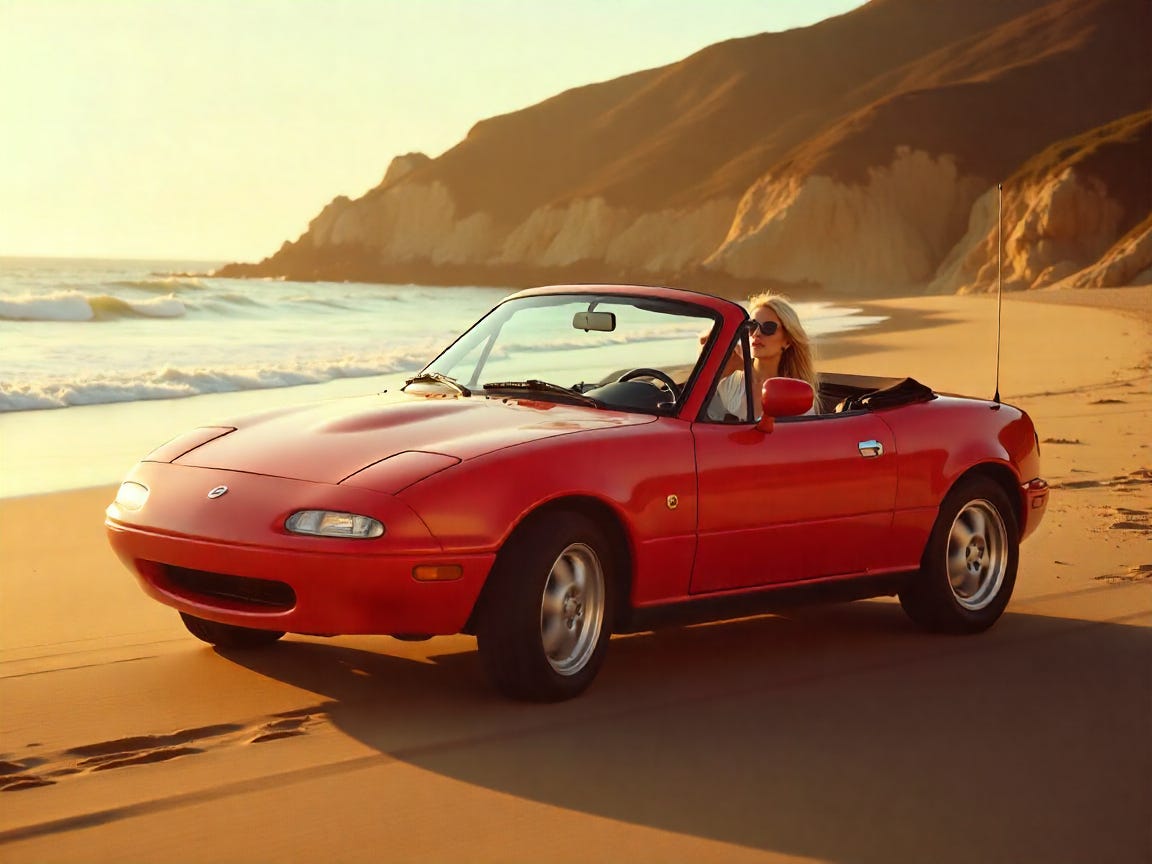
The Mazda MX-5 Miata redefined the affordable roadster when it debuted in 1989, hitting its stride in the 1990s. With a lightweight body (around 2,100 lbs), near-perfect 50/50 weight distribution, and a responsive five-speed manual transmission, the Miata delivered pure driving joy. Its 1.6L inline-4 engine (upgraded to 1.8L in 1994) produced 116–140 hp, modest by today’s standards but plenty for its agile frame. The Miata’s simple, timeless design echoed classic British roadsters but offered Japanese reliability, making it a global hit. Today, first-generation Miatas remain sought-after for their affordability and fun.
Mazda RX-7 FD (1992–2002)
The third-generation Mazda RX-7 (FD) is arguably Mazda’s most iconic car of the decade. Powered by a 1.3L twin-turbo rotary engine (13B-REW) delivering 255 hp, the RX-7 combined sleek styling with thrilling performance. Its rear-wheel-drive layout, low center of gravity, and 2,800-lb curb weight made it a favorite among enthusiasts for its razor-sharp handling. Though discontinued in North America after 1995 due to emissions regulations, the RX-7 FD retains a cult following, with pristine examples commanding high prices at auctions.
Mazda 626 (1990–1999)
The Mazda 626 was a midsize sedan that offered practicality without sacrificing style. Available as a sedan or hatchback, it featured engines ranging from a 2.0L inline-4 to a 2.5L V6, with options for five-speed manual or four-speed automatic transmissions. The 626 stood out for its smooth ride, decent fuel economy, and features like power windows in higher trims. It shared underpinnings with the sportier MX-6, proving Mazda could make family cars engaging.
Mazda MX-6 (1991–1997)
The MX-6 was a sleek, front-wheel-drive coupe based on the 626 platform. Its 2.5L V6 engine produced up to 164 hp, and its sporty design — complete with a rear spoiler on some trims — appealed to drivers seeking a stylish yet practical car. Sharing engineering with the Ford Probe, the MX-6 offered a balance of performance and comfort, making it a versatile choice for the era.
Mazda 323 & Protégé (1990–1999)
The Mazda 323 and its Protégé variant were compact cars designed for efficiency and affordability. With 1.6L to 1.8L inline-4 engines and options for sedan, hatchback, or wagon configurations, these models delivered reliable transportation with decent handling. Their lightweight builds and fuel-efficient designs made them popular for urban drivers, and their durability ensures many are still on the road today.
Mazda B-Series Pickup (1990–1999)
The Mazda B-Series was a rugged, reliable pickup built for light-duty tasks. Available with 2.2L inline-4 or 3.0L V6 engines and rear- or four-wheel-drive options, it shared engineering with the Ford Ranger. Known for its long production run and solid reliability, the B-Series was a practical choice for work or leisure.
Mazda Cosmo (Eunos Cosmo, 1990–1996)
Sold primarily in Japan under the Eunos brand, the Mazda Cosmo was a technological showcase. It featured a 13B twin-rotor or 20B triple-rotor rotary engine, producing up to 276 hp. With a luxurious interior, touchscreen climate controls, and early GPS, the Cosmo was ahead of its time. Its limited production makes it a rare gem for collectors.
Mazda’s Engineering Philosophy
Mazda’s 1990s success stemmed from a clear engineering ethos: prioritize the driver. This philosophy manifested in several ways:
Lightweight Design
Mazda obsessed over reducing weight to enhance performance and efficiency. The MX-5 Miata’s 2,100-lb frame and the RX-7’s low center of gravity exemplified this, offering superior handling and grip. Even family cars like the 323 benefited from lighter builds, improving fuel economy.
Engaging Dynamics
Whether in a sports car or sedan, Mazda ensured driving felt rewarding. Five-speed manual transmissions were standard across many models, delivering crisp shifts. The rotary engines in the RX-7 and Cosmo provided smooth, high-revving power, while balanced suspensions made every model corner confidently.
Thoughtful Interiors
Mazda’s cabins prioritized function over flash. The MX-6 and 626 offered power windows and ergonomic layouts, while hatchbacks like the 323 featured fold-flat rear seats for versatility. Even the Cosmo’s luxury interior maintained a driver-focused design.
Consistent Brand Identity
From the B-Series to the Cosmo, Mazda applied its “driving matters” philosophy across its lineup. This consistency gave every model — whether a pickup or a rotary-powered coupe — a sense of purpose and cohesion.
Why 1990s Mazdas Endure
Mazda’s 1990s cars weren’t just reliable; they had soul. The MX-5 Miata remains a benchmark for affordable sports cars, while the RX-7 FD is a legend among performance enthusiasts. Even practical models like the 626 and 323 offered enough character to stand out in a crowded market. Their durability means many are still driven or restored, with communities dedicated to preserving these classics.
For collectors, finding a well-maintained 1990s Mazda is a treasure hunt. Whether it’s a Miata for weekend drives or a rare Cosmo, these cars reward owners with a connection to the road that’s hard to find in modern vehicles.
Shipping Your 1990s Mazda
If you’ve found a 1990s Mazda — be it an RX-7, Miata, or 626 — getting it home safely is crucial. Whether purchasing from a private seller, dealership, or auction, reliable transport ensures your classic arrives in pristine condition. AmeriFreight Car Shipping specializes in classic vehicle transport, offering open or enclosed options to suit your needs. Learn more at AmeriFreight’s guide to shipping classic cars or request a free quote today.
FAQs
What was Mazda’s standout sports car in the 1990s?
The Mazda RX-7 FD, with its twin-turbo rotary engine, was Mazda’s premier sports car, known for its performance and handling.
Why was the RX-7 discontinued in North America?
Emissions regulations and declining sales led to its discontinuation after 1995.
Did Mazda manufacture its own engines?
Yes, Mazda designed and built its engines, including the unique rotary engines for the RX-7 and Cosmo.
What was Mazda’s relationship with Ford?
Ford held a significant stake in Mazda during the 1990s, peaking at 33.4%, influencing models like the 626 and B-Series.
Conclusion
Mazda’s 1990s lineup was a masterclass in balancing style, reliability, and driving pleasure. From the MX-5 Miata’s pure roadster fun to the RX-7’s high-performance legacy, these cars proved that practicality and passion could coexist. Their enduring appeal lies in Mazda’s commitment to lightweight design, engaging dynamics, and driver-focused engineering. For enthusiasts and collectors, 1990s Mazdas remain a testament to an era when cars were built to inspire. If you’re ready to own one, ensure safe delivery with trusted transport services like AmeriFreight.
Keywords: 1990s Mazda cars, Mazda MX-5 Miata, Mazda RX-7, Mazda 626, Mazda MX-6, Mazda 323, Mazda B-Series, Mazda Cosmo, classic Mazda models, Mazda rotary engine, 1990s car reliability, Mazda sports cars, car shipping services.
메타데이터
- post_id
- 8de7b14ef3a3
- slug
- 1990s-mazda-cars-stylish-and-reliable-8de7b14ef3a3
- url
- https://medium.com/@a.legaspi/1990s-mazda-cars-stylish-and-reliable-8de7b14ef3a3
- canonical_url
- https://medium.com/@a.legaspi/1990s-mazda-cars-stylish-and-reliable-8de7b14ef3a3
- author_url
- https://medium.com/@a.legaspi
- status
- ok
- fetched_at
- 2026-07-13 06:23:13