Web Scraping for Academic Research: A Deep Dive into NeurIPS Papers
Introduction
NeurIPS Papers: Web Scraping for Academic Research
In today’s digital world, vast amounts of academic knowledge are locked behind paywalls or scattered across different websites. Web scraping is a powerful technique that allows researchers to automate data extraction, making it easier to analyze trends, discover insights, and stay current with the latest research. This blog explores how to build web scrapers in Java and Python to extract research paper details from NeurIPSPapers (*https://papers.nips.cc*), the repository for one of the most prestigious machine learning conferences.
What is Web Scraping?
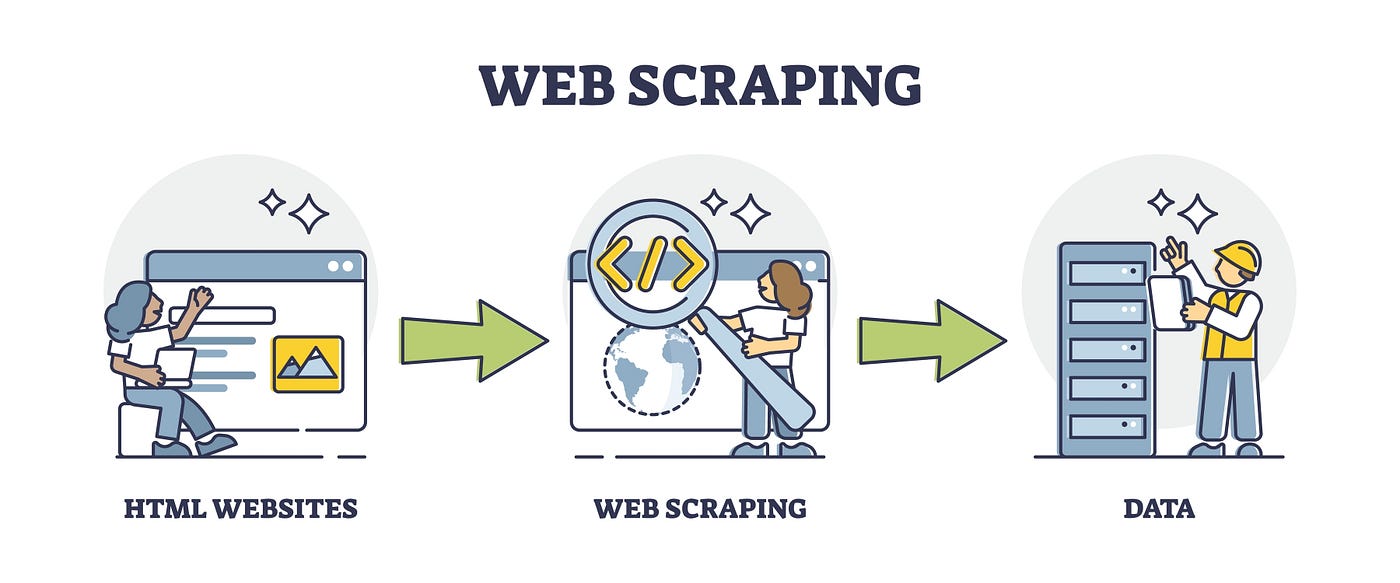
At its core, web scraping is the process of programmatically extracting data from websites. Instead of manually copying information from a webpage, web scraping automates the retrieval and parsing of website content, allowing you to harvest large amounts of data efficiently. Whether it’s extracting research papers, monitoring price changes, or aggregating news headlines, web scraping can transform raw, unstructured data into a structured format that can be analyzed and used for decision-making.
Some key aspects include:
- Automation: Uses scripts to navigate websites and extract the desired information automatically.
- Data Parsing: Converts HTML or other web formats into structured data like CSV or JSON.
- Versatility: Applies to various tasks, from academic research to market analysis.
Why Use Web Scraping for Research Papers?
Academic researchers often need access to vast collections of papers, but manually browsing multiple pages, copying titles, and organizing metadata is time-consuming. Web scraping automates this process, offering several advantages:
- Efficient Data Collection: Automatically gathers metadata from open-access repositories.
- Trend Analysis: Identifies research trends over multiple years.
- Collaboration Insights: Helps track recurring authors and institutional affiliations.
NeurIPS, one of the most prestigious machine learning conferences, hosts a vast collection of valuable papers. Manually gathering metadata for these papers is impractical, making web scraping an essential tool.
- Automated Data Collection: Extracts metadata, author names, and PDF links in minutes.
- Large-Scale Analysis: Enables trend analysis of paper submissions, author collaborations, and topic distributions.
- Seamless Data Integration: Stores extracted data in databases for further processing, linking with citation networks or machine learning models.
Challenges Faced While Scraping NeurIPS
While implementing the scrapers, I encountered several challenges:
1. Pagination Handling
- The NeurIPS website organizes papers by year, requiring multiple requests to scrape papers from different years.
- Solution: Implemented loops to navigate and extract data from multiple pages.
2. Rate Limiting
- Sending too many requests too quickly can result in the server blocking the scraper.
- Solution: Introduced delays and randomized request intervals to mimic human behavior.
3. JavaScript-Rendered Content
- Some websites use JavaScript to load content dynamically, which makes scraping using simple HTTP requests ineffective.
- Solution: Used Selenium in Python when necessary to render JavaScript.
Implementing the Scraper

Java Implementation: Fast and Reliable
For Java, I used JSoup to parse the HTML and extract relevant details. Since Java is highly performant, this approach enabled fast downloads and structured data extraction.
Key Steps in Java:
- Send HTTP requests to fetch paper list pages.
- Parse the HTML to extract paper titles, authors, and links.
- Save the extracted data into a CSV file.
Python Implementation: Async Scraping for Speed
For Python, I leveraged aiohttp and BeautifulSoup for asynchronous scraping, allowing me to fetch multiple pages concurrently.
Key Steps in Python:
- Use
aiohttpto send concurrent requests for faster scraping. - Extract paper details with
BeautifulSoup. - Store the metadata in a structured format like JSON or CSV
Java vs Python for Web Scraping

Java vs Python
Java
Pros:
- Strong typing and excellent performance make Java ideal for large-scale, production-ready web scrapers.
- Libraries like to
Jsoupprovide powerful and reliable HTML parsing. - Java’s robust concurrency model,
ExecutorServiceallows efficient management of multiple scraping threads, maximizing performance.
Cons:
- More verbose syntax compared to Python, requiring additional lines of code to achieve similar functionality.
- Setting up a Java-based web scraping environment can be more complex than Python.
Python
Pros:
- A rich ecosystem of libraries, such as
requests(for HTTP requests) andBeautifulSoup(for HTML parsing), makes web scraping highly accessible. - Its dynamic typing and concise syntax enable rapid prototyping and development.
- Advanced frameworks
Scrapyoffer robust scraping capabilities, including rate limiting, proxy management, and data storage.
Cons:
- Performance can become a bottleneck for very large-scale scraping projects.
- While multithreading is possible, Python’s Global Interpreter Lock (GIL) limits true parallel execution for CPU-bound tasks.
Comparison Table: Java vs. Python

Comparsion Table (Java VS Python)
Extracted Data Insights
- Publication Volume: Over 5,000 research papers were published by NeurIPS during this timeframe.
- Trending Topics: The most researched fields included machine learning, deep learning, reinforcement learning, and natural language processing (NLP).
- Author Contributions: Prominent researchers consistently contributed multiple papers, demonstrating expertise in specialized domains. Additionally, cross-institution collaborations were widespread.
Ethical Web Scraping Guidelines
Web scraping must be conducted with responsibility and adherence to ethical principles. Key measures I implemented include:
- Rate Management: Introduced request delays to prevent excessive server strain.
- Compliance with Robots.txt: Followed NeurIPS’s specified rules regarding accessible pages for scraping.
- Optimized Resource Usage: Designed lightweight scrapers to efficiently extract only necessary data.
- Avoiding Redundant Downloads: Refrained from unnecessary retrieval of PDFs or large files to conserve bandwidth.
Key Takeaways from the Project
This project offered several critical learning experiences:
- Managing Challenges: Web scraping requires addressing issues such as rate limitations, pagination, and handling dynamic content.
- Selecting the Right Tools: Python’s asynchronous capabilities enhance performance, while Java’s static parsing offers efficiency for structured data extraction.
- Maintaining Ethical Standards: Scrapers should be thoughtfully designed to minimize website impact and adhere to legal and ethical considerations.
Access the Full Implementation
The full source code for both Python and Java implementations is available on my GitHub: GitHub Repository for Python & Java Scrapers
Final Thoughts
Web scraping is crucial in academic research as it facilitates large-scale data collection. Python and Java offer unique advantages, depending on the structure of the target website. However, careful planning and ethical considerations are essential to ensure compliance and avoid disrupting web services.
References
- NeurIPS Papers: **https://papers.nips.cc/**
- Python aiohttp Documentation: ***https://docs.aiohttp.org/***
- Java Jsoup Documentation: ***https://jsoup.org/***
- BeautifulSoup Documentation: ***https://www.crummy.com/software/BeautifulSoup/***
메타데이터
- post_id
- 8df1ba8e75ee
- slug
- web-scraping-for-academic-research-a-deep-dive-into-neurips-papers-8df1ba8e75ee
- url
- https://medium.com/@usmanaamirbs2022/web-scraping-for-academic-research-a-deep-dive-into-neurips-papers-8df1ba8e75ee
- canonical_url
- https://medium.com/@usmanaamirbs2022/web-scraping-for-academic-research-a-deep-dive-into-neurips-papers-8df1ba8e75ee
- author_url
- https://medium.com/@usmanaamirbs2022
- status
- ok
- fetched_at
- 2026-07-21 02:19:38





