The Fire Hydrant and the Snowmobile Suits: How I Map Minnesota’s Hidden History
A behind-the-scenes look at the workflow of “Minnesota Then” — from archival detective work to precision GIS triggers.
BUILDING MINNESOTA THEN
The Fire Hydrant and the Snowmobile Suits: How I Map Minnesota’s Hidden History
A behind-the-scenes look at the workflow of “Minnesota Then” — from archival detective work to precision GIS triggers.
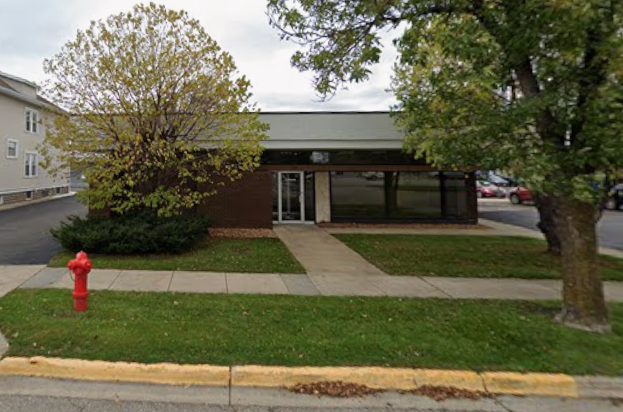
Google Maps image of the sidewalk the Willmar 8 picketed on
There is a patch of pavement in Willmar, Minnesota, that most people walk right past without a second thought. To them, it is just a sidewalk in front of the bank. To me, it is the spot where eight women stood in snowmobile suits in the dead of winter and helped change the course of labor history in this state.
Getting that story off a page and onto that exact corner — that is what Minnesota Then is about.
A quick note before I get into the “how”: every article I publish is researched and written by me. I use AI for light copyediting — a second set of eyes on the prose, nothing more. The historical work, and the content that comes from it, is mine. That said, building a point of interest for the Museum Without Walls does involve LLMs in a more meaningful way, and I think it’s worth being straight about that. The workflow below is where those tools show up.
The Script
A 750-word essay and a five-minute narration are not the same thing. One you read at your own pace with a cup of coffee. The other plays in your ear while you’re standing on a busy street corner, or at the very least, out in the elements.
The first step is adapting the research into a conversational script — something that sounds like a person talking, not a textbook reciting. This is where LLMs earn their place. I feed in the finished article and work with the tool to shape something that is historically accurate and tight enough to hold attention from a sidewalk. The goal is to put you there — in that era, on that spot. I keep it under 5,000 characters, because brevity is a sign of respect.
It took a couple of listen-throughs to make sure everything sounded right. One thing people don’t think about: text-to-speech engines have no idea how to pronounce “Willmar” correctly. Left to its own devices, it sounds like someone from out of state reading a map. So, I spell it out by sound in the backend — “Willmer” — so the virtual docent sounds like someone who actually lives here. That matters. These are Minnesota stories. They should sound like it.
The Audio
Once the script is locked, I run it through Google’s TTS engine to generate the MP3. I went back and forth early on about using different voices at different sites — maybe a woman’s voice for one, a man’s for another. In the end, I chose one consistent male narrator for everything. The museum needed a voice, not a cast of characters.
The Location (The Hard Part)
This is where the project stops being about writing and starts being about detective work. For the exhibit to function, the coordinates have to be exact. Not close. Exact. The app triggers when you step inside a 20-foot radius. If I’m off by half a block, you’re standing in front of the wrong building listening to the story with an incorrect sense of place. For the Willmar 8, the original bank building is long gone. There was no plaque, no obvious marker, nothing to anchor me.
I had to find archival photos and line them up against modern street view imagery until I could match the angles, the storefronts, and the sightlines. In the end, a fire hydrant sealed it. No LLM helped with this part. It was just me, old photographs, Google Maps, and a lot of squinting at street corners. But when I finally confirmed that location, something clicked that doesn’t happen when you’re just writing.
The Build
The technical side is deliberately lean. I designed the app on a streamlined JavaScript architecture, built to be fast and stay out of the way of the story. Adding a new exhibit means:
- Assigning a location ID.
- Dropping in the GPS coordinates.
- Linking the audio file.
- Attaching the metadata.
The heavy lifting happened earlier in the archives. There are 21 locations live right now. I have 57 articles on the site, which means I have a long runway ahead of me — and I’m not in a hurry to rush it.
Why This Matters
Minnesota Then evolved from a side project into something I can’t imagine walking away from. The workflow I just described — the scripting, the sound-tuning, the detective work on a street corner — reinforces that these stories are worth the effort.
Using AI as a tool in that process doesn’t change what this is. It’s still about the history. It’s still about the place. It’s still about making sure the story finds you when you show up.
No app to download. No account to create. No QR codes. Free, always, for everyone. When you walk down a street in this state, you are walking through something. My job is just to make sure you know it. This is my process.
The Willmar 8 exhibit is live (along with 20 other locations in Minnesota). If you want to stand where history was made, open the map and go. The past will be waiting.
Matt Reicher is a historian for Minnesota Then, a digital museum dedicated to uncovering the stories and places that shaped Minnesota. Explore more at mnthen.com and subscribe for free on Substack.
메타데이터
- post_id
- 8df7de2df928
- slug
- the-fire-hydrant-and-the-snowmobile-suits-how-i-map-minnesotas-hidden-history-8df7de2df928
- url
- https://medium.com/minnesota-then-building-in-public/the-fire-hydrant-and-the-snowmobile-suits-how-i-map-minnesotas-hidden-history-8df7de2df928
- canonical_url
- https://medium.com/minnesota-then-building-in-public/the-fire-hydrant-and-the-snowmobile-suits-how-i-map-minnesotas-hidden-history-8df7de2df928
- author_url
- https://medium.com/@mattreicher
- status
- ok
- fetched_at
- 2026-06-15 20:49:13