The Kazakh movie “Kairat” by Darezhan Omirbaev: Chronicle of a Hero Without Glory in the Shadows of…
The protagonist of this film is a young man who moves from a provincial town to the capital in search of a better life. He is an ordinary…
The Kazakh movie “Kairat” by Darezhan Omirbaev: Chronicle of a Hero Without Glory in the Shadows of the 1990s
The protagonist of this film is a young man who moves from a provincial town to the capital in search of a better life. He is an ordinary person, with nothing particularly remarkable about him — a man among many. Kaïrat comes to the city intending to enter university, but fails to achieve this goal. His failure is not due to a lack of education, but to unfortunate circumstances: during the entrance exam, Kaïrat is caught passing a cheat sheet to someone at the request of the girl seated next to him.
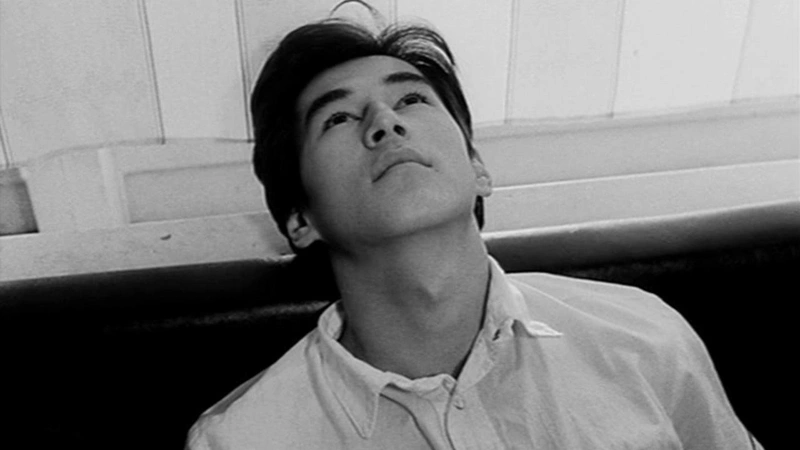
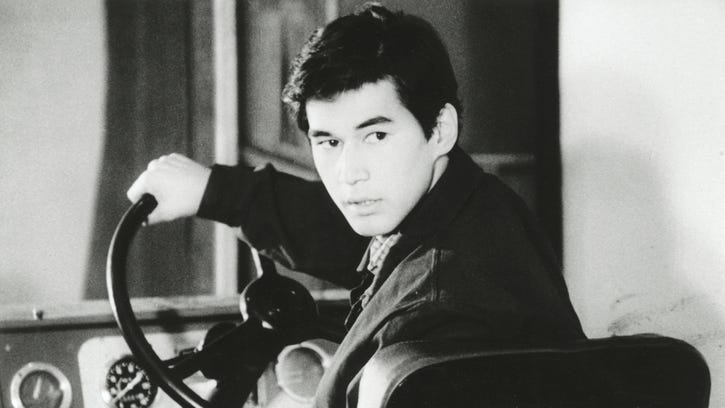
What follows is a process of survival in the big city: he squeezes into a dorm room, works as a minibus driver — simply trying to make ends meet. Misfortune follows him everywhere.
The hero of Kaïrat is a composite figure of that era — the uncertain early 1990s, during the collapse of the Soviet Union. Kaïrat is not a fighter who strives to win and succeeds. He is an outsider hero who cannot control his circumstances and, out of despair, adapts and becomes a follower. He is practically emotionless, silent, and uncommunicative. Kaïrat doesn’t even have real friends — just roommates with whom he exchanges a few words. His love interest, Indira, turns out not to be “the one and only.” Kaïrat, like Viktor Tsoi’s character, is a lone hero — but not a rebellious one, rather a defeated one. A man who bends to circumstances, who does not overcome, who is not a leader but led. The hero in this film is incapable of changing anything at all.
In the final scene, the alarm rings. Kaïrat wakes up in his dark dormitory room, gets dressed, and prepares to go to work. The cycle and monotony of life continue. What lies ahead remains unknown.
Kaïrat is played by Kairat Makhmetov, a non-professional actor — a type more than a trained performer. He seems to live the character’s life rather than act it in the classical, theatrical sense. One of the film’s most striking scenes is a moment of conflict, where Kaïrat challenges Zhan to a one-on-one fight. Kaïrat willingly steps into a confrontation that otherwise would never have happened. This act is his way of asserting himself, of surviving in the urban jungle. The outcome doesn’t matter — what matters is that Kaïrat dares to defy Zhan, the dormitory’s dominant figure. Kaïrat knew full well what he was doing.
These inner contradictions, his hesitation, sketch the average profile of a young man of that era — the time of the Union’s collapse, the age of upheaval.
The film Director Darezhan Omirbaev speaks of Kaïrat:
“The social structure my character represents has already been well explored in both cinema and literature. But I tried to show his inner experiences. I decided to include dreams in the plot. Of course, I would not have dared to build the film’s structure around dreams if I hadn’t seen Ivan’s Childhood by Tarkovsky or The Discreet Charm of the Bourgeoisie by Buñuel — from whom I borrowed one dream.” He further adds: “The main source material for the film was my personal experience, although I believe the most important thing in a work of art is not the content, but the form — not reality, but style — not a film, but cinema.”
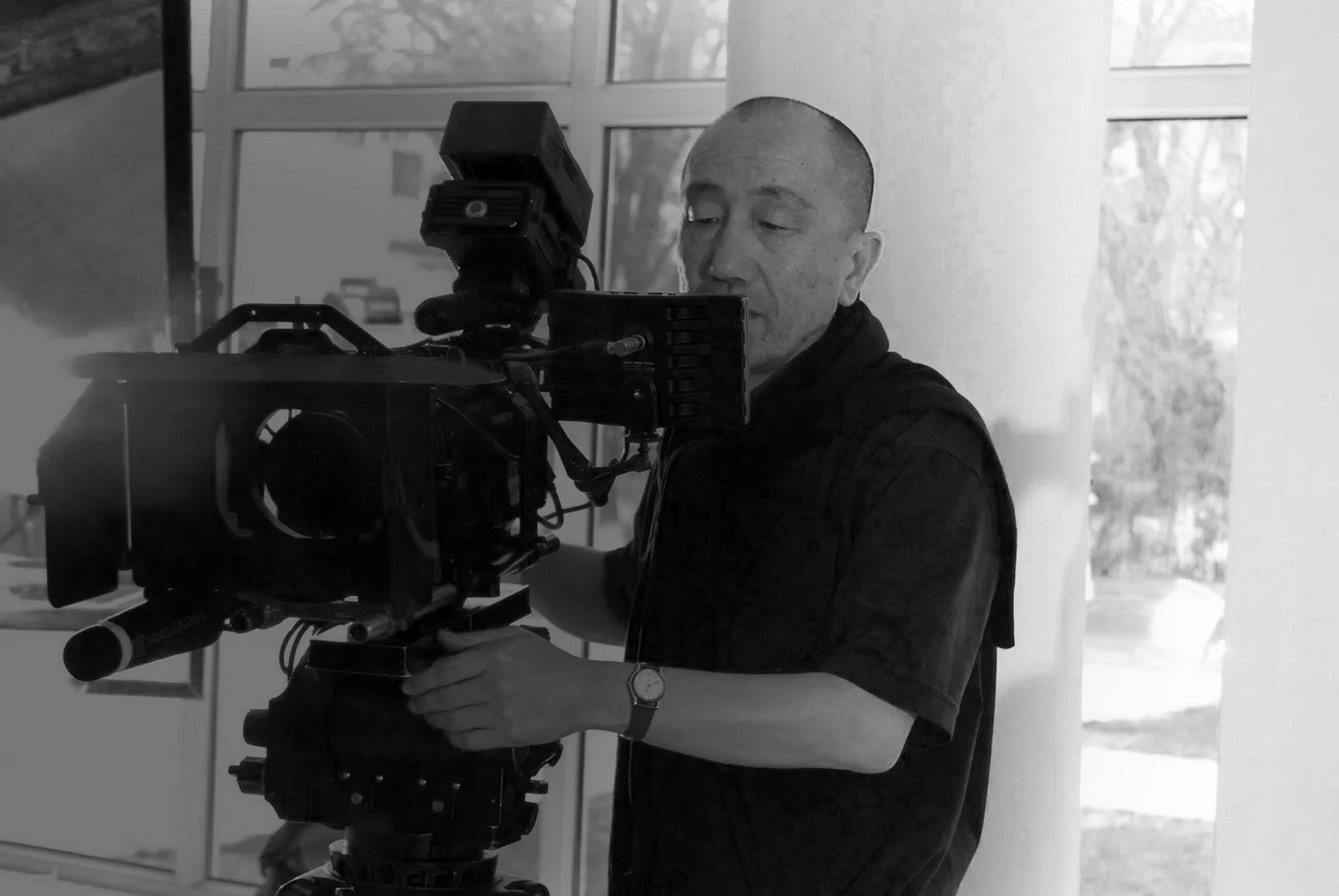
Omirbaev’s films are undeniably connected thematically. One could say he is a bit like François Truffaut, who followed the life of Antoine Doinel through five films (The 400 Blows, Love at Twenty [in the anthology], Stolen Kisses, Bed and Board, and Love on the Run), in his own way exploring the life of a single screen character: a boy from the short film Shilde, who grows up, is sent to a children’s sanatorium (Cardiogram), fails his university entrance exams (Kaïrat), and, while living in a foreign city during the transitional era, becomes a contract killer (Killer). But unlike Truffaut, Omirbaev’s protagonist is not always the same person, nor does the narrative follow chronological order. The characters — whether villagers or city dwellers — are distinct individuals, whose lives the director connects across his films. And as we know, changing the order of elements doesn’t change the outcome. The Omirbaevian screen biography seems to end with Jol (The Road): in this film, we see the life of a filmmaker who is planning to shoot Killer, and misses his mother’s funeral.
P.S. Presented as the opening film of the Darezhan Omirbaev retrospective at the Cinémathèque française as part of the Kazakh Film Festival (Paris 2024).
메타데이터
- post_id
- 8e24aea099b0
- slug
- the-kazakh-movie-kairat-by-darezhan-omirbaev-chronicle-of-a-hero-without-glory-in-the-shadows-of-8e24aea099b0
- url
- https://medium.com/@andre.raphael.ivanov/the-kazakh-movie-kairat-by-darezhan-omirbaev-chronicle-of-a-hero-without-glory-in-the-shadows-of-8e24aea099b0
- canonical_url
- https://medium.com/@andre.raphael.ivanov/the-kazakh-movie-kairat-by-darezhan-omirbaev-chronicle-of-a-hero-without-glory-in-the-shadows-of-8e24aea099b0
- author_url
- https://medium.com/@andre.raphael.ivanov
- status
- ok
- fetched_at
- 2026-07-20 00:12:32




