How to use your mornings like the most productive 1%
A science-based guide to stop procrastinating and achieve goals
How to use your mornings like the most productive 1%
A science-based guide to stop procrastinating and achieve goals
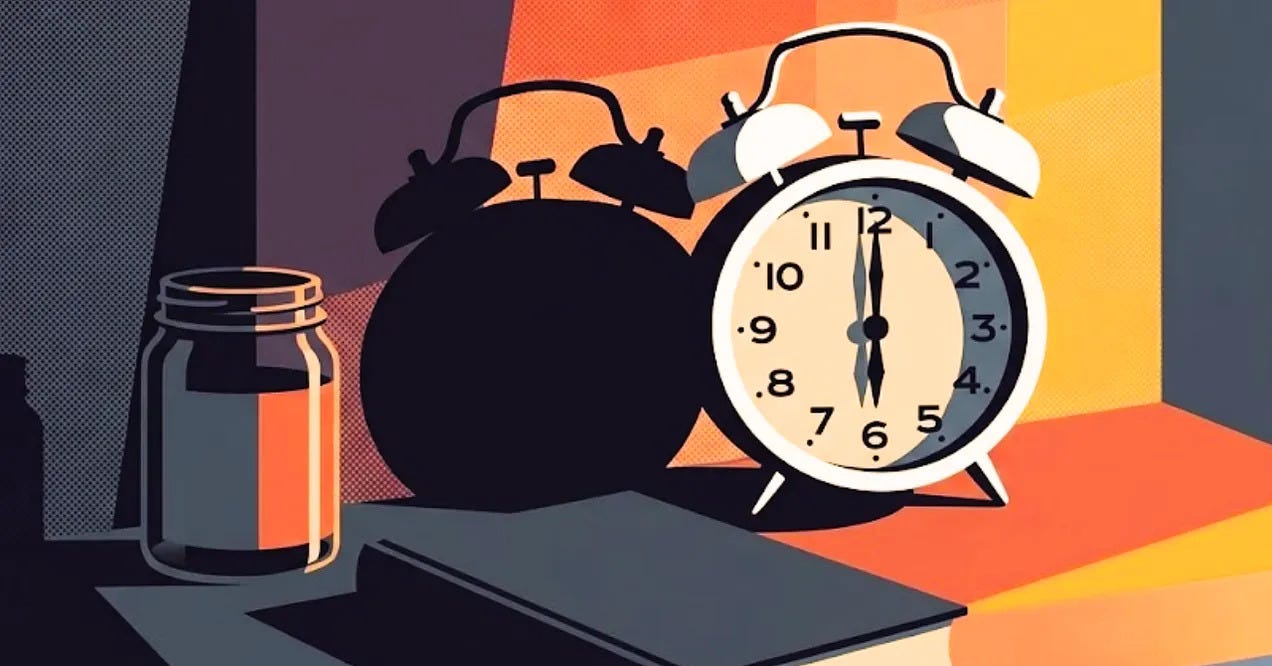
Created by Mental Garden
Most people operate on autopilot.
They wake up to the shrill sound of an alarm, reach out for their first dose of dopamine by checking their phone notifications, and immediately enter a reactive mental state. They’ve handed over control of their attention before they’ve even gotten out of bed.
This is one of the biggest bottlenecks of modern life.
In her book What the Most Successful People Do Before Breakfast, Laura Vanderkam studied dozens of the most productive and organized people on the planet across all kinds of fields. This was the conclusion she reached: “Before the rest of the world is having breakfast, the most successful people have already racked up daily wins that bring them closer to their goals.”
In other words: getting up early is essential.
And I confirm this after analyzing the routines of writers like Anthony Trollope, Kurt Vonnegut, Toni Morrison, Maya Angelou, Derek Walcott, Isaac Asimov, Ernest Hemingway, Haruki Murakami, and many more. They all share a common pattern: the dawn.
Dawn is the refuge of your goals. The hours before breakfast make a brutal difference in the results of writing and of almost any discipline.
Let me explain in this guide why this happens and how to apply it.

The crucial hours
Your mind has a finite and highly valuable attention battery.
In the mornings, your mental clarity and energy are at their peak — you’re ready to execute complex tasks. This is why any modern creator or strategist should move their creative and deep-thinking time to dawn. The idea is to sync your schedule with your biology.
But what does most everyone do?
They immediately give away that high-quality energy to superfluous tasks: checking email, scrolling social media the moment they wake up, replying to messages, or attending minor meetings that fragment their attention. However, Laura Vanderkam recommends the opposite. Mornings are the only block of time where extraordinary people have full control over their own schedule. No one is looking for you at 5:00 AM — you can create in peace.
That empty space is your greatest competitive advantage.
To reclaim your mornings, you only need three steps:
- Go to bed earlier.
- Get up earlier.
- Do the important thing first thing.
There’s no other secret. The problem is that the habits of the crowd drag us along: 99% go to bed late and wake up tired. I shifted my schedule toward the morning a while ago and noticed the improvement instantly. The day still has the same 24 hours, but the feeling is incomparable. Today I go to sleep at 10:00 PM so I can be awake at 6:00 AM and sit down to write.
Simply adjusting this block of time skyrocketed my performance.
This happens because not all your hours are worth the same. As the day goes on, fatigue erodes your cognitive capacity, which is why you procrastinate more in the afternoon and perform worse. Psychologist Roy Baumeister, one of the leading experts on willpower, demonstrated this with a famous experiment.
Baumeister asked his students to fast before coming to the lab.
Baumeister asked a group of students to fast before entering the laboratory. Then he brought them into a room full of stimuli: freshly baked chocolate chip cookies, candy, and… radishes. Some were allowed to eat whatever they wanted, while the test group’s access was restricted, forcing them to eat only the radishes. They consciously resisted the temptation.
Both groups were then given geometry problems designed to be unsolvable. The students who had satisfied their cravings with cookies persisted trying to solve the puzzles for about 20 minutes on average.
What happened to the exhausted radish-eaters?
Their mental energy had been depleted resisting the earlier temptation — they threw in the towel after just 8 minutes on average.
This is exactly what I mean. Falling into temptation, procrastinating, and making excuses is easy in the afternoons and evenings, after a full day of meeting responsibilities and resisting through sheer willpower.
- Diets tend to break at sundown.
- Impulsive crimes are committed more frequently at night.
- Relapses into addiction or lapses in judgment tend to happen at night.
Your battery is at zero, and your mind is left exposed at its lowest levels of control.
That’s why priorities need to be reordered around daily energy — and why you should get up early.
In 1887, psychologist William James left us a key insight: “Any sequence of mental action which has been frequently repeated tends to perpetuate itself… we find ourselves automatically prompted to think, feel, or do what we have been accustomed to think, feel, or do, under like circumstances, without any consciously formed purpose.” — William James, Habit (1887).
Habits are the structure. Automate as many useful actions as possible and build unbreachable walls against the habits that hold you back. Self-control lets you live in peace — it eliminates the exhaustion of having to decide everything.
Which areas should you prioritize before the noise begins?
- Family?
- Your personal future and career?
- Your own self, through meditation, study, and exercise?
Sleep a little earlier, wake up a little earlier, and prioritize. That’s all there is to it.

Protect your mornings
If you struggle to get out of bed, it’s often because of dreading the boring tasks imposed by someone else’s agenda (like a conventional job). On the other hand, when the first thing on your list is that personal goal you’re passionate about, you get up with the energy of a kid running to see the presents on Christmas morning.
Performance psychology expert Shawn Achor explains it this way:
“The reason we stay in bed in the morning is because our brain gets exhausted thinking about everything we have to do that day. We think about tasks instead of things that make us happy. If you think about things that excite you, it will be easier to get up. Whatever your brain focuses on becomes your reality.” — Shawn Achor, The Happiness Advantage
Disappear from the noise. Master your focus before breakfast.
This text was written as sunlight was rising on the horizon.
— Álvaro

Want to know more? Here are 3 related ideas to dig deeper:
- You don’t need more hours, you need better hours
- Email is killing your productivity
- The GTD Method: Organize your tasks, decide instantly, and save time

✍️ Your turn: Which areas should you prioritize before the noise begins?
💭 Quote of the day: “My advice is, never do tomorrow what you can do today. Procrastination is the thief of time. Collar him!” — Charles Dickens, David Copperfield
P.S. I also offer 1:1 consulting to help you grow on Substack.
If you’ve just started and aren’t sure how it works, or you’ve been at it a while but feel stuck, this will help. I’ll help you find your direction, position yourself as a leader in your niche, and build a system tailored to your case for sustained growth.
Credentials? 96,000+ global readers in 2 years, 100% organic growth, with ~250,000 monthly visits. All built from scratch, writing solo in my spare time.
If you’re interested, write to me at: **jardinmental@proton.me**

🌱 Here I plant ideas. In the newsletter, they grow.
📩 Join 96,000+ curious readers in Mental Garden newsletter exploring:
- clearer thinking
- deeper focus
- creative systems for writing
- practical tools for intellectual work
See you in the next letter 👋
References
- Vanderkam, L. (2013). What the Most Successful People Do Before Breakfast: And Two Other Short Guides to Achieving More at Work and at Home.
메타데이터
- post_id
- 8e3d712e7e73
- slug
- how-to-use-your-mornings-like-the-most-productive-1-8e3d712e7e73
- url
- https://medium.com/@mentalgarden/how-to-use-your-mornings-like-the-most-productive-1-8e3d712e7e73
- canonical_url
- https://medium.com/@mentalgarden/how-to-use-your-mornings-like-the-most-productive-1-8e3d712e7e73
- author_url
- https://medium.com/@mentalgarden
- status
- ok
- fetched_at
- 2026-07-27 08:19:09