Your IoT Device Has a Backdoor. The Manufacturer Put It There.
The camera in the corner blinks once. Not a steady LED. A pulse. Quick, then gone.
Your IoT Device Has a Backdoor. The Manufacturer Put It There.
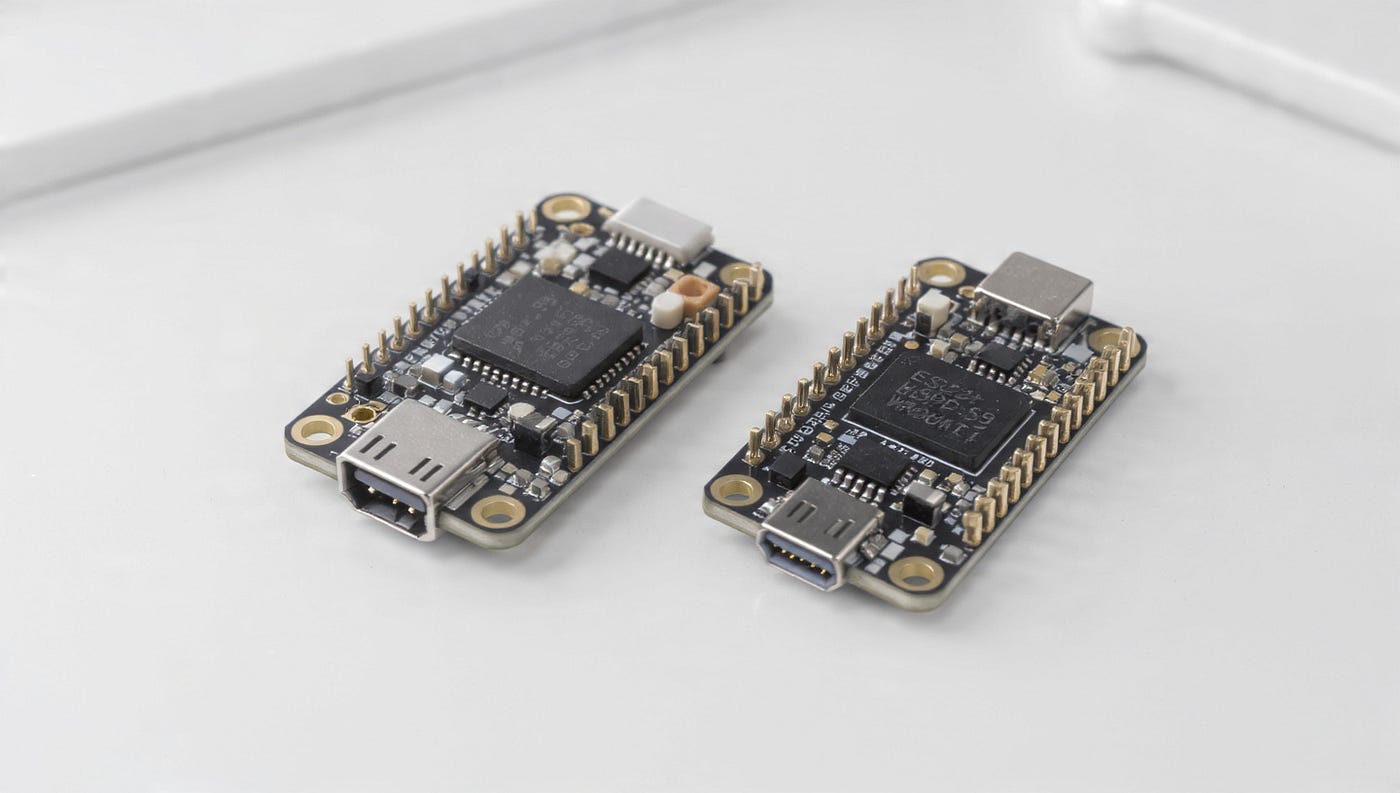
Photo by Dan LeFebvre on Unsplash
The camera in the corner blinks once. Not a steady LED. A pulse. Quick, then gone.
You didn’t trigger it. No motion. No app open. Just a flicker like it checked something and moved on.
Most people ignore that moment. They rationalize it. Firmware update. Network hiccup. Cheap hardware doing cheap things.
That’s the comfortable version.
The less comfortable one is simpler. The device is doing exactly what it was designed to do. You just weren’t meant to notice.
Once you accept that, the rest starts to fall into place.
The Lie of “Consumer Security”
Manufacturers don’t build devices for you. That sounds obvious, but it slips past people.
They build for scale. For support costs. For regulatory checkboxes. For internal tooling. For remote diagnostics. For post-sale visibility. For partners you never agreed to.
Security, in that stack, is a constraint. Not a goal.
You were told your smart camera encrypts traffic. It probably does. You were told your router has a firewall. It probably does. You were told your smart lock is “secure by design.” It probably is, within a very narrow definition of secure.
But none of that excludes the presence of a backdoor. It just reframes it.
Because the backdoor isn’t some rogue exploit stitched in by a malicious engineer. It’s usually a feature. Documented internally. Sometimes even mentioned in support manuals if you dig deep enough.
Remote access endpoints. Debug ports left enabled. Hardcoded credentials that “should never be exposed.” Update mechanisms that trust anything signed by a key you will never see.
These are not accidents.
They are decisions.
Backdoors Don’t Look Like Backdoors Anymore
People still imagine backdoors as something crude. A hidden password. A secret login screen. A line of code buried in a firmware dump.
That still exists. But it’s not the main event.
Modern backdoors are cleaner. They blend into the system because they are the system.
Take remote update services. Your device checks in with a server, verifies a signature, and pulls new firmware. That’s normal. Expected.
But think about what that implies.
Whoever controls that update pipeline controls the device. Completely. No exploit required.
Or consider cloud relay services. Many IoT devices don’t expose ports directly. Instead, they maintain outbound connections to vendor servers. Your app connects to those servers, which then relay commands back to your device.
From a networking standpoint, it looks safe. No inbound exposure.
From a control standpoint, you’ve handed the keys to someone else.
Debug interfaces are another quiet layer. UART, JTAG, test pads on the board. These are meant for development and repair. But they often remain active in production units.
Not because engineers forgot. Because disabling them costs time and money, and support teams sometimes rely on them.
So they stay.
Dormant, maybe. Obscure, definitely. But present.
Why Manufacturers Keep Them
It’s not always malicious. That’s the part people resist.
Most of these backdoors exist because removing them creates friction.
Support teams need a way to diagnose issues in the field. Engineers need fallback access when updates fail. Logistics teams need to recover devices at scale. Partners need integration hooks.
Every one of those needs can justify a pathway into the device.
And once it exists, it rarely gets removed. It gets hidden. Documented internally. Wrapped in policy language.
There’s also liability management. If a device bricks itself after an update, the company needs a way to fix it without physically touching every unit.
So they build in recovery channels.
Those channels don’t disappear when the device ships.
They just become invisible to you.
The Quiet Economics of Control
There’s another layer. Less technical. More structural.
When a company sells you a device, they don’t actually want to lose contact with it.
Not fully.
Data is one reason. Usage patterns, error logs, performance metrics. Even anonymized, it feeds back into product decisions.
But control is the deeper one.
If they can push updates, they can change behavior after the sale. Add features. Remove features. Lock things down. Open things up. Respond to legal pressure. Pivot business models.
Your device becomes a moving target.
You bought version 1.0. You might wake up with version 1.3 that behaves differently.
Sometimes better. Sometimes worse.
Either way, you didn’t approve the code that now runs in your home.
That’s not a bug in the system. It is the system.
When It Goes Wrong
You don’t hear about most of these backdoors because they operate quietly.
You hear about them when something leaks.
A hardcoded admin credential discovered in a firmware image. A debug port that grants root access with no authentication. An update server that accepts unsigned images due to a misconfiguration.
Suddenly the internal pathway becomes public.
Now it’s not just the manufacturer who can use it. Anyone with enough time and curiosity can.
That’s when the narrative shifts. The company issues a statement. Calls it an oversight. Pushes a patch.
But the underlying pattern remains.
Another device. Another pathway. Another justification.
It repeats because the incentives haven’t changed.
You Are Sitting on a Network of Embedded Systems
Look around your space for a second. Not abstractly. Literally.
Router. Smart TV. Phone charger with a USB controller. Security camera. Printer. Thermostat. Streaming stick. Even some light bulbs.
Each one is a small computer. Each one runs firmware you didn’t audit. Each one likely has some form of remote management pathway.
Individually, they feel trivial. Together, they form a mesh of potential entry points.
Attackers don’t need your main machine if they can pivot through something weaker.
And IoT devices are often weaker. Less frequently updated. Poorly monitored. Designed with constraints that favor cost over hardening.
The backdoor in one device is not isolated. It’s a foothold.
From there, lateral movement becomes a question of patience.
The Illusion of “I’m Not a Target”
This is where people check out.
They assume they’re not interesting enough to be targeted. No sensitive data. No high-value position. No reason for anyone to care.
That assumption used to hold more weight.
It doesn’t now.
Automation changes the equation. Scanning for exposed devices is trivial. Exploiting known pathways can be scripted. Botnets don’t care who you are. They care what your device can do.
Bandwidth. Compute. Persistence.
If your device can be controlled, it can be used. Maybe not against you directly. Maybe as part of something larger.
That’s enough.
And if a manufacturer backdoor exists, it lowers the barrier even further. It’s a built-in shortcut.
Where UART Fits Into This
Most people never open their devices. They don’t see the board. The traces. The tiny labeled pads that quietly expose everything.
UART is one of those interfaces that feels almost too simple.
Two lines for communication. One for transmit, one for receive. Sometimes a ground pin. That’s it.
Hook into it, and you often get a console. Boot logs. Sometimes a shell.
Not always locked down. Not always authenticated.
It was never meant for you. It was meant for the people building and debugging the device.
But it’s there. Physical. Direct. Hard to fully remove without redesigning the board.
If software pathways are the polished backdoors, UART is the raw one. Closer to the metal.
And once you understand how to use it, the abstraction layers start to peel away.
You Don’t Need Paranoia. You Need Clarity.
It’s easy to spiral here. To start seeing every device as hostile. Every update as a threat.
That’s not useful.
What is useful is understanding the shape of the system you’re in.
Your devices are not fully yours. They are shared environments with invisible stakeholders. The manufacturer. Their infrastructure. Their update pipelines. Their support tooling.
Backdoors exist within that context. Not always malicious. Not always exploited. But present.
Once you see that, your decisions change.
You segment networks. You isolate critical systems. You think twice about what needs internet access and what doesn’t. You pay attention to update mechanisms instead of blindly trusting them.
You stop assuming that silence equals safety.
The Part Most People Skip
Knowledge without action is a kind of comfort. It lets you feel aware without actually changing anything.
So keep it simple. Focus on leverage points.
- Put IoT devices on a separate network or VLAN if your router supports it
- Disable features you don’t use, especially remote access and cloud integrations
- Monitor outbound traffic patterns if you have the tools
- Physically inspect hardware when possible. Ports tell stories software tries to hide
That’s not perfect security. It’s movement in the right direction.
And movement matters more than theory.
Closing Thought
The blinking light in the corner doesn’t mean you’re being watched in some dramatic, cinematic way.
It means the device is alive in a network you don’t fully control.
That’s the real shift.
Not fear. Not panic.
Just a quiet recalibration.
Because once you see the system for what it is, you stop asking whether a backdoor exists.
You start asking who it’s for.
And whether you’re okay with the answer.
Final Note
If you want to go deeper into the physical side of this, especially how to interface directly with embedded systems and expose what’s usually hidden, this is worth your time:
메타데이터
- post_id
- 8e7a8b76d0c5
- slug
- your-iot-device-has-a-backdoor-the-manufacturer-put-it-there-8e7a8b76d0c5
- url
- https://osintteam.blog/your-iot-device-has-a-backdoor-the-manufacturer-put-it-there-8e7a8b76d0c5
- canonical_url
- https://osintteam.blog/your-iot-device-has-a-backdoor-the-manufacturer-put-it-there-8e7a8b76d0c5
- author_url
- https://medium.com/@neonmaxima
- status
- ok
- fetched_at
- 2026-06-21 19:25:17