We Cannot Prepare for a Future We Do Not See Ourselves In
Inspired by the reflections of Tarek Cheniti
We Cannot Prepare for a Future We Do Not See Ourselves In
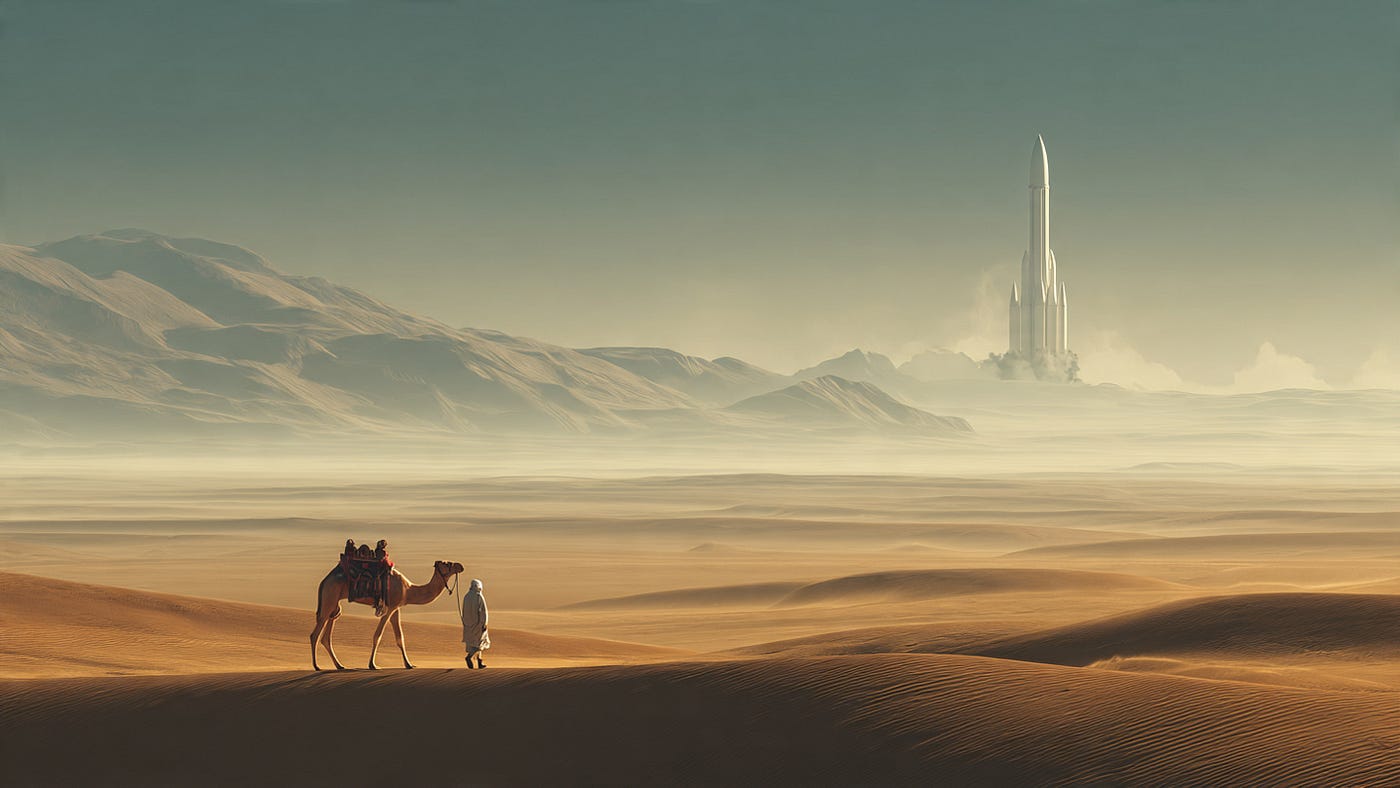
Inspired by the reflections of Tarek Cheniti
There was one idea that stayed with me long after listening to Tarek Cheniti’s intervention: a society cannot prepare for a future in which it no longer imagines itself.
It sounds simple, almost obvious. Yet in much of the Arab world, and particularly in countries like Tunisia, this question has become deeply urgent. We speak endlessly about crisis, reform, migration, economy, governance, and technology. But how often do we truly ask ourselves a more fundamental question: what future do we actually see for ourselves here?
Across the world, foresight has become an established discipline. Governments, institutions, and think tanks use scenario planning to anticipate political, social, economic, and environmental transformations. They model risks, imagine multiple futures, and prepare societies for change. This is not science fiction. It is strategy.
And yet, in our region, this culture of long-term thinking often arrives late, if at all.
The problem may not be a lack of intelligence or expertise. It may be something more structural and cultural.
When Myth Is Safer Than Science
One of the most striking contradictions in our societies is that speculative talk about the future is often tolerated only when it belongs to the realm of myth, prophecy, or sensational prediction.
Public figures can speak freely about dramatic political futures, social collapse, or grand transformations when these ideas are framed as intuition, mysticism, or entertainment. In those spaces, imagination becomes harmless.
But when the conversation shifts toward evidence-based foresight — water scarcity, climate stress, economic fragility, demographic change, education decline — the discussion suddenly becomes uncomfortable.
Scientific anticipation is dangerous because it implies accountability.
Talking seriously about the future means asking who is responsible for preparing it.
And that is where the conversation often stops.
The Cultural Weight of Destiny
Another uncomfortable truth lies in our relationship with fate.
In many Arab societies, there remains a deeply rooted cultural reflex that sees destiny as already written. This worldview can unintentionally weaken the instinct to plan long term.
If the future is predetermined, what is the point of building it?
This does not mean faith is the problem. Rather, it raises a legitimate question about how cultural narratives influence collective behavior. Societies that have experienced rapid transformation — whether in East Asia or elsewhere — often cultivate a strong belief in agency, planning, and discipline.
The future, for them, is something to be shaped.
For us, too often, it becomes something to be endured.
A Borrowed Vision of Stability
Perhaps the most critical point is this: our vision of the future is rarely our own.
Too often, the dominant narratives about what our countries should become are imported, imposed, or designed according to external interests. We inherit concepts such as “stability” without questioning what they truly mean.
Stability for whom?
For citizens seeking dignity and opportunity? Or for systems that prioritize immobility and silence?
This distinction matters.
A future built around preserving structures rather than empowering people is not foresight. It is containment.
The Crisis of Belonging
But perhaps the deepest crisis is emotional rather than political.
How do you imagine a future in a place you no longer feel connected to?
When younger generations no longer see language, culture, or geography as part of their identity, the future becomes elsewhere. Migration is no longer merely an economic decision; it becomes an existential projection.
The imagined future is not here.
It is in another country, another language, another passport.
This is where Cheniti’s reflection becomes particularly powerful. A society cannot build tomorrow if its youth have already mentally relocated.
The real crisis is not only brain drain.
It is imagination drain.
The Most Difficult Question
The question is no longer whether we have the tools to prepare for the future.
The real question is whether we still believe we belong in it.
Because foresight is not only about policies, institutions, or strategic reports. It begins with a collective act of imagination.
A people must first be able to say: we are still here, and we see ourselves in what comes next.
Without that, every conversation about the future remains abstract.
And perhaps that is the most critical challenge facing our societies today.
메타데이터
- post_id
- 8e855415a545
- slug
- we-cannot-prepare-for-a-future-we-do-not-see-ourselves-in-8e855415a545
- url
- https://medium.com/@karim2k/we-cannot-prepare-for-a-future-we-do-not-see-ourselves-in-8e855415a545
- canonical_url
- https://medium.com/@karim2k/we-cannot-prepare-for-a-future-we-do-not-see-ourselves-in-8e855415a545
- author_url
- https://medium.com/@karim2k
- status
- ok
- fetched_at
- 2026-07-11 05:46:21


