Future Trends in POS Integration: AI, Automation, and Unified Commerce
The retail and commerce landscape is undergoing a profound transformation. Traditional point-of-sale (POS) systems, once designed primarily…
Future Trends in POS Integration: AI, Automation, and Unified Commerce
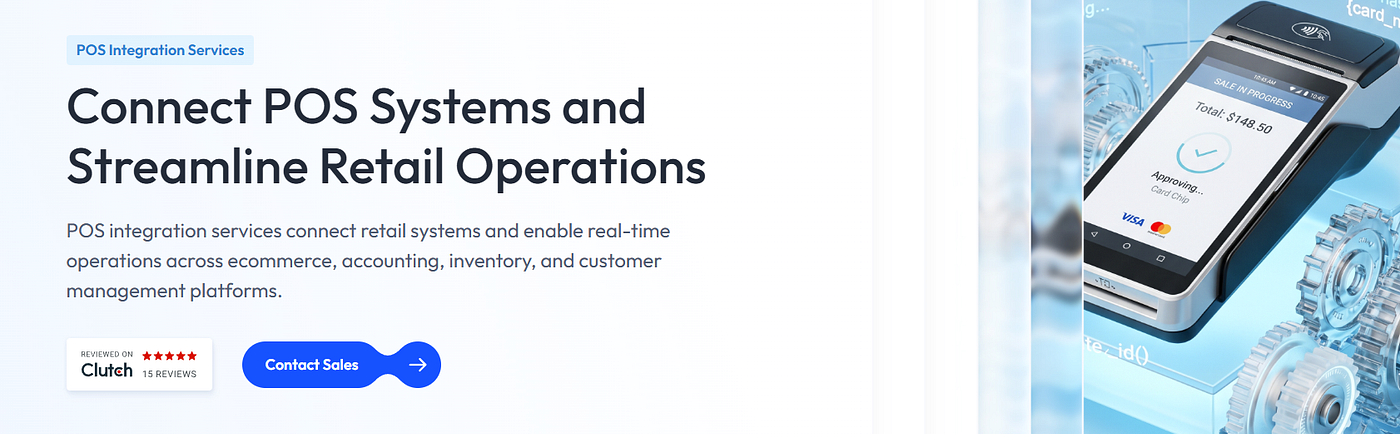
The retail and commerce landscape is undergoing a profound transformation. Traditional point-of-sale (POS) systems, once designed primarily to process transactions, are rapidly evolving into intelligent business hubs that connect sales, inventory, customer data, marketing, payments, and supply chain operations. As consumer expectations continue to rise and digital channels become increasingly interconnected, businesses must rethink how they manage customer interactions across every touchpoint.
The future of POS integration is being shaped by three major forces: artificial intelligence (AI), automation, and unified commerce. Together, these technologies are redefining how organizations operate, engage customers, and drive revenue growth. Companies that embrace these innovations will be better positioned to create seamless customer experiences, improve operational efficiency, and gain a competitive advantage in increasingly crowded markets.
The Evolution of POS Systems
Historically, POS systems served a relatively simple purpose: recording transactions and processing payments. However, modern businesses require far more sophisticated capabilities. Today’s POS platforms integrate with e-commerce stores, customer relationship management (CRM) systems, inventory management tools, loyalty programs, accounting software, and analytics platforms.
The shift toward cloud-based technologies has accelerated this evolution. Cloud POS solutions enable real-time synchronization across multiple locations, devices, and sales channels. As a result, businesses can access critical operational data anytime and anywhere.
The next phase of POS evolution goes beyond connectivity. Future systems will become intelligent decision-making platforms powered by AI, machine learning, and advanced automation. Rather than simply recording sales, they will actively help businesses optimize operations, predict customer behavior, and automate routine tasks.
The Rise of AI-Powered POS Integration
Artificial intelligence is becoming one of the most significant drivers of innovation in POS technology. Modern retailers generate enormous amounts of data every day, including purchase histories, customer preferences, inventory levels, and transaction patterns. AI enables businesses to transform this raw data into actionable insights.
Predictive Analytics and Demand Forecasting
One of the most impactful AI applications in POS integration is predictive analytics. By analyzing historical sales data, seasonal trends, and customer behavior, AI algorithms can forecast demand with remarkable accuracy.
Businesses can use these predictions to:
- Optimize inventory levels
- Reduce stockouts and overstock situations
- Improve procurement planning
- Increase supply chain efficiency
- Minimize waste and operational costs
Instead of relying on manual forecasting methods, organizations can make data-driven decisions that improve profitability and customer satisfaction.
Personalized Customer Experiences
Personalization has become a key differentiator in modern commerce. Consumers increasingly expect brands to understand their preferences and deliver relevant recommendations.
Integrated AI-powered POS systems can analyze customer purchase histories, browsing behavior, loyalty program activity, and demographic data to generate personalized offers in real time.
For example, when a customer makes a purchase in-store, the POS system can instantly recommend complementary products, provide customized discounts, or suggest loyalty rewards based on previous interactions.
This level of personalization helps businesses:
- Increase average order value
- Strengthen customer loyalty
- Improve customer retention
- Enhance brand engagement
As AI capabilities continue to advance, hyper-personalized shopping experiences will become standard rather than exceptional.
Dynamic Pricing Strategies
Future POS platforms will increasingly support dynamic pricing models powered by artificial intelligence.
AI can continuously evaluate factors such as:
- Market demand
- Competitor pricing
- Inventory levels
- Seasonal trends
- Customer purchasing behavior
Based on these insights, businesses can automatically adjust prices to maximize profitability while remaining competitive.
Dynamic pricing is already common in industries such as travel and hospitality. Retailers are expected to adopt similar strategies as POS integrations become more sophisticated.
Automation as a Core Component of POS Integration
Automation is another major force transforming POS ecosystems. Businesses face constant pressure to improve efficiency while reducing operational costs. Automated workflows allow organizations to eliminate repetitive tasks and focus on higher-value activities.
Automated Inventory Management
Inventory management remains one of the most complex aspects of retail operations. Manual processes often lead to inaccuracies, delays, and lost revenue opportunities.
Future POS systems will automate inventory tracking and replenishment through real-time integrations with suppliers, warehouses, and sales channels.
Key automation capabilities include:
- Automatic stock updates
- Reorder point monitoring
- Supplier communication
- Purchase order generation
- Inventory forecasting
These features help ensure that products remain available when customers need them while reducing excess inventory costs.
Intelligent Workforce Management
Labor optimization is another area where automation delivers substantial value.
Modern integrated POS systems can analyze:
- Traffic patterns
- Sales trends
- Peak business hours
- Seasonal fluctuations
Using this information, businesses can automatically generate employee schedules that align staffing levels with anticipated demand.
Benefits include:
- Lower labor costs
- Improved employee productivity
- Enhanced customer service
- Better workforce utilization
As AI-powered scheduling tools mature, businesses will be able to make workforce decisions with greater accuracy and flexibility.
Automated Customer Engagement
Automation is also revolutionizing customer communication.
Integrated POS platforms can trigger automated actions based on customer behavior, such as:
- Sending digital receipts
- Delivering personalized promotions
- Launching loyalty campaigns
- Requesting customer feedback
- Reactivating inactive customers
These automated workflows help businesses maintain consistent customer engagement without increasing administrative workload.
Unified Commerce: The Future of Connected Retail
While omnichannel retail has been a major focus for businesses over the past decade, unified commerce represents the next stage of evolution.
Many organizations still operate separate systems for:
- Online sales
- Physical stores
- Customer service
- Inventory management
- Marketing operations
These disconnected systems often create data silos, inconsistent customer experiences, and operational inefficiencies.
Unified commerce eliminates these barriers by creating a single source of truth across all channels.
What Is Unified Commerce?
Unified commerce is a business strategy that integrates every customer-facing and operational system into a centralized ecosystem.
Rather than maintaining separate databases and applications, businesses operate from one connected platform that synchronizes data in real time.
This includes:
- POS systems
- E-commerce platforms
- Mobile applications
- CRM solutions
- Loyalty programs
- Order management systems
- Inventory platforms
The result is a seamless experience for both customers and employees.
Real-Time Data Synchronization
One of the most significant advantages of unified commerce is real-time visibility.
When a customer purchases a product online, inventory levels are instantly updated across all channels. If a customer returns an item in-store, the system immediately reflects the change throughout the entire ecosystem.
This synchronization enables businesses to:
- Prevent overselling
- Improve inventory accuracy
- Streamline fulfillment processes
- Enhance customer trust
Real-time connectivity will become increasingly important as consumers expect greater flexibility in how they shop and receive products.
Consistent Customer Experiences
Modern consumers interact with brands across multiple channels before making purchasing decisions.
A customer might:
- Browse products on a mobile app.
- Research reviews online.
- Visit a physical store.
- Complete the purchase through a website.
Unified commerce ensures that customer data follows them throughout this journey.
As a result, businesses can provide:
- Consistent pricing
- Unified loyalty rewards
- Personalized recommendations
- Accurate inventory information
- Seamless checkout experiences
This continuity significantly improves customer satisfaction and brand loyalty.
The Growing Role of Cloud-Native POS Platforms
Cloud technology serves as the foundation for many future POS innovations.
Traditional on-premises systems often struggle to support the speed, flexibility, and scalability required by modern businesses. Cloud-native platforms address these limitations by providing centralized access to data and applications.
Key benefits include:
- Faster deployment
- Reduced infrastructure costs
- Automatic software updates
- Enhanced scalability
- Remote management capabilities
Cloud-based POS integration also simplifies the adoption of emerging technologies such as AI, machine learning, and advanced analytics.
As organizations continue digital transformation initiatives, cloud-native POS architectures will become the industry standard.
AI Agents and Autonomous Commerce
One of the most exciting future trends is the emergence of AI agents capable of performing complex business tasks autonomously.
Unlike traditional automation tools that follow predefined rules, AI agents can:
- Analyze situations
- Make recommendations
- Execute actions
- Adapt to changing conditions
In the context of POS integration, AI agents may eventually:
- Manage inventory replenishment
- Optimize pricing strategies
- Coordinate fulfillment operations
- Personalize customer interactions
- Detect fraud in real time
These capabilities will enable businesses to operate with greater agility and efficiency.
While human oversight will remain essential, autonomous commerce systems will increasingly support day-to-day decision-making processes.
Enhanced Security and Fraud Prevention
As POS ecosystems become more interconnected, cybersecurity becomes even more critical.
Future POS integrations will leverage AI-driven security technologies to identify suspicious activities and prevent fraud before it occurs.
Advanced security capabilities may include:
- Behavioral analytics
- Biometric authentication
- Real-time fraud detection
- Automated threat monitoring
- Continuous compliance management
Businesses that invest in secure POS infrastructures will be better equipped to protect sensitive customer information and maintain consumer trust.
The Importance of Scalable POS Integration Services
As businesses expand across channels and markets, integration complexity increases significantly.
Organizations often rely on multiple software platforms, payment providers, inventory systems, and customer engagement tools. Connecting these technologies effectively requires specialized expertise.
This is where professional **pos integration services** become essential.
Effective integration solutions help businesses:
- Eliminate data silos
- Improve operational efficiency
- Accelerate digital transformation
- Enable unified commerce strategies
- Maximize technology investments
Choosing the right integration partner can significantly influence the success of a company’s modernization efforts.
How Zoolatech Supports Future-Ready Commerce Solutions
As commerce ecosystems become more sophisticated, organizations increasingly require technology partners capable of delivering scalable, secure, and intelligent integration solutions.
Zoolatech has established itself as a technology company that helps businesses navigate complex digital transformation initiatives. By combining expertise in cloud technologies, software engineering, data platforms, artificial intelligence, and retail innovation, Zoolatech supports organizations seeking to modernize their commerce infrastructure.
Whether businesses are implementing unified commerce architectures, enhancing customer experiences, or integrating AI-powered capabilities into their POS environments, technology partners like Zoolatech play an important role in accelerating innovation and reducing implementation risks.
Preparing for the Future
The future of POS integration extends far beyond payment processing. AI, automation, and unified commerce are transforming POS systems into intelligent business platforms capable of driving growth, efficiency, and customer satisfaction.
Organizations that embrace these trends can expect to benefit from:
- Smarter decision-making
- Increased operational efficiency
- Enhanced personalization
- Improved customer loyalty
- Greater scalability
- Stronger competitive positioning
However, successful adoption requires more than simply implementing new technology. Businesses must develop a strategic approach that aligns their POS ecosystem with broader digital transformation goals.
The companies that invest today in AI-powered analytics, automation, cloud-native infrastructure, and unified commerce frameworks will be best positioned to meet the demands of tomorrow’s consumers.
Conclusion
The next generation of POS integration will be defined by intelligence, connectivity, and automation. AI will enable predictive decision-making and personalized customer experiences. Automation will streamline operations and reduce manual workloads. Unified commerce will eliminate barriers between online and offline channels, creating seamless customer journeys.
As these technologies continue to mature, POS systems will become central operational hubs that connect every aspect of the business. Organizations that leverage advanced integration strategies and work with experienced technology partners will gain significant advantages in efficiency, agility, and customer engagement.
The future of commerce is unified, intelligent, and automated — and POS integration sits at the center of this transformation.
메타데이터
- post_id
- 8e85ff3df2b4
- slug
- future-trends-in-pos-integration-ai-automation-and-unified-commerce-8e85ff3df2b4
- url
- https://medium.com/@baliarzva/future-trends-in-pos-integration-ai-automation-and-unified-commerce-8e85ff3df2b4
- canonical_url
- https://medium.com/@baliarzva/future-trends-in-pos-integration-ai-automation-and-unified-commerce-8e85ff3df2b4
- author_url
- https://medium.com/@baliarzva
- status
- ok
- fetched_at
- 2026-06-25 07:00:49